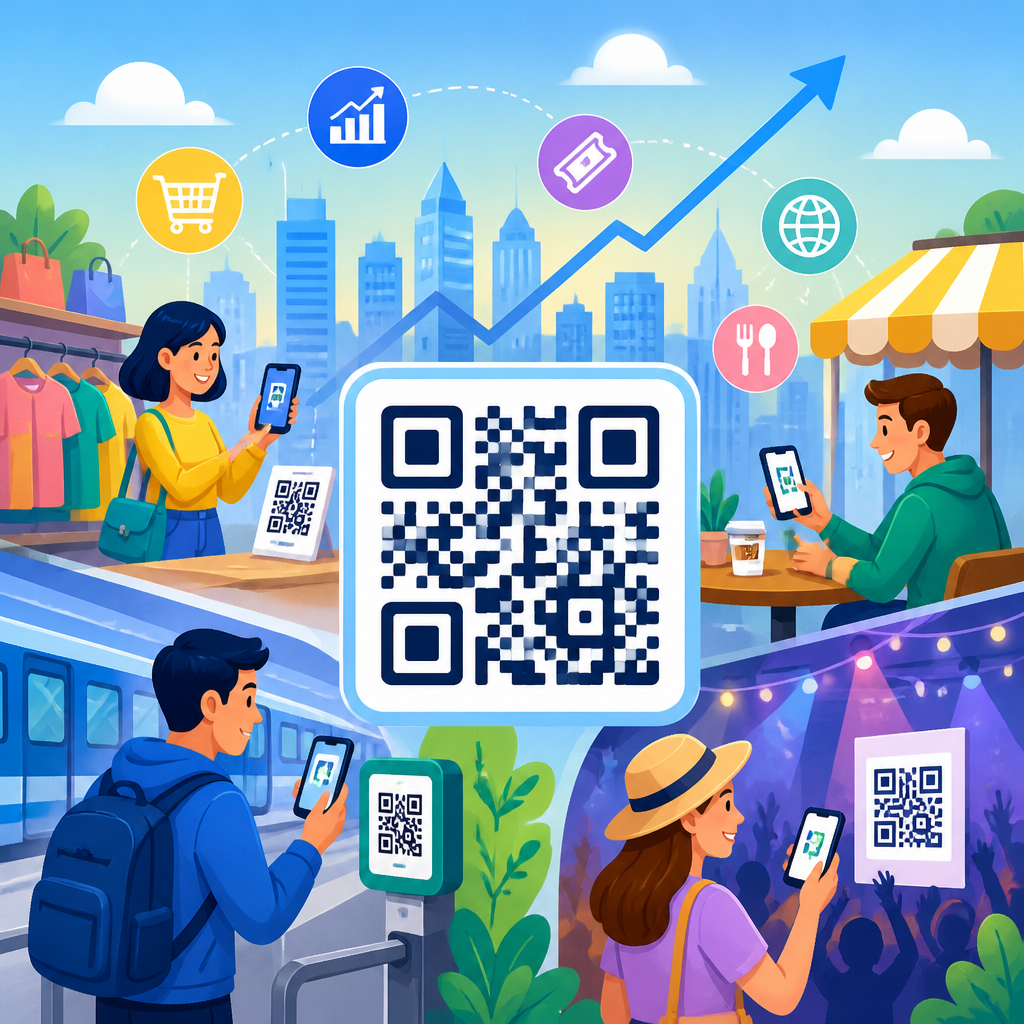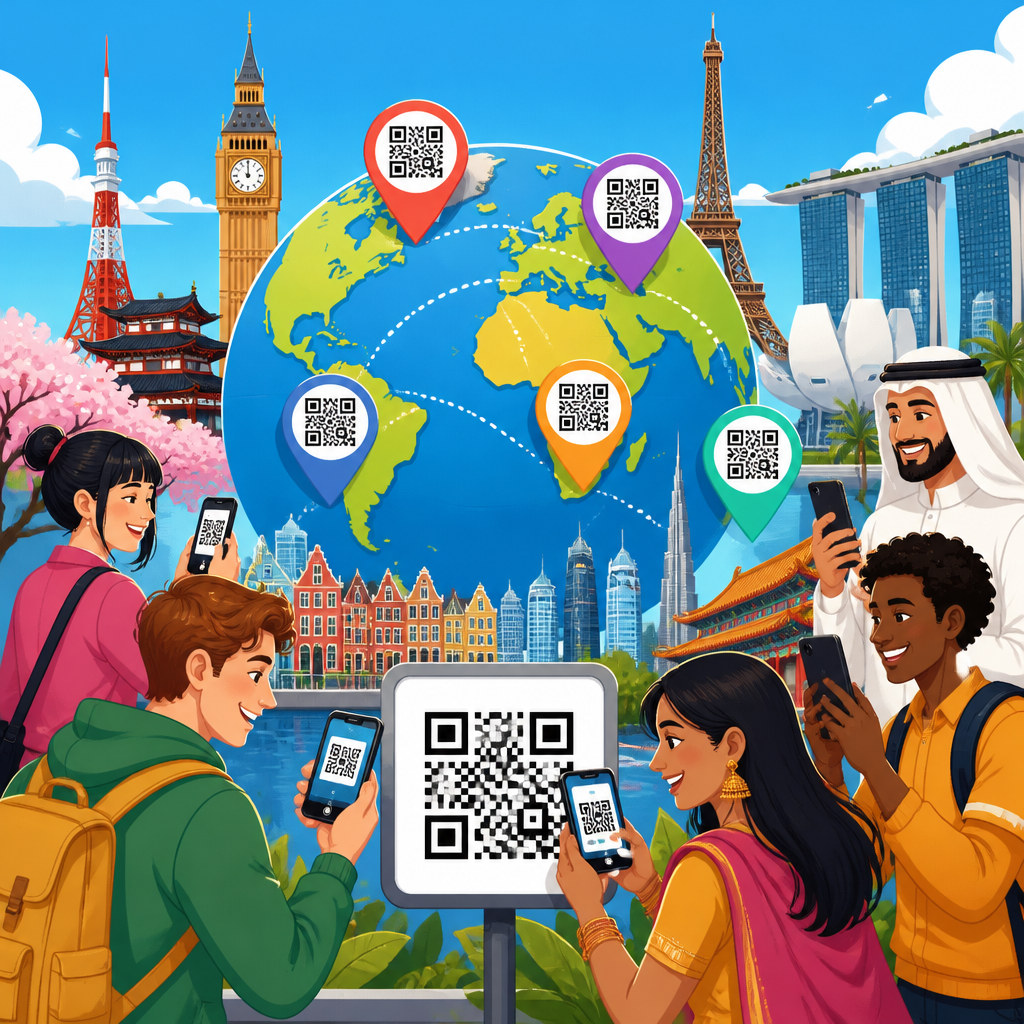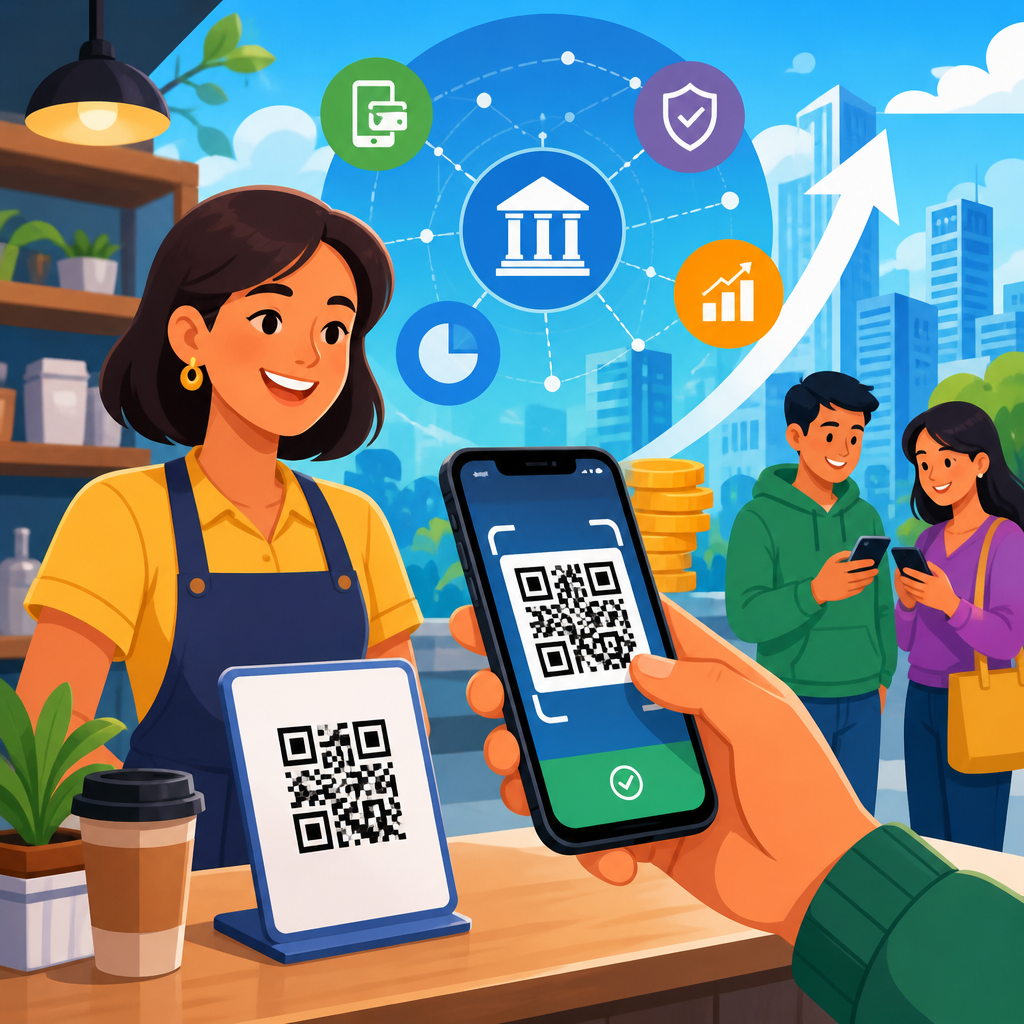
QR code payments have moved from a convenience feature to a core payment rail, and fintech has been the main force accelerating that shift. A QR code payment lets a customer scan a machine-readable square image with a smartphone to initiate or confirm a transaction. The code can be static, meaning the merchant presents the same code every time and the payer enters the amount, or dynamic, meaning the code is generated for a specific purchase with the amount, merchant identifier, and transaction reference already embedded. In practice, fintech companies have made both models easier to deploy, cheaper to process, and simpler for consumers to trust.
This matters because payments shape how quickly money moves, how expensive acceptance is for merchants, and how inclusive commerce can become for people without cards. In markets where card terminals are costly, QR code payments reduce hardware requirements to a printed placard or a basic display. In markets with advanced banking apps, they offer an alternative to contactless cards, especially for account-to-account transfers. I have worked with merchants evaluating payment acceptance stacks, and the appeal is consistent: QR systems shorten setup time, lower fixed costs, and create a digital trail that improves reconciliation, loyalty, and fraud monitoring.
Fintech is driving adoption by solving the entire chain, not just the scan itself. It builds merchant onboarding flows, identity checks, payment orchestration, settlement engines, refunds, tokenization, and analytics. It also creates consumer-facing experiences through bank apps, wallets, and super apps that normalize scanning in daily life. The result is that QR code payments now sit at the intersection of retail commerce, peer-to-peer transfers, billing, transit, hospitality, and cross-border acceptance. Understanding how fintech is expanding this ecosystem is essential for any business following QR code trends and innovations, because this subtopic increasingly influences checkout design, customer acquisition, and digital payment strategy.
Why QR code payments fit modern commerce
QR code payments match the economics and behavior of modern commerce unusually well. A merchant can begin accepting digital payments without buying a traditional point-of-sale terminal, which is significant for small businesses, market vendors, service professionals, and temporary sellers. The setup can be as simple as printing a code linked to a payment account. For larger retailers, dynamic QR code payments integrate into existing POS software and enterprise resource planning systems, making transaction matching and refunds more reliable. This flexibility explains why QR is used in everything from cafes and taxis to utility billing and e-commerce order pickup.
Another reason adoption is rising is smartphone familiarity. Consumers already know how to open a camera app, scan a code, and follow a prompt. That lowers training friction compared with introducing a new hardware device or a proprietary process. During the pandemic, businesses also embraced touch-light payment methods, which helped scanning become a default behavior in many regions. Even where near-field communication is common, QR remains relevant because it works on lower-cost phones, does not require merchants to maintain card readers for every use case, and can support remote-presented transactions on invoices, websites, and packaging.
Interoperability has improved as national and regional standards have matured. EMVCo specifications for merchant-presented and consumer-presented QR codes created a common technical foundation, while domestic real-time payment schemes in countries such as India, Brazil, and Thailand gave fintech firms an efficient settlement layer. When QR is tied to instant bank transfer networks, merchants gain immediate confirmation and faster access to funds, which can materially improve cash flow. That is a stronger proposition than simply replacing one card payment method with another.
How fintech removes the biggest barriers to adoption
The biggest barriers to payment adoption are rarely the visible ones. Merchants worry about onboarding time, transaction costs, refunds, disputes, reporting, staff training, and whether customers will actually use the method. Consumers worry about trust, speed, failed scans, and whether they need yet another app. Fintech addresses these concerns through product design and infrastructure. Good onboarding compresses compliance checks, account setup, and settlement preferences into a guided digital flow. Strong payment APIs connect QR acceptance to accounting software, order management, and CRM systems, reducing manual work after the payment is completed.
Cost is another decisive factor. Card acceptance often includes terminal rental, interchange, scheme fees, and processor markup. QR code payments, especially when routed over account-to-account rails, can avoid some of those costs. That does not make them free; there are still fees for processing, fraud controls, software, and support. But fintech firms package these services in ways that are often more transparent for small merchants. In deployments I have seen, the reduction in fixed hardware expense is what first gets a merchant interested, while easier reconciliation and faster settlement are what keep the method in place.
Reliability has also improved. Earlier QR payment experiences could feel fragmented, with separate apps, inconsistent code formats, and poor exception handling. Fintech platforms now standardize payment intents, webhook notifications, reference IDs, and status messaging. If a customer scans but abandons the payment, the merchant system can time out gracefully. If a payment succeeds but the POS connection drops, the system can retrieve the status from the processor. These details sound operational, but they determine whether staff trust the method during a busy lunch rush or checkout peak.
Merchant adoption: from printed code to integrated checkout
Merchant adoption typically starts with the simplest model and then matures. Micro-merchants often begin with static QR codes because deployment is immediate. A salon, food stall, or freelance instructor can display one code and ask the customer to enter the amount. This works, but it introduces the risk of mistyped values and makes automated reconciliation harder. Fintech providers improve this setup with confirmation screens, payer notes, and merchant dashboards that show incoming payments in real time. For very small businesses, that can be enough to replace cash-heavy operations.
As merchants grow, dynamic QR code payments become more attractive. The POS generates a unique code for each order, embedding the amount and reference so the customer only needs to approve the transaction. This reduces errors, speeds throughput, and simplifies refunds because every payment is linked to an order ID. Restaurants can place a dynamic QR on a table bill, parking operators can generate one at exit, and e-commerce merchants can show one at checkout for account-based payment. These use cases turn QR from a backup method into a primary payment option.
Fintech companies support this progression with software kits, plug-ins, and unified dashboards. A merchant may start with a standalone acceptance page, then move to integrations with Shopify, WooCommerce, Stripe-compatible gateways, or custom enterprise systems. The best providers also offer settlement reporting, tax exports, and webhook-driven status updates that fit into existing finance workflows. That integration layer is often underestimated, yet it is where adoption either scales or stalls. Merchants do not want an isolated payment island; they want payment acceptance that feeds inventory, accounting, refunds, and customer support.
Consumer behavior and trust: why people actually scan
Consumers adopt QR code payments when the experience feels faster, clearer, and safer than alternatives. Speed matters, but perceived control matters just as much. With a QR flow, the customer usually sees the merchant name, amount, and funding source on their own device before approving. That visibility can build confidence, particularly in account-to-account payments where the user does not hand a card to anyone. Fintech apps reinforce trust with biometric login, transaction alerts, saved favorites, and instant digital receipts.
Rewards and utility also shape behavior. Many wallets and banking apps tie QR payments to cashback, loyalty points, budget categorization, or installment options. Consumers are more likely to scan repeatedly when the payment creates a usable record, not just a debit. In several markets, billers and public services have normalized scanning by printing QR codes on invoices for taxes, tuition, telecom, and utilities. Once users become familiar with paying a bill this way, using the same behavior in stores feels natural rather than experimental.
Trust can be damaged by fraud, so fintech firms invest heavily in interface design and risk controls. The app should display the verified merchant name, not just a vague handle. Dynamic codes reduce amount manipulation risk because the amount is prefilled. Device binding, behavioral analytics, and transaction velocity checks help identify suspicious activity. Clear dispute and refund channels matter too. If customers think a mistaken transfer cannot be resolved, adoption slows. The strongest QR ecosystems balance convenience with visible safeguards, which is why trust grows fastest when banks, regulated wallets, and recognized payment brands participate.
Payment models, infrastructure, and settlement economics
Not all QR code payments run on the same rails, and fintech adoption strategy depends on the underlying model. Some transactions use card credentials stored in a wallet and simply use the QR code as a way to pass payment details. Others run directly from bank account to bank account over instant payment systems. Others still operate within closed-loop wallets funded by balances. Each model has different economics, risk patterns, and user experience tradeoffs.
| Model | How it works | Main advantage | Main limitation |
|---|---|---|---|
| Static merchant-presented QR | Merchant displays one code; customer enters amount | Lowest setup cost | Weaker automation and higher input error risk |
| Dynamic merchant-presented QR | POS generates a transaction-specific code | Better reconciliation and speed | Requires software integration |
| Consumer-presented QR | Customer wallet shows code; merchant scans it | Useful for loyalty-linked wallets | Merchant needs scanning equipment |
| Account-to-account QR | Scan initiates direct bank transfer | Fast settlement and lower acceptance cost | Depends on banking and real-time payment coverage |
Settlement timing is critical for merchants. Card-based flows may settle on a delayed schedule, while account-to-account QR payments can confirm and settle much faster, sometimes in seconds depending on the domestic payment rail. That difference affects working capital, especially for merchants with thin margins. Fintech providers increasingly use smart routing to decide which rail to use based on geography, customer preference, and cost optimization. They also bundle treasury features such as split settlements, multi-entity reporting, and payout controls for platforms and franchises.
Infrastructure quality determines whether QR payments remain a niche or become a scalable payment rail. Providers need resilient APIs, strong uptime, idempotent transaction handling, and support for refunds, reversals, and offline edge cases. They also need compliance functions such as know your customer, anti-money laundering screening, and sanctions checks where applicable. The providers winning in this space are not just making codes; they are operating payments infrastructure that can stand up to peak volumes, regulatory scrutiny, and enterprise procurement standards.
Regional growth, regulation, and the next phase of QR code payments
The strongest QR code payment stories come from markets where fintech innovation aligns with public infrastructure. India’s Unified Payments Interface, Brazil’s Pix, and Thailand’s PromptPay are widely cited because they combine instant transfers, broad bank participation, and simple user experiences. In China, Alipay and WeChat Pay demonstrated how QR can scale through wallet ecosystems long before many Western markets considered it mainstream. These examples show that adoption accelerates when consumers can use one familiar method across many merchant types and when merchants know customers already understand the behavior.
Regulation also matters. Standardized QR specifications reduce fragmentation and increase merchant confidence that one acceptance setup will reach more users. Consumer protection rules, transparent fee disclosure, and clear refund practices make the method more credible. Open banking frameworks in Europe and elsewhere create additional possibilities by allowing fintech companies to initiate account-based payments in regulated ways. However, adoption is not automatic. In card-dominant markets, QR must compete with entrenched tap-to-pay habits, so fintech firms often win first in bill pay, B2B invoicing, hospitality, or underserved merchant segments rather than mainstream grocery checkout.
Looking ahead, QR code payments will keep expanding because fintech continues to connect payment acceptance with broader commerce functions. Expect tighter links to digital receipts, loyalty programs, identity verification, and cross-border settlement. Expect more merchant tools that combine QR acceptance with invoicing, subscriptions, and customer messaging in one dashboard. For businesses building out a QR Codes in Payments strategy, the practical lesson is simple: treat QR as a serious payment channel, not a novelty. Audit your customer journeys, compare static and dynamic QR options, and choose fintech partners that offer strong integrations, clear reporting, and dependable settlement. That is how adoption turns into measurable business value.
Frequently Asked Questions
1. Why are fintech companies such a major force behind QR code payment adoption?
Fintech companies have played a central role in making QR code payments mainstream because they move faster than traditional payment providers and design products around real-world user behavior. Instead of treating QR payments as a niche add-on, fintech platforms have built them into everyday financial experiences such as mobile wallets, merchant apps, peer-to-peer transfers, loyalty tools, and small-business payment acceptance. That matters because a payment method only scales when it is easy for both consumers and merchants to use consistently.
Another major reason is cost and accessibility. QR code payments are generally far less expensive to deploy than card terminals or other hardware-heavy acceptance methods. A small merchant can often begin accepting payments with a printed static code or a basic smartphone setup, which removes a huge barrier to entry. Fintech firms recognized early that lower setup costs would accelerate merchant onboarding, especially among microbusinesses, street vendors, service professionals, and merchants in underserved markets.
Fintech companies have also invested heavily in user experience. They simplify onboarding, reduce friction during checkout, support instant notifications, provide transaction histories, and integrate payments with invoicing, analytics, refunds, and customer rewards. In many cases, fintech platforms do not just enable the payment itself; they build an entire merchant and consumer ecosystem around it. That broader value proposition is a big reason QR payments have shifted from a convenience feature into a core payment rail.
Finally, fintechs often act as connectors across banks, merchants, consumers, and payment networks. They help standardize QR flows, improve interoperability, and bring modern APIs into the payment stack. As a result, they have been able to scale QR acceptance more quickly than legacy systems that rely on slower implementation cycles. In short, fintech is driving adoption by making QR payments cheaper to accept, easier to use, and more deeply embedded in digital commerce.
2. What is the difference between static and dynamic QR code payments, and why does it matter?
Static and dynamic QR code payments may look similar to the consumer, but they work differently and serve different business needs. A static QR code stays the same from transaction to transaction. The merchant displays one permanent code, and the customer scans it and typically enters the payment amount manually before authorizing the transaction. This approach is simple, inexpensive, and easy to deploy, which makes it especially useful for small merchants, market sellers, charities, and informal businesses that want a fast way to start accepting digital payments.
Dynamic QR codes, by contrast, are generated for a specific purchase or session. They can include the transaction amount, merchant identifier, invoice or order reference, and other contextual details tied to that individual sale. Because the information is embedded at the time of payment, dynamic QR codes reduce manual entry errors, improve reconciliation, and create a smoother checkout flow. For larger retailers, restaurants, e-commerce pickup points, transportation providers, and service businesses, that added precision can be extremely valuable.
The distinction matters because it affects security, operational efficiency, and customer experience. Static QR codes are highly accessible and low-cost, but they may require more care from the user and merchant to confirm the correct amount was entered. Dynamic QR codes tend to support better transaction matching and can be easier to integrate with point-of-sale systems, inventory management, and accounting software. They also make it easier to support features such as one-tap confirmation, digital receipts, and automated reporting.
Fintech firms have accelerated adoption of both models by tailoring them to different segments of the market. They give very small merchants a simple entry point with static codes while offering more advanced businesses dynamic, software-driven payment flows. This flexibility is one reason QR payments are scaling so effectively across a wide range of industries and merchant sizes.
3. How do QR code payments benefit merchants and consumers compared with traditional payment methods?
For merchants, one of the biggest advantages of QR code payments is lower cost of acceptance. Traditional card infrastructure often requires dedicated hardware, installation, maintenance, and processing arrangements that can be burdensome for smaller businesses. QR-based acceptance can often be launched with minimal equipment, making digital payment access far more practical for merchants that were previously cash-only or hesitant to invest in expensive terminals.
QR payments also support faster digital transformation. Merchants can connect payment acceptance with mobile ordering, invoicing, loyalty programs, promotions, bookkeeping, and settlement tools within one fintech platform. That is especially attractive for small and midsize businesses that want more than just payment processing. They want visibility into sales, easier reconciliation, and tools that help them manage their business more efficiently. Fintech providers often package those capabilities together, which increases the value of adopting QR payments.
For consumers, convenience is the most obvious benefit. Paying with a smartphone can be quick, familiar, and easy, particularly for users who already manage finances through mobile apps. QR payments can also reduce the need to carry cash or physically hand over a payment card. In some environments, they provide a cleaner and more contact-friendly checkout experience, which helped strengthen adoption in many markets.
There is also a broader inclusion benefit. QR code payments can expand digital commerce to people and businesses who may not have had access to traditional card-based infrastructure. As fintech apps become more widespread, consumers gain additional ways to pay directly from stored balances, linked bank accounts, or digital wallets. That flexibility broadens participation in the digital economy. In practical terms, QR payments often succeed because they make digital transactions simpler, cheaper, and more adaptable for both sides of the payment experience.
4. Are QR code payments secure, and how is fintech improving trust in them?
QR code payments can be very secure when they are implemented through reputable platforms with strong authentication, transaction monitoring, and clear user verification steps. The QR code itself is simply a method of transmitting payment information or initiating a payment request. The real security depends on the payment app, the underlying network, and the safeguards built into the transaction process. That is an important point because people sometimes confuse the visible code with the full payment security architecture behind it.
Fintech companies have improved trust in QR payments by adding multiple layers of protection. These often include biometric login, device authentication, tokenization, encrypted data transmission, fraud detection systems, transaction alerts, and in-app confirmation screens that clearly show who is being paid and how much. Dynamic QR codes can add another layer of safety by linking the code to a specific purchase, which reduces ambiguity and improves transaction integrity.
At the same time, there are risks users should understand. Fraudsters may attempt to replace legitimate merchant QR codes with fake ones or trick users into scanning malicious codes. Strong fintech platforms address this through merchant verification, branded interfaces, real-time warnings, dispute mechanisms, and user education. The best systems make it easy for customers to confirm payment details before authorizing the transaction rather than relying on blind trust.
Trust also improves when the payment experience is consistent and transparent. Instant confirmations, digital receipts, visible merchant names, and clear error handling all make people more comfortable using QR payments repeatedly. In that sense, fintech is not only improving technical security but also building behavioral trust. Widespread adoption depends on both, and the most successful QR payment platforms focus on securing the transaction while making the process feel reliable and familiar.
5. What does the future of QR code payments look like as fintech continues to evolve?
The future of QR code payments looks strong because fintech is expanding them beyond simple scan-to-pay transactions into a broader digital commerce infrastructure. What began as a low-friction payment method is increasingly becoming a gateway to integrated financial services. Businesses can use QR flows not just for checkout, but also for billing, subscriptions, loyalty activation, customer identification, ticketing, table ordering, delivery confirmation, and cross-channel commerce.
One important trend is deeper interoperability. As fintech providers, banks, payment networks, and regulators move toward common standards, QR payments become easier to use across different apps, merchants, and geographic markets. That reduces fragmentation and makes the consumer experience more seamless. It also gives merchants more confidence that QR acceptance will work at scale rather than being tied to one isolated wallet or platform.
Another trend is richer merchant enablement. Fintech companies are layering analytics, credit, cash-flow tools, embedded finance, and customer engagement features on top of payment acceptance. In other words, QR payments are becoming an entry point into full-service business platforms. For merchants, that makes adoption more attractive because the payment itself is only part of the value. The surrounding tools can help improve operations, retention, and profitability.
Consumer behavior is also likely to keep reinforcing growth. As more people become comfortable using smartphones for banking, shopping, and identity verification, QR code payments fit naturally into the broader digital ecosystem. They are flexible enough to work in-store, online-to-offline journeys, invoices, and remote transactions. Fintech is accelerating this shift by making QR payments smarter, more connected, and easier to scale. That is why many industry observers now see them not as a temporary trend, but as a durable and increasingly important payment rail.