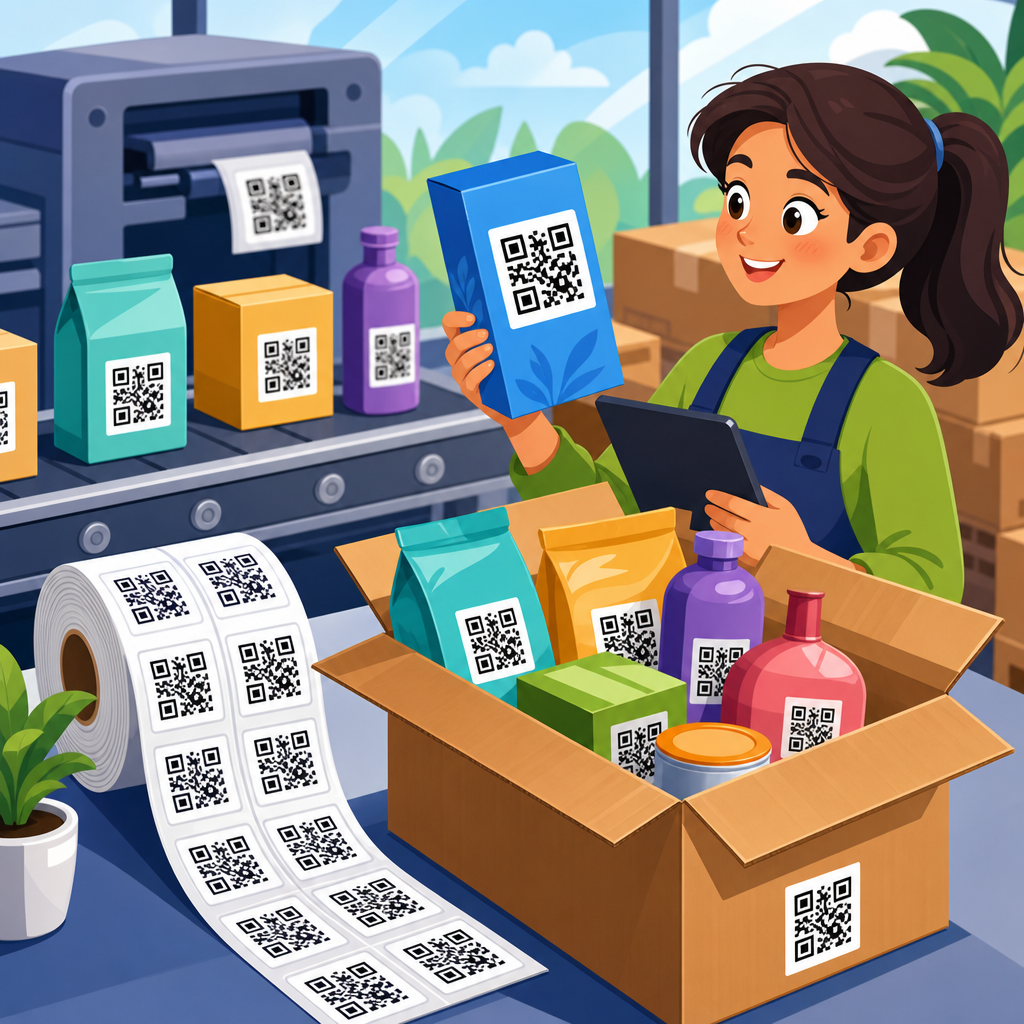
Bulk QR code generation sounds straightforward until a team has to create hundreds or thousands of codes that scan reliably, point to the right destination, match brand standards, and remain maintainable after launch. In practice, bulk QR code creation is a production workflow, not a one-click task. It combines data preparation, encoding rules, file management, print considerations, analytics, and governance. I have worked on bulk QR code rollouts for product packaging, event badges, direct mail, restaurant menus, and inventory labels, and the same problems appear repeatedly: bad source data, inconsistent naming, weak testing, and no plan for updates.
A QR code is a two-dimensional barcode that stores data such as a URL, text string, contact record, Wi-Fi credential, or identifier. Bulk QR code generation means creating many codes at once from a structured dataset, usually a spreadsheet, database export, or API feed. Teams use it when every item needs a unique destination or identifier: one code per product, seat, coupon, shipment, patient packet, or marketing asset. The main value is scale. Instead of manually building codes one by one, a system maps rows of data to generated images and export files.
This matters because volume multiplies small mistakes. A single wrong URL is an inconvenience; ten thousand wrong URLs become a costly reprint, missed scans, and damaged trust. Bulk workflows also expose deeper technical issues. Character encoding can break international text. Low contrast can reduce scan rates on packaging. Static codes lock in destinations, while dynamic codes add redirects, analytics, and subscription costs. Security matters too, because QR codes can hide malicious or expired links if controls are weak. For organizations treating QR as a serious channel, the challenge is not just generating images. The challenge is building a repeatable, auditable process that produces accurate, scannable, compliant, and measurable codes at scale.
Data quality and source-file errors
The most common challenge in bulk QR code generation is poor source data. Bulk systems are only as good as the CSV, spreadsheet, or database feed behind them. I often see duplicate rows, broken links, missing identifiers, unescaped special characters, and inconsistent naming conventions. If a template expects columns labeled SKU, LandingURL, Campaign, and Region, even a small mismatch can push bad values into the wrong fields. A row with a trailing space in a URL may still look correct to a human reviewer, yet fail validation or create a redirect error after deployment.
Good bulk QR code creation starts with data hygiene. Validate URLs with automated checks. Normalize capitalization, delimiters, and date formats. Deduplicate identifiers before generation, not after. If codes will be matched to physical items, every record needs a stable primary key that survives edits and reprints. For large runs, I recommend generating from a locked export rather than a live spreadsheet. That creates version control and a clear audit trail. Teams using Airtable, Google Sheets, Excel, or a product information management system should still pass the final dataset through validation scripts before generation.
Another frequent issue is misunderstanding what should be encoded directly versus what should come from a lookup table or redirect service. Encoding long, parameter-heavy URLs into every code increases symbol density and can reduce scan reliability. A cleaner pattern is to encode short dynamic URLs and manage destinations centrally. This reduces the chance of malformed links, simplifies future edits, and keeps image complexity lower.
Choosing static or dynamic QR codes
One of the biggest decisions in bulk QR code creation is whether to use static or dynamic QR codes. Static codes embed the final destination directly. They are simple, inexpensive, and independent of a third-party redirect platform. They work well when the content will not change, such as a permanent product manual PDF or an internal asset ID. The drawback is permanence. If a landing page moves or a campaign changes, the printed code cannot be updated.
Dynamic codes point to a short redirect URL managed by a platform. The destination can be changed later without changing the printed symbol. Dynamic systems also enable analytics such as scan count, time, device type, and approximate location. For marketing, packaging, and distributed print, dynamic usually wins because it preserves flexibility. The tradeoff is operational dependence. If the vendor account lapses, the redirect domain changes, or the service suffers downtime, every code is affected.
In real deployments, I advise teams to decide based on content lifespan, reprint cost, analytics needs, and vendor risk. If replacing printed material would be expensive, dynamic codes are safer. If codes are used in a controlled internal setting with stable identifiers and no need for redirects, static can be better. What causes trouble is mixing both models with no governance. Staff then fail to remember which assets are editable and which are permanent, leading to avoidable production mistakes.
Scan reliability, size, and print constraints
A QR code that exists is not necessarily a QR code that scans well. Bulk generation often fails at the physical production stage because teams think only about data and not about scanning conditions. Symbol size, quiet zone, contrast, material, curvature, and viewing distance all affect performance. ISO/IEC 18004 defines the symbology, but practical deployment still requires testing on real devices and surfaces.
The quiet zone is a clear margin around the code, typically at least four modules wide. Designers frequently violate this by placing text, borders, or artwork too close. Contrast is another issue. Dark code on light background remains the safest option. Metallic substrates, glossy laminates, transparent labels, and low-contrast brand colors can all reduce readability. I have seen beautifully branded codes fail because the navy-on-black palette looked elegant in a mockup but scanned inconsistently under store lighting.
Distance matters too. A code on a warehouse rack, bus shelter, or trade show banner needs a larger print size than a code on packaging held in the hand. Error correction helps by allowing recovery from some damage or logo overlays, but higher error correction also increases density. That can be counterproductive when the encoded data is already long. Bulk QR code generation should therefore include print specifications tied to each use case, not a single default export for everything.
| Challenge | Why it happens | Practical fix |
|---|---|---|
| Dense, hard-to-scan symbols | Long URLs, too much embedded data, high error correction | Use short dynamic URLs, reduce unnecessary parameters, test lower density |
| Unreadable printed codes | Small size, poor contrast, missing quiet zone | Set minimum size standards, preserve white space, print dark on light |
| Wrong destination at scale | Dirty CSV data, duplicate rows, bad mappings | Validate source files, deduplicate, lock a final export before generation |
| Broken analytics | Mixed tracking rules across teams and vendors | Standardize UTM logic, redirect rules, and reporting fields |
| Reprint risk | Static codes used for changeable content | Choose dynamic codes for campaigns and long-lived printed assets |
File formats, naming conventions, and asset management
Bulk QR code creation generates a large asset library quickly, and file management becomes a serious challenge. A batch of ten codes can be handled manually. A batch of ten thousand demands strict naming conventions, folder structures, and metadata. Without them, teams lose track of which PNG, SVG, EPS, or PDF belongs to which item. The result is simple but expensive: the wrong code gets placed on the wrong label, insert, or sign.
Raster versus vector format is a frequent point of confusion. PNG is fine for digital use and many small print jobs, but SVG or EPS is usually better for print because vectors scale cleanly. If a packaging team receives low-resolution raster exports and enlarges them in layout software, edges can soften and scan reliability may drop. File names should include a persistent identifier, not just a human-readable title. Product-02458_frontlabel_qr.svg is safer than summer-campaign-final-new.svg.
Digital asset management also matters after launch. Teams need a registry that connects each code image to its encoded value, intended placement, owner, approval date, and revision history. This can live in a DAM, a PIM, a spreadsheet with controls, or a QR management platform, but it must exist. In mature operations, generated codes are treated like governed brand assets, not disposable graphics.
Tracking, analytics, and attribution gaps
Many teams expect bulk QR code generation to produce instant insight, but analytics quality depends on setup, not on the code image itself. If landing pages, redirect rules, and campaign parameters are inconsistent, reporting becomes unreliable. One batch might use UTM parameters for source and medium, another might omit them, and a third might rely entirely on platform analytics. Then nobody can answer a basic question such as which postcard variant drove the highest conversion rate.
The fix is a standard measurement framework. Define which parameters are appended, where redirects are logged, how unique scans are counted, and which system is the source of truth. Google Analytics 4, Adobe Analytics, Bitly, and enterprise QR platforms can all contribute data, but teams should avoid overlapping methods that count differently. Dynamic QR codes usually provide scan metrics, yet these are not the same as sessions or conversions in web analytics. A scan can fail to load fully, and a visit can be blocked by consent settings. Good reporting reconciles these differences instead of pretending they are identical.
Attribution gets even harder in omnichannel campaigns. A code printed on packaging may trigger a mobile web visit, an app download, or a store locator search weeks after purchase. Bulk deployments should map each code to a business objective before generation. Otherwise, organizations collect scans without learning anything useful.
Security, compliance, and operational governance
Security is often overlooked because QR codes look harmless, but a bulk deployment can create broad risk. Codes may link to pages that later expire, redirect chains can be hijacked, and unmanaged short links can obscure destination transparency. In regulated industries such as healthcare, finance, and pharmaceuticals, codes may point to content with privacy, recordkeeping, or promotional constraints. Bulk QR code creation needs approval rules just like email campaigns and packaging artwork.
Governance starts with domain control. Wherever possible, use branded short domains owned by the organization rather than generic third-party domains. That improves trust and reduces dependence on a vendor’s shared reputation. Redirect destinations should be monitored for uptime and certificate validity. If QR codes trigger data collection, consent and privacy disclosures must align with regional laws and platform policies. For example, a code on patient documents may require stricter destination access control than a code on a restaurant table tent.
Operationally, assign ownership. Someone must approve data, someone must verify samples, and someone must maintain redirects after launch. I have seen abandoned campaign accounts break thousands of active codes because no team accepted long-term responsibility. Governance sounds administrative, but it is what keeps a bulk QR program useful after the excitement of launch fades.
Testing workflows and long-term maintenance
The final challenge is assuming generation is the finish line. In reality, bulk QR code creation should end with testing and maintenance plans. Every batch needs sample-based QA at minimum, and high-risk deployments may justify 100 percent automated validation of encoded values. Test with both iOS and Android devices, in bright and dim conditions, on actual printed materials, and through the full redirect path. A code that scans on a desktop printout in the office may fail on a curved bottle or low-cost thermal label.
Maintenance is equally important. Destinations change, pages are retired, campaigns end, and product catalogs evolve. Dynamic codes need redirect reviews, and static codes need documentation so replacements can be planned before content breaks. A practical maintenance schedule includes monthly link checks, ownership reviews, and reporting audits. For very large programs, APIs can automate status monitoring and regeneration workflows.
As a hub for bulk QR code creation, the central lesson is simple: scale exposes weaknesses in data, design, analytics, and governance. The best bulk QR code generation process starts with clean data, uses the right code type for the use case, respects print physics, organizes assets rigorously, measures consistently, and assigns long-term ownership. Organizations that do these basics well avoid costly reprints and gain a dependable bridge between physical touchpoints and digital experiences. If you are building or fixing a bulk QR workflow, start by auditing one complete batch from source file to live scan result, then standardize the steps that worked.
Frequently Asked Questions
What makes bulk QR code generation more complicated than creating a few codes manually?
At small scale, QR code creation can feel deceptively simple: paste in a URL, export an image, and move on. The complexity appears when that process has to be repeated across hundreds or thousands of records without errors. In a bulk workflow, every code depends on clean source data, consistent formatting, correct destination logic, reliable file naming, and quality control at every stage. A single typo in a spreadsheet, an extra character in a URL, or an inconsistent naming convention can affect a large batch and create downstream problems in print, packaging, events, or mail campaigns.
Another major challenge is that bulk generation is rarely just about making the codes themselves. Teams also need to decide whether to use static or dynamic QR codes, how to structure redirects, what size and error correction level to use, how to organize outputs, and how to test scannability across devices. If brand styling is involved, additional variables enter the process, including logo placement, color contrast, quiet zone preservation, and export settings. What looks like a one-click task is actually a production system that touches creative, marketing, operations, analytics, and compliance.
This is why experienced teams treat bulk QR code generation like a managed workflow rather than a design task. They establish validation rules before generation, define output standards, create naming schemas, run test scans on samples, and document the relationship between each QR code and its intended destination. That discipline is what prevents a high-volume rollout from turning into a high-volume reprint or support issue.
What are the most common data and URL problems in bulk QR code projects?
Data quality is one of the biggest failure points in bulk QR code generation. When QR codes are created from spreadsheets, databases, or exported CSV files, even small inconsistencies can produce broken or misleading results. Common issues include missing values, duplicate records, malformed URLs, wrong protocol usage, accidental spaces, inconsistent capitalization in tracking parameters, and destination pages that were never validated before generation. In high-volume projects, those errors do not stay isolated; they multiply quickly and can affect an entire campaign.
URL management becomes even more challenging when teams append UTM parameters, personalization tokens, product identifiers, or regional routing rules. A URL might technically generate into a QR code but still fail strategically if the landing page is unpublished, redirects incorrectly, strips analytics parameters, or behaves poorly on mobile devices. The practical problem is not just whether the code scans, but whether it leads users to the right experience under real conditions. This is especially important for packaging, event credentials, and direct mail, where the physical item may remain in circulation long after the initial distribution.
The best way to reduce these risks is to validate data before generating anything. That means checking for duplicates, confirming all URLs resolve correctly, standardizing naming conventions, validating parameter syntax, and using test batches before full production. Many teams also benefit from using a master record that links each QR code ID to its source data, output file, and destination URL. That creates traceability, which is essential when a stakeholder later asks which code belongs to which product, attendee, or campaign segment.
How do branding and design choices affect QR code scan reliability at scale?
Brand customization is one of the most underestimated risks in QR code deployment. In theory, adding colors, logos, frames, or custom shapes can make a code feel more polished and aligned with a campaign. In practice, every design change can affect scan performance. At scale, this becomes a serious operational issue because a visual treatment that works in one example may fail across different sizes, materials, lighting conditions, printers, and smartphone cameras. A code that looks attractive in a mockup can become unreliable on glossy packaging, textured labels, plastic badges, or low-contrast mail pieces.
The core technical requirements still matter no matter how creative the design becomes. QR codes need enough contrast between foreground and background, a proper quiet zone around the edges, sufficient module clarity, and a size appropriate for scanning distance. Logo overlays must be carefully controlled, and error correction settings should be chosen based on the extent of design modification. If these rules are ignored, teams often discover failures only after printing or distribution, when correction becomes expensive or impossible.
For bulk projects, consistency is just as important as creativity. A branded QR code template should be tested across multiple use cases before being applied to the full batch. That includes scan testing on iPhone and Android devices, in bright and low-light conditions, and from realistic user distances. It is also wise to test exported files in the actual production process, not just on screen. Reliable bulk generation depends on treating brand styling as a controlled system with approved design parameters, not as a last-minute visual embellishment.
Why are file management and output organization such a big challenge in large QR code rollouts?
When a project produces a handful of QR codes, file handling is easy to manage manually. In bulk operations, however, file management becomes a major source of confusion and error. Teams may need to generate PNG, SVG, or PDF assets; map each output to a product SKU, attendee record, or campaign segment; hand files off to designers or printers; and maintain a record of which version was approved and deployed. Without a clear system, it becomes difficult to know whether the right code was placed in the right layout or whether an old file was accidentally reused.
Naming conventions are especially important. Generic filenames like qr-final.png or version2-updated.svg quickly become unworkable when there are hundreds or thousands of assets. A structured naming format tied to a unique identifier makes it easier to search, audit, automate placement, and troubleshoot problems later. Folder hierarchy matters too, particularly when different teams are handling packaging, badge printing, or regional campaign variants. If file management is sloppy, even perfectly generated QR codes can be misapplied in production.
Strong output governance solves a lot of these issues. Teams should define file types, resolution standards, color mode requirements, naming rules, and version control practices before generation begins. They should also maintain a source-of-truth document that connects each asset to its encoded content and intended use. This becomes invaluable when someone needs to replace a destination, verify a print batch, or investigate a scan problem after launch. In large deployments, organized file management is not administrative overhead; it is part of quality assurance.
How can teams maintain QR codes after launch and avoid long-term problems?
One of the most overlooked challenges in bulk QR code generation is post-launch maintenance. A QR code may be printed once, but the experience behind it often changes over time. Landing pages move, products are discontinued, campaigns expire, tracking structures evolve, and ownership shifts between teams. If the rollout was built without a maintenance plan, organizations can end up with live QR codes that send users to broken pages, outdated offers, or irrelevant content months later. This is particularly risky for packaging and physical collateral, where the code may remain accessible long after the initial campaign period.
This is where the decision between static and dynamic QR codes becomes strategically important. Static codes permanently embed the destination, which limits flexibility if links need to be updated. Dynamic codes add an additional management layer but allow redirects to be changed without replacing the printed asset. For many large-scale deployments, that flexibility is essential. It supports corrections, analytics improvements, localization changes, and content updates while preserving the original print investment. That said, dynamic systems also require governance, access control, platform reliability, and documentation so they do not become another unmanaged dependency.
The most resilient teams plan for maintenance from the beginning. They keep an inventory of active QR codes, define who owns destination updates, monitor scan analytics, test live links periodically, and document redirect logic clearly. They also think beyond launch-day success and ask practical questions: What happens if a product page changes? Who updates event content after the event? How long should a mailer code stay active? Bulk QR code generation is not finished when the files are exported or the materials are printed. It is finished when the organization can confidently manage those codes throughout their full lifecycle.