QR code marketing strategies give small businesses a low-cost way to connect physical spaces with digital actions, from menu views and coupon claims to reviews, appointments, and repeat purchases. A QR code, or quick response code, is a scannable two-dimensional barcode that opens a web link, payment page, app screen, contact card, or other digital asset when a customer points a smartphone camera at it. For small businesses, that simple action matters because attention is short, marketing budgets are tight, and every extra tap reduces conversion. I have used QR campaigns in retail stores, restaurants, clinics, and local service firms, and the pattern is consistent: when the destination is relevant and the placement is intentional, scan rates rise and offline traffic becomes measurable. This makes QR code marketing useful not only for promotion but also for attribution, customer experience, and first-party data collection.
The best QR code marketing strategies are built around customer intent, not novelty. A code on a storefront should solve a different problem than a code on packaging, a receipt, or a table tent. Dynamic QR codes are usually the better choice because the destination URL can be changed without reprinting the code, and platforms such as Bitly, Beaconstac, QR Code Generator Pro, and Uniqode provide analytics on scans, devices, location, and time. Good strategy also requires practical details: strong contrast, quiet zones around the code, error correction that fits the design, mobile-optimized landing pages, and a clear call to action beside the code. Small businesses that treat QR codes as tiny conversion gateways, rather than decorative add-ons, can increase response rates, improve operational efficiency, and create a measurable bridge between local marketing and digital revenue.
Start with a clear conversion goal and match the QR code to the moment
The first rule of effective QR code marketing strategies is to assign one primary conversion goal to each code. That goal might be ordering ahead, booking a consultation, joining a loyalty program, claiming a coupon, leaving a review, downloading care instructions, or following a social account. When one code tries to do everything, it usually does nothing well. In practice, I map codes to customer moments: awareness, consideration, purchase, onboarding, retention, and advocacy. A poster in a gym lobby can send prospects to a free trial form, while a code on a member welcome card can open an exercise library. Same brand, different intent, different landing pages.
Context determines response. In restaurants, table QR codes work best when they reduce friction immediately, such as opening a digital menu, allergen list, or payment flow. In home services, a QR code on a technician leave-behind card can open a maintenance checklist or rebooking page. In retail, shelf talkers often perform better when they answer hesitation questions, like size guides, product demos, or warranty details. The strategic point is simple: place the code where the next step feels obvious. If a customer must stop and ask why they should scan, the marketing has already lost momentum.
Every scan destination should also answer the basic questions a searcher or customer has within seconds. What is this? Why should I care now? What do I do next? The landing page should load fast, fit the screen, and contain one dominant call to action. For a bakery promoting catering, the code might lead to a page with package photos, minimum order details, lead times, testimonials, and a short inquiry form. That is better than sending traffic to the homepage, where users must navigate again. Relevance between placement, promise, and page is the core engine behind high-performing QR code campaigns.
Use dynamic QR codes, campaign tagging, and analytics to measure offline marketing
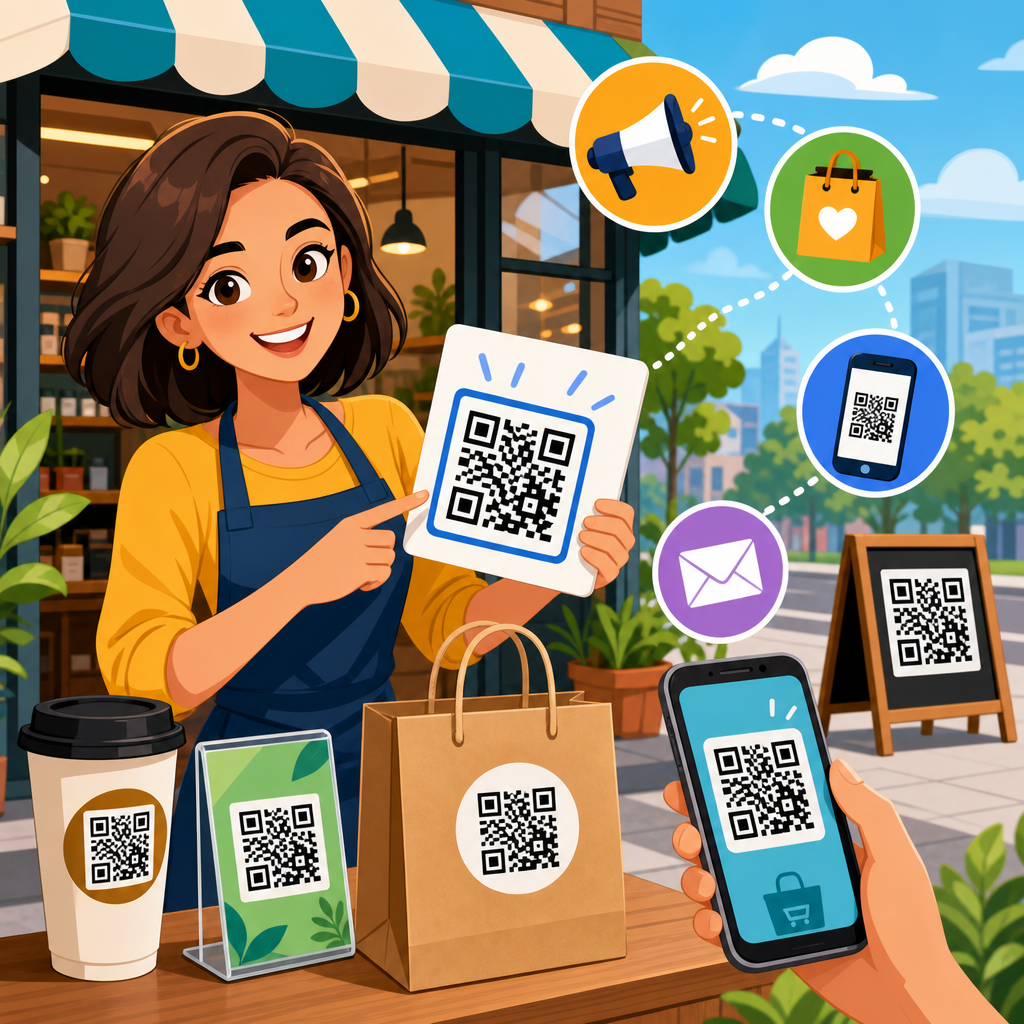
Small businesses often struggle to measure flyers, window signs, direct mail, packaging inserts, and event materials. Dynamic QR codes solve much of that problem because they can be edited after print and tracked at the campaign level. I recommend assigning each placement its own code and attaching UTM parameters to the destination URL so scans appear clearly in Google Analytics 4. A coffee shop, for example, can use separate codes for its sidewalk sign, loyalty card, pastry bag insert, and farmers market banner. This reveals which physical touchpoint actually drives visits, orders, and sign-ups.
Measurement should go beyond raw scan volume. Useful metrics include unique scans, repeat scans, scan-to-session rate, bounce rate, conversion rate, assisted conversions, and revenue per scan. Device type matters too. If most users scan on older phones with slower connections, the landing page must be light and fast. Time-of-day data can shape staffing and offers. A lunch restaurant may learn that scans spike at 11:15 a.m. from nearby office workers, suggesting a limited-time pre-order message. Analytics turns QR code marketing from a guess into a repeatable operating system.
One issue I repeatedly see is businesses using the same generic code everywhere. That destroys attribution and hides poor placements. A better structure is campaign naming by channel, location, and objective, such as window-review-spring or receipt-loyalty-q2. Redirect rules are another advantage of dynamic platforms. If a promotion expires, the code can redirect to a current offer instead of a dead page. This protects printed materials and preserves customer trust. For regulated sectors like healthcare or financial services, avoid embedding sensitive personal data in the code itself; link to secure pages with proper consent flows instead.
Create landing pages that are built for mobile action, not desktop browsing
QR code scans are overwhelmingly mobile, so the landing experience must be designed for thumb-driven action. That means compressed images, short forms, large buttons, autofill support, click-to-call options, wallet-friendly coupons, and copy that gets to the point quickly. Google’s Core Web Vitals remain relevant because poor mobile performance increases abandonment. In campaigns I have managed, reducing form fields from seven to three often produced a larger lift than changing the QR design. The page after the scan matters more than the square itself.
Message match is equally important. If the sign says “Scan for 10% off today,” the landing page should immediately show the offer, expiration terms, and redemption instructions. Do not force visitors through a generic homepage or require them to search for details. A local salon can send window traffic to a page with available appointment slots, service pricing, stylist photos, and a new-client promo code. A pet groomer can route package inserts to aftercare tips plus a rebooking button for six weeks later. The page should complete the promise that motivated the scan.
Trust cues improve conversion. Include business name, phone number, address, review highlights, return or cancellation information, and privacy language where appropriate. If the destination is a payment page, use recognized processors and secure HTTPS links. For forms, state how data will be used. Accessibility matters too: strong font contrast, readable type sizes, and concise instructions support more users. A QR code is not a strategy by itself; it is a gateway. The strategy succeeds when the destination is fast, obvious, and credible enough to convert a customer standing on a sidewalk, at a counter, or in a waiting room.
Choose high-impact placements across storefronts, packaging, print, and in-person service
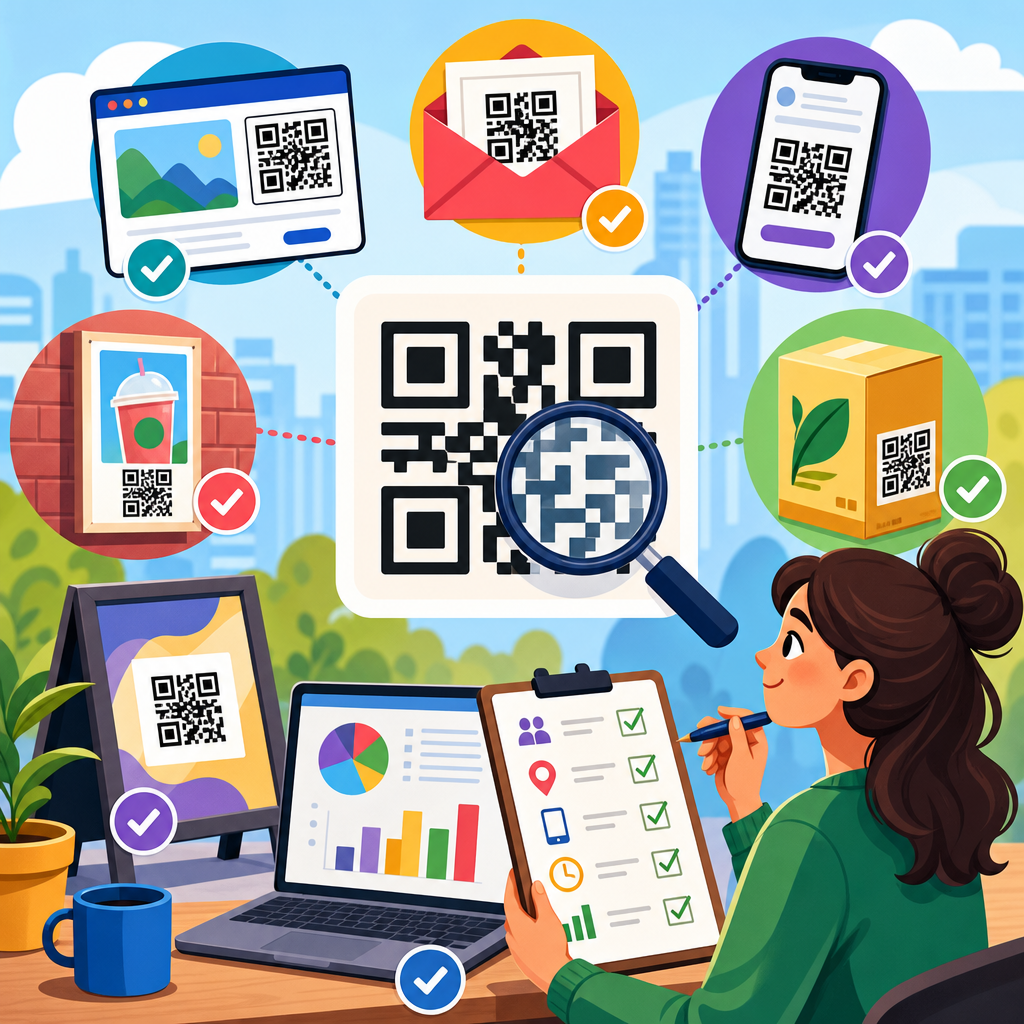
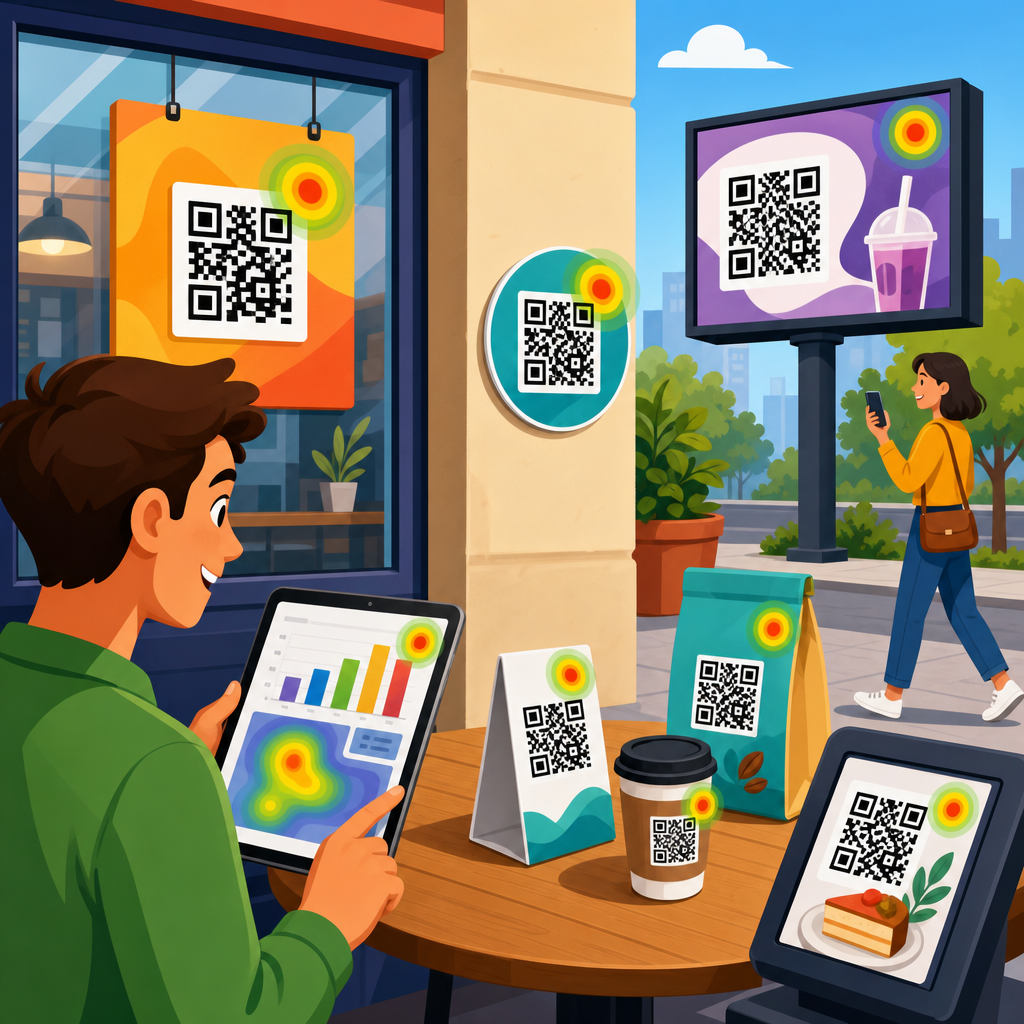
Placement determines performance as much as offer quality. The most productive QR code marketing strategies focus on locations where customers naturally pause. Storefront windows work when businesses are closed or when passersby want information without entering. Counter signs are useful at checkout for loyalty enrollment, tip prompts, warranty registration, or review requests. Packaging performs well because it reaches existing buyers at the exact moment of use. A candle maker can place a QR code on the box linking to burn-care instructions, refill options, and a VIP list. That adds value while creating a retention channel.
Printed materials remain powerful when used selectively. Direct mail with a personalized offer can send recipients to a tracked landing page. Event booths can use QR codes for lead capture instead of paper forms. Business cards can open contact details, portfolios, or scheduling links. For service businesses, vehicle wraps and yard signs can convert neighborhood interest into estimate requests. The key is distance and visibility. A code meant to be scanned from a car is unrealistic; one intended for close range should be large enough to scan comfortably and supported by a short URL as backup.
| Placement | Best objective | Example CTA | Main metric |
|---|---|---|---|
| Storefront window | After-hours lead capture | Scan to book tomorrow | Appointments per scan |
| Receipt | Reviews or loyalty | Scan to earn your next reward | Enrollments |
| Packaging insert | Upsell and education | Scan for care tips and refills | Repeat purchases |
| Table tent | Menu, ordering, payment | Scan to order now | Average order value |
| Direct mail | Offer redemption | Scan for your local offer | Coupon uses |
Operational environments need tailored use. In clinics, codes can reduce paperwork by opening intake instructions, maps, or follow-up resources, but they must never replace necessary privacy safeguards. In real estate, sign riders can send prospects to property tours, lender calculators, and open-house registration. In education or nonprofits, event posters can link directly to volunteer forms or donation pages. The strongest placements serve a real customer need first and a marketing objective second. That is why they generate both higher scan rates and better brand sentiment.
Design QR offers that give customers a reason to scan now
People do not scan because a QR code exists; they scan because the value proposition is immediate and clear. The best offers reduce effort, save money, answer a pressing question, or unlock something unavailable elsewhere. For small businesses, strong examples include first-visit discounts, buy-online-pickup-in-store ordering, product demos, waitlist access, loyalty points, how-to content, event registration, and review incentives that comply with platform rules. Google, Yelp, and many marketplaces prohibit gating or selectively requesting only positive reviews, so ask for honest feedback and avoid manipulative wording.
Urgency helps when it is genuine. A brewery can use a table code for tonight’s limited tap list. A boutique can put a code on a fitting-room sign offering style ideas for the items being tried on. A dental office can place a checkout code that opens post-visit care instructions and a referral program. In each case, the offer is relevant to the exact moment. Generic “scan me” language underperforms because it asks for action without explaining the reward. Specific calls to action consistently win: “Scan for same-day pricing,” “Scan to join our VIP list,” or “Scan for assembly video.”
Segmentation makes offers smarter. New customers may need an introductory incentive, while repeat buyers respond better to convenience or exclusivity. A florist can use one code on wedding expo materials for consultation bookings and another on bouquet sleeves for subscription enrollment. Seasonal businesses can rotate destinations without replacing printed materials if they use dynamic codes. The most effective QR code marketing strategies pair a visible benefit with a low-friction next step. If scanning leads to a long form, confusing page, or irrelevant content, even a good offer will fail.
Apply channel-specific strategies for restaurants, retail, services, and events
Different business models require different QR workflows. Restaurants benefit most from menu access, table ordering, waitlist management, loyalty enrollment, and review collection after payment. Success depends on menu usability, item photos where helpful, modifier clarity, and simple checkout. Retail businesses often gain more from product education, inventory checks, coupon delivery, and post-purchase engagement. A hardware store can place codes on shelves linking to installation videos and compatibility charts, reducing staff interruptions while increasing buyer confidence.
Service businesses should emphasize booking, estimates, trust-building, and follow-up care. For example, a landscaping company can place a code on yard signs that opens a gallery, service area map, financing options, and quote request form. A med spa can route brochure scans to treatment FAQs, contraindications, before-and-after galleries, and scheduling. Events are another strong use case because QR codes simplify registration, agendas, lead capture, and sponsor engagement. At trade shows, I prefer a dedicated landing page with one-tap contact sharing and an incentive such as a downloadable checklist or demo booking.
Channel strategy also includes post-scan communication. Capturing an email or SMS opt-in from a QR landing page allows follow-up sequences that recover non-converters and nurture interest. A boutique fitness studio can send a trial-class reminder, then a limited membership offer, then a success-story email. A home services brand can deliver estimate confirmations and maintenance reminders. The code starts the interaction, but the lifecycle flow closes the sale. Small businesses that connect QR traffic to CRM tools such as HubSpot, Mailchimp, Klaviyo, or Square Marketing usually extract more value than businesses treating scans as isolated clicks.
Avoid common mistakes and build a repeatable optimization process
Most QR campaign failures come from preventable errors: tiny codes, low contrast, poor placement, weak cell service, homepage redirects, expired offers, or no call to action. Another frequent mistake is overbranding the code until it becomes hard to scan. Custom colors and logos can work, but readability comes first. Follow established print guidance: maintain a quiet zone, test across iPhone and Android devices, and verify scanning under different lighting conditions. If the environment has limited connectivity, consider pages that load quickly or offer Wi-Fi prompts where appropriate.
Optimization should be continuous. Test CTA wording, placement height, landing page layout, incentive type, and follow-up timing. Even small changes can produce meaningful gains. In one local retail campaign, moving a counter code from the payment terminal to eye level and changing the CTA from “Follow us” to “Scan for your next purchase reward” more than doubled participation. Create a simple review cadence: weekly for scan data, monthly for conversion performance, and quarterly for broader campaign decisions. Archive results so future promotions start with evidence instead of assumptions.
Compliance and customer trust deserve equal attention. If you collect phone numbers or email addresses, disclose consent terms clearly and honor opt-out rules under applicable regulations. If minors may scan the code, avoid data practices that create legal risk. For payment links, use secure providers and reconciliation processes. The businesses that win with QR code marketing strategies are not the ones with the flashiest code art. They are the ones that pair practical design, useful destinations, and disciplined measurement with a respectful customer experience.
Best QR code marketing strategies for small businesses all share the same foundation: a clear goal, a relevant placement, a mobile-ready destination, and measurable follow-through. QR codes work because they remove friction between offline attention and online action, but only when each code is tied to a specific customer need. Dynamic codes, campaign tagging, strong calls to action, and fast landing pages turn scans into bookings, sales, reviews, and repeat purchases. Whether the code appears on a window, receipt, package, menu, sign, or mailer, success depends on matching the offer to the moment and making the next step obvious.
For small businesses, the main benefit is efficiency. QR campaigns can stretch limited budgets, improve attribution for print and in-person marketing, and create better customer experiences at the same time. They also scale well: one business can start with a storefront booking code and a receipt loyalty code, then expand into packaging, events, and direct mail once the data shows what performs. The hub approach matters here because QR strategy is not one tactic; it is a system that touches acquisition, conversion, retention, and advocacy across channels.
If you want stronger local marketing results, audit every customer touchpoint and ask a simple question: what is the most useful digital action I can offer right here? Then build one QR code for that moment, track it carefully, and improve it with real data. Start small, test quickly, and turn each successful scan into a repeatable growth channel.
Frequently Asked Questions
What are the best ways small businesses can use QR codes in marketing?
The most effective QR code marketing strategies for small businesses are the ones that reduce friction and make it easy for customers to take the next step immediately. In practice, that means linking QR codes to actions with clear value: digital menus, limited-time coupons, loyalty programs, online ordering, appointment booking, review requests, event registration, contact forms, product information, and social media follow options. A restaurant might place a QR code on table tents for menu access and another on receipts for feedback or rewards enrollment. A retail store can use QR codes on shelf tags to highlight product demos, customer reviews, or bundle discounts. Service-based businesses often benefit from QR codes on flyers, business cards, vehicles, and storefront signage that lead directly to booking pages or quote requests.
The strongest strategy is to match the QR code destination to the customer’s context. Someone scanning a code in-store is likely ready to browse details, claim an offer, or make a purchase, while someone scanning from packaging after the sale may be more interested in setup instructions, care tips, referrals, or a review prompt. Small businesses should also focus on one clear objective per code instead of sending users to a general homepage. A code that says “Scan for 10% off your next order” usually performs better than one that simply says “Scan me.” When used thoughtfully, QR codes become a bridge between offline attention and measurable online engagement, helping small businesses turn foot traffic, packaging, print materials, and signage into trackable marketing opportunities.
Where should a small business place QR codes for the highest scan rates?
Placement has a major impact on QR code performance. The best locations are places where customers naturally pause, wait, or make decisions. In a physical location, that can include front doors, checkout counters, tables, product displays, shelf talkers, packaging inserts, receipts, waiting areas, and window signage. For mobile businesses or home service companies, QR codes can work well on vehicles, leave-behind cards, invoices, yard signs, and direct mail. The key is visibility plus relevance. A customer should understand why the code is there and what benefit they will get from scanning it within a second or two.
High-performing placements also account for practical scanning conditions. The code should be large enough to scan comfortably, placed at an accessible height, and surrounded by enough empty space to remain readable. Avoid putting QR codes where glare, poor lighting, curved surfaces, or clutter make scanning difficult. It also helps to pair the code with a short call to action such as “Scan to book an appointment,” “Scan for today’s coupon,” or “Scan to leave a quick review.” In print marketing, include the code near compelling copy, not buried in a corner. In-store, test the customer journey: if someone sees the code while standing in line, sitting at a table, or browsing products, the destination should feel useful at that exact moment. Small improvements in placement and messaging often lead to significantly higher scan rates and better conversion results.
How can small businesses track whether their QR code marketing is working?
One of the biggest advantages of QR code marketing is measurability. Small businesses can track performance by using dynamic QR codes, custom campaign URLs, UTM parameters, landing pages, and analytics platforms such as Google Analytics or reporting tools built into the QR code generator. Instead of linking every code to the same generic page, create dedicated destinations for each campaign, location, or promotion. For example, a code on a window poster might lead to a different tracked link than a code on packaging or a receipt. That setup makes it much easier to identify what is driving scans, clicks, conversions, purchases, and appointments.
Important metrics include total scans, unique scans, time of day, location-based trends, device type, click-through behavior, conversion rate, and the final action completed by the customer. However, raw scan volume is only part of the picture. What matters most is whether the code leads to real business outcomes such as coupon redemptions, loyalty signups, review submissions, bookings, online orders, or repeat purchases. Small businesses should define success before launching a campaign and compare results across placements and offers. If one QR code gets fewer scans but generates more sales, it may be more valuable than a higher-traffic code with weak conversions. Regular testing, clear attribution, and simple reporting dashboards help owners make better decisions and improve campaign performance over time without increasing marketing spend.
Should small businesses use static or dynamic QR codes?
For most marketing use cases, dynamic QR codes are the better choice because they offer flexibility and better tracking. A static QR code sends users to a fixed destination that cannot be changed once the code is printed. That may be fine for permanent information such as a basic contact card or a stable webpage, but it creates limitations if the business wants to update the offer, replace an expired link, or measure performance in detail. Dynamic QR codes solve that problem by allowing the destination URL to be edited without changing the printed code itself. That means a business can keep the same code on signs, menus, packaging, or flyers while updating the landing page as promotions and priorities change.
Dynamic codes also support more sophisticated campaign management. A small business can test different landing pages, rotate seasonal offers, pause promotions, and gather scan analytics without reprinting materials. This can save both time and money, especially for businesses with tight budgets. Static codes still have a place when simplicity is the top priority and the destination is unlikely to change, but for active marketing campaigns, dynamic codes usually deliver more long-term value. They are especially helpful when QR codes appear on materials with a long shelf life, such as posters, menus, product packaging, and business cards. In short, if the goal is growth, optimization, and flexibility, dynamic QR codes are generally the smarter marketing investment.
What are the most common QR code marketing mistakes small businesses should avoid?
The most common mistake is sending customers to a poor destination. Even a perfectly placed QR code will underperform if it leads to a slow page, a generic homepage, a desktop-only experience, or content that does not match the promise made in the call to action. The landing page should be mobile-friendly, fast, easy to navigate, and designed around one primary next step. Another frequent issue is weak messaging. Customers need a reason to scan, so businesses should clearly communicate the benefit, whether that is a discount, convenience, exclusive content, faster ordering, or easy booking. “Scan me” is rarely enough on its own.
Other mistakes include using codes that are too small, placing them where internet access is weak, printing them on reflective or curved surfaces, and failing to test them across different smartphones before launch. Some businesses also overuse QR codes, placing them everywhere without a clear strategy. That can create clutter and reduce customer trust. It is usually better to deploy fewer codes with stronger intent and better offers. Another avoidable error is not tracking results. Without analytics, it becomes difficult to know which campaigns deserve more attention or budget. Finally, businesses should keep the customer experience in mind after the scan. If the form is too long, the coupon is hard to redeem, or the booking process is confusing, conversions will drop. The best QR code marketing feels helpful, fast, and relevant from the moment the customer sees the code to the moment they complete the action.