QR code quality control determines whether a code scans instantly in real conditions or fails when customers, inspectors, or warehouse teams need it most. In practical terms, quality control means planning, testing, measuring, and monitoring every factor that affects readability, from symbol size and quiet zone to print contrast, substrate choice, and camera behavior. QR code testing and quality assurance matter because a visually attractive code can still perform poorly if ink spreads, labels wrinkle, glare obscures modules, or damage correction assumptions are unrealistic. I have seen expensive product launches delayed by something as small as a truncated quiet zone on flexible packaging, and I have also seen plain black-on-white codes outperform highly branded versions because they respected scanner tolerances. For teams working under the broader umbrella of QR code design, printing, and materials, this hub article explains the standards, tests, and workflow controls that prevent those failures. It covers how to define scan success, which defects actually matter, how to verify printed output, and how to build a repeatable QA process that survives changes in artwork, suppliers, presses, and environments.
Define scan performance before you print
The first best practice is to set a measurable definition of success before artwork is approved. Many teams casually ask, “Does it scan?” but that question is too narrow to support reliable production. A strong QR code testing and quality assurance plan specifies the intended scan distance, target device mix, expected lighting conditions, mounting surface, and acceptable first-pass scan rate. For a retail package, success may mean a code scans within two seconds on current iPhone and Android cameras under supermarket lighting, even after minor scuffing. For a warehouse label, success may mean a handheld imager reads the code from one meter while the label is curved around a corrugate edge. Those are different use cases and they produce different design tolerances.
Standards provide the baseline. ISO/IEC 18004 defines QR Code symbology, while print quality verification is commonly assessed through ISO/IEC 15415 for two-dimensional symbols. In production environments, I recommend treating those standards as the floor, not the ceiling. A code can receive an acceptable verification result in a controlled setup and still frustrate real users if the content is too dense, the placement catches glare, or the package finish changes after filling. That is why quality control begins by matching the technical specification to the real scan journey. If the marketing team wants a stylized code on a glossy pouch, QA should document the risk early and schedule testing on actual printed samples rather than approving a digital mockup.
Control the variables that most often cause failures
Most scan failures trace back to a short list of controllable variables. The module size must be large enough for the expected scan distance and camera resolution. The quiet zone, usually at least four modules on all sides, must remain clear of text, dielines, folds, and decorative shapes. Contrast must be high enough that dark modules remain distinct from the background; in practice, dark foreground on a light matte background is the safest choice. Data density must also be managed. When a team encodes long URLs with unnecessary tracking parameters, the symbol version increases, modules shrink, and print tolerance drops. Shortening the payload often improves scan reliability more than enlarging the code by a small amount.
Material and finishing choices can undermine an otherwise correct design. Uncoated stocks can absorb ink and soften edges. Thermal transfer ribbons can produce inconsistent darkness if heat settings drift. Varnish, lamination, foil, and metallic inks can create reflections that phone cameras interpret as noise. On flexible films, package crumpling can deform the grid enough to reduce read rates even when error correction is enabled. QR error correction is helpful, but it is not a substitute for sound production control. I regularly advise teams to test the exact combination of press, ink set, substrate, adhesive, and finish because changing one element can alter modulation, edge contrast, and symbol geometry more than expected.
Build a verification process that combines standards and field testing
The most dependable QR code quality control program uses both instrumented verification and real-world scanning. Verification grades matter because they measure objective attributes such as symbol contrast, modulation, fixed pattern damage, grid nonuniformity, and decode performance under a standardized method. Tools from Axicon, REA VeriCube, and Cognex are commonly used for this work. These devices reveal problems that the human eye misses, especially marginal contrast or subtle distortion. If a supplier sends labels that “look fine,” a verifier can show whether edge roughness, axial nonuniformity, or localized defects are pushing the code toward failure.
Field testing matters because users do not scan in a lab. They use different phones, stand at inconsistent angles, and work under mixed light. A complete QA routine therefore includes a controlled verification step and a practical scan test matrix. I usually test with several generations of iPhone and Samsung devices, at least one lower-end Android handset, and the operational scanner type if the code is intended for logistics or manufacturing. The code should be tested flat, curved, and mounted, because packaging stress changes behavior. It should also be tested after abrasion, moisture exposure, and storage if the product will face those conditions. The point is simple: verification tells you whether the symbol meets technical print criteria, while field testing tells you whether people can use it without friction.
Use a repeatable test matrix for devices, environments, and print conditions
A repeatable matrix turns QR code testing and quality assurance from guesswork into process control. Without one, teams tend to rescan the same pristine sample under office light and conclude the job is done. A better approach is to define a fixed set of variables and record outcomes every time artwork, printers, materials, or suppliers change. That creates comparable data and prevents late surprises. The matrix should cover at least device type, operating system, camera app, scan distance, angle, lighting intensity, surface condition, and sample age. If the code appears on multiple packaging sizes or label positions, each variation needs its own line item.
| Test variable | What to check | Typical failure signal | Corrective action |
|---|---|---|---|
| Module size | Scans at intended distance on all target devices | Only scans at close range | Increase printed size or reduce payload |
| Quiet zone | Clear margin on all four sides after trim and application | Intermittent or no detection | Restore four-module margin and move nearby graphics |
| Contrast | Dark modules remain distinct under bright and dim light | Slow lock or camera hunting | Use darker ink and lighter nonreflective background |
| Substrate/finish | No glare, bleed, or distortion after converting | Works flat but fails on package | Change finish, ink, or placement area |
| Damage tolerance | Still scans after expected abrasion or moisture | Rapid failure in transit or use | Increase protection, move code, or redesign label |
When recorded properly, this matrix becomes a decision tool. If a code passes on flagship phones but fails on lower-cost Android models, the issue may be low contrast or excessive density rather than complete symbol failure. If a code passes before application but fails after labels are wrapped around a small bottle radius, module deformation is the likely cause. In both cases, the matrix points directly to the engineering fix.
Validate artwork, prepress, and print production as separate stages
One of the most common mistakes in QR code quality assurance is treating “the code” as a single object. In reality, failures can be introduced at artwork creation, prepress conversion, printing, finishing, application, or in-market use. Each stage needs its own gate. During artwork review, confirm the payload, error correction level, version, colors, quiet zone, and final physical size. Avoid exporting the code as a low-resolution raster file; vector output is safer because it preserves hard edges. During prepress, inspect trapping, overprint settings, color separations, and any scaling that might alter module geometry. I have seen compliant codes become marginal because an automated workflow resized them non-proportionally inside a packaging template.
During production, operators should check print registration, density consistency, and substrate behavior at startup and at intervals through the run. This matters especially on flexographic and thermal processes where dot gain, ribbon wear, or pressure changes can affect edge definition. Finished samples should be pulled from the beginning, middle, and end of the run, then verified and field-tested. For pressure-sensitive labels, application is another checkpoint. Air bubbles, wrinkles, and edge lift can block finder patterns or bend the grid enough to reduce readability. By separating the stages, teams can identify whether the root cause lives in design, conversion, print, or application instead of blaming the symbol itself.
Test for realistic wear, placement, and user behavior
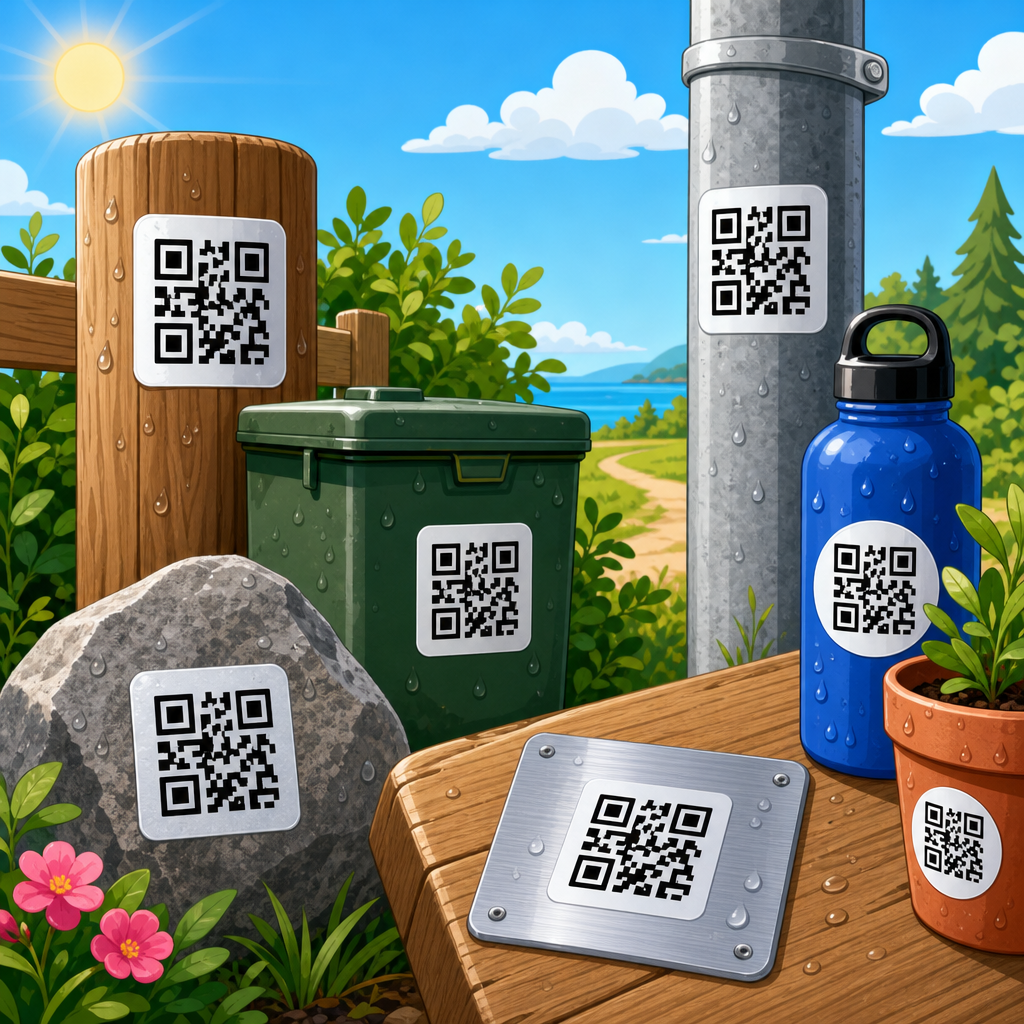
A QR code is not successful because it scans perfectly in a conference room. It is successful because it still scans after shipping, shelf handling, weather exposure, cleaning, or daily operational use. That is why robust QR code testing and quality assurance include environmental and human-factor testing. For consumer packaging, simulate handling abrasion, smudging, condensation, and creasing. For industrial labels, evaluate UV exposure, solvent contact, temperature cycling, and scuff resistance. For healthcare or laboratory use, test disinfectant compatibility and curved placement on small containers. These are not edge cases; they are normal operating conditions.
Placement deserves equal attention. Codes printed across seams, near folds, on highly curved surfaces, or over transparent windows routinely underperform. User behavior adds another layer. People do not always center the code, hold the camera steady, or stand in ideal light. If a code requires precision to scan, it is poorly controlled. In field work, I look for first-pass success with ordinary handling, not expert technique. A package code should scan while the product is held naturally. A poster code should scan from a comfortable standing distance. A warehouse label should scan without requiring workers to rotate cartons awkwardly. Quality control succeeds when the code works with human behavior instead of demanding perfect conditions.
Monitor live performance and feed results back into design standards
The final best practice is to treat QR code quality control as a continuous loop rather than a one-time approval. Once codes are live, monitor scan analytics, customer support complaints, return data, and supplier quality trends. Dynamic QR platforms can reveal scan volume by device type, location, and time, which helps identify whether a problem is technical or campaign-related. If scans drop sharply after a print rerun, investigate print quality. If one packaging format consistently underperforms, review size, placement, and finish. In manufacturing, verifier grades and reject rates should be trended by line, shift, printer, and material lot. Patterns usually emerge quickly when the data is organized.
Those findings should be turned into house standards. For example, many teams eventually establish a minimum printed size by use case, ban reversed-out or metallic QR codes for critical workflows, standardize matte white underprints on flexible packaging, and require verification grades above the bare minimum for public-facing campaigns. That institutional knowledge is what makes a subtopic hub valuable: every future article on sizing, substrate selection, print methods, or label durability should connect back to the same quality criteria. QR code testing and quality assurance are the control system that ties design, printing, and materials together. If you want fewer scan failures, faster approvals, and stronger campaign or operational results, document your requirements, verify every production stage, test in real conditions, and update your standards after every job.
Frequently Asked Questions
1. What does QR code quality control actually include?
QR code quality control covers the full set of decisions and checks that determine whether a code will scan quickly and reliably in real-world conditions. It starts long before printing, with planning around data length, error correction level, target scan distance, symbol size, and placement. From there, it includes design rules such as maintaining a proper quiet zone, preserving strong contrast between dark and light areas, and avoiding visual changes that interfere with finder patterns or module clarity. A code may look clean on screen and still fail in use if it has been reduced too much, printed on a reflective substrate, distorted by packaging curves, or surrounded by competing graphics.
In production, quality control also means verifying how the code behaves after printing or marking. Ink spread, dot gain, ribbon wear, low toner, poor registration, surface texture, lamination, and material color can all reduce readability. On labels and packaging, even a small loss of edge definition can make modules bleed together and cause inconsistent scan results. In warehouse, manufacturing, retail, and field environments, teams should also consider lighting, scanner angle, device camera quality, and user movement. The practical goal is not simply to create a valid QR code, but to produce one that scans instantly under the actual conditions in which customers, inspectors, operators, or delivery teams will use it.
2. What are the most important technical factors that affect QR code readability?
The most important factors are symbol size, quiet zone, print contrast, module definition, and environmental scanning conditions. Symbol size must match the expected scan distance and the camera or scanner being used. If the code is too small, modules become difficult to resolve, especially on lower-resolution mobile cameras or at awkward angles. The quiet zone, which is the clear margin around the code, is equally critical because scanners rely on that empty area to separate the symbol from surrounding text, images, or packaging elements. When the quiet zone is crowded or cut off, scan performance often drops sharply even if the code itself is technically correct.
Print contrast is another major variable. Dark modules on a light, non-reflective background typically perform best, while low-contrast combinations, glossy finishes, metallic materials, or transparent substrates can create glare and reduce camera detection. Module shape and edge sharpness also matter. If printing causes modules to expand, blur, break, or merge, the symbol becomes harder to decode. Beyond the printed mark itself, scan conditions play a major role. Lighting, screen brightness for digital displays, curved surfaces, protective films, dirt, abrasion, and the quality of the user’s camera all influence results. Strong quality control treats these factors as connected, not separate, because reliable scanning depends on the total system rather than one design choice alone.
3. How should businesses test QR codes before approving them for production?
Businesses should test QR codes in conditions that closely match actual use, not just in ideal office settings. A strong testing process begins with checking the source file to confirm that the encoded data is correct, the error correction level is appropriate, and the generated symbol is not more complex than necessary. Next, teams should print or apply the code using the exact production method, substrate, finish, and size planned for launch. Testing should include multiple samples from different points in the run so quality issues such as fading, smearing, misalignment, or inconsistent darkness can be detected early. A single successful scan from one perfect sample is not enough to validate production readiness.
Real-world scan testing should involve the devices people will actually use, including common smartphone models, dedicated scanners if applicable, and different operating systems or camera apps when relevant. Codes should be tested under varying lighting conditions, at realistic distances, and from different angles. If the QR code will appear on shipping labels, product packaging, signage, equipment, or documents, each format should be tested in its expected environment. It is also wise to test after handling stress such as abrasion, bending, condensation, or exposure to heat and sunlight when those conditions are likely in the field. The best approval process combines standards-based verification with practical user testing, because a code can pass technical checks and still perform poorly if the placement, surface, or use scenario creates friction for scanners.
4. What printing and material issues most often cause QR code failures?
Many QR code failures come from ordinary print and material problems rather than major design mistakes. One of the most common is dot gain or ink spread, where dark modules become larger than intended and start closing small spaces between elements. Thermal transfer issues, worn printheads, low-resolution printing, excessive heat, poor ribbon selection, and low toner can all degrade edge sharpness. On flexographic or other packaging workflows, registration shifts and plate or press variability may distort the symbol enough to create inconsistent scans. When labels are cut too tightly, the quiet zone may also be reduced or eliminated, which can make otherwise acceptable codes unreliable in use.
Material choice is just as important. Glossy, reflective, metallic, transparent, textured, or highly absorbent substrates can interfere with contrast and module clarity. Curved bottles, shrink sleeves, and flexible packaging may stretch or warp the code, especially near seams or heavily contoured areas. Lamination, varnish, and protective coatings can introduce glare that affects camera capture. Even background colors can create problems when they reduce contrast or confuse image processing on mobile devices. For this reason, quality control should include material-specific validation rather than assuming one QR code design will behave the same across paper labels, corrugate, plastic film, rigid packaging, and direct part marking surfaces.
5. What are the best ongoing quality assurance practices after a QR code program is launched?
After launch, the best practice is to treat QR code performance as an ongoing operational metric rather than a one-time design task. Businesses should establish documented specifications for size, quiet zone, contrast, placement, print method, acceptable substrates, and verification thresholds. Those specifications should be shared across design, procurement, print production, packaging, and quality teams so that late-stage changes do not unintentionally damage scan reliability. Regular sampling from production runs is essential, especially when suppliers, materials, artwork versions, or equipment settings change. If QR codes are used across multiple facilities, sites should follow the same inspection standards and escalation procedures.
Monitoring field performance is equally valuable. Customer complaints, failed scans in warehouses, longer transaction times, or increased manual key entry can all signal a quality drift that is not obvious from visual inspection alone. Teams should review failure patterns by product line, substrate, printer, supplier, and environment to identify root causes quickly. Version control also matters: if linked destinations, encoded content, or campaign-specific designs change, each update should go through the same test discipline as the original rollout. The most effective quality assurance programs combine preventive controls, routine verification, and feedback from real users, ensuring that QR codes continue to scan reliably long after the initial artwork is approved.