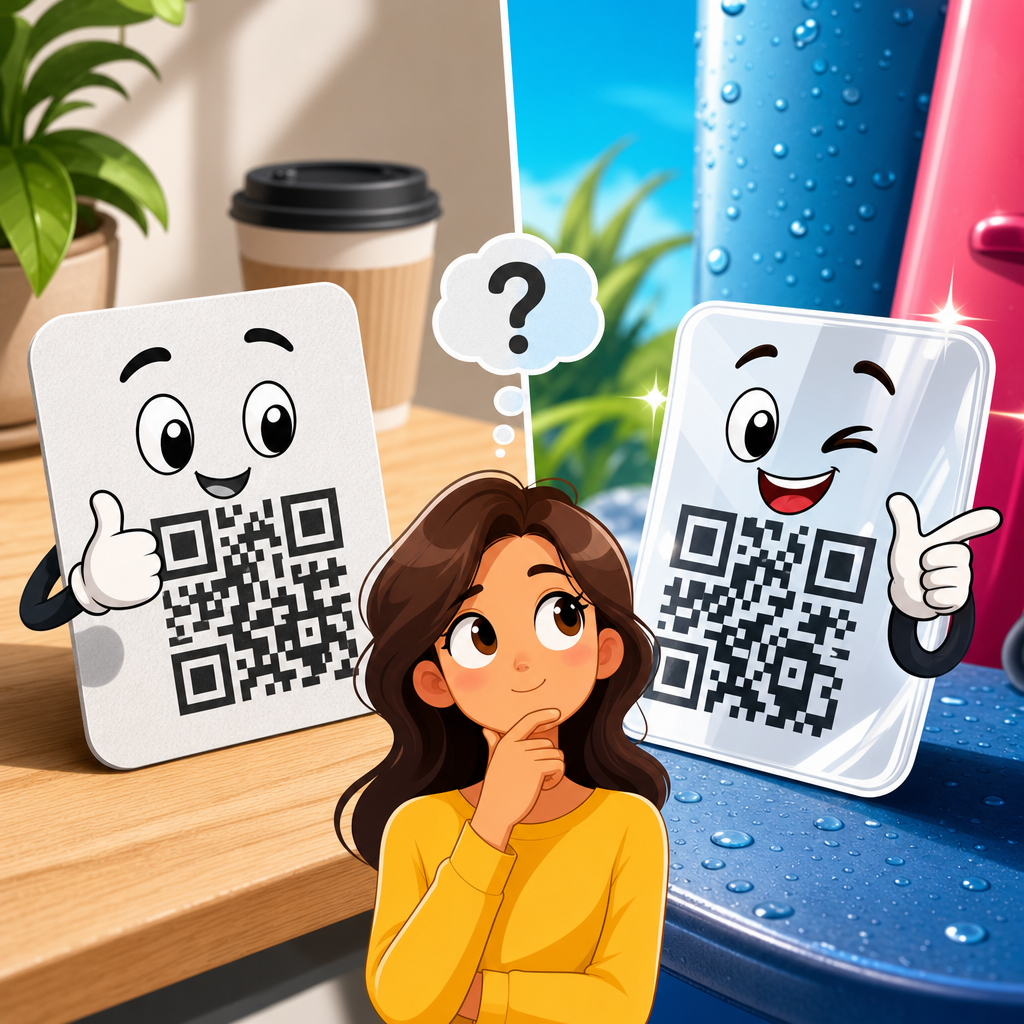
Choosing between matte and glossy QR code stickers affects more than appearance; it directly changes scan reliability, durability, placement options, and how customers interact with the code. In QR code sticker design, the surface finish is the outer coating or face stock treatment applied to the printed label, while readability refers to how consistently phone cameras and scanner apps can detect the code under real lighting conditions. A hub page on this topic must answer the practical question first: neither finish is universally better. Matte QR code stickers usually perform better in bright light, on busy retail floors, and in industrial settings because they reduce glare. Glossy QR code stickers usually look sharper, more vibrant, and more premium on packaging, promotional materials, and indoor displays where lighting is controlled.
I have tested both finishes on product labels, restaurant table tents, event badges, warehouse bins, and storefront decals, and the choice almost always comes down to environment, material stack, and the distance from which people scan. Many teams focus on color and branding before they validate scan performance, which is backwards. A QR code sticker is a functional interface first and a branded print piece second. If the finish creates reflections, smudging, or contrast loss, scan rates drop even when the design looks attractive.
This matters because QR codes now support menus, payments, authentication, warranty registration, app downloads, and first-party data capture. Poor material choices create friction at the exact moment a user intends to act. The best QR code sticker design balances quiet zones, module contrast, adhesive performance, print resolution, and the right finish for the use case. Understanding when matte or glossy works best helps marketers, operations teams, designers, and printers reduce failed scans, reprint costs, and customer frustration.
How surface finish affects QR code scanning
The most important question is simple: which finish scans more reliably? In most real-world tests, matte wins for consistency because it diffuses light instead of reflecting it back toward the camera lens. Smartphone cameras depend on clear contrast between dark modules and light background areas. When overhead LEDs, direct sunlight, or display case lighting create specular highlights on a glossy sticker, the camera may interpret bright reflections as white patches that interrupt the grid. That can cause slow detection, repeated repositioning, or a complete scan failure.
Glossy QR code stickers can still scan extremely well when the code is printed at high resolution, the contrast ratio is strong, and the sticker sits in an area with controlled lighting. Premium cosmetic packaging is a common example. A glossy laminated label on a serum box can look crisp and expensive while still scanning reliably in a home environment. Problems usually appear in mixed lighting: convenience store coolers, café windows, trade show booths, and car windshields. In those settings, even a technically correct code can underperform because the finish creates glare at the wrong angle.
Finish also interacts with print method. Thermal transfer, UV inkjet, offset, flexographic, and digital toner systems produce different edge sharpness and ink laydown. QR codes rely on clean square modules, not decorative softness. If a glossy coating adds visual depth but the ink spread slightly rounds module corners, the final symbol may become harder to decode at smaller sizes. Matte coatings often hide minor surface imperfections better, though low-quality matte stocks can reduce perceived black density if the printer profile is poorly calibrated.
For high-volume deployments, always test with multiple phones, including older Android devices with average cameras, not only flagship iPhones. A QR code that scans instantly on a premium device may struggle on a lower-cost phone under retail lighting.
When matte QR code stickers are the better choice
Matte QR code stickers are usually the safer option for operational use. They are particularly effective in environments where codes must scan quickly, repeatedly, and at different viewing angles. Warehouses, healthcare settings, manufacturing floors, museums, public signage, school campuses, and logistics labels all benefit from matte surfaces because glare control is more valuable than visual shine. On a warehouse shelf label, for example, staff may scan from arm’s length under bright strip lights. A matte polypropylene label with permanent adhesive and a high-contrast black-on-white code will outperform a glossy paper label almost every time.
Matte is also preferable when users touch the sticker often. Restaurant QR code stickers placed on tables accumulate fingerprints, cleaning solution residue, and minor abrasions. Glossy surfaces can show these marks quickly, especially under directional light. Matte laminates hide handling wear better and remain easier to scan over time. For the same reason, matte finishes work well on reusable assets such as equipment tags, conference check-in stations, and classroom resource labels.
Another strength is readability on curved or uneven surfaces. Water bottles, jars, and small tubes can distort reflections on glossy materials, creating hotspots that partially obscure the code. Matte surfaces reduce this effect. If the item will be photographed for social media or e-commerce, matte also minimizes reflections that would otherwise make the code disappear in product images.
Design flexibility is a practical advantage. Brands increasingly use muted palettes, soft-touch packaging, and understated label systems. Matte QR code stickers integrate naturally into these aesthetics without forcing a high-shine patch into the composition. When the code must blend into a premium but restrained design system, matte is often easier to execute without sacrificing function.
When glossy QR code stickers make more sense
Glossy QR code stickers are the right choice when visual impact and color vibrancy matter most and the scanning environment is predictable. Consumer packaged goods, beauty products, short-run promotions, indoor point-of-sale displays, and branded inserts often benefit from glossy finishes because they make colors pop and produce a cleaner, more polished look. On a product box displayed under soft retail lighting, a glossy label can communicate a premium finish that aligns with the rest of the packaging.
Glossy finishes also work well when the QR code is large relative to scanning distance. A large code on a window cling for in-store loyalty signups may still scan well despite some reflection because users can step closer and the module size is generous. The same is true for direct-mail pieces that recipients read at home. There, the code sits in stable indoor light and glossy stock can elevate the feel of the printed piece without materially reducing usability.
Durability can be excellent with the right glossy laminate. Polyester and polypropylene gloss labels resist moisture, oils, and scuffing better than uncoated paper stocks. For refrigerated products, bath and body packaging, or beverage labels, a gloss synthetic face stock may provide stronger moisture resistance than a basic matte paper option. The finish itself is not the whole story; the substrate, adhesive, and laminate determine performance. I have seen glossy BOPP labels survive condensation and repeated handling far better than budget matte paper labels, even though the matte versions scanned more consistently under direct spotlights.
The limitation is clear: glossy is less forgiving. If you choose it, compensate with larger code size, stronger contrast, careful placement away from strong reflections, and mandatory scan testing under actual lighting.
Key design rules for QR code sticker design
The finish decision matters, but several design rules have a bigger effect on scan success than matte versus glossy alone. First, preserve the quiet zone, the empty margin around the code. Industry guidance commonly recommends at least four modules of clear space on all sides. Second, maintain strong contrast. Black on white remains the most reliable combination. Dark navy on cream can work, but pastel-on-pastel combinations fail often, especially after lamination or under warm store lighting.
Third, print at adequate size for distance. A practical rule many print teams use is about one inch of code width for every ten inches of scanning distance, then add margin for lower-end cameras. Fourth, avoid over-styling. Rounded modules, embedded logos, and decorative frames can work if error correction is set appropriately, but every customization reduces tolerance. Fifth, use vector artwork or high-resolution export, never a low-quality screenshot. Sixth, place the sticker on the flattest practical surface and avoid seams, folds, and corners that break the grid.
As the hub for QR code sticker design, this topic naturally connects to related decisions such as QR code size guidelines, sticker adhesive selection, weatherproof label materials, print resolution requirements, color contrast testing, and static versus dynamic QR code strategy. A dynamic code is usually the smarter choice for stickers because the destination URL can change without reprinting the label. That matters for campaigns, support pages, menus, and product documentation that evolve over time.
| Factor | Matte | Glossy | Best Use Case |
|---|---|---|---|
| Glare control | Excellent | Moderate to poor in bright light | Public signage, tables, warehouses |
| Color vibrancy | Moderate | High | Retail packaging, inserts, cosmetics |
| Fingerprint visibility | Low | Higher | Frequently handled stickers |
| Moisture resistance | Depends on laminate and substrate | Depends on laminate and substrate | BOPP or polyester labels |
| Scan reliability across angles | Usually stronger | More variable | Mixed lighting environments |
Materials, adhesives, and print methods that influence the result
Many buyers assume finish alone determines performance, but the full label construction matters more. Paper labels are economical and suitable for short-term indoor use, yet they tear, absorb moisture, and degrade quickly. Polypropylene, often sold as BOPP, is a popular synthetic stock for QR code stickers because it resists water and oils and works well on consumer packaging. Polyester labels handle harsher conditions, including chemicals and abrasion, making them common in asset tracking and electronics labeling. Vinyl is useful for decals and outdoor applications, especially on windows and vehicles.
Adhesive choice is equally important. Permanent acrylic adhesive provides broad compatibility, while removable adhesive suits temporary promotions or rental environments where residue is unacceptable. Freezer-grade adhesives are needed for cold-chain packaging. Textured surfaces, low-surface-energy plastics, and powder-coated metals may require specialized formulations. A perfectly printed glossy QR code sticker still fails if the edges lift, wrinkle, or trap bubbles over time.
Printing method determines edge definition and consistency across large runs. Flexography is efficient for volume packaging labels but must be controlled carefully to avoid dot gain. Digital presses are excellent for variable data and short runs. Thermal transfer is dependable for industrial labeling, especially when paired with resin ribbons and synthetic stock. UV-curable inks can provide durability but may create surface sheen that interacts with finish choices. In production, I always request a press proof on the actual material stack, then test scans after lamination, not before. The laminate can alter both contrast and reflectivity enough to change results.
Standards and verification tools help remove guesswork. ISO/IEC 18004 defines the QR Code symbology. Verification systems from brands such as Keyence, Cognex, and Zebra can grade print quality in industrial settings. For marketing teams, practical field testing with native camera apps, Google Lens, and common third-party scanners is often sufficient, provided the sample set is broad.
How to choose the best finish for your use case
The quickest way to decide is to evaluate five variables: lighting, handling, surface shape, lifespan, and brand goals. If lighting is unpredictable or harsh, choose matte. If the sticker will be touched often, choose matte or a low-glare laminate. If the surface is curved, glossy becomes riskier unless the code is larger than usual. If the label must survive moisture, chemicals, or refrigeration, prioritize synthetic stock and laminate first, then choose finish. If shelf appeal is central and scanning happens in calmer indoor light, glossy may be worth it.
Use scenario-based thinking. For restaurant table QR code stickers linking to menus, matte laminated polypropylene is the best default because it reduces glare from overhead lighting and hides fingerprints. For premium skincare cartons with a QR code leading to ingredient education or loyalty signup, glossy BOPP can work beautifully if the code is at least moderately sized and placed away from reflective metallic accents. For equipment maintenance labels in a plant, matte polyester is the clear winner because reliability beats aesthetics. For a direct-mail campaign, either finish can work, but glossy often aligns better with a polished promotional piece.
Before full production, run a simple acceptance test. Print both finishes at final size. Place them in the real environment. Scan them ten times each using several devices from typical user distances and angles. Check first-scan success rate, time to detect, and whether fingerprints or condensation reduce performance after handling. The better finish is the one that maintains reliable scanning after realistic abuse, not the one that looks best under perfect studio light.
Matte versus glossy QR code stickers is ultimately a decision about usability under conditions, not preference in isolation. Start with readability, validate with material testing, then align the finish with your brand. If you are building a stronger QR code sticker design system, review your code size, contrast, substrate, adhesive, and placement standards next, because those choices determine whether every scan becomes a smooth customer action.
Frequently Asked Questions
1. Is matte or glossy better for QR code sticker scan reliability?
In most real-world situations, matte QR code stickers are the safer choice for scan reliability because they reduce glare and reflections that can interfere with phone cameras. A QR code works best when a scanner can clearly distinguish the dark modules from the light background, and shiny coatings can create bright hotspots under sunlight, overhead LEDs, flash, or storefront lighting. Those reflections may wash out parts of the code, especially when the sticker is viewed at an angle or placed behind glass. Matte finishes scatter light rather than reflecting it sharply, which makes the printed pattern easier for scanning apps to detect consistently.
That said, glossy stickers are not automatically hard to scan. A well-printed glossy QR code with strong contrast, adequate quiet space, and proper sizing can still perform very well in controlled lighting. If the sticker will be used indoors on packaging, product labels, or handouts where glare is limited, glossy may scan just fine. The practical difference is that matte usually gives you more margin for error across varied environments. If you expect customers to scan from a car window, a restaurant table near bright lights, a sunny storefront, or any location with changing light conditions, matte typically offers the more dependable user experience.
2. How does surface finish affect QR code readability in different lighting conditions?
Surface finish has a direct impact on readability because scanners do not read a QR code the way people do; they rely on a camera sensor capturing clean contrast and recognizable geometric patterns. Glossy finishes reflect light in a more mirror-like way, which can create blown-out areas on the sticker surface. Even if the code looks perfectly fine to the human eye, a camera may struggle when part of the code is obscured by a reflection. This is especially common under direct sunlight, spotlights, bright retail lighting, or when a user tilts a phone while scanning.
Matte finishes are generally more forgiving because they diffuse light, reducing visual noise and helping the code remain legible from more angles. That can improve first-try scan rates, which matters for customer engagement. If someone has to reposition their phone several times, the QR code experience feels slower and less reliable, even if the code eventually works. In practical terms, matte is often better for windows, walls, counters, menus, posters, and public-facing placements where you cannot control how or when people scan. Glossy works best when appearance is a higher priority and the lighting environment is predictable. For either finish, readability also depends on print sharpness, high contrast, proper code size, and leaving enough white space around the code.
3. Are glossy QR code stickers more durable than matte ones?
Not necessarily. Durability is influenced more by the sticker material, adhesive, lamination, ink quality, and environmental exposure than by sheen alone. Many people assume glossy means tougher, but a glossy look is simply a surface characteristic unless it is paired with a protective laminate or a more rugged face stock. You can have highly durable matte labels designed for outdoor use, and you can also have glossy labels meant only for short-term indoor applications. The finish by itself does not tell the full story.
What does change is how wear may appear over time. Glossy stickers can show scratches, fingerprints, and scuff marks more visibly because the reflective surface highlights imperfections. Matte stickers often hide minor handling wear better, which can help them maintain a cleaner appearance in high-touch settings. On the other hand, some glossy laminated products resist moisture and wiping very well, making them useful for bottles, packaging, and surfaces that need to be cleaned regularly. If durability is a top priority, focus on whether the sticker is waterproof, UV-resistant, abrasion-resistant, and rated for the intended indoor or outdoor use. For QR performance over the long term, the key is keeping the printed code crisp, high-contrast, and free from fading, peeling, or surface damage regardless of finish.
4. Where should I use matte vs glossy QR code stickers?
Matte QR code stickers are usually the better fit for practical, scan-first placements. These include storefront doors, restaurant tables, walls, shipping stations, event signage, equipment labels, instruction decals, and any location where customers will scan quickly in mixed lighting. They are also a strong choice for surfaces viewed under ceiling lights or daylight because reduced glare makes scanning easier from multiple angles. If the QR code is the main functional element and you want the least friction possible, matte is often the smarter default.
Glossy QR code stickers are often chosen when visual polish and color vibrancy matter more, or when the sticker is part of product packaging and branding. The finish can make colors pop and give labels a premium retail look, which is useful on cosmetic packaging, promotional stickers, bottle labels, and branded inserts. Glossy can work well when the code is scanned in calmer, indoor conditions and the sticker is not exposed to harsh reflections. A good rule is to match the finish to the context: choose matte for environmental flexibility and dependable readability, and choose glossy when presentation is important and the scanning environment is easier to control. If you are unsure, test both finishes in the exact placement where customers will use them.
5. What should businesses consider before choosing matte or glossy QR code stickers?
Businesses should start with the intended use case rather than appearance alone. Ask where the sticker will be placed, what kind of lighting it will face, how far away people will scan from, and whether the code is meant for quick public interaction or occasional controlled use. A QR code on a sunny storefront, drive-thru sign, or countertop will face very different conditions than one on product packaging or a brochure. If scan speed and consistency are central to the campaign, matte is often the low-risk option because it performs more predictably under varied lighting.
It is also important to consider brand presentation, expected lifespan, and maintenance. Glossy may align better with premium packaging aesthetics, but matte may better support usability in high-traffic spaces. Think about fingerprints, scratches, moisture exposure, cleaning routines, and whether the label will be touched often. Beyond finish, make sure the QR code is printed at an appropriate size, uses strong dark-on-light contrast, has a clear quiet zone, and links to a mobile-friendly destination. The smartest approach is to prototype both finishes, place them in their real environment, and test scans with multiple phone models at different times of day. That kind of field testing often reveals more than theory and helps ensure the final sticker supports both branding and performance.