QR code placement determines whether a scan happens instantly, after hesitation, or not at all. In my work with retail signage, packaging prototypes, event collateral, fleet decals, and restaurant tabletop displays, the same pattern appears repeatedly: a well-designed code can still fail if it sits in the wrong spot, at the wrong height, on the wrong material, or without enough surrounding context. The best places to put QR code stickers are the locations where people naturally pause, can frame the code easily with a phone camera, and immediately understand what they will get after scanning.
A QR code sticker is a printed adhesive label containing a machine-readable matrix that opens a digital destination such as a menu, landing page, payment link, app download, warranty registration, map, video, or contact card. QR code placement refers to the physical position, viewing angle, surface type, and environmental conditions that influence scannability. Good placement is not just a design choice. It affects conversion rate, accessibility, customer trust, maintenance costs, and campaign measurement. If a code is too high, too reflective, too curved, too small, or hidden within visual clutter, scanning friction rises fast.
This matters because people decide in seconds whether to engage. Phone cameras need a stable line of sight, sufficient lighting, and a code large enough to resolve from the expected distance. Users also need a reason to scan. The strongest placements combine visibility with intent: on product packaging near instructions, on storefront windows near hours, on trade show signs at eye level, or on equipment labels beside service information. Across this QR Code Design, Printing & Materials hub, placement connects directly to size, contrast, substrate, adhesive choice, lamination, quiet zone, and testing. Put simply, where you place a QR code sticker often matters as much as the code itself.
Core principles of effective QR code placement
The best QR code placement follows four practical rules: put the code where attention already exists, match the code size to the scanning distance, keep the surface flat and non-glare when possible, and add a clear call to action. I use these rules on every print proof because they solve most failures before production. A code on a poster at a bus shelter can work extremely well, but only if it is large enough to scan from a standing distance and not buried against a busy background. A code on a bottle neck label may look elegant, yet if the curve distorts modules or fingers cover the sticker during handling, scans drop.
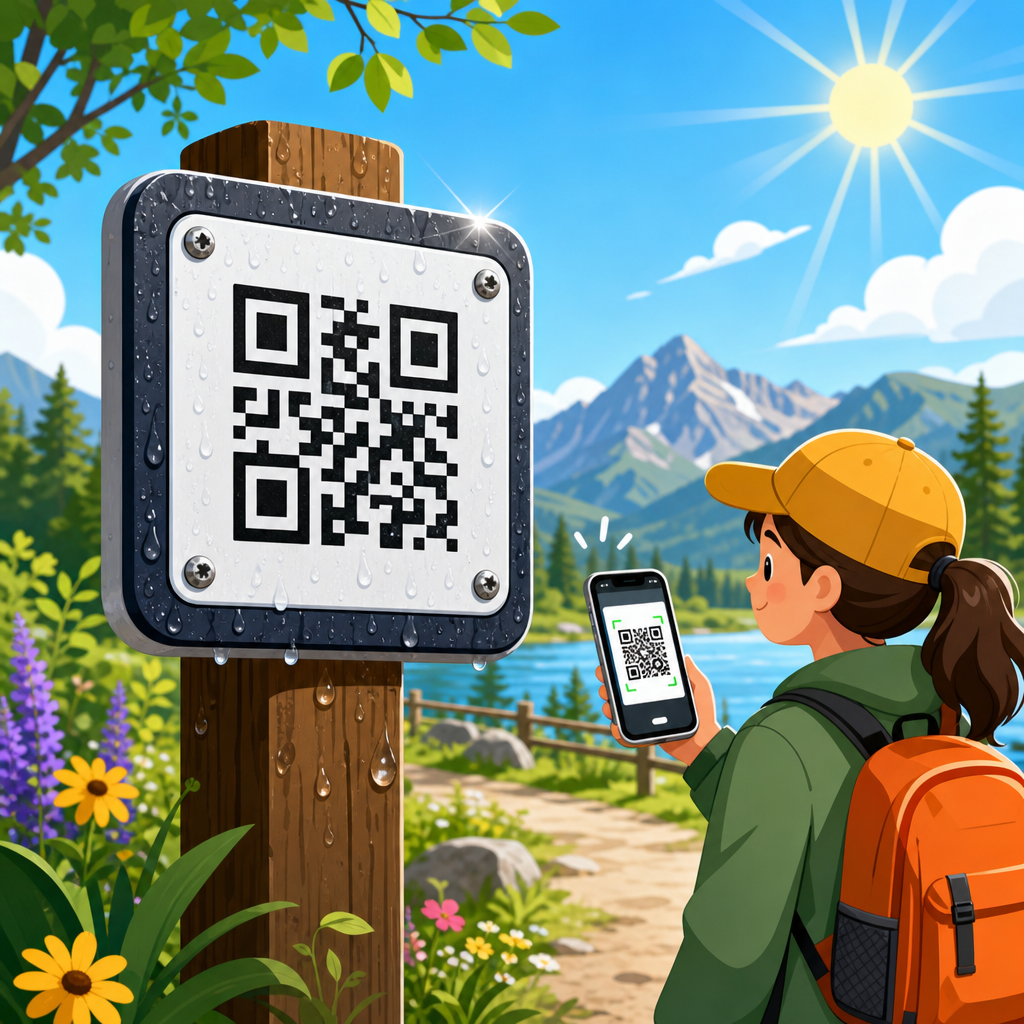
Distance is the first placement filter. A practical baseline is that the code should be about one inch wide for every ten inches of scanning distance, then validated in the real environment with multiple phones. Lighting is the second filter. Matte surfaces outperform glossy ones under overhead fixtures, sunlight, and flash because reflections wash out contrast. Orientation matters less than marketers assume because modern camera apps can read rotated codes, but angle matters a lot. A code placed on a steeply slanted surface or behind glass picks up glare and perspective distortion. Finally, context matters. “Scan for menu,” “Scan for setup guide,” or “Scan for today’s offer” consistently outperforms a bare code because users know the payoff before they commit.
Best places to put QR code stickers in stores, offices, and public spaces
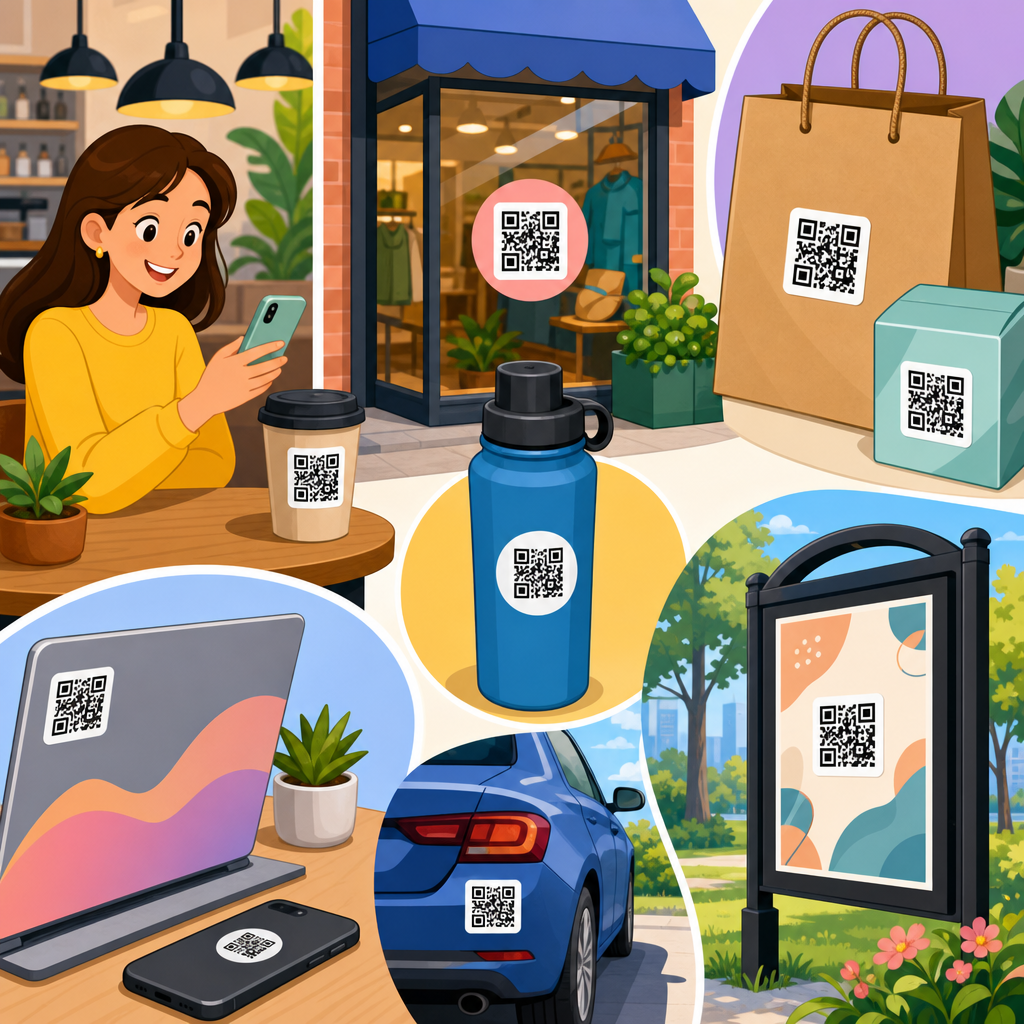
Physical environments create predictable scanning moments. In retail stores, the best sticker locations are entrance windows, endcaps, shelf talkers, fitting rooms, and point-of-sale counters. Entrance glass works well for store hours, loyalty signups, and location pages because visitors naturally slow down there. Shelf-edge labels are strong for product comparison guides, ingredient details, or assembly videos, especially for electronics, cosmetics, and home improvement items where buyers want more information before purchase. At checkout, QR code stickers can route customers to digital receipts, financing pages, or review requests. The key is to keep the sticker near the decision point rather than asking people to scan after they have already moved on.
In offices and public spaces, place stickers where people wait or need instruction. Reception desks can link to visitor registration. Elevators and lobby directories can connect to tenant maps. Conference room doors can open booking pages or Wi-Fi instructions. Museums and public exhibits often place codes beside plaques at a readable angle, not below knee height where visitors must crouch. Hospitals and clinics use room-door and discharge-area placement for wayfinding, preparation instructions, and follow-up resources, though healthcare teams must avoid exposing sensitive data. In transit hubs, QR code stickers work best on eye-level pillars, ticketing areas, and information boards where foot traffic slows enough to permit scanning.
| Location | Best use | Why it works | Main caution |
|---|---|---|---|
| Storefront window | Hours, offers, directions | High visibility during approach and after hours | Glass glare and backlighting |
| Shelf edge | Specs, reviews, comparisons | Close to purchase decision | Small label size limits code dimensions |
| Checkout counter | Payments, receipts, loyalty | Customer is stationary and engaged | Counter clutter competes for attention |
| Product packaging | Setup, warranty, recipes, support | Code travels with the product | Curved surfaces and seam placement reduce scans |
| Vehicle door or panel | Booking, contact, promotions | Large surface and strong local reach | Motion, dirt, and viewing distance |
| Event signage | Agenda, lead capture, downloads | Attendees actively seek information | Crowding and poor line of sight |
Product, packaging, and take-home placement strategies
Packaging is often the highest-value place to put QR code stickers because the code stays with the product throughout the customer journey. The strongest positions are the side panel, back panel, hang tag, instruction insert, and inside-lid reveal. On cartons, I usually avoid folds, corners, perforations, and tamper seams because those break the code grid or force awkward angles. Food brands often place codes near nutrition information or recipes. Consumer electronics brands place them near serial numbers, setup instructions, or warranty messaging. Cosmetics brands use them on outer cartons for tutorials and shade guides. The best placement gives the user a reason to scan at the moment they need help or reassurance.
For reusable packaging and shipping materials, placement should anticipate wear. Corrugated boxes scuff, absorb moisture, and crease easily, so exterior QR stickers need durable stock and enough contrast to remain readable after handling. Poly mailers flex, which can distort small codes, so larger stickers on flatter zones work better. On glass jars, metal cans, and bottles, a QR code sticker should sit on the flattest available panel and avoid high-shine varnishes. On flexible pouches, place the sticker above the product fill line and away from heat seals. If the package will be refrigerated or frozen, choose an adhesive rated for condensation and test scan performance under actual storage conditions.
Vehicles, equipment, and outdoor surfaces
Vehicles are powerful moving billboards, but they are not universal scanning surfaces. The best places to put QR code stickers on vehicles are side doors, rear panels, and parked-display graphics where a person can approach safely. I do not recommend relying on a code meant to be scanned while traffic is moving; that creates both friction and safety concerns. For service vans, a rear-door sticker can link to appointment booking, emergency contact details, or a service area map when the vehicle is parked. For food trucks, window-adjacent placement can open menus and payment links. Fleet managers should use laminated, UV-resistant vinyl because road grime, fuel splashes, and weather quickly degrade standard paper labels.
On equipment, machinery, and durable goods, QR placement is most effective near the task it supports. A sticker beside a control panel can link to an operating guide. A code on a photocopier can route staff to troubleshooting steps. A code on a water heater or HVAC unit can open maintenance logs or filter specifications. Manufacturing and facilities teams increasingly use QR stickers for asset management because they reduce search time and paper binders. Standards such as ISO/IEC 18004 govern QR code structure, but field performance still depends on practical details: avoid hot surfaces that degrade adhesive, textured powder coat that traps air, and rounded pipes that warp the code.
Events, hospitality, and tabletop placements
At events, every placement decision should answer one question: where does an attendee pause long enough to scan? Registration desks, badge backs, booth counters, table tents, aisle signs, and presentation slides are all common candidates, but they serve different goals. Registration-area QR code stickers work well for check-in overflow, agendas, and maps because visitors are already looking for directions. Booth counters are ideal for lead capture because prospects stop to talk. Badge backs can support networking or digital business cards, though the code must remain large enough to scan at close range. On presentation slides, a code should appear only during static moments and be backed by a short URL for accessibility.
Restaurants, hotels, and cafés need especially careful QR code placement because guests interact from seated, standing, and mobile positions. For menus, tabletop tents and wall signage near the queue usually outperform codes placed under glossy acrylic or on dark wood where reflections interfere. Hotel room stickers can live near the desk, bedside table, and TV guide to surface room service, Wi-Fi, checkout, and local recommendations. In quick-service settings, put codes before the ordering point, not after it, so customers have time to browse. If sanitation matters, as it does on tables and counters, use wipeable laminate and replace damaged stickers promptly because scratches across modules can break recognition.
Placement mistakes that reduce scan rates
The most common QR code placement mistakes are surprisingly mundane. Codes are printed too small for the expected distance, pushed into corners without enough quiet zone, placed on reflective substrates, wrapped around curves, hidden behind glass, or surrounded by dense graphics that compete for attention. I also see many stickers installed too low or too high. Waist-to-eye level is usually the safest band for general public scanning because it minimizes awkward body movement and keeps the phone camera steady. Another frequent mistake is placing a code where there is no mobile signal or poor Wi-Fi while expecting an online destination to load instantly. The code may scan, yet the experience still fails.
There are also strategic mistakes. A QR code sticker that links to a generic homepage wastes the user’s effort; placement should connect to a destination tailored to the object and moment. A code on packaging should not force users to hunt for setup instructions after landing. A code in a retail aisle should not drop people onto an unrelated campaign page. Tracking can also go wrong when teams reuse one code everywhere and lose location-level insight. Dynamic QR platforms such as Bitly, QR Code Generator Pro, Uniqode, and Beaconstac allow redirects and analytics, but only if each placement has a clear naming convention. Without disciplined testing, attribution becomes guesswork.
How to test and optimize QR code sticker placement
Testing QR code placement is not complicated, but it must be systematic. Print prototypes at actual size, apply them to the real surface, and scan with multiple devices including current iPhone and Android models under morning, afternoon, and artificial light. Test from the expected approach distance and angle. Time how long the first successful scan takes. Check whether the destination loads quickly on cellular and Wi-Fi. Then watch one or two unprompted users interact with the sticker. If they ask what the code does, placement likely needs stronger messaging. If they move closer than expected, the code is too small. If they tilt their phone repeatedly, glare or angle is probably the issue.
Optimization should continue after launch. Track scan rate by placement, not just by campaign. Compare entrance-window scans with checkout-counter scans. Compare packaging side-panel scans with inside-lid scans. Replace low performers with adjusted height, larger size, stronger contrast, or a clearer call to action, then measure again. This hub article should guide every related decision in QR Code Design, Printing & Materials because placement touches materials, printing methods, adhesives, weather resistance, and user intent all at once. The best places to put QR code stickers are where visibility, context, and ease intersect. Start with the user’s scanning moment, test in the real world, and refine each placement until scanning feels effortless.
Frequently Asked Questions
Where should QR code stickers be placed for the highest scan rates?
The best-performing QR code sticker placements are almost always the places where people naturally stop, look, and have enough time to pull out their phone without feeling rushed. In practice, that usually means eye-level or slightly below eye-level surfaces near decision points: retail shelf talkers, product displays, checkout counters, tabletop displays, waiting areas, entry signs, packaging panels, and event signage where attendees pause to orient themselves. A QR code tends to perform well when it appears in a moment of low friction rather than in a pass-through zone where someone is still walking, turning, or managing other tasks.
Good placement also depends on intent. If the goal is instant action, such as viewing a menu, claiming an offer, checking in, or accessing product details, the sticker should sit exactly where that decision happens. On a restaurant table, that might be near the edge facing the seated guest. On packaging, it may be on a broad, flat panel that is visible before the box is opened. In retail, it often works best beside pricing or product education rather than buried on a side panel. The highest scan rates usually come from placements that pair visibility with context, so the user immediately understands why the code is there and what they will get by scanning it.
What is the ideal height and angle for a QR code sticker?
As a rule, the ideal height is the height at which someone can comfortably notice and scan the code without bending awkwardly, reaching up, or stepping back into traffic. For standing adults, many successful placements fall around chest to eye level, especially on signs, windows, kiosks, and displays. For seated environments, such as restaurant tables, waiting rooms, or conference tables, the code should be positioned within the user’s natural downward field of view. The closer the scanning action matches normal posture, the more likely it is to happen quickly.
Angle matters just as much as height. A QR code sticker should sit on a surface that can be framed easily by a phone camera without harsh glare, severe perspective distortion, or the need for the user to tilt their phone into an uncomfortable position. Flat, front-facing surfaces usually outperform steeply angled placements, floor-level stickers, or overhead applications. If the surface is glossy, curved, or reflective, even a perfectly printed code can become hard to scan. In real-world use, the best angle is the one that lets someone spot the code, hold up their phone, and get a clean read in one or two seconds. If a placement forces them to crouch, stretch, twist, or fight reflections, scan performance usually drops.
Are there places where QR code stickers should not be used?
Yes, and avoiding poor placements is just as important as choosing good ones. QR code stickers should generally not be placed where people are moving too quickly to engage, where they cannot safely stop, or where scanning would feel inconvenient or socially awkward. Examples include very low surfaces near the floor, high overhead placements, curved edges of packaging, heavily textured materials, crowded visual backgrounds, and areas with intense glare or low lighting. Codes placed on vehicle surfaces that are meant to be scanned while the vehicle is moving are also a poor choice; fleet decals work better when they are visible while parked, fueling, loading, or stopped.
Another common mistake is placing the code where it competes with clutter or lacks any explanation. A QR sticker without a short call to action can easily be ignored, even if the location is technically visible. People want to know what they are scanning for: menu, warranty info, installation video, discount, directions, registration, or product specs. It is also wise to avoid placements that are likely to crease, peel, smudge, or wear down quickly, such as fold lines, corners, hand-contact areas, or surfaces exposed to weather without proper material protection. A bad location can make even a high-quality code feel unreliable.
What surfaces and materials work best for QR code stickers?
The best surfaces are smooth, stable, and easy to view from a normal scanning distance. Flat panels on signage, packaging, counters, windows, tabletops, and display fixtures are usually strong candidates because they allow the code to remain visually consistent and physically intact. Matte or low-glare finishes are often preferable to highly glossy surfaces because they reduce reflection and make the code easier for phone cameras to read under mixed lighting. In environments like retail, hospitality, or events, durability matters too, so the sticker material should match the use case, whether that means removable adhesive for short-term campaigns or weather-resistant stock for outdoor exposure.
Material choice directly affects readability over time. A code that is crisp on day one can become difficult to scan if the sticker bubbles, wrinkles, fades, scratches, or lifts at the edges. For packaging prototypes, broad flat faces are usually safer than seams or curved sidewalls. For restaurant tabletop displays, laminated or wipeable surfaces can help maintain clarity despite repeated cleaning. For fleet decals, outdoor-rated materials with UV protection are essential. In general, the best placement is not just about where the code looks attractive; it is about where the printed sticker will stay clean, legible, and structurally sound through real usage.
How much surrounding context should a QR code sticker have?
A QR code should almost never stand alone without context. The most effective stickers include a short, clear instruction that tells people exactly what happens when they scan. Simple prompts such as “Scan to view menu,” “Scan for assembly video,” “Scan to claim offer,” or “Scan for product details” remove uncertainty and increase trust. This surrounding context helps the user decide in a split second whether the scan is worth their time. In many cases, context is the difference between a visible code and a useful one.
Just as important is visual breathing room. The code needs enough blank space around it so it does not blend into nearby graphics, text, borders, or patterns. It should feel intentionally placed, not squeezed into leftover design space. In retail signage, event collateral, packaging, and tabletop displays, the strongest results usually come from codes that are paired with a benefit-driven message and placed near the exact moment of decision. That combination of clear value, strong visibility, and clean spacing creates confidence. When users immediately understand what the code does and can frame it easily, scan behavior becomes much more natural and consistent.