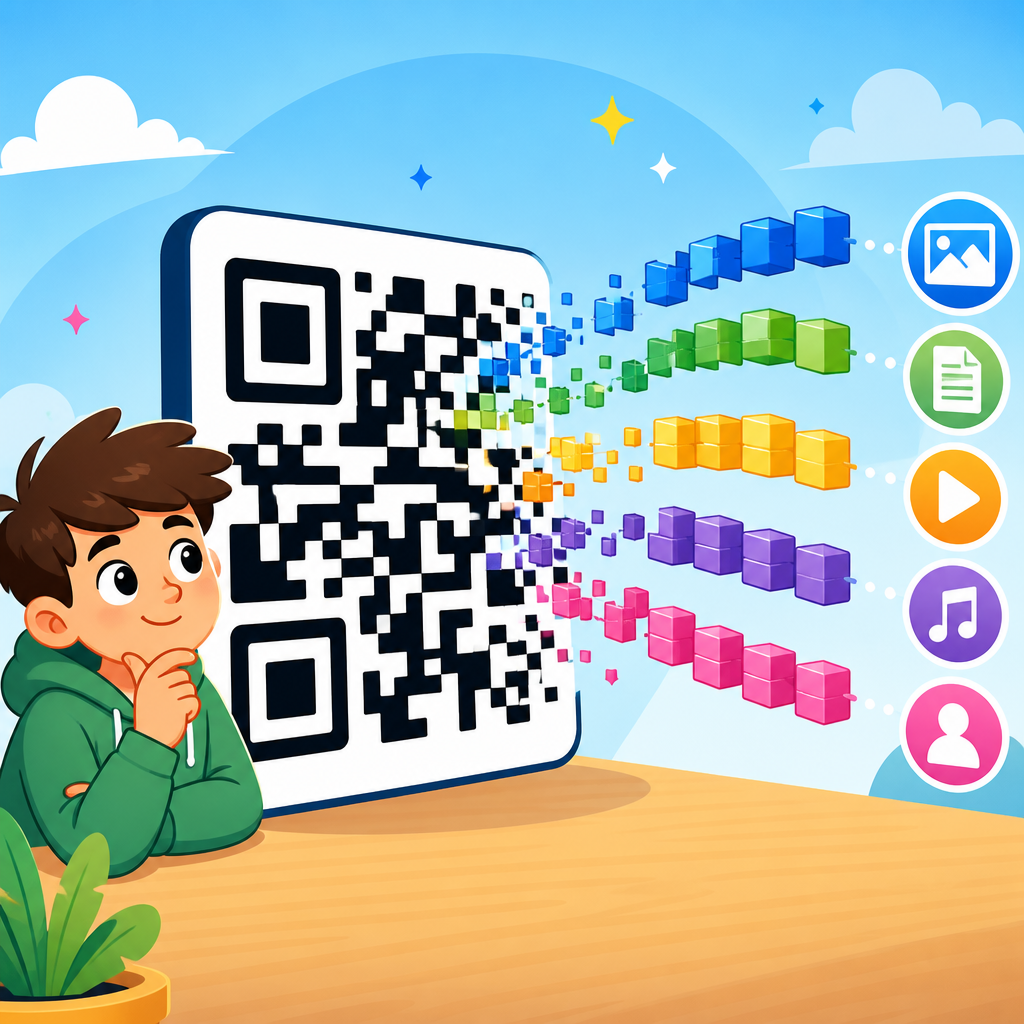
A QR code symbol structure is the precise arrangement of modules, patterns, format data, version data, and encoded payload that allows a scanner to detect, orient, decode, and verify a QR code reliably. In practical terms, it is the blueprint that turns a simple square image into a machine-readable symbol used for URLs, payments, authentication, tickets, inventory, and industrial traceability. When teams discuss QR code standards and formats, they are really discussing how this structure is defined, how different symbol families relate to one another, and how implementation choices affect scan performance, capacity, and interoperability across devices and software.
This matters because a QR code that looks visually acceptable can still fail in production if its structure is compromised. I have seen marketing teams resize codes until the quiet zone disappeared, manufacturers laser-mark symbols on curved metal without adjusting module size, and developers assume any “QR generator” follows the same rules. The result is usually the same: inconsistent scans, support tickets, and preventable reprints. Understanding QR code symbol structure helps prevent those failures. It also provides the foundation for every related topic in QR Code Standards and Formats, from version sizing and error correction to Micro QR, Model 1 versus Model 2, mask patterns, encoding modes, and print quality verification.
At the standards level, QR codes are governed primarily by ISO/IEC 18004, which defines the symbol architecture, encoding logic, correction methods, and placement rules. “Symbol” refers to the complete machine-readable mark, including all functional patterns and data modules. “Module” means the smallest black or white square in the grid. “Version” indicates the symbol dimensions, ranging in standard QR from Version 1 at 21 by 21 modules up to Version 40 at 177 by 177. “Format information” stores the error correction level and mask pattern. “Version information” appears on larger symbols and helps decoders identify the correct grid size. Together, these elements create a standardized visual language that scanners can interpret quickly under real-world conditions.
As a hub topic, QR code standards and formats starts with structure because every advanced decision depends on it. If you know how a symbol is built, you can choose the right format, estimate data capacity, understand why logo overlays are risky, evaluate print specifications, and troubleshoot scan failures with methodical accuracy rather than guesswork.
Core components of a QR code symbol
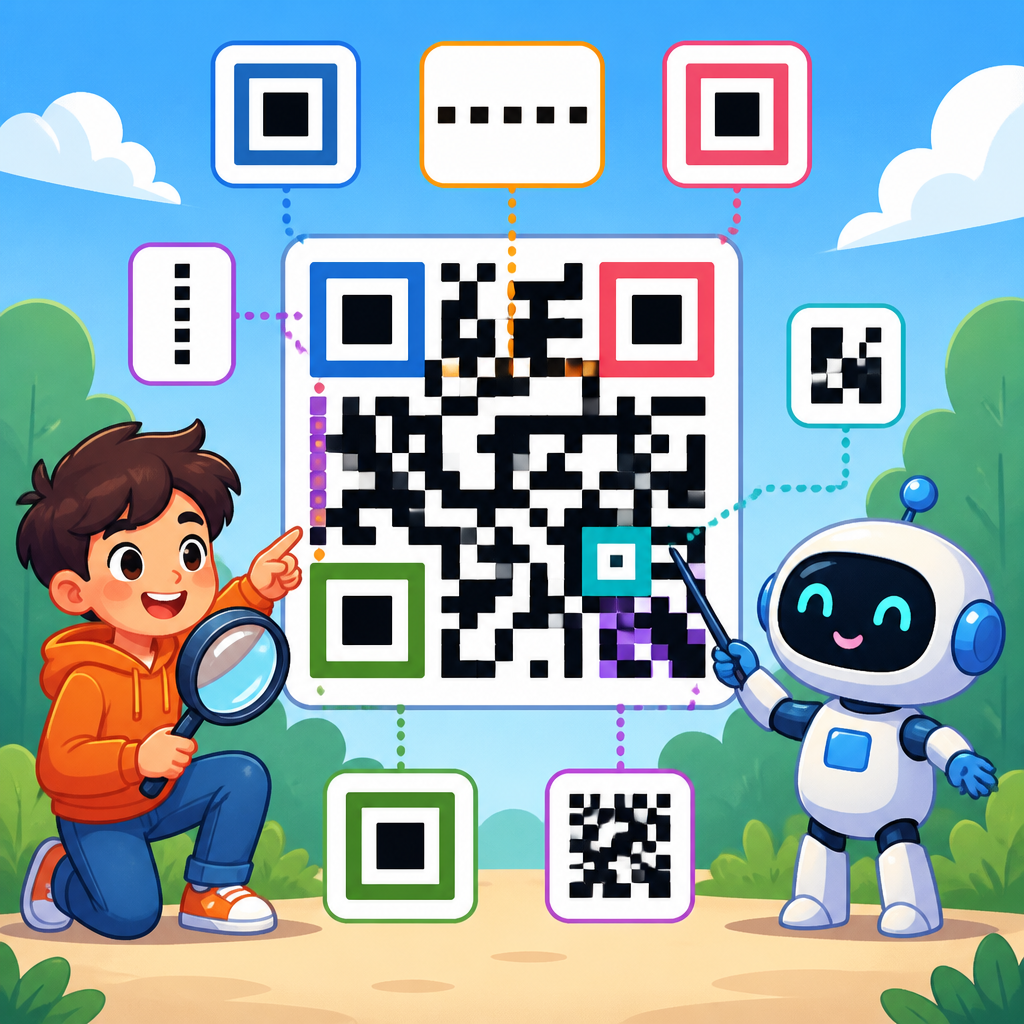
A standard QR code symbol contains several fixed patterns plus an area for encoded data and error correction codewords. The three large finder patterns in the top left, top right, and bottom left corners are the most recognizable elements. Their job is to help a scanner locate the symbol in an image, determine orientation, and establish scale. Each finder pattern includes a nested arrangement of dark and light modules with a separator around it. If any of these patterns are obscured, detection becomes much less reliable, especially at a distance or in low contrast environments.
Between the finder patterns sit the timing patterns: alternating dark and light modules running horizontally and vertically. These allow a decoder to measure module pitch and map the grid accurately. Smaller alignment patterns appear in most versions above Version 1 and are critical for correcting distortion, especially when the code is printed on flexible packaging, curved surfaces, or labels applied unevenly. In industrial settings, alignment patterns often determine whether a symbol remains readable after dot gain, abrasion, or slight warping.
Beyond these fixed features, the symbol includes format information areas near the finder patterns and, for Version 7 and above, version information fields. The remaining modules carry interleaved data codewords and Reed-Solomon error correction codewords. A mask pattern is applied to reduce undesirable visual artifacts such as large blocks of the same color or patterns that could confuse a scanner. Good QR code generation software evaluates all mask candidates and selects the one with the lowest penalty score under the standard’s mask evaluation rules.
How the grid, versions, and capacity work
QR code sizing follows a strict mathematical progression. Version 1 is 21 by 21 modules, and each higher version adds four modules to both width and height. That means Version 2 is 25 by 25, Version 3 is 29 by 29, and so on until Version 40 reaches 177 by 177. This version system is not cosmetic. It controls how much data can be stored, how many alignment patterns are required, and whether version information fields must be included.
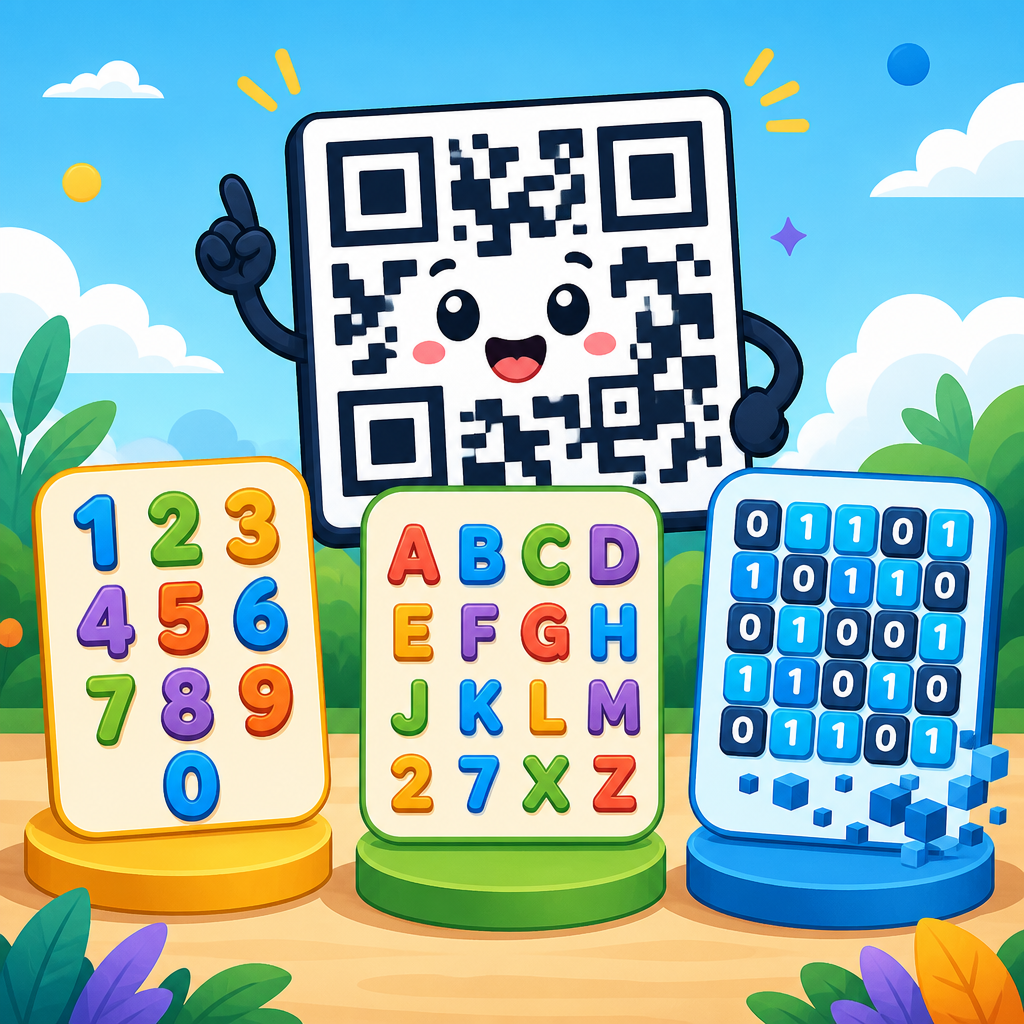
Capacity depends on more than version size. It also depends on the encoding mode and error correction level. Numeric mode is the most space-efficient for digits, alphanumeric mode supports a defined character set efficiently, byte mode is common for general text and URLs, and Kanji mode compresses eligible double-byte characters. A short payment identifier in numeric mode may fit into a much smaller symbol than a long UTF-8 URL in byte mode. In client work, I often find oversized symbols generated because tools default to byte mode even when the content is purely numeric.
Error correction levels are labeled L, M, Q, and H. Higher levels reserve more capacity for recovery, which makes the symbol more robust against dirt, scratches, or partial obstruction, but reduces payload capacity. Marketers often choose H when placing a logo in the center, while manufacturers may use M or Q depending on print consistency and required size limits. There is no universally best level; the correct choice depends on environment, content length, and tolerance for damage.
QR code standards and formats within the family
When people say “QR code format,” they often mean any square 2D code with three corner markers, but the standards landscape is more specific. Model 2 is the dominant modern QR code and the format most software generates today. Model 1 is the original variant, now uncommon. Micro QR is a smaller related format intended for applications with tight space constraints, such as small parts marking or compact labels. There is also rMQR, a rectangular variant standardized later for narrow spaces, though support across consumer scanners is less universal than standard QR.
These formats share design principles but differ in symbol architecture, finder pattern arrangement, and capacity profile. Standard QR uses three finder patterns. Micro QR uses one finder pattern and a reduced structural overhead, which makes it efficient for short data strings but less forgiving in difficult scan conditions. In practice, I recommend standard Model 2 for most public-facing use cases because smartphone support is broad and implementation risk is low. Micro QR and rectangular formats are valuable when label real estate is the binding constraint and the scanning environment is controlled.
It is also important to distinguish QR from other matrix symbologies such as Data Matrix and Aztec Code. Data Matrix is widely used in healthcare and direct part marking, while Aztec is common in transportation boarding passes. Each has different finder logic, density behavior, and error handling characteristics. Choosing among them is not branding; it is an engineering decision shaped by space, reader capability, substrate, and ecosystem compatibility.
Placement rules, masking, and reading reliability
The brilliance of QR code symbol structure is not just that it stores data, but that it remains decodable under imperfect conditions. Data is placed in a prescribed zigzag pattern through available modules after reserved areas for function patterns are excluded. The decoder knows this path exactly, which is why unauthorized structural edits break readability even if the symbol still “looks” like a QR code. Designers sometimes move dots, stylize corners, or erase interior cells for aesthetics without understanding they may be removing codewords or altering format bits.
Masking is another misunderstood feature. Before finalizing the symbol, the generator applies one of eight defined mask patterns to the data area. The goal is to avoid patterns that create scanner ambiguity, such as long runs of identical modules, 2 by 2 blocks, or patterns resembling finder structures. The symbol stores the chosen mask pattern in the format information so the decoder can reverse it. This is one reason compliant generation libraries outperform simplistic image-based generators.
Quiet zone requirements are equally critical. A QR code needs a clear margin around the symbol, typically four modules wide for standard QR. Without that border, scanners may struggle to separate the code from surrounding graphics or text. In packaging reviews, missing quiet zones are among the most common causes of intermittent scans, especially when glossy backgrounds, patterned artwork, or reverse printing reduce edge clarity.
Practical design, printing, and verification considerations
A structurally correct symbol can still underperform if production quality is poor. Module size must match expected scan distance and camera quality. As a rule, smaller modules increase density but demand better print precision and focus. For consumer packaging, I generally avoid pushing module sizes to the theoretical minimum because retail lighting, curved containers, and lower-end phone cameras quickly expose narrow tolerances. Contrast matters too: dark modules on a light background remain the safest choice. Inverted codes can work, but support is less consistent.
Direct part marking introduces additional complexity. Laser-etched or dot-peened QR codes on metal often suffer from low contrast, surface glare, and geometric distortion. In these cases, alignment patterns, larger module sizes, and disciplined verification are more important than raw data density. Where traceability is mandatory, teams often validate symbols using ISO/IEC 15415 for printed 2D code quality and ISO/IEC TR 29158, also known as AIM DPM, for direct part marks. Verification grades reveal issues that a casual phone scan may miss.
| Element | Purpose | Common failure | Best practice |
|---|---|---|---|
| Finder patterns | Detection and orientation | Covered by logos or cropping | Keep fully clear and high contrast |
| Quiet zone | Separates code from surroundings | Artwork placed too close | Maintain at least four modules |
| Mask pattern | Improves visual balance for scanning | Noncompliant generators | Use standards-based libraries |
| Error correction | Recovers damaged data | Overstuffed payloads | Match level to environment |
| Module size | Controls print and scan tolerance | Too small for substrate | Test at production scale |
Testing should happen in the real environment, not only on a desktop screen. Print a prototype, scan it on different devices, test under expected lighting, and verify the final artwork after export. I have seen vector-perfect codes fail because rasterization introduced antialiasing, because black was converted to rich CMYK, or because varnish reduced contrast after finishing.
How this hub connects the wider standards and formats topic
If you are building deeper knowledge in QR Code Technology and Development, symbol structure is the anchor for every related standards and formats article. Version charts make sense only after you understand module grids. Error correction comparisons matter only after you know where recovery codewords live and why they trade against capacity. Articles on Micro QR, rMQR, and Model 1 versus Model 2 all extend from the same structural vocabulary. The same is true for content encoding, character sets, mask evaluation, format information bits, version information fields, and print verification methods.
This hub also supports implementation decisions. Developers need to know which libraries produce compliant symbols, how to preserve quiet zones during rendering, and why SVG output is often preferable for print. Product teams need to know when to choose a smaller version with shorter content rather than force dense payloads into tiny labels. Designers need to understand that customization is safe only when functional regions remain untouched. Operations teams need verification procedures, not assumptions, before deploying millions of labels or packaging units.
The core lesson is straightforward: a QR code is not just an image; it is a standardized symbol with strict structural rules. Master those rules, and you can make better choices about format selection, data encoding, production tolerances, and scan reliability across consumer, commercial, and industrial use cases. Use this page as your starting point, then map each deeper question back to the symbol itself, because structure is the key to every dependable QR code implementation.
Frequently Asked Questions
What is the symbol structure of a QR code?
The symbol structure of a QR code is the standardized layout that makes the code readable by scanners and camera-based apps. It is not just a random grid of black and white squares. Instead, it is a carefully defined arrangement of modules, which are the tiny square elements that form the overall symbol, along with functional patterns and data areas that each serve a specific purpose. This structure allows a scanner to quickly detect the code, determine its orientation, read the encoded information, and confirm that the data has been interpreted correctly.
At a practical level, a QR code symbol structure includes finder patterns in the corners for fast detection, alignment patterns for distortion correction, timing patterns for establishing the grid, format information for error correction and masking details, version information on larger codes, and the encoded payload itself. It also includes error correction codewords that help recover data if part of the symbol is dirty, damaged, or partially obscured. In short, the symbol structure is the blueprint that transforms a simple square image into a reliable machine-readable format used in everything from website links and mobile payments to product labeling, tickets, and industrial traceability systems.
What are the main parts of a QR code symbol, and what does each one do?
A QR code symbol is made up of several distinct structural elements, and each one plays a critical role in successful scanning. The most recognizable are the finder patterns, which appear as large square targets in three corners of the symbol. These help the scanner detect that the image is a QR code and determine its orientation, even if the code is rotated. Without finder patterns, reliable detection would be much slower and less accurate.
Another key element is the alignment pattern, which helps the scanner compensate for distortion caused by curved surfaces, perspective changes, or imperfect printing. Timing patterns, which run between the finder patterns, establish the spacing of the module grid so the scanner can map the entire symbol correctly. Format information stores details about the error correction level and the mask pattern used, while version information appears on larger QR codes to identify the symbol size and layout rules being applied.
The remaining space is used for the data area, where the encoded payload and error correction codewords are placed according to the QR standard. This payload may contain URLs, plain text, numeric strings, payment instructions, authentication tokens, inventory records, or other machine-readable content. Together, these structural parts allow a QR code to be detected quickly, read accurately, and decoded consistently across different devices and environments.
Why is QR code structure important for reliable scanning and decoding?
QR code structure is important because scanners do not simply “look” at the code and guess its contents. They rely on a strict geometric and logical framework to identify the symbol, orient it properly, extract the data, and validate the result. If the structure is poorly designed, altered, or generated incorrectly, scanning performance drops significantly. This can lead to failed scans, slow recognition, or corrupted decoded data, especially in real-world conditions like low light, glare, print defects, or damaged labels.
The structure improves reliability in several ways. Finder patterns make the symbol easy to locate in a busy image. Timing and alignment patterns help the scanner reconstruct the correct grid, even when the code is tilted or printed on uneven surfaces. Error correction ensures that a portion of the data can still be recovered if modules are obscured, scratched, or smudged. Masking patterns reduce problematic visual artifacts that might otherwise confuse image processing algorithms. Format and version data give the scanner the information it needs to interpret the symbol according to the proper rules.
This is why the structural definition of a QR code matters so much in professional applications. In payments, authentication, logistics, healthcare, manufacturing, and ticketing, scan reliability is not a convenience feature; it is a requirement. A well-formed symbol structure ensures that the code works consistently across different scanning devices, software libraries, and operating conditions.
How do version, format information, and error correction fit into the QR code symbol structure?
Version, format information, and error correction are all embedded parts of the QR code symbol structure, and they are essential to how the symbol is interpreted. The version indicates the size and capacity of the QR code. As the version number increases, the symbol becomes larger and can hold more data. Smaller versions are used for short payloads, while larger versions support longer messages or more robust layouts. Version information is especially important on larger QR codes because the scanner needs to know how the symbol has been arranged.
Format information tells the scanner two things: the error correction level and the mask pattern. Error correction levels determine how much redundancy has been added to the symbol so that damaged or missing data can still be recovered. Higher error correction allows more recovery from damage but reduces the amount of space available for the payload. The mask pattern is used to balance the visual distribution of dark and light modules. This makes the QR code easier for scanners to interpret by minimizing patterns that might interfere with detection or cause ambiguity.
Error correction itself is one of the most valuable parts of the overall structure. QR codes use mathematical error correction codewords so that the original data can often still be reconstructed even if part of the symbol is unreadable. That is why a QR code can continue to function despite scratches, poor printing, folds, or partial obstruction. In practical terms, these structural features work together to make QR codes scalable, resilient, and dependable in demanding real-world use cases.
How does understanding QR code symbol structure help with design, printing, and business use?
Understanding QR code symbol structure helps teams create codes that are both standards-compliant and highly scannable. From a design perspective, it clarifies which areas of the symbol can tolerate customization and which areas must remain untouched. For example, businesses often want branded QR codes with colors, logos, or stylized visuals, but if these modifications interfere with finder patterns, timing patterns, quiet zones, or critical data modules, scan performance can suffer. Knowing the structure helps designers preserve the functional integrity of the symbol while still achieving a polished visual presentation.
In printing and production, structural knowledge improves quality control. Teams can choose an appropriate version size, error correction level, and module density for the intended environment. A QR code printed on packaging, metal parts, warehouse labels, event badges, or outdoor signage may face very different scanning conditions. Understanding the structure makes it easier to decide how large the code should be, how much redundancy it needs, and how much contrast is necessary for reliable performance. It also helps prevent common problems such as overcrowded data, poor print resolution, or insufficient quiet zone spacing around the symbol.
For business and operational use, the value is even broader. When organizations discuss QR code standards, formats, and implementation requirements, they are really discussing the symbol structure that defines how the code behaves. That structure affects interoperability, user experience, traceability, and data reliability across systems. Whether the QR code is being used for URLs, payments, authentication, access control, tickets, asset tracking, or industrial traceability, a strong understanding of symbol structure leads to better implementation decisions and more dependable results.