QR codes look simple on the surface, but the difference between a Model 1 and Model 2 QR code reveals how the standard evolved from an early industrial marking system into the dominant two-dimensional barcode used in payments, packaging, ticketing, logistics, and product authentication. In practical terms, Model 1 QR codes are the original version defined by Denso Wave in the 1990s, while Model 2 QR codes are the refined version that added alignment patterns, improved placement of function modules, and broader real-world reliability. If you are building, printing, scanning, or specifying QR symbols, understanding this distinction matters because not every QR code format has the same capacity, resilience, compatibility profile, or implementation history. I have had to explain this more than once to teams who assumed every square matrix code labeled “QR” followed one identical structure, only to discover that legacy references, scanner libraries, and standards documents were talking about different generations of the symbol.
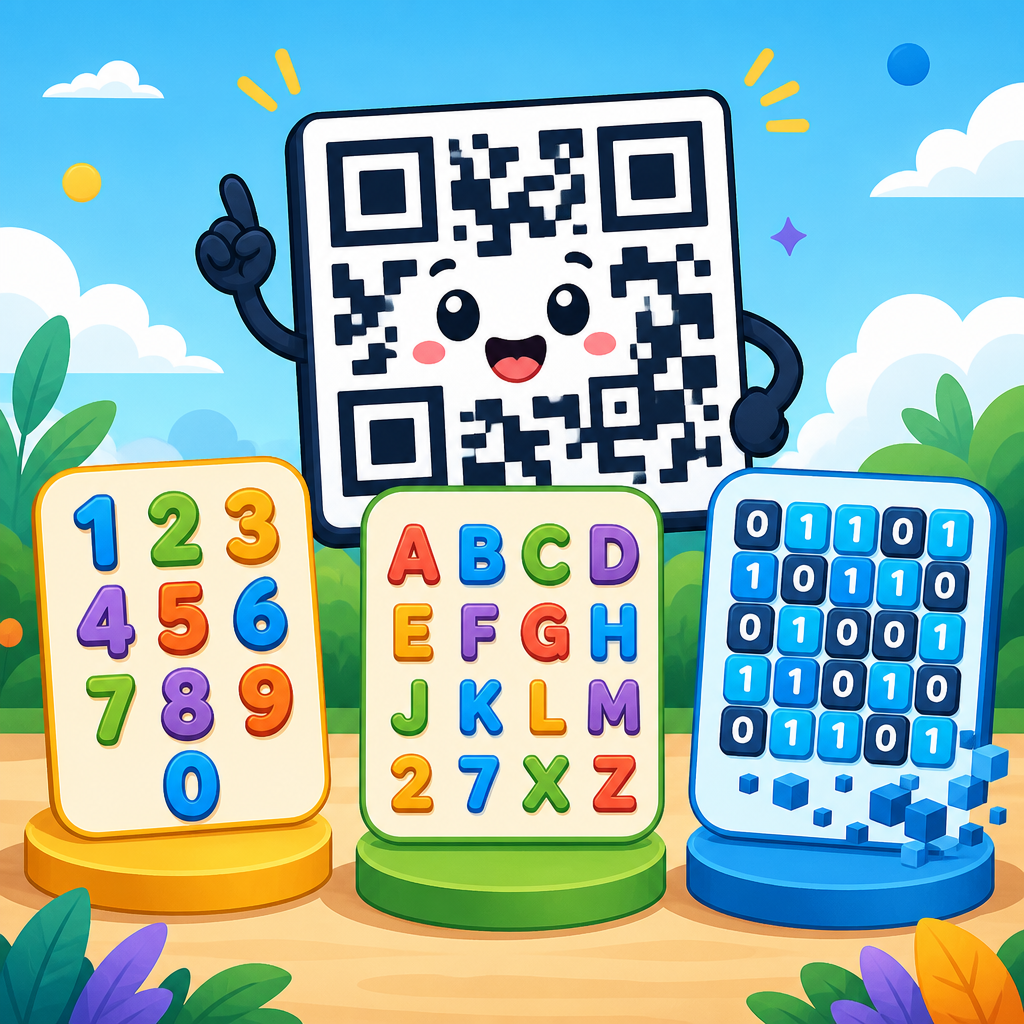
A QR code, short for Quick Response code, is a matrix symbology made of dark and light modules arranged in a square grid. It stores data such as numeric strings, alphanumeric text, binary payloads, or kanji, and it includes error correction based on Reed-Solomon coding so the symbol can still be read when partially damaged or obscured. The term “model” in QR code standards refers to a structural version of the symbol, not a use case or branding variation. That point is important because people often confuse Model 1 and Model 2 with Micro QR, rMQR, SQRC, or even dynamic QR code platforms. They are not the same thing. Model 1 and Model 2 are foundational symbol structures within the broader QR code family, and Model 2 is the version that almost everyone means today when they say “QR code.”
This topic also matters because QR code standards affect manufacturing tolerances, scan performance, software decoding, print size decisions, and long-term interoperability. A marketing team may only care that a smartphone camera opens a URL, but a packaging engineer, printer, or developer needs to know what pattern geometry is actually being generated. Standards and formats are not trivia. They determine symbol size, capacity, quiet zone requirements, and how well a code survives low contrast, distortion, curved surfaces, or damaged labels. As the hub for QR Code Standards & Formats, this article explains the central distinction between Model 1 and Model 2 and places it in the wider standards landscape so readers can make correct technical decisions and connect this topic to related formats, versions, encoding modes, and compliance requirements.
Model 1 vs Model 2 QR code: the direct answer
The shortest accurate answer is this: Model 1 QR codes are the original QR symbol design, and Model 2 QR codes are the improved design that became the mainstream standard. Model 2 introduced alignment patterns and structural refinements that significantly improved reading performance, especially at larger symbol sizes and under less-than-ideal scanning conditions. Because of those improvements, Model 2 effectively replaced Model 1 in common use. Today, when software libraries such as ZXing, ZBar, OpenCV integrations, industrial imagers, or smartphone camera frameworks generate or decode standard QR codes, they are almost always working with Model 2 symbols.
From an implementation perspective, that means most modern teams do not choose between Model 1 and Model 2 in day-to-day work. They inherit Model 2 by default through libraries, printers, scanners, and standards compliance. The distinction still matters, however, for documentation, legacy systems, barcode education, reverse engineering, and procurement language. If a specification cites early QR structures without clarifying model behavior, misunderstandings follow. I have seen print vendors ask whether a code was “standard QR” when the real issue was not branding but symbol geometry, module count, and decoder support in an older embedded scanner.
How Model 1 QR codes work
Model 1 was the first QR code design released by Denso Wave in 1994 for high-speed scanning in automotive manufacturing. Its purpose was practical: hold more data than one-dimensional barcodes while enabling faster reading from any orientation. The symbol uses finder patterns in three corners for orientation detection, timing patterns to establish module spacing, data and error-correction codewords arranged in the remaining area, and a quiet zone around the outside. It supports multiple data modes and multiple symbol versions that increase matrix dimensions as more storage is needed.
The limitation of Model 1 is not that it failed to work, but that it was less robust than the later model. Larger symbols benefit from stronger geometric correction cues, and Model 1 lacked the alignment pattern system that would later become one of Model 2’s defining strengths. In controlled factory settings, that may have been acceptable. In broader use on paper labels, consumer packaging, direct part marks, signage, and unevenly printed surfaces, robustness matters more. That is why Model 1 is historically important but operationally uncommon today.
How Model 2 QR codes improved the standard
Model 2 retained the core QR concept but refined the symbol architecture. The most notable improvement was the addition of alignment patterns, smaller square reference marks placed at defined positions in larger versions of the symbol. These help a decoder compensate for distortion, especially when the printed code is on a curved bottle, a wrinkled label, a bent ticket, or a perspective-skewed poster captured at an angle. Model 2 also improved how function patterns and data are arranged, increasing reading stability and expanding practical capacity.
In real deployments, this change is not academic. A warehouse scanner reading pallet labels from variable angles, a consumer phone scanning a coupon under glare, or a field technician capturing a weathered asset tag all benefit from the structural cues in Model 2. The result is fewer failed scans and greater tolerance for print and environmental imperfections. That is one reason ISO/IEC 18004, the key QR code standard, reflects the mainstream use of the later model. If your workflow depends on interoperability across mobile devices, browser-based scanners, POS systems, and industrial imagers, Model 2 is the baseline assumption.
Key structural differences between Model 1 and Model 2
The clearest way to compare the two models is by structure and scanning behavior, not marketing labels. Both are square matrix symbols with finder patterns in three corners and Reed-Solomon error correction. The differences are in the details that affect decoding reliability and deployment suitability.
| Feature | Model 1 | Model 2 |
|---|---|---|
| Release era | Original QR design from 1994 | Later refined design that became standard |
| Alignment patterns | Not included | Included in larger versions for distortion correction |
| Scan robustness | Adequate in controlled conditions | Better under skew, curvature, and print variation |
| Mainstream use today | Rare and mostly historical | Near universal for standard QR generation and scanning |
| Typical decoder support | Less relevant in modern consumer workflows | Broad support across phones, apps, and industrial devices |
| Practical recommendation | Only for legacy reference cases | Default choice for almost all implementations |
For most readers, the operational takeaway is simple: if you are making a QR code now, you are almost certainly making Model 2, whether or not the software exposes that term. The older model remains relevant mainly when tracing the history of the symbology or auditing old technical materials.
Where versions, formats, and related standards fit in
One of the most common sources of confusion is the difference between a QR code model and a QR code version. A model is the symbol architecture generation. A version is the size tier within that architecture. Standard QR codes have versions from 1 to 40, with each step adding four modules per side. Version 1 is 21 by 21 modules, version 2 is 25 by 25, and so on up to version 40 at 177 by 177. Capacity depends on version, error correction level, and data mode. Numeric mode fits more characters than byte mode because it is encoded more efficiently.
Another source of confusion is the relationship between standard QR and other formats in the same family. Micro QR is a smaller variant designed for tight marking areas. SQRC adds a private data area for restricted reading. iQR expands shape and capacity options beyond traditional square matrices. rMQR, standardized more recently, uses a rectangular footprint for narrow surfaces. These are separate formats, not substitutes for the Model 1 versus Model 2 distinction. When building a content hub on QR Code Standards & Formats, it helps to think of Model 1 and Model 2 as the historical backbone, versions as size classes, encoding modes as data rules, and specialized variants as format branches created for constrained use cases.
Standards work also requires attention to error correction levels L, M, Q, and H. Higher error correction improves recoverability but reduces available data capacity because more modules are allocated to redundancy. Mask patterns matter too; generators evaluate penalty rules to choose a mask that avoids problematic visual patterns and improves decoder performance. Character set handling is another real-world issue. If a workflow mixes UTF-8 expectations, ECI indicators, and legacy scanners with limited support, interoperability testing matters. These standards details are exactly why QR format knowledge belongs upstream in development, not as an afterthought after artwork is already on press.
Why Model 2 dominates modern scanning and printing
Model 2 became dominant because it performs better across the messy conditions of real deployment. In lab conditions, many symbols scan well. In the field, print gain changes module shape, matte and gloss substrates reflect light differently, labels wrinkle, symbols get cropped too tightly, and quiet zones are compromised by nearby graphics. Model 2’s structure gives decoders more reliable reference points, which improves read rates and reduces user friction. That matters on retail shelves, in hospital specimen tracking, on event tickets, in utility asset management, and in cross-border logistics where multiple hardware vendors touch the same symbol.
Smartphone adoption accelerated this dominance. Native camera apps and embedded decoder libraries are optimized for common QR usage, meaning mainstream consumer compatibility effectively assumes Model 2. If a brand wants one symbol to work on iPhone, Android, handheld warehouse imagers, kiosk scanners, and browser-based WebRTC readers, the safest path is a conventional Model 2 QR code generated with compliant settings, sufficient module size, strong contrast, and a proper quiet zone. In practice, success depends less on theoretical maximum capacity and more on disciplined symbol design.
Best practices when specifying a QR code standard today
When I help teams specify QR implementation requirements, I start with use case, scan distance, substrate, environmental exposure, and decoder type. Then I define data length, data mode, error correction level, target physical size, and minimum module size. For printed consumer packaging, black on white with a four-module quiet zone remains the safest standard configuration. For industrial marks, verification against recognized quality methodologies such as ISO/IEC 15415 for printed two-dimensional symbols or ISO/IEC TR 29158, often called AIM DPM, for direct part marking provides a much more reliable quality benchmark than an informal “it scanned on my phone” test.
Tool choice matters as well. Established generators and libraries such as ZXing, QRCode.js derivatives, commercial label software, and industrial marking platforms generally produce Model 2 standard QR codes correctly, but defaults still need review. A designer may accidentally invert colors, place the symbol over a textured background, or shrink modules below what the intended scanner can resolve. A developer may overpack data into a high version when a short redirect URL would enable a cleaner, smaller symbol. A print buyer may approve artwork without verification grading. Good QR results come from standards-aware decisions across the full chain, from data payload through printing and scanning.
Conclusion
Model 1 and Model 2 QR codes are not competing consumer products but two stages in the evolution of the QR standard. Model 1 was the original design that proved the concept. Model 2 added alignment patterns and other structural refinements that made QR codes more robust, more interoperable, and far better suited to widespread commercial use. That is why Model 2 became the practical default and why almost every standard QR code in use today belongs to that model, even if the software never labels it explicitly.
For anyone researching QR Code Standards & Formats, this distinction provides the foundation for understanding the rest of the category. Once you know that Model 2 is the mainstream structure, the next technical questions become clearer: which version size fits the payload, which error correction level balances resilience and capacity, which encoding mode is most efficient, and which specialized variant applies when square standard QR is not ideal. Those are the decisions that determine whether a symbol merely exists or performs reliably in the real world.
If you are planning a QR deployment, use this hub as your starting point and validate every choice against your actual scanning conditions. Choose standards-compliant generation, verify print quality, and design for the scanner that will be used in the field. That approach prevents rework, improves scan rates, and turns a simple square symbol into dependable infrastructure.
Frequently Asked Questions
What is the main difference between a Model 1 and Model 2 QR code?
The main difference is that Model 1 is the original QR code specification, while Model 2 is the improved and far more widely used version that refined the symbol structure for better performance in real-world scanning conditions. Model 1 QR codes were part of the earliest generation created by Denso Wave in the 1990s for industrial tracking and automated identification. They proved the concept of a high-capacity two-dimensional barcode, but they had limitations in symbol design that made them less robust than what came later.
Model 2 QR codes introduced structural enhancements, most notably improved placement of function patterns and the addition of alignment patterns. Those changes helped scanners read the code more reliably, especially when the symbol was printed at different sizes, placed on curved surfaces, or exposed to distortion. In simple terms, Model 1 was the original framework, and Model 2 was the practical evolution that made QR codes more resilient, scalable, and suitable for mainstream use.
That is why, when people refer to a “QR code” today, they are almost always talking about a Model 2 QR code, whether it appears on a payment terminal, product label, event ticket, shipping carton, or marketing poster. Model 1 matters historically, but Model 2 became the standard that shaped modern adoption.
Why did Model 2 QR codes replace Model 1 in most applications?
Model 2 QR codes replaced Model 1 in most applications because they were designed to solve practical scanning and layout issues that became important as QR technology moved beyond tightly controlled industrial environments. The original Model 1 design worked, but it was less refined in how its internal patterns supported symbol reading. As deployment expanded into packaging, logistics, retail, and public-facing use cases, better scan consistency became essential.
The addition of alignment patterns in Model 2 was a major reason for its success. These patterns help the scanner compensate for geometric distortion, which is especially useful when a code is printed on flexible packaging, bottles, labels, or uneven materials. Model 2 also improved the arrangement of function modules, making the symbol easier for imaging systems to interpret accurately. Those refinements increased reliability without changing the core value proposition of QR codes: compact size, high data density, and strong error correction.
Another reason Model 2 took over is compatibility with modern software and hardware ecosystems. Most QR code generators, mobile scanning apps, industrial readers, and standards-based implementations are built around Model 2 conventions. Once that version became dominant, the market naturally standardized around it. In effect, Model 2 did not just replace Model 1 because it was newer; it replaced it because it was better suited to widespread, everyday use.
Are Model 1 QR codes still used today?
Model 1 QR codes are rarely used today, and in most current environments they are more of historical and technical interest than a practical choice. The overwhelming majority of QR codes generated for commerce, payments, consumer engagement, authentication, warehousing, and ticketing are Model 2. That is the version supported by modern QR code creation tools and expected by most scanning systems.
There may still be legacy systems, archived documentation, or specialized industrial contexts where Model 1 appears, particularly if an organization has maintained older equipment or preserved early implementations of QR technology. However, for new deployments, there is little reason to choose Model 1. Model 2 offers better reading performance and aligns with contemporary standards and expectations.
For businesses and developers, the practical takeaway is straightforward: if you are creating a QR code today, you will almost certainly be using Model 2, even if the software never explicitly says so. Model 1 remains important for understanding the evolution of QR technology, but it is not the form that drives current market use.
How do alignment patterns make Model 2 QR codes better?
Alignment patterns are one of the defining improvements that make Model 2 QR codes more reliable than Model 1. In a QR symbol, the scanner needs to determine not only where the code is located but also how to interpret its grid accurately when the image is tilted, stretched, curved, or printed imperfectly. Finder patterns in the corners help identify the symbol, but alignment patterns provide additional reference points that improve geometric correction.
This matters because many QR codes are used in less-than-perfect conditions. A code might be printed on shrink wrap, embossed on packaging, placed on a cylindrical bottle, shown on a phone screen with glare, or captured from an angle by a mobile camera. In those situations, the module grid can appear distorted. Alignment patterns help the scanner map the symbol back into its proper structure, increasing the chance of a fast and accurate read.
From a practical standpoint, this improvement helped QR codes transition from controlled industrial marking to mass-market deployment. Better distortion handling means fewer failed scans, less frustration for users, and more dependable performance for businesses. That is one of the key reasons Model 2 became the dominant QR code format in applications ranging from payments and product packaging to boarding passes and inventory control.
Which QR code model should businesses, developers, and marketers use today?
Businesses, developers, and marketers should use Model 2 QR codes for virtually all modern applications. It is the established standard, the version supported by mainstream generators and readers, and the format best suited for current use cases such as mobile payments, digital menus, app downloads, serialized packaging, omnichannel marketing, warehouse operations, and anti-counterfeiting workflows.
Choosing Model 2 is not just about following convention. It means benefiting from the structural improvements that made QR technology dependable at scale, including better scan performance and broader interoperability across devices and platforms. If a code needs to work across iPhones, Android devices, point-of-sale scanners, handheld industrial imagers, and cloud-based workflows, Model 2 is the safe and expected choice.
For most users, the decision is effectively made for them because modern QR code platforms generate Model 2 by default. The more important considerations usually involve error correction level, print size, quiet zone, contrast, content type, and whether the code should be static or dynamic. But at the model level, Model 2 is the format organizations should rely on today. Model 1 is best understood as an early milestone in QR code history rather than a recommended option for present-day implementation.