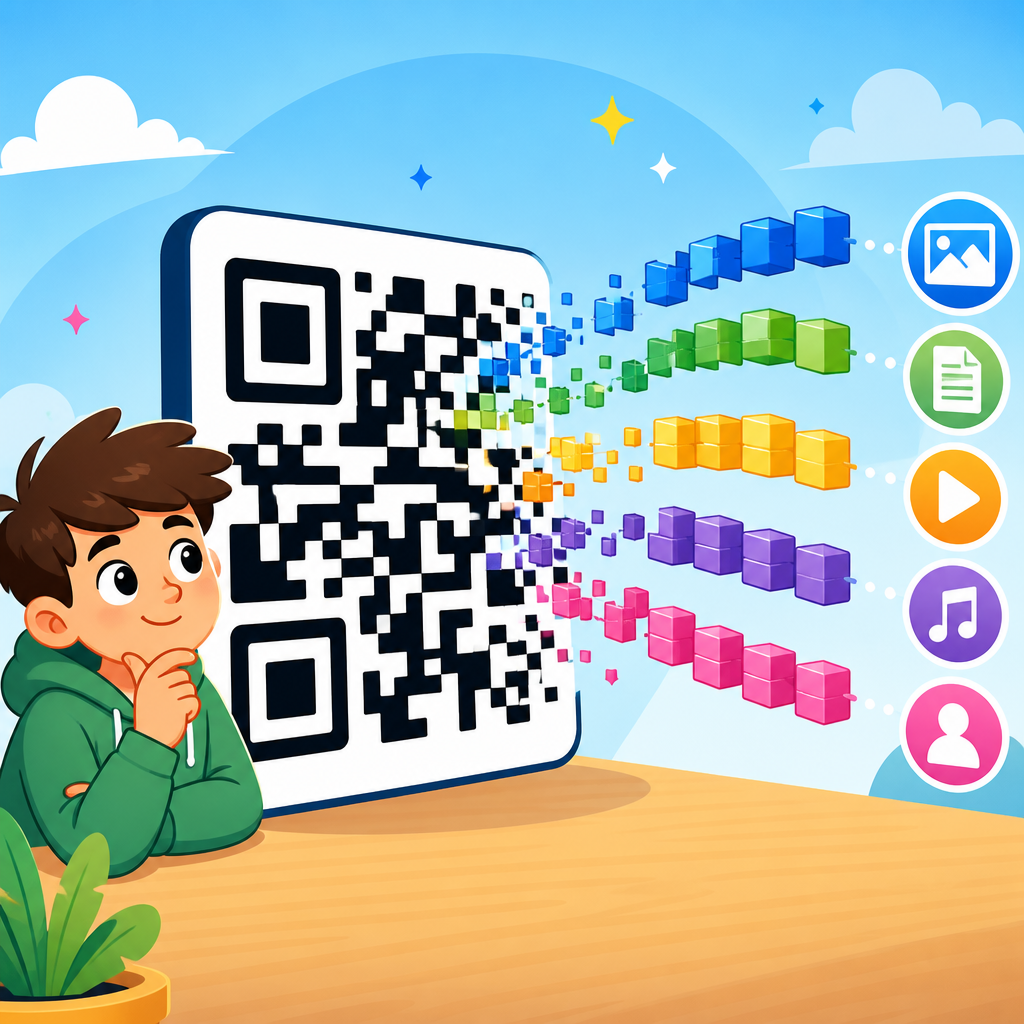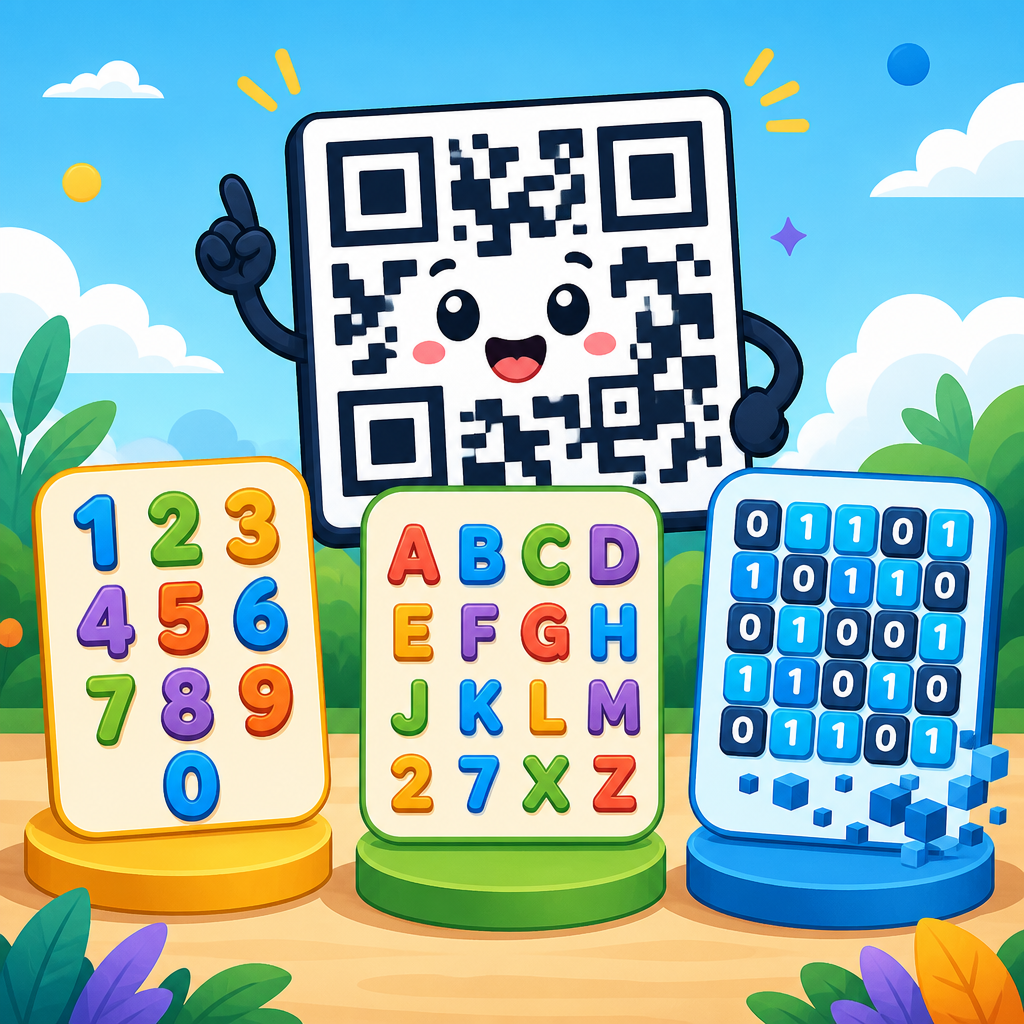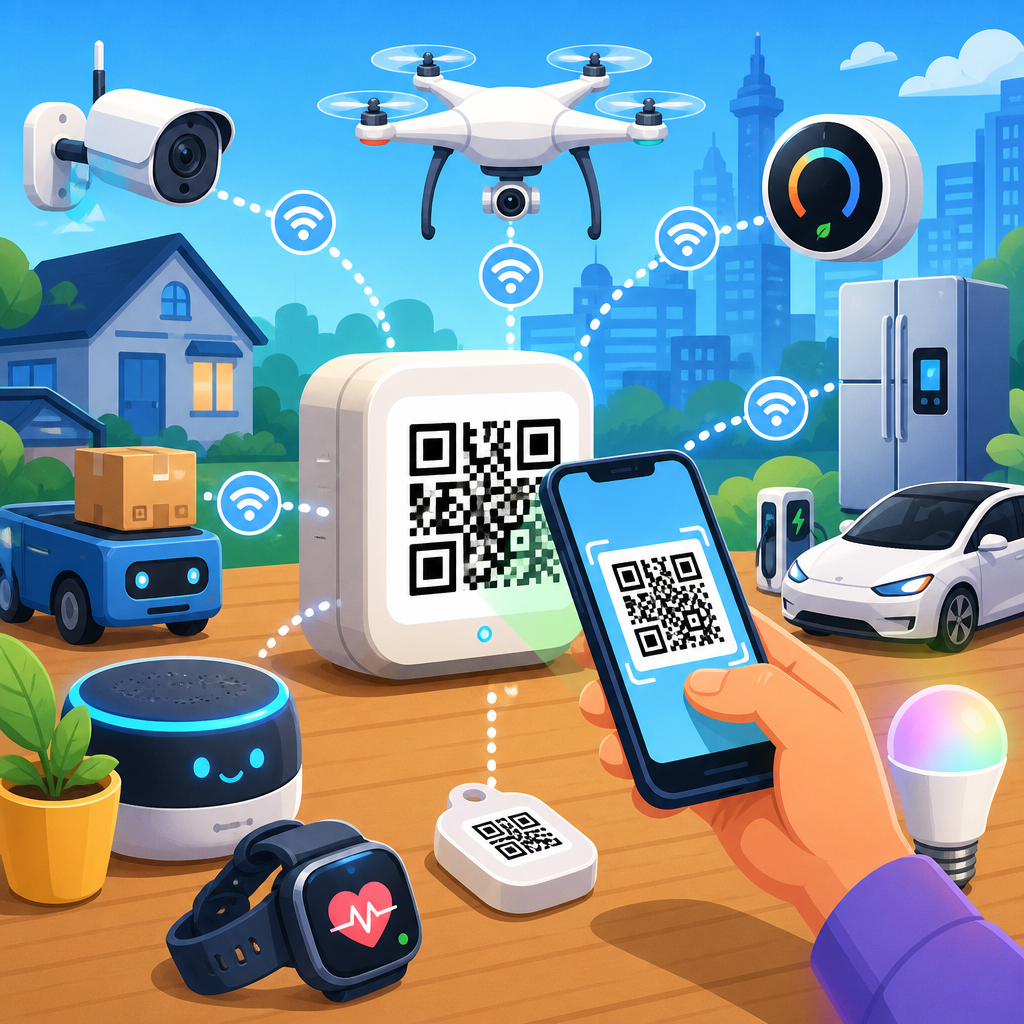
QR codes are becoming a practical bridge between physical devices and digital systems, and nowhere is that more visible than in the Internet of Things. In simple terms, the Internet of Things, or IoT, refers to connected objects such as sensors, appliances, factory machines, medical devices, vehicles, and smart building equipment that collect data, exchange information, and trigger actions over networks. A QR code is a two-dimensional matrix barcode that stores machine-readable data, usually a URL, identifier, credential, or configuration payload. When these two technologies meet, organizations gain a low-cost, standardized, and highly flexible way to identify, configure, maintain, and secure connected assets at scale.
I have worked on deployments where teams struggled less with connectivity than with basic device lifecycle management: naming devices consistently, onboarding them quickly, linking them to digital twins, and giving technicians a reliable way to access the right records in the field. QR codes solve many of those operational problems because they are inexpensive to print, easy to scan with commodity hardware, and compatible with existing mobile workflows. A sensor on a production line, a thermostat in a school, or a pump in a water treatment plant can carry a QR code that instantly opens setup instructions, maintenance logs, warranty information, and live telemetry dashboards. That simple scan reduces errors, shortens training time, and creates a direct path from physical asset to software layer.
This matters because the future of QR code technology is not just about marketing links or restaurant menus. It is about turning static labels into dynamic interfaces for connected environments. As IoT adoption grows across manufacturing, healthcare, logistics, retail, agriculture, and smart cities, businesses need interoperability, traceability, and security that work in real-world conditions. QR codes support those goals by functioning as visible identifiers, user interaction points, and fallback access mechanisms even when near-field or wireless pairing options are unavailable. For any organization planning connected products or infrastructure, understanding how QR codes fit into IoT architecture is now a strategic requirement, not a minor implementation detail.
Why QR codes fit IoT infrastructure
QR codes fit IoT infrastructure because they solve a foundational problem: connecting a physical object to the correct digital record with minimal friction. Every IoT program depends on identity. A connected valve, meter, wearable, or gateway must be uniquely identified before it can be configured, monitored, updated, or serviced. While radio-frequency tags, Bluetooth beacons, and embedded secure elements all have important roles, QR codes provide a universal visual layer that humans and machines can both use. A field technician can scan a label with a phone, while a software platform can interpret the encoded asset ID and fetch the exact data model from a cloud system.
In practice, QR codes are especially valuable during provisioning and service events. Manufacturers often encode a serial number, model number, MAC address, and onboarding token into a label that ships with the device. During installation, the scanner app reads the code, verifies inventory records, associates the device with a site, and starts the commissioning workflow. I have seen this reduce manual entry errors dramatically on large rollouts because technicians no longer transpose long alphanumeric strings. For constrained devices with limited screens or no interface at all, the QR code becomes the simplest human-readable access point.
Another reason QR codes fit so well is resilience. IoT environments are messy: wireless signals are inconsistent, batteries fail, and devices get moved, replaced, or serviced by third parties. A printed code still works when the network is down, making it useful for offline identification and delayed synchronization. Unlike proprietary interfaces, QR labels are readable by standard smartphones and industrial handhelds. That lowers deployment cost and training overhead. For organizations building future-ready systems, that combination of openness, affordability, and reliability gives QR codes a long runway inside IoT ecosystems.
Core IoT use cases for QR codes
The most common IoT use case is asset identification tied to a cloud record. In a factory, each machine, sensor cluster, and spare component can have a QR code linked to a computerized maintenance management system such as IBM Maximo, Fiix, or MaintainX. A technician scans the code and immediately sees runtime history, recent alarms, calibration status, and parts documentation. In healthcare, a QR code on a connected infusion pump can pull service records and current firmware version before a biomedical engineer performs inspection. In logistics, QR-coded pallets and returnable containers connect location scans with IoT sensor data about temperature, shock, or humidity.
Provisioning is another major use case. Smart home devices often use a QR code during onboarding to pass Wi-Fi credentials, device certificates, ownership tokens, or setup URLs to a mobile app. The Matter smart home standard made this pattern familiar by using onboarding codes that simplify secure commissioning across ecosystems. Industrial deployments use similar approaches, though often with stronger identity controls and mobile device management. By embedding the right bootstrap data, a QR code can compress a complex setup process into a guided scan-and-confirm workflow.
Consumer products also benefit. A connected air purifier, thermostat, or fitness device can use a QR code to register ownership, verify authenticity, launch tutorials, and route support cases to the correct product page. In agriculture, QR labels on irrigation controllers or livestock monitoring equipment help workers pull exact service instructions from the field. In smart buildings, facilities staff can scan room devices to check occupancy sensor status, battery health, and work order history. The pattern is consistent across sectors: the code removes ambiguity and brings the right context to the person standing in front of the asset.
How QR codes support the device lifecycle
QR codes add value across the entire device lifecycle, from manufacturing through retirement. During production, they can tie a physical unit to manufacturing execution system records, test results, and component traceability. If a board fails final inspection, the code links investigators to batch data and process logs. Once shipped, the same identifier follows the device into warehouse management, installation, and customer activation. This continuity is essential in IoT, where lifecycle data influences support cost, warranty claims, and compliance.
After deployment, the maintenance phase is where QR codes usually prove their worth fastest. A worker scanning a rooftop HVAC controller or submeter can log a service event without searching a database manually. If the organization uses digital twin software, the scan can open the twin directly, showing current telemetry, fault states, and historical trends. That creates a practical bridge between operational technology in the field and enterprise systems in the office. Technicians make better decisions because the asset context is immediate rather than buried in separate applications.
End-of-life management is often overlooked, but it matters for sustainability and data governance. When a device is decommissioned, a QR code can trigger the correct retirement workflow, including certificate revocation, inventory updates, secure wipe confirmation, and recycling instructions. For regulated sectors, the scan also creates an audit trail. Teams managing thousands of connected assets need that level of process discipline, and QR codes provide a simple way to enforce it at the physical point of action.
Security, identity, and trust considerations
QR codes do not make an IoT system secure by themselves, but they can strengthen secure workflows when implemented correctly. The key is to treat the code as an identity pointer or bootstrap mechanism, not as the sole bearer of trust. If a label contains a plain static URL with no authentication, anyone who scans it may reach the same endpoint. That is acceptable for public documentation, but not for administrative control. Secure implementations typically encode a device identifier plus a short-lived token, or direct the app to a backend that requires authentication and validates device ownership before exposing sensitive functions.
Tampering is a real concern. In the field, labels can be replaced, damaged, or copied. Good practice includes cryptographically signed payloads, server-side verification, tamper-evident labels, and comparison against hardware identifiers such as serial numbers or X.509 device certificates stored in trusted elements. The Open Mobile Alliance, NIST guidance on device identity, and zero trust principles all point toward layered verification rather than blind trust in any one artifact. In projects I have supported, the safest pattern was to use the QR code to begin the conversation while letting the backend prove the device.
Privacy also matters. A QR code on a medical or consumer device should not expose personally identifiable information or service secrets. Data minimization is the rule: store the least information necessary, and resolve richer context only after access control checks. Dynamic QR codes, where the destination can be updated server-side, also help organizations rotate endpoints, respond to incidents, and preserve continuity when infrastructure changes.
Future trends shaping QR codes in IoT
The future of QR code technology in IoT is being shaped by convergence, not novelty for its own sake. QR codes are increasingly part of broader identity frameworks that include digital twins, public key infrastructure, product passports, and cloud asset graphs. As enterprises mature, they stop treating the code as just a sticker and start using it as a persistent interface layer for every stage of device interaction. That shift enables stronger governance and better automation.
Several trends are especially important. First, product identity is becoming richer and more standardized. Regulations around traceability, right-to-repair, sustainability reporting, and supply chain transparency are pushing manufacturers to maintain durable digital records for physical goods. Second, edge computing is expanding the need for fast local workflows. A technician working in a remote plant or utility site needs scan-based access that works even with intermittent connectivity. Third, AI-driven support systems increasingly depend on clean asset identity. When a worker scans a QR code and asks a support assistant for the likely cause of a fault, the answer quality depends on linking the correct asset history instantly.
| Trend | What changes | IoT impact |
|---|---|---|
| Digital product passports | More lifecycle and sustainability data tied to each unit | QR codes become long-term access points for compliance and service records |
| Secure commissioning standards | Bootstrap identity and ownership transfer become more formalized | Faster setup with fewer manual errors and stronger trust controls |
| Digital twins | Physical assets map to live software models | Scans open telemetry, maintenance history, and simulation context |
| AI service workflows | Support tools use asset context to generate guidance | QR scans improve troubleshooting accuracy and response speed |
Another major trend is multimodal access. QR codes will not replace NFC, RFID, BLE, or ultra-wideband; they will complement them. In many future deployments, a product will carry several identity layers at once. The QR code will remain valuable because it is visible, cross-platform, low cost, and usable by people without specialized readers.
Implementation best practices for scalable deployment
Successful deployment starts with data architecture, not label printing. Define a canonical asset identifier, map it to your IoT platform, and decide which systems are authoritative for inventory, telemetry, maintenance, and ownership. Then design the QR payload around the workflow. For public support access, a stable URL may be enough. For provisioning, include only the bootstrap data needed to fetch secure configuration. For industrial maintenance, the best approach is often a short identifier resolved through an authenticated mobile app.
Label durability matters more than teams expect. Choose materials and adhesives based on environment: polyester for general industrial use, anodized aluminum for extreme wear, chemical-resistant laminates for laboratories, and UV-stable labels for outdoor installations. Placement should support safe scanning without requiring workers to reach into hazardous areas. Test contrast, size, and error correction level under real lighting conditions. ISO/IEC 18004 defines QR code specifications, and verification with proper scanning tools reduces surprises after rollout.
Governance is the final piece. Establish ownership for updates, redirects, retirement, and incident response. Audit scan analytics carefully, especially for consumer products, and ensure that mobile apps handle offline states gracefully. The organizations that get the most value from QR codes in IoT are the ones that treat them as part of product infrastructure, not an afterthought attached at the end.
QR codes in the Internet of Things are valuable because they create a direct, low-friction connection between a physical device and its digital identity. That connection improves onboarding, maintenance, traceability, support, and retirement across nearly every industry using connected assets. Whether the device is a smart thermostat, a medical pump, a warehouse sensor, or a factory robot, the QR code gives people a dependable way to reach the exact record, workflow, or dashboard they need without manual lookup.
The broader lesson is that the future of QR code technology is operational. As IoT systems expand, organizations need tools that work across supply chains, field service, cloud platforms, and compliance programs. QR codes meet that need because they are cheap to deploy, easy to use, and adaptable to secure identity frameworks. They also work well alongside digital twins, commissioning standards, and AI-assisted support, making them more relevant as connected environments become more complex.
If you are building or modernizing an IoT program, start by reviewing how your devices are identified, commissioned, and serviced today. Then design a QR code strategy that supports the full lifecycle, integrates with your core systems, and respects security from the beginning. Done well, that one visible square can become one of the most practical interfaces in your entire connected ecosystem.
Frequently Asked Questions
How are QR codes used in IoT environments?
QR codes are used in IoT environments as a simple, low-cost way to connect physical devices to digital systems. In practice, a QR code can be placed on a sensor, machine, appliance, medical device, vehicle component, or smart building asset so that a technician, operator, customer, or system administrator can instantly access relevant information with a scan. That information might include a device ID, onboarding link, configuration page, maintenance record, firmware update portal, troubleshooting guide, warranty details, or a secure interface for registering the device within a larger IoT platform.
They are especially useful because they bridge the gap between the physical world and the digital identity of an object. Many IoT devices are small, distributed, or installed in difficult-to-manage environments, so manually entering long serial numbers, MAC addresses, or setup URLs can be inefficient and error-prone. A QR code makes that process faster and more reliable. For example, in a factory, scanning a QR code on a machine can pull up live performance dashboards or maintenance instructions. In healthcare, a QR code on a connected device can help staff verify equipment details and service history. In smart buildings, QR codes can link lighting controllers, HVAC units, or access systems to asset management platforms.
Just as importantly, QR codes support workflows beyond installation. They can help with inspections, incident logging, replacement part identification, lifecycle tracking, and user education. Rather than being a replacement for IoT connectivity itself, QR codes act as a practical access layer that makes connected devices easier for people to identify, manage, and interact with throughout their operational life.
Why are QR codes considered a practical bridge between physical devices and digital systems?
QR codes are considered practical because they solve a very common problem in IoT: physical devices exist in the real world, but their data, controls, and management tools live in digital platforms. A QR code provides a direct, scannable link between those two layers. Instead of searching a database, typing in a serial number, or relying on paper records, a user can point a smartphone, tablet, or industrial scanner at the code and immediately reach the right digital destination.
This matters in IoT because scale and complexity are major challenges. Organizations may manage hundreds, thousands, or even millions of connected assets. The easier it is to identify and access a specific device’s profile, the more efficient operations become. QR codes are inexpensive to generate, simple to print, and easy to deploy across many kinds of equipment. They also do not require power, embedded screens, or complex user interfaces, which makes them ideal for low-cost devices or rugged environments where simplicity matters.
Another reason they work so well is accessibility. Most users already understand how to scan a QR code, and modern mobile devices support it natively. That lowers training requirements and speeds up adoption across field service, manufacturing, logistics, healthcare, retail, and smart infrastructure settings. In essence, QR codes make IoT systems more usable for humans. While sensors and software handle machine-to-machine communication in the background, QR codes create a convenient human-to-machine entry point that supports setup, service, validation, and decision-making.
What information can a QR code store for an IoT device?
A QR code for an IoT device can store a wide range of machine-readable information, depending on the use case and the amount of data needed. In many cases, the code contains a URL that points to a cloud dashboard, device profile, provisioning endpoint, or support portal. It may also hold a unique device identifier, serial number, batch number, model information, installation instructions, API endpoint reference, or encrypted token used during onboarding and authentication. Some QR codes are designed simply to identify a device, while others act as gateways to much richer information hosted remotely.
For IoT applications, the most valuable use of a QR code is often not storing all the information directly inside the code, but linking to a centralized system where the latest device data can be retrieved. That is important because connected devices change over time. Firmware versions update, ownership changes, maintenance events occur, and live status data evolves constantly. By using the QR code as a pointer to dynamic records in a secure platform, organizations can keep information current without replacing the printed label.
There are also practical design considerations. If a QR code stores too much data directly, it becomes denser and potentially harder to scan in real-world conditions. For that reason, many IoT deployments use concise encoded data, such as a unique ID or secure URL, and let backend systems do the heavy lifting. This approach supports better reliability, easier maintenance, and stronger integration with asset management, analytics, and device lifecycle systems.
Are QR codes secure enough for IoT device management?
QR codes can be secure enough for IoT device management when they are implemented correctly, but they should not be treated as a security solution by themselves. A QR code is fundamentally a data container or pointer. Its security depends on what it contains, where it leads, and how the connected system validates the request. If a code simply links to a public webpage, the security risk is relatively low. If it is used for device registration, configuration, or access to sensitive operational data, then stronger protections are necessary.
Best practices include using QR codes to store temporary or limited-purpose tokens rather than permanent credentials, requiring authentication after the scan, encrypting sensitive data where appropriate, and routing users to secure HTTPS endpoints. Organizations should also use backend validation to confirm that the scanned code is legitimate and authorized for the action being requested. Role-based access controls, device certificates, audit logging, token expiration, and anomaly detection can further strengthen the process.
Physical security also matters. Because QR codes are visible labels, they can potentially be copied, photographed, or replaced with malicious stickers. In operational settings, tamper-evident labels, protected placement, routine inspections, and user training can reduce that risk. The safest mindset is to use QR codes as a convenient interface layer, not as the only gatekeeper. When paired with sound identity management and IoT security architecture, QR codes can support secure onboarding, maintenance, and support workflows without introducing unnecessary friction.
What are the main benefits of using QR codes in IoT at scale?
The main benefits of using QR codes in IoT at scale are speed, accuracy, lower cost, and better lifecycle management. At a basic level, QR codes make devices easier to identify and interact with. That reduces manual data entry, shortens installation time, and minimizes errors caused by mistyped IDs or incorrect asset matching. In large IoT deployments, even small improvements in these processes can translate into major operational savings.
QR codes also improve workforce efficiency. Field technicians can scan a code to access setup instructions, diagnostics, service histories, and replacement procedures on the spot, without searching through separate systems. In asset-heavy industries such as manufacturing, logistics, utilities, and healthcare, this can shorten downtime and improve response times. For end users, QR codes can simplify activation, self-service support, and product registration, making connected products easier to adopt and maintain.
From a systems perspective, QR codes support stronger traceability across the full device lifecycle. They can help organizations track devices from manufacturing and shipping to deployment, inspection, repair, and retirement. This becomes especially valuable in regulated or safety-critical sectors where documentation and accountability matter. Because QR codes are inexpensive and flexible, they also scale well across diverse hardware types and deployment models. In short, they offer a straightforward but highly effective way to make large IoT ecosystems more manageable, more accessible, and more efficient for both people and systems.