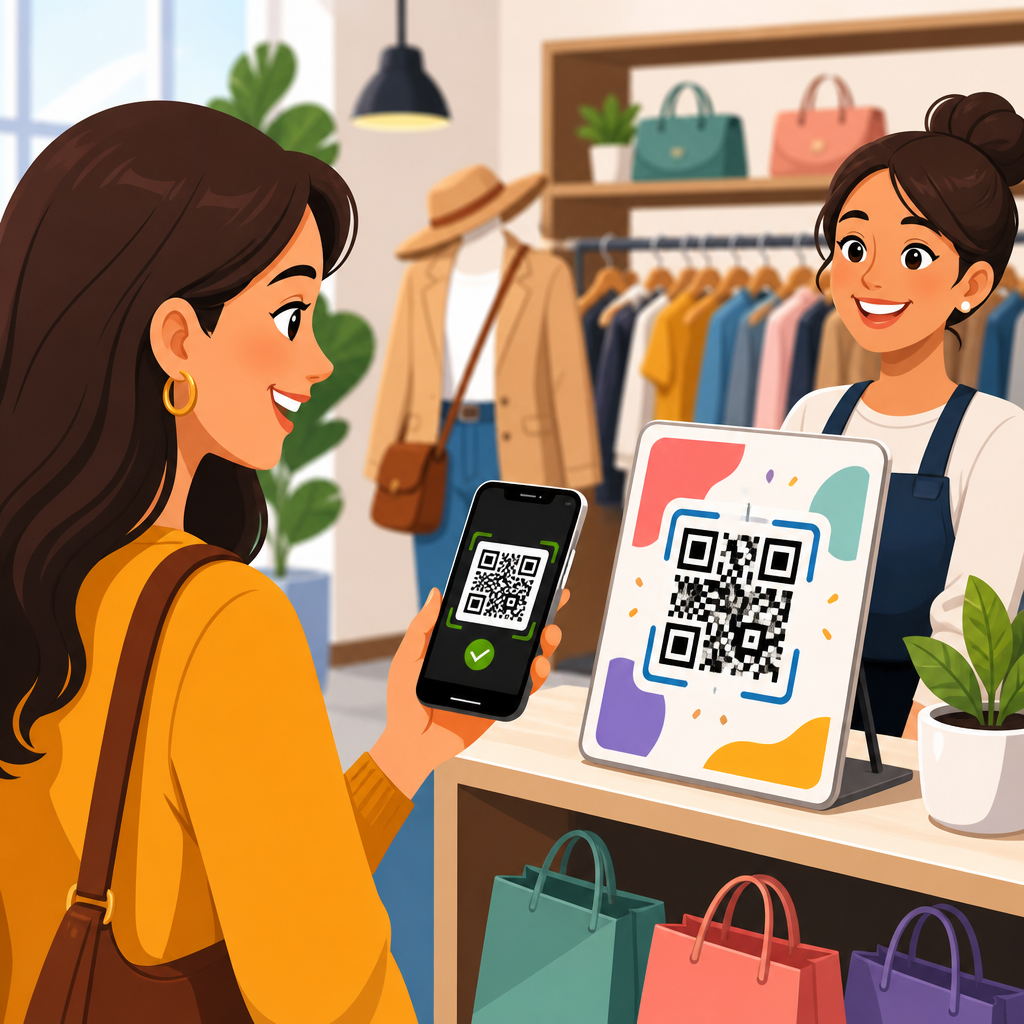
QR codes have become one of the most practical tools in modern marketing because they connect physical attention to digital action in a single scan. In brand engagement campaigns, a QR code turns packaging, posters, direct mail, point-of-sale displays, event signage, and even television screens into measurable touchpoints. Instead of asking a customer to remember a URL, search for a product, or download an app later, brands can move people instantly from curiosity to participation. That speed matters in crowded campaigns where every extra step reduces response.
For marketers, brand engagement means more than awareness. It includes any deliberate interaction that deepens recognition, trust, preference, or action: watching a product demo, joining a loyalty program, entering a contest, unlocking augmented reality content, claiming an offer, giving feedback, or sharing user-generated content. A QR code is simply the bridge, but the campaign strategy behind it determines whether scans become meaningful outcomes. I have seen the difference firsthand: a generic code that dumps visitors on a homepage underperforms badly, while a code tied to one clear promise and one mobile-optimized landing page can lift conversion rates dramatically.
The technology is straightforward. Static QR codes point to a fixed destination and cannot be edited after printing. Dynamic QR codes use a short redirect URL, which allows marketers to change the destination, add tracking parameters, and monitor scan activity by time, device, and location. That flexibility is essential for campaign management. If a retailer needs to swap an expired offer, an event organizer needs to update a schedule, or a packaged goods brand wants region-specific pages, dynamic codes make that possible without reprinting every asset.
This matters because marketing budgets are under pressure to prove return, and QR codes create a rare link between offline media and digital analytics. A scan can be attributed to a poster in a subway station, a table tent in a restaurant, a catalog page, or an out-of-home ad in a stadium. Used well, QR codes help teams answer basic but important questions: Which creative drove action? Which store location generated more engagement? Did customers redeem the offer, watch the video, or sign up for SMS? For any brand building a marketing and advertising hub around measurable engagement, QR codes deserve a central role.
How QR codes fit into marketing and advertising strategy
QR codes work best when they are treated as campaign infrastructure rather than decoration. Their role is to reduce friction between exposure and response. In practical terms, that means each code should support a defined objective: lead generation, coupon redemption, product education, review collection, app downloads, social follows, loyalty enrollment, or event participation. When the objective is clear, creative teams can write stronger calls to action, analytics teams can define cleaner success metrics, and media buyers can compare performance across channels.
A useful planning framework is audience, moment, value, and destination. Audience identifies who is scanning: new prospects, existing customers, event attendees, retail shoppers, or B2B buyers. Moment defines the context: standing in an aisle, opening a mailed brochure, waiting at a bus stop, watching a live demonstration, or unboxing a product at home. Value is the immediate benefit promised for scanning, such as “see how it works,” “unlock 15% off,” or “enter to win.” Destination is the mobile experience that delivers that promise. If any one of those four elements is weak, scan rates and conversions usually fall.
In omnichannel marketing, QR codes also support continuity. A beauty brand can place a code on in-store shelf talkers that opens shade-matching guidance, then retarget those visitors with paid social ads. A restaurant chain can print codes on tray liners that link to a seasonal rewards campaign, then follow up through email after sign-up. A B2B exhibitor can use booth signage codes to share a product spec sheet and route high-intent leads into a sales automation workflow. The code itself is not the strategy; it is the trigger that connects channels.
High-impact use cases for brand engagement campaigns
Marketing and advertising teams can use QR codes across the full customer journey, from first exposure to repeat purchase. On awareness campaigns, out-of-home ads often use QR codes to bring static creative to life with video, store locators, or product drops. On consideration campaigns, brands use them in print ads, brochures, and packaging to answer common questions with demos, ingredient details, FAQs, or social proof. On conversion campaigns, the most common destinations are offer pages, commerce pages, and lead forms. On retention campaigns, QR codes often support loyalty enrollment, referrals, care instructions, reorder flows, and review requests.
Consumer packaged goods brands have been especially effective. A beverage company can place a code under the label that opens a sweepstakes, recipe content, and an age-gated product story page. A cosmetics brand can print a code on secondary packaging that launches a tutorial matched to the exact SKU, reducing post-purchase confusion and increasing satisfaction. In retail, fitting room signage can direct shoppers to style recommendations or alternate sizes. In hospitality, hotel lobby displays can invite guests to local guides or on-property upgrades. The common thread is relevance at the exact moment of attention.
Events and experiential activations are another strong fit. At trade shows, QR codes on booth walls can route visitors to demos, calendars, and contact forms while reducing reliance on paper collateral. At concerts or sports venues, brands use them for scavenger hunts, instant-win games, merchandise offers, and fan voting. Because scans happen in real time, marketers can monitor which placements are working during the event and adjust staff, signage, or incentives quickly. That ability to optimize live is one reason QR-based brand engagement has become standard practice across many event formats.
Campaign design: calls to action, landing pages, and creative placement
Most QR code campaign failures come from weak execution, not bad technology. The first rule is simple: never present a code without a clear reason to scan. “Scan me” is not a benefit. “Scan to see the 30-second demo,” “Scan for today’s in-store offer,” and “Scan to enter before midnight” are benefits. Good calls to action are specific, time-bound when appropriate, and aligned with the user’s context. If someone is standing in a store aisle, the destination should help them decide or buy, not force them through an irrelevant navigation menu.
Landing page quality matters as much as placement. The page must load quickly, fit the mobile screen, and complete the promised action with minimal friction. In many campaigns I have audited, brands invested heavily in signage and packaging design but sent traffic to pages that were slow, cluttered, or disconnected from the creative message. That breaks trust. A QR code on a skincare display promising a routine finder should land directly on the routine finder, not the homepage. A code in a direct mail piece offering a quote should open a short form with prefilled campaign data where possible.
Physical execution also affects performance. Contrast should be high, quiet zones should be preserved, and the code should be large enough for the scanning distance. As a rule of thumb, designers often use a scanning distance to code size ratio of roughly 10:1. If the audience stands ten feet away, the code should be about one foot wide. Placement should avoid glare, curved surfaces when possible, and cluttered backgrounds. Testing in real conditions matters: lighting in a retail aisle, movement in a transit station, and camera quality on older devices can all influence results.
| Campaign element | Best practice | Why it improves engagement |
|---|---|---|
| Call to action | State the exact benefit, such as discount, demo, or entry | Users scan when value is immediate and obvious |
| Destination | Send visitors to a dedicated mobile landing page | Reduces confusion and increases completion rates |
| Code type | Use dynamic QR codes for trackable campaigns | Allows edits, analytics, and A/B testing without reprint |
| Placement | Match the scan context to the task the user wants next | Supports intent at the moment of attention |
| Testing | Check scans across devices, distances, and lighting conditions | Prevents technical friction that lowers response |
Measurement, attribution, and optimization
One of the strongest arguments for QR codes in marketing and advertising is measurement. Dynamic code platforms such as Bitly, QR Code Generator PRO, Flowcode, Beaconstac, and Uniqode provide scan-level reporting, while web analytics platforms like Google Analytics 4 capture downstream behavior. The most effective setup uses UTM parameters, distinct landing pages, and campaign naming conventions aligned with the media plan. That lets teams see not only scan volume, but also bounce rate, engagement time, form completion, revenue, and assisted conversions.
Marketers should separate primary and secondary metrics. Primary metrics depend on campaign goals: redemptions for a coupon, leads for a B2B brochure, sign-ups for a loyalty drive, or completed purchases for a product launch. Secondary metrics help diagnose performance: scan-through rate by location, return visitor rate, completion rate on the landing page, and time of day. If one poster gets strong scan volume but weak conversions, the offer or page may be misaligned. If another gets fewer scans but higher conversion, the audience or context may be stronger, suggesting a better media placement.
Attribution still requires discipline. A QR scan does not automatically prove full campaign impact, especially in multi-touch journeys. Someone may see a billboard, scan later from packaging, then convert through email. For that reason, teams should interpret QR analytics alongside store sales, coupon redemptions, customer surveys, CRM data, and geo-based lift studies when budgets allow. Testing is also valuable. Marketers can compare two offers, two calls to action, or two landing page layouts using separate dynamic codes. Over time, this turns QR campaigns from one-off tactics into a repeatable optimization program.
Privacy, trust, and operational considerations
Consumers will scan more readily when the experience feels safe and credible. Brands should use recognizable domains, secure HTTPS destinations, and clear labeling around what happens next. If a scan leads to a form, state what data is collected and how it will be used. If it launches SMS or email capture, disclose consent terms in plain language. Regulatory requirements vary by market, but the standard should be simple: only collect necessary information, store it securely, and make the exchange proportional to the value offered.
Operational governance matters too. Campaign teams need inventory control over where each code appears, who owns the destination, when offers expire, and how updates are approved. Broken links, expired promotions, and outdated event pages damage trust quickly. I recommend maintaining a QR code register that lists the asset, owner, destination URL, activation date, expiry date, and reporting dashboard. This is especially important for distributed organizations with local store marketing, franchise operations, or multiple agency partners. The more places codes appear, the more discipline is required to keep experiences accurate.
Accessibility should not be overlooked. A code should never be the only path to essential information. Printed materials should include a short URL or other alternative, especially in environments where scanning is impractical. Landing pages should meet mobile accessibility basics, including readable contrast, descriptive headings, tappable buttons, and form labels. These are not just compliance concerns; they affect campaign performance. When more people can complete the experience easily, engagement rises.
Building a scalable hub for QR code use cases in marketing
As a hub topic under QR code use cases by industry, marketing and advertising should connect broad strategy to specific execution paths. That means organizing related articles around practical intents: QR codes for retail promotions, packaging engagement, event marketing, direct mail, restaurant offers, real estate signage, nonprofit fundraising, automotive showrooms, and B2B lead capture. Each supporting page can explore audience context, creative examples, technical setup, KPIs, and common mistakes. The hub page then serves as the strategic overview that helps readers choose the right approach before diving deeper.
The main benefit of this structure is clarity. A marketing leader looking for campaign ideas needs quick answers on what works, what to measure, and what tradeoffs to expect. A specialist implementing codes on packaging needs details on dynamic redirects, testing, and analytics. By linking these topics together, brands create a resource that supports both planning and execution. That also improves discoverability because searchers often begin with a broad query like QR codes for marketing, then narrow into specific use cases such as QR codes for trade shows or QR codes on product packaging.
QR codes for brand engagement campaigns work because they respect user behavior. People act in the moment when the path is simple, relevant, and rewarding. For marketers, that creates a direct bridge from physical media to digital outcomes, along with data that can guide better creative and budget decisions. The essentials are clear: use dynamic codes, promise a specific benefit, send traffic to a dedicated mobile page, measure downstream results, and maintain trust through accurate, secure experiences.
When these elements are in place, QR codes stop being a novelty and become a dependable part of the marketing stack. They can educate shoppers, capture leads, drive purchases, and extend brand storytelling across channels without adding friction. Just as important, they help teams learn which messages and placements truly move people to act. If you are building a marketing and advertising program within a broader QR code use case strategy, start with one high-intent campaign, instrument it carefully, and use the results to scale with confidence.
Frequently Asked Questions
How do QR codes improve brand engagement campaigns?
QR codes improve brand engagement campaigns by removing friction between a customer seeing a message and taking action on it. In traditional marketing, even an interested person may drop off if they have to type in a website address, search for a product, remember a promotion, or return later when they have more time. A QR code compresses that entire path into a single scan, which makes engagement faster, simpler, and far more likely to happen in the moment attention is highest.
That matters because brand engagement depends on momentum. When someone notices a package, in-store display, event sign, direct mail piece, or outdoor ad, their interest is often temporary. A QR code turns that brief window into an immediate digital interaction, whether that means watching a product demo, joining a loyalty program, claiming an offer, entering a giveaway, viewing exclusive content, completing a survey, or making a purchase. The result is not just more clicks, but better quality engagement because the user is acting at the exact moment curiosity is strongest.
QR codes also make offline channels measurable. Brands can track scans by campaign, location, date, device type, and destination performance, giving marketers a much clearer view of which touchpoints are driving action. That measurement is especially valuable in omnichannel campaigns, where a brand may be using packaging, retail signage, print, out-of-home, and social media together. Instead of guessing which physical assets influenced the customer, a QR code helps connect that interaction to real campaign data. In practical terms, QR codes help brands increase response rates, shorten the path to conversion, and turn passive attention into trackable participation.
Where should brands use QR codes in an engagement campaign?
Brands should place QR codes anywhere customers naturally pause, notice, or make decisions. Some of the most effective placements include product packaging, shelf talkers, point-of-sale displays, direct mail pieces, brochures, event booths, menus, receipts, window signage, posters, transit ads, product inserts, and television or presentation screens. The best placement depends on when and where the customer is most likely to want more information or be ready to act.
For example, packaging is ideal for post-purchase engagement because it can guide customers to tutorials, product registration, loyalty rewards, reviews, referral programs, or cross-sell recommendations. In retail environments, QR codes on displays can support product comparison, limited-time offers, or access to expanded inventory online. At events, a QR code can be used for instant lead capture, schedule downloads, contest entries, digital brochures, or social media participation. In direct mail, it can bridge physical outreach with landing pages tailored to the recipient or campaign segment.
Successful placement also depends on visibility and usability. A QR code should be large enough to scan easily, positioned where a phone can comfortably capture it, and surrounded by enough white space to avoid scanning problems. The destination should match the context. A code on event signage should not send users to a generic homepage if they expect event-specific information. A code on packaging should not lead to a desktop-heavy page that is difficult to use on mobile. The strongest campaigns think carefully about customer intent at each touchpoint and match the QR code experience to that moment.
What should a QR code lead to in order to increase engagement?
A QR code should lead to a mobile-optimized experience that delivers immediate value and aligns with the customer’s reason for scanning. One of the most common mistakes in QR code campaigns is sending people to a general homepage, where they have to search for the relevant offer or content themselves. If a person scans, they are signaling intent. The landing experience should respect that intent by being specific, fast, and action-oriented.
High-performing destinations often include exclusive offers, interactive product pages, sign-up forms, loyalty enrollment, sweepstakes entries, how-to videos, augmented reality experiences, customer reviews, event registration, downloadable resources, store locators, menu details, or personalized campaign pages. For brand engagement specifically, destinations that invite participation tend to perform well. That could mean voting on a new product flavor, unlocking behind-the-scenes content, joining a VIP list, sharing on social media, or accessing a gamified experience tied to the campaign.
The page should load quickly, look strong on mobile, and make the next step obvious. A concise headline, a clear benefit, and a prominent call to action are essential. If the campaign goal is lead generation, the form should be short and easy to complete. If the goal is education, the content should be immediately useful rather than buried under unnecessary navigation. If the goal is conversion, the checkout or redemption path should be streamlined. In short, the best QR code destination does not just continue the campaign message; it completes it by giving users a relevant and satisfying next action.
How can brands track the performance of QR code campaigns?
Brands can track QR code performance by using dynamic QR codes tied to analytics-enabled landing pages or marketing platforms. Unlike static codes, dynamic QR codes allow brands to change the destination URL without reprinting the code, and they often provide built-in scan reporting. This makes them far more useful for campaign management because marketers can monitor engagement in real time and optimize based on results.
Common performance metrics include total scans, unique scans, repeat scans, scan location, time of day, device type, operating system, and conversion actions after the scan. When paired with web analytics tools, CRM systems, or campaign tracking parameters such as UTM codes, brands can go further and measure bounce rate, time on page, form completions, purchases, downloads, redemptions, and assisted conversions. This allows marketers to evaluate not only whether a QR code was scanned, but whether it actually contributed to meaningful business outcomes.
To get the clearest insights, brands should create distinct QR codes for different placements, audiences, or creative variations. For example, separate codes can be used for packaging, in-store signage, event banners, and direct mail, even if they lead to similar content. This makes it easier to compare channel performance and identify where engagement is strongest. A/B testing can also help refine call-to-action language, offer type, landing page format, or design placement. With the right setup, QR codes become more than access tools; they become measurable campaign assets that help marketers learn, optimize, and improve return on investment.
What are the most important best practices for QR codes in brand engagement campaigns?
The most important best practices are clarity, relevance, usability, and trust. A QR code should never appear without a clear reason to scan. People are much more likely to engage when the call to action tells them exactly what they will get, such as “Scan to unlock 15% off,” “Scan to watch the demo,” or “Scan to enter the giveaway.” Specificity increases scan rates because it reduces uncertainty and sets a clear expectation.
Design and technical execution matter just as much. The code should be easy to scan, high contrast, and printed or displayed at a size appropriate for the viewing distance. It should be tested across multiple devices and lighting conditions before launch. The landing page should be secure, mobile-friendly, and fast. If the experience is slow, confusing, or mismatched to the original message, engagement will drop quickly. Brands should also avoid sending traffic to cluttered pages with too many choices, because the user journey should feel seamless from scan to action.
It is also important to think strategically about context and audience. A code on product packaging may support education and retention, while a code in a storefront may be better suited for offers or inventory access. A code shown during a live event may need a short, high-impact experience that works under time pressure. Trust is another key factor. Users are more comfortable scanning when the brand is recognizable and the purpose is transparent. For that reason, many brands benefit from using customized QR codes that align with brand colors and design standards while still maintaining scan reliability. When QR codes are thoughtfully placed, clearly explained, and connected to valuable mobile experiences, they become one of the most effective bridges between physical marketing and digital engagement.