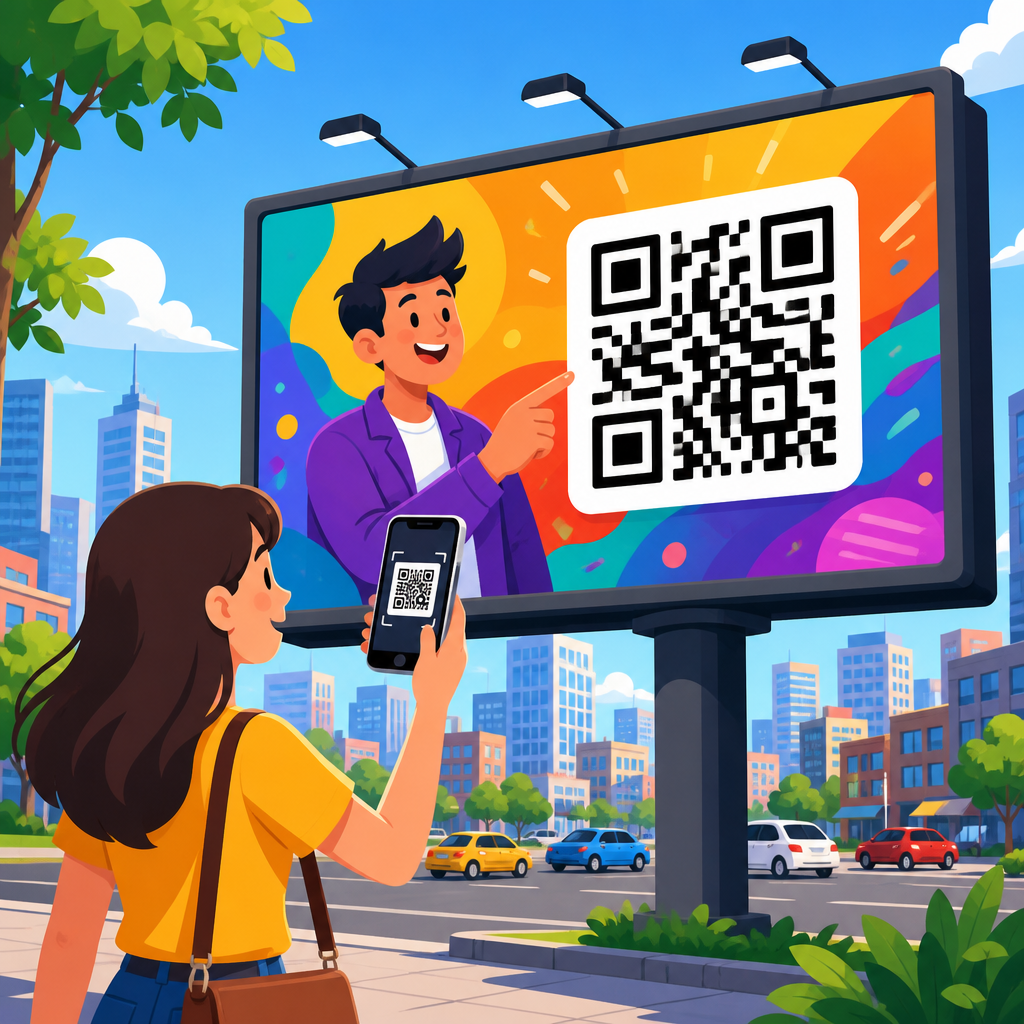
QR codes for billboard advertising turn a static outdoor impression into a measurable digital interaction, giving marketers a practical way to connect awareness, response, and attribution in one campaign. In simple terms, a QR code is a two-dimensional barcode that a smartphone camera can scan to open a webpage, app, video, map, coupon, lead form, or other destination. A billboard is traditionally a one-way format: people see it, remember what they can, and maybe act later. When you add a QR code, the board becomes a response channel. That shift matters because modern marketing teams are under pressure to prove return on ad spend, shorten the path from curiosity to action, and unify offline media with digital analytics. I have worked on campaigns where one scanable code outperformed a vanity URL because drivers and pedestrians could respond instantly instead of trying to remember a web address hours later. Used well, billboard QR codes help brands capture intent at the moment it appears.
The topic sits at the center of marketing and advertising because outdoor media is still powerful for reach, while mobile devices dominate how people complete decisions. Billboard QR codes bridge those realities. They support product launches, event promotion, retail footfall, app installs, franchise lead generation, tourism campaigns, and local service bookings. They also create a hub for related tactics across the broader marketing and advertising category, including QR codes on posters, transit ads, packaging, direct mail, in-store displays, menus, brochures, and point-of-sale signage. The same principles apply across channels: clear value exchange, fast mobile landing pages, strong tracking, and a design that can be scanned under real conditions. This article explains how billboard QR codes work, when they are effective, how to design and measure them, and which mistakes reduce performance. If you need one practical answer, it is this: billboard QR codes work best when the offer is immediate, the destination is mobile-first, and the code is large enough to scan from the actual viewing distance.
Why QR Codes Work on Billboards
Billboards are excellent for broad awareness because they deliver repeated impressions in high-traffic areas, but they are weak at capturing immediate response without a frictionless next step. QR codes reduce friction. A person sees the message, opens the phone camera, scans, and lands exactly where the advertiser wants. That sequence compresses attention, interest, and action into seconds. From campaign reviews I have run, the biggest gain is not novelty; it is convenience. People act when the effort is low and the relevance is high. A commuter who sees “Get a quote in 30 seconds” or “Claim today’s offer” has a clear reason to scan now, not later.
They also solve a persistent attribution problem in out-of-home advertising. Traditional billboard metrics rely on circulation estimates, traffic counts, and modeled impressions. Those measures are useful, but they do not show what happened next. A QR code can be tied to a unique URL, UTM parameters, a dedicated landing page, and conversion events in analytics platforms such as Google Analytics 4, Adobe Analytics, HubSpot, or Salesforce Campaigns. Marketers can measure scans, sessions, form fills, purchases, calls, map opens, coupon redemptions, and assisted conversions. That does not make billboard measurement perfect, because not every viewer scans, but it dramatically improves visibility into response behavior.
Another reason billboard QR codes work is flexibility. The destination can change without replacing the printed board if you use a dynamic QR code. That matters when legal copy changes, stock runs low, a promotion ends, or creative underperforms. In practice, dynamic codes are usually preferable for campaign management because they allow destination updates, scan analytics, device breakdowns, time-of-day reporting, and geographic trends. Static QR codes still have uses, especially for permanent installations with stable destinations, but most paid media campaigns benefit from the control and reporting of dynamic versions.
Best Use Cases in Marketing and Advertising
Not every billboard objective is equally suited to QR activation. The strongest use cases are those where the next action can happen on a phone immediately. Retail campaigns often use billboard QR codes to deliver a store locator, limited-time coupon, or click-to-save offer in Apple Wallet or Google Wallet. Entertainment brands use them for trailer views, ticket purchases, or waitlist signups. Real estate developers use them to open a mobile property gallery, virtual tour, or lead form. Restaurants and quick-service chains use them for menu highlights, app downloads, loyalty enrollment, or order-ahead promotions.
Local service businesses benefit as well. A roofing company can run a weather-triggered billboard after a storm with a QR code leading to emergency inspection booking. A personal injury law firm can direct scanners to a short qualification form. A hospital or clinic can route users to urgent care wait times, physician finder pages, or service-line content. Tourism boards use billboard QR codes near airports, highways, or transit hubs to open itineraries, hotel deals, and attraction maps. B2B marketers can use them at airports and business districts to promote reports, webinar registration, or demo requests, though they generally need stronger incentives because B2B decisions are less impulsive.
The most effective campaigns align the billboard context with the mobile destination. A board near a stadium should not send people to a generic homepage; it should open event-specific content, merchandise, transportation details, or a live offer tied to that location. A transit shelter billboard can promote app downloads because the user is stationary long enough to scan comfortably. A highway billboard should focus on low-friction actions like saving directions, calling, or opening a short-form landing page with one primary choice. Context increases response because it respects the real conditions in which the audience is viewing the ad.
Design Rules That Make a Billboard QR Code Scannable
Scannability is the first requirement. If people cannot scan the code quickly, every other optimization fails. Start with size. A common guideline is a roughly 10:1 ratio between viewing distance and QR code size, though teams should always test in the real environment. For example, a code intended to scan from 20 feet away should be about 2 feet wide, and greater distance may require much larger dimensions depending on speed, angle, lighting, and camera quality. Quiet zone matters too: the blank margin around the code helps cameras distinguish it from surrounding graphics. Remove that margin and scan reliability drops.
Contrast should be high, ideally dark code elements on a light background. Branded colors can work, but low-contrast combinations often fail outdoors, especially in glare or at dusk. Avoid placing codes over photography, patterns, or reflective surfaces. Error correction can protect readability if a code includes a logo or minor visual interference, but aggressive styling is a common mistake. I have seen teams insist on overdesigned codes with thin modules and decorative shapes that looked impressive in a presentation and performed poorly on the street. A billboard is not the place to prioritize novelty over function.
Message hierarchy matters just as much as the code itself. The viewer should understand in one glance what they get by scanning. “Scan for 20% off,” “Scan to watch the trailer,” and “Scan to find the nearest store” are stronger than “Learn more.” Good billboard creative follows a clear sequence: core headline, QR code, brief call to action, and trust cue if needed. Short copy works because outdoor dwell time is limited. If the ad is likely to be seen by drivers, the design must be even simpler. Some jurisdictions and media owners also restrict interactive elements on roadside boards for safety reasons, so compliance review is essential before launch.
| Campaign element | Recommended practice | Why it matters |
|---|---|---|
| QR code type | Use dynamic QR codes for paid campaigns | Allows destination changes and detailed scan tracking |
| Landing page | Build a mobile-first page with one primary action | Reduces drop-off after the scan |
| Call to action | State a specific benefit such as discount, directions, or booking | Gives people a reason to scan immediately |
| Code placement | Keep it isolated with strong contrast and clear quiet zone | Improves scan reliability in outdoor conditions |
| Measurement | Tag URLs with UTMs and connect events to analytics and CRM | Supports attribution and optimization |
Landing Pages, Tracking, and Attribution
A billboard QR code campaign succeeds or fails after the scan. The destination should load fast, match the billboard promise, and make the next step obvious. In most cases, the best landing page is not the homepage. It is a dedicated page with a single purpose, compressed images, readable type, thumb-friendly buttons, and as little friction as possible. If the goal is lead generation, reduce the form to essential fields. If the goal is store visits, open a map or store locator immediately. If the goal is app downloads, route by device so iPhone users reach the App Store and Android users reach Google Play without extra taps.
Tracking should be planned before creative goes live. Use unique campaign URLs with UTM parameters for source, medium, campaign, creative, and placement. Dynamic QR platforms often provide scan counts, timestamps, approximate location, and device data, but those numbers should be reconciled with site analytics because a scan does not always become a session. In GA4, configure key events such as form_submit, purchase, click_call, generate_lead, or view_promotion. In a CRM, map those actions to pipeline stages so outdoor media contributes to revenue reporting, not just top-of-funnel dashboards. For larger programs, offline conversion imports and call tracking help close the loop.
Attribution requires realism. Billboard QR scans represent direct response from a subset of viewers who choose to act immediately. Many other people will search the brand later, visit directly, or convert through another channel. That means QR code results should be evaluated alongside branded search lift, direct traffic trends, geo-based holdout tests, coupon redemption, footfall studies, and sales by market. The code is not the whole measurement strategy; it is one high-signal component of it. When teams understand that, they avoid the mistake of undervaluing outdoor media simply because not every impression produces a scan.
Common Mistakes and How to Avoid Them
The most common failure is sending users to a generic destination with no immediate payoff. If someone scans a billboard and lands on a crowded homepage, the ad wasted the moment of intent. The second failure is making the code too small or placing it where glare, motion, or angle makes scanning difficult. The third is weak creative logic: the billboard asks for too much attention, too much reading, or too much decision-making. Outdoor media rewards clarity, not complexity.
Another mistake is ignoring audience safety and context. A QR code on a fast-moving highway placement may generate fewer scans than one in a pedestrian, transit, or urban stop environment because the audience does not have enough time to act safely. In those cases, a short memorable URL or brand search cue can complement the QR code. Teams also overlook mobile page speed. Even a strong billboard and scannable code can underperform if the landing page is heavy, slow, or blocked by intrusive pop-ups. Core Web Vitals, image compression, and simplified scripts are not technical extras here; they are conversion factors.
Finally, many brands launch once and never optimize. The better approach is to test location, call to action, offer, landing page layout, and destination type. Compare “Scan for directions” against “Scan for today’s offer.” Compare a coupon against a quiz or a booking tool. Review scan peaks by hour and day. If one market responds better than another, examine environmental differences such as traffic speed, billboard angle, weather, and local brand familiarity. Billboard QR code performance improves when creative and measurement teams work together instead of treating outdoor as an isolated channel.
How This Fits the Wider Marketing and Advertising QR Strategy
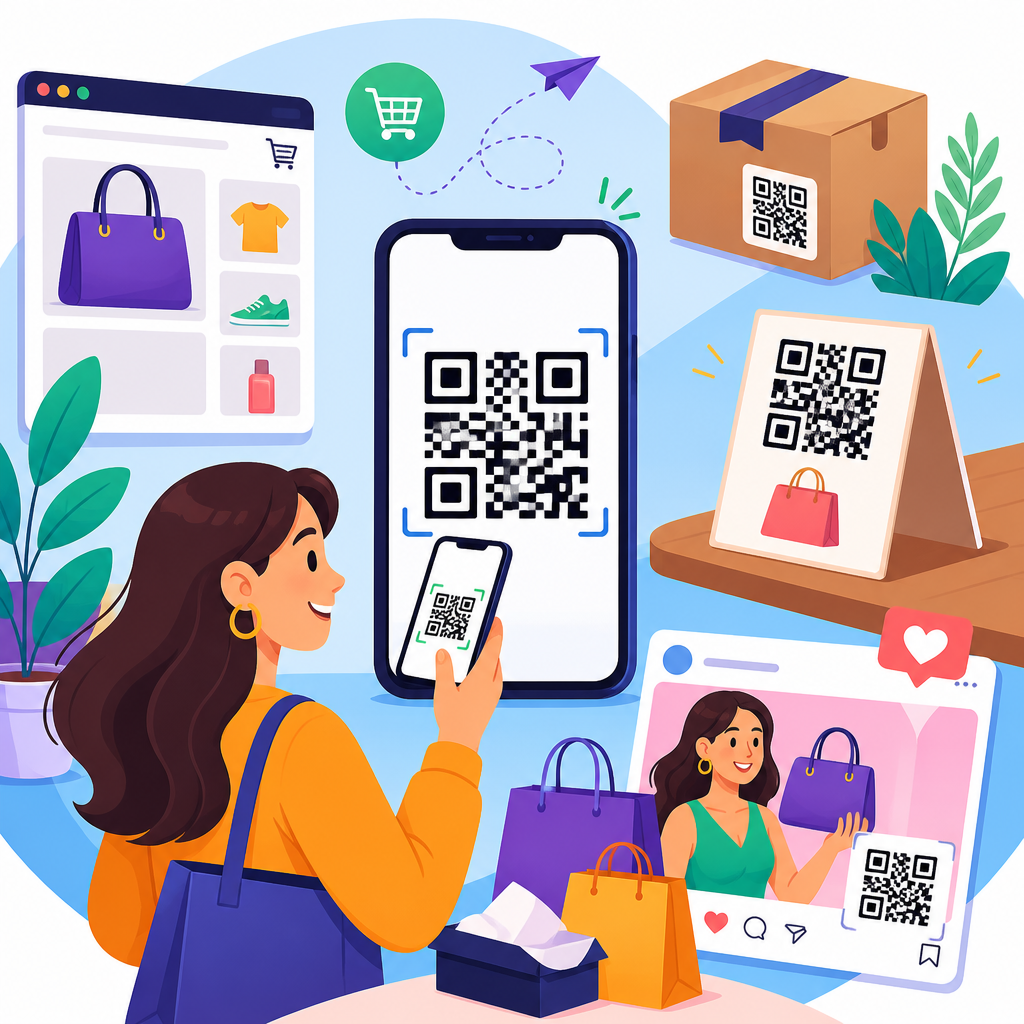
As a hub topic within marketing and advertising, billboard QR codes should connect to a broader QR ecosystem rather than operate alone. The strongest programs maintain message consistency across billboards, posters, transit ads, flyers, packaging, retail displays, direct mail, and social retargeting. A person may first scan a street-level poster, later see a billboard, and finally convert from an email reminder or paid search ad. Shared campaign naming, aligned landing pages, and synchronized offers make those touchpoints reinforce each other. This is where internal campaign architecture matters: one category strategy, many channel-specific executions.
Billboard placements are especially useful at the top and middle of the funnel, where they create awareness and capture high-intent curiosity in physical environments. Other marketing and advertising QR uses often carry the relationship further. Packaging QR codes deepen product education after purchase. In-store signage supports promotions and loyalty enrollment at the point of decision. Event signage captures leads during live experiences. Direct mail QR codes revive offline response rates by adding immediacy and measurement. Treating billboard QR codes as the hub means building standards that every adjacent use case can inherit: dynamic code governance, mobile landing page templates, analytics conventions, compliance review, and creative scan testing.
The result is a more accountable offline media program. Instead of guessing how physical advertising contributes, marketers can connect impression-heavy channels to measurable digital behavior. Start with one billboard campaign, define the action you want, build a fast destination, and test the code in the real world before launch. Then extend the same framework to the rest of your marketing and advertising assets. QR codes do not replace strong creative or smart media buying, but they make both more effective by turning attention into action. If your brand uses outdoor media, audit your current billboards and identify where a well-designed QR code can create the next measurable step.
Frequently Asked Questions
1. Why should marketers use QR codes on billboard advertising?
QR codes give billboard advertising something it has traditionally lacked: an immediate, trackable response path. A standard billboard is excellent for broad visibility and top-of-funnel awareness, but it usually depends on memory. A person sees the message while driving or walking, then may or may not search for the brand later. By adding a QR code, marketers create a direct bridge from the physical ad to a digital destination where action can happen in real time.
This matters because it turns a passive impression into an active interaction. Instead of hoping the audience remembers a website, promo code, or phone number, the billboard can instantly send people to a landing page, appointment form, coupon, product page, app download, event registration, map, or video. That removes friction, which is one of the biggest barriers in out-of-home advertising. The easier it is to respond, the more likely people are to take the next step.
QR codes also improve measurement and attribution. Marketers can track scans by location, date, time, device type, and campaign variation, depending on the platform they use. That means a billboard campaign no longer has to be evaluated only by estimated impressions or traffic counts. It can be assessed by actual engagement metrics such as scans, visits, conversions, and downstream sales activity. For brands that need to justify spend and compare channels more accurately, that is a major advantage.
In short, QR codes make billboard advertising more interactive, more measurable, and more performance-oriented without taking away its branding power. They help connect awareness, response, and analytics in one campaign, which is why they have become such a practical addition to modern outdoor media.
2. What should a billboard QR code link to for the best results?
The best destination is one that matches the viewer’s intent, the campaign goal, and the limited attention span of someone engaging with out-of-home media. In most cases, a billboard QR code should not simply send people to a generic homepage. That often creates unnecessary friction and forces the user to hunt for the information or offer that motivated the scan in the first place.
Instead, marketers should use a dedicated mobile-friendly landing page built specifically for the billboard campaign. If the objective is lead generation, the QR code can open a short form with a clear value proposition. If the goal is foot traffic, it can launch directions to the nearest location or display a store locator. If the campaign promotes a limited-time offer, it can reveal a coupon or discount code immediately after the scan. For entertainment, tourism, or event marketing, a QR code might link to a ticketing page, trailer, event schedule, or reservation tool. For app-based businesses, directing users to an app download page or deep link can be effective as long as the experience is streamlined.
The destination should also reflect the context of the billboard. Someone scanning from a city center may want directions, nearby availability, or a time-sensitive promotion. Someone scanning from a commuter corridor may be better served by a “learn more” page they can revisit later. Whatever the destination, it should load quickly, look great on mobile, and focus on one primary call to action rather than presenting too many choices.
Strong billboard QR destinations usually share a few traits: simple design, concise copy, prominent call-to-action buttons, and relevance to the ad creative. The transition from billboard message to landing page should feel seamless. If the billboard promises “Get 20% Off Today,” the landing page should immediately deliver that offer. If the ad says “Book a Free Demo in 30 Seconds,” the user should land directly on a short booking flow. Relevance and speed are what convert curiosity into measurable action.
3. How can businesses make a QR code on a billboard easy and safe to scan?
Successful billboard QR codes depend on both visibility and usability. First, the code itself must be large enough to scan from a realistic distance. The exact size depends on the billboard format, road speed, and viewing angle, but the general principle is simple: if people cannot comfortably notice and capture the code in the few seconds available, it will underperform. Marketers should work with designers and media partners to make sure the code occupies enough space and is not treated as a tiny add-on in a corner.
Contrast is equally important. A black code on a white background is often the safest choice because smartphone cameras recognize it easily. Stylized codes can work, but excessive branding, low contrast, or busy imagery behind the code can reduce scan reliability. The quiet zone, or blank margin around the code, should also be preserved so devices can detect the shape correctly. Before launch, the final printed version should be tested under real-world conditions, not just on a computer screen.
Clear instructions help increase scan rates. A billboard should not assume everyone instantly knows what will happen after scanning. A short prompt such as “Scan to Get Directions,” “Scan for Today’s Offer,” or “Scan to Watch the Trailer” gives viewers a reason to act and sets expectations. Pairing the QR code with a concise benefit makes the interaction more compelling and understandable.
Safety matters as well, especially for roadside placements. Billboard QR campaigns should never encourage unsafe behavior from drivers. The message should be designed with the reality of the environment in mind. In high-speed traffic areas, a QR code may be more appropriate on pedestrian-focused, transit, or stationary dwell-time formats than on billboards where scanning would be impractical or dangerous. Advertisers should prioritize locations where users can engage safely, such as sidewalks, train platforms, parking structures, rideshare zones, and urban areas with foot traffic.
Finally, using a trustworthy destination helps reassure users. The landing page should load over HTTPS, align with the brand name on the billboard, and avoid suspicious redirects. If the brand is recognizable and the CTA is clear, people are much more likely to feel comfortable scanning. Ease of use and credibility work together: the more seamless and legitimate the experience feels, the better the results will be.
4. How do marketers measure the success of a billboard QR code campaign?
Measurement starts with scan data, but it should not end there. A QR code platform can typically show how many times a code was scanned, when those scans occurred, where they came from, and what devices were used. That provides a basic engagement layer and helps marketers understand whether the creative, location, and call to action are generating interest. Scan volume alone, however, is only part of the story.
To evaluate performance properly, businesses should connect the QR code to a campaign-specific landing page with analytics in place. That allows teams to track what users do after the scan. Key metrics might include page views, bounce rate, time on page, form submissions, coupon redemptions, calls, purchases, appointment bookings, or app installs. These downstream actions are what show whether the billboard is driving meaningful business outcomes rather than just curiosity.
Marketers can also use unique QR codes for different billboards, markets, messages, or creative versions. This makes A/B testing and location-based analysis much more useful. For example, a retailer might discover that a billboard near a shopping district drives more coupon redemptions, while a billboard on a commuter route generates more product page visits but fewer conversions. Those insights can guide future media buying, creative strategy, and landing page optimization.
Attribution becomes even stronger when QR campaigns are integrated with broader analytics tools, CRM systems, call tracking, or conversion APIs. A lead generated from a billboard scan can be tagged by source and followed through the sales funnel. A local promotion can be measured not only by scans, but by in-store redemption or booked appointments. This gives out-of-home advertising a much more accountable role in the overall marketing mix.
The most effective way to judge success is to align metrics with the original objective. If the campaign goal is awareness, scans and engagement rate may be the main indicators. If the goal is lead generation, completed forms and qualified leads matter more. If the goal is sales, then purchases, revenue, and return on ad spend become central. QR codes make billboard performance more measurable, but the real value comes from defining success clearly before the campaign begins.
5. What are the most common mistakes to avoid with billboard QR codes?
One of the biggest mistakes is treating the QR code as an afterthought. If it is too small, poorly placed, low contrast, or competing with cluttered design elements, it may be technically present but practically unusable. A billboard has only moments to communicate its message, so the QR code needs to be integrated intentionally into the layout with strong visibility and a clear purpose.
Another common issue is sending users to the wrong destination. A generic homepage, a slow-loading site, a non-mobile page, or a confusing interface can waste the interest generated by the scan. Billboard users need a fast, focused experience. If they scan for an offer, they should see the offer immediately. If they scan for directions, they should not have to navigate through multiple menus. Relevance and simplicity are essential.
Marketers also sometimes fail to provide a compelling reason to scan. A QR code by itself is not enough. People need a benefit, such as access to a discount, directions, a demo, exclusive content, a giveaway, or some other clear next step. Without a