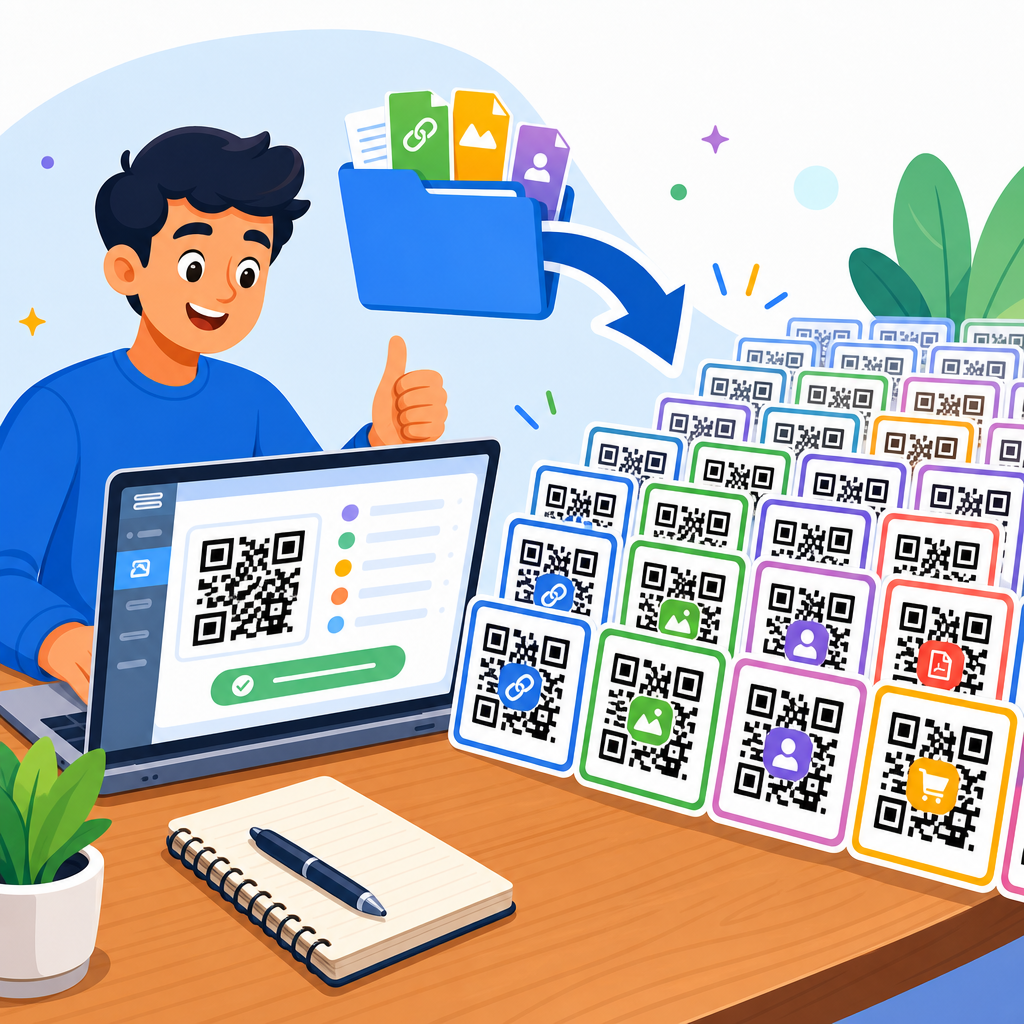
A QR code that gets scanned consistently is not just a graphic; it is a machine-readable interface shaped by contrast, error correction, size, placement, and user trust. In practice, QR code design means customizing the code’s appearance without weakening scan performance, while QR code customization covers branding choices such as colors, logos, frames, and call-to-action text. This matters because a beautiful code that fails under real lighting, distance, or camera quality does not generate visits, leads, payments, downloads, or check-ins.
I have tested QR codes on packaging, retail signage, restaurant tables, event badges, direct mail, and vehicle wraps, and the pattern is predictable: the highest-performing designs balance brand recognition with technical readability. Marketers often focus on aesthetics first, yet scanners care about module clarity, quiet zone preservation, and the relationship between print size and scanning distance. Users care about something different: whether the code looks trustworthy, whether the destination is clear, and whether the reward is worth the tap. Good QR code design sits exactly at that intersection.
At a technical level, a QR code is a two-dimensional matrix barcode made of dark and light modules arranged around finder patterns, alignment patterns, timing patterns, and a surrounding quiet zone. A static QR code stores a fixed destination directly in the symbol, while a dynamic QR code points to a short URL that can be edited later and tracked through analytics. For most campaigns, dynamic codes are the better design choice because they support A/B testing, redirects, and error correction flexibility without forcing a reprint when the landing page changes.
Designing for scans also matters because use cases differ sharply. A QR code on a product box may be scanned at arm’s length under indoor light. A code on a poster in a station may be scanned from several feet away while the user is moving. A restaurant table code may face glare, spills, and low-light dinner service. These conditions change the acceptable margin for styling. The core rule is simple: decoration is optional, scan reliability is not. When that priority is respected, customized QR codes can outperform generic black-and-white squares because they attract attention, communicate purpose, and fit naturally into the surrounding design system.
Start with scanability: the non-negotiable design rules
The best answer to the question “How do you design a QR code that gets scanned?” is this: begin with the standards scanners require before adding any branding. Use strong contrast between foreground and background, keep the quiet zone clear, choose an adequate physical size, and test across multiple phones before publishing. These fundamentals come from the ISO/IEC 18004 QR Code specification and from how smartphone camera software detects edges and finder patterns in real conditions.
Contrast is the first rule. Dark modules on a light background remain the safest option because most consumer scanners identify the code by detecting clear luminance differences. Black on white is ideal, but deep navy, dark green, or dark brown on an off-white background can work well. Problems begin when brands choose low-contrast combinations such as yellow on white, pastel pink on cream, or metallic foil against reflective stock. In testing, those combinations often scan on flagship phones in good light but fail on older Android devices, cracked screens, or dim retail environments.
The quiet zone is equally important. This empty margin around the QR code helps the scanner separate the symbol from nearby text, borders, and imagery. A common failure I see in brochures and packaging is a code pressed directly against icons, coupon edges, or patterned backgrounds. Even a well-generated symbol will become harder to read if the quiet zone is interrupted. As a working standard, preserve at least four modules of clear space on all sides, and more if the design is busy.
Size must match scanning distance. A practical rule used in print production is a minimum one-inch code for close-range scanning, then roughly increase size relative to expected distance. If someone will scan from ten feet away, a tiny code in the corner of a poster is unrealistic. On business cards, compact codes can work because the user holds the card close. On storefront windows, trade show walls, and menu boards, larger is better because users are farther away and camera shake is higher.
Error correction gives designers room to customize. QR codes support four levels: L, M, Q, and H. Higher levels allow more damage or obstruction while keeping the code readable, which matters if you add a center logo or expect wear. The tradeoff is data density: more correction means a more complex symbol for the same content. This is one reason dynamic QR codes are useful. A short redirect URL creates a simpler pattern than a long encoded URL filled with parameters.
Customize without breaking the code
Customization works when each visual change respects how scanners detect structure. The safest custom QR code designs modify color, frame, and logo while preserving the three finder patterns, the module grid, and the quiet zone. Rounded modules, branded eyes, and center marks can all work, but they should be introduced cautiously and tested on low-end devices, not just the latest iPhone. If a design choice reduces first-try scans, it is not a successful customization no matter how polished it looks.
Color choices should prioritize luminance contrast over pure brand matching. For example, a luxury brand may prefer gold, but reflective metallic gold on white often performs poorly. A better solution is matte dark gold on cream or black with subtle gold framing outside the symbol. In one retail packaging project, replacing a pale sage foreground with a darker forest tone increased successful first scans because the code remained on-brand while delivering much stronger contrast under store lighting.
Adding a logo can improve trust and recognition, especially when users hesitate to scan unknown destinations. The logo should sit near the center, remain modest in size, and be paired with medium to high error correction. Oversized logos are one of the most common causes of scan failure because they obscure too many modules. As a practical benchmark, keep the logo small enough that the finder patterns remain dominant visual anchors. If the logo starts to compete with them, you have gone too far.
Frames and calls to action often raise scan rates more than decorative module shapes do. A plain code labeled “Scan to view menu,” “Scan for setup guide,” or “Scan to claim 10% off” usually outperforms an unlabeled code because it answers the user’s immediate question: why should I scan this? In restaurant tests, framed codes with a clear benefit consistently reduced hesitation compared with unframed symbols that looked like technical marks rather than invitations.
Background imagery deserves special caution. Placing a QR code over a photo, texture, or gradient can work only if the code sits on a clean, stable panel. Busy images behind transparent modules confuse detection and reduce contrast. If your design needs atmosphere, place the code inside a solid container card or white box. That simple move preserves branding around the code while protecting readability where it matters.
Best practices by format, placement, and use case
The right QR code design depends on where it appears. Print, packaging, screens, labels, apparel, and outdoor media each create different constraints. On printed flyers and brochures, ink spread and paper texture can soften edges, so high contrast and slightly larger size help. On corrugated packaging, seams and curves can distort the symbol, so codes should stay on flat panels away from folds. On screens, moire patterns and glare can interfere, making clean rendering and adequate pixel dimensions essential.
Placement affects both visibility and user confidence. A QR code hidden in a footer or squeezed next to legal text may technically function but attract few scans. Users need enough room to notice it, understand it, and physically position their camera. On tables, center or top-right placement often works because it falls within the natural field of view. On product packaging, the side panel near instructions can be effective for support content, while front-panel placement makes sense for promotions or authenticity verification.
Context also shapes user intent. A payment QR code should look secure, minimal, and clearly tied to the merchant identity. A campaign code on out-of-home media must be larger, simpler, and linked to a mobile-optimized landing page that loads quickly over cellular networks. A Wi-Fi QR code in a hotel lobby should emphasize convenience and use a clear instruction label. In each case, design success is not measured by aesthetics alone but by whether the code supports the exact job the user is trying to complete.
| Use case | Recommended design approach | Common mistake | Better practice |
|---|---|---|---|
| Restaurant menus | High-contrast code with frame and “Scan to view menu” label | Glossy table tents causing glare | Use matte print and larger code size |
| Product packaging | Dynamic code on flat panel with support or warranty CTA | Placing code over seam or curve | Move to stable surface with quiet zone |
| Posters and signage | Large symbol sized for distance, short CTA, simple destination | Tiny code at bottom corner | Scale for viewing distance and eye line |
| Business cards | Compact code linking to vCard or portfolio | Encoding too much data directly | Use dynamic short URL for cleaner pattern |
| Event badges | Clear code with attendee or ticket flow, tested under low light | Busy branded background | Add solid white panel behind code |
Testing, analytics, and iteration that improve scan rates
No QR code design should go live without real-device testing. I recommend checking every code on both iPhone and Android, on at least one older device, under bright and dim light, and at the expected scanning distance. Test with the default camera app first because that is what most users will use. Then test printed samples, not just on-screen proofs. A code that scans perfectly in a design tool preview may fail after ink gain, laminate glare, or low-resolution export.
Analytics complete the design process. Dynamic QR platforms such as Bitly, QR Code Generator PRO, Beaconstac, Flowcode, and Uniqode let teams track scans by time, location, and device. That data shows whether a code is underperforming because of design, placement, or offer mismatch. For example, if scans spike only during daylight hours, glare or low evening visibility may be the issue. If scans are high but conversions are low, the landing page rather than the code design may be the real bottleneck.
A/B testing is especially valuable for hub-level QR code design strategy. Compare framed versus unframed codes, generic versus benefit-led CTA text, and logo versus no logo. In direct mail, even a small wording change such as “Scan to see your quote” instead of “Learn more” can materially lift engagement because it makes the outcome specific. In retail, moving a code from the bottom shelf strip to eye-level signage can outperform any visual redesign because convenience beats ornament.
There are also limits to what design can solve. If the destination page is slow, not mobile-friendly, blocked by app requirements, or asks users to pinch, zoom, or hunt for the promised content, scan performance in the broader business sense will still be poor. The best QR code design connects instantly to a fast, relevant mobile experience. That means concise landing pages, visible trust signals, and continuity between the CTA on the code and the page headline after the scan.
Building a repeatable QR code design system
Organizations that use QR codes often benefit from a simple internal design standard. Define approved colors, minimum sizes, required quiet zone, logo rules, CTA templates, and print specifications. Include separate presets for packaging, signage, digital display, and small-format print. This prevents each campaign from reinventing the symbol and reduces the risk of attractive but unreliable variations entering production.
A strong system also aligns QR design with the wider customer journey. Link support codes to help centers, packaging codes to onboarding flows, event codes to check-in pages, and promotional codes to dedicated landing pages with clear attribution. Add naming conventions and campaign tags so analytics stay useful over time. When teams treat QR codes as operational assets rather than decorative extras, scan rates improve and reporting becomes meaningful across channels.
The most effective QR code design is therefore deliberate, not flashy. Start with contrast, quiet zone, size, and error correction. Customize with restraint through logos, frames, and brand-safe colors. Match the code to its physical environment and intended action. Then test, track, and refine. If you are building out a broader QR program, use this page as your hub and apply these principles consistently across menus, packaging, business cards, posters, payments, and product support. A QR code that gets scanned is one that respects both the camera and the customer. Review your current codes, test them in real conditions, and improve the weakest one first today.
Frequently Asked Questions
What makes a QR code more likely to get scanned successfully?
A QR code gets scanned reliably when function comes first and design supports readability instead of competing with it. The most important factors are strong contrast, adequate size, clear quiet space around the code, appropriate error correction, and placement that matches real-world scanning conditions. In practical terms, that means using a dark foreground on a light background, avoiding overly decorative patterns that distort the code’s data modules, and keeping a clean margin around the entire symbol so phone cameras can recognize its boundaries quickly.
Scan performance also depends on context. A code printed on a poster across a room needs to be larger than one placed on product packaging held in the hand. Lighting matters too: glossy surfaces, low light, glare, and shadows can all interfere with readability. Camera quality varies from user to user, so a design that only works under ideal conditions is not a strong design. If the code is meant for repeated public use, test it at different distances, angles, and brightness levels before finalizing it. The best-performing QR codes are not necessarily the most elaborate; they are the ones that stay machine-readable in ordinary, imperfect situations.
How much can you customize a QR code without hurting scan performance?
You can customize a QR code quite a bit, but only if every visual choice preserves the code’s underlying structure. Safe customization usually includes adjusting colors, adding a frame, incorporating a clear call to action, softening corners slightly, and placing a small logo in the center when the code uses a suitable error correction level. The key is that customization should enhance recognition and trust without interfering with how scanners detect the code’s finder patterns, alignment patterns, and data modules.
Problems begin when branding decisions override readability. Very low contrast color combinations, busy backgrounds, oversized logos, extreme shape changes, and heavy gradients can all reduce scan accuracy. Customization should never obscure the three corner finder squares or crowd the quiet zone around the code. If a logo is added, it should be sized conservatively and tested across multiple devices. In general, the more customized the code becomes, the more important testing becomes. A branded QR code can absolutely perform well, but it should be treated as a functional interface first and a graphic element second.
What colors work best for QR codes, and which ones should be avoided?
The safest color approach is simple: use a dark code on a light background. Black on white remains the most reliable option because it provides the strongest contrast for camera recognition, but other dark-on-light combinations can work well too, such as navy on white or deep green on a pale background. What matters most is contrast, not just brand alignment. If users need to tilt their phone, step closer, or retry the scan because the code blends into the design, the color choice is working against performance.
Colors to avoid include light-on-light combinations, metallic finishes, reflective inks, and low-contrast pairings such as pastel gray on beige or yellow on white. Red can also be risky in some contexts depending on how devices process image channels, especially when contrast is weak. Transparent backgrounds, photographic backgrounds, and patterned surfaces can make detection much harder. If brand colors are non-negotiable, use them in the frame, surrounding artwork, or call-to-action text while preserving a highly readable code area. A visually consistent design is useful, but a scannable design is what actually drives results.
How do size and placement affect whether people scan a QR code?
Size and placement are major drivers of scan success because they determine whether people can easily notice the code, access it comfortably, and capture it clearly with a phone camera. A QR code should be large enough for the expected scanning distance. A common rule of thumb is that the farther away the user is, the larger the code must be. A tiny code on a billboard or a code placed too high on signage creates unnecessary friction. Users should not have to zoom, stretch, or move into awkward positions just to scan it.
Placement should also consider user behavior and environment. On packaging, position the code where it is visible without wrapping around edges or folding into seams. On printed materials, avoid placing it too close to other graphic elements that can visually crowd it. In public spaces, keep it at a practical eye or hand level and away from glare-prone surfaces when possible. Most importantly, pair the code with a clear reason to scan, such as a short benefit statement or action prompt. Good placement does not just improve camera access; it improves the chance that someone notices the code, trusts it, and acts on it.
How can you build trust so more people actually scan your QR code?
Trust is often the missing piece in QR code performance. Even a technically perfect code may be ignored if users are unsure where it leads or why they should scan it. The most effective way to improve scan rates is to remove ambiguity. Add a short call to action that explains the benefit, such as “View Menu,” “Get Setup Instructions,” or “See Today’s Offer.” When people know what will happen after the scan, they are much more likely to engage. A branded frame or design can help as well, because it makes the code look intentional rather than random or suspicious.
The destination matters just as much as the design. Use recognizable branding near the code, link to a secure and relevant landing page, and ensure the mobile experience is fast and useful. If the code sends users to a broken page, a generic homepage, or content unrelated to the context, future trust drops quickly. In business settings, credibility also improves when the code appears professionally printed, well placed, and consistent with the rest of the brand. In short, people scan when the code looks legitimate, the purpose is clear, and the experience after scanning feels worth the effort.