A QR code for SMS is a scannable code that opens a text message draft on a phone, usually with the recipient number and a prewritten message already filled in, allowing users to send a text in seconds instead of typing everything manually. For businesses, event organizers, schools, restaurants, and service teams, that simple shortcut removes friction at the exact moment someone is ready to act. I have implemented SMS QR campaigns for appointment reminders, customer support, donations, lead capture, and staff communications, and the same pattern holds every time: when the next step is easier, completion rates rise.
To create a QR code for SMS, you encode an SMS string that a smartphone can interpret. In most QR code generators, you choose the SMS option, enter the phone number, add an optional message, and generate the code. When scanned, the user’s default messaging app opens with those fields populated. This matters because text messaging remains one of the most direct communication channels available. SMS is fast, familiar, and broadly accessible, and a well-made QR code turns posters, packaging, signage, receipts, menus, and print ads into instant mobile touchpoints.
This article is the hub for learning how to create QR codes, with SMS as the core use case and the wider creation process explained clearly. You will learn the correct SMS format, the difference between static and dynamic QR codes, design rules that preserve scanability, testing steps, analytics considerations, and the most common mistakes to avoid. You will also see where SMS QR codes fit among URL, vCard, email, Wi-Fi, and app-link QR codes so you can choose the right format for each campaign. If you need one practical guide that answers both “how do I make an SMS QR code?” and “how should I create QR codes properly in general?”, this is that page.
What an SMS QR Code Does and How the Format Works
An SMS QR code encodes instructions that mobile devices translate into a text message action. The most common payload format is straightforward: it includes the phone number and, optionally, a preset message. Different generators may structure the string slightly differently for compatibility, but the user experience is the same: scan, open messaging app, review message, send. That last step matters. A QR code should not send a text automatically; it should prepare the text and leave the final action to the user.
In practice, the best SMS QR codes are short, clear, and purpose-built. For example, a property manager may use a code with the number prefilled and the message “Interested in unit 4B” on a yard sign. A clinic may place one at reception with “Need prescription refill.” A restaurant might add “Text CLUB to join rewards” on table tents, with the message already drafted to minimize friction. Across these cases, the QR code is not just a convenience feature. It reduces errors, standardizes incoming messages, and improves response workflows because staff receive predictable text content.
Compatibility is generally strong on iPhone and Android, but not identical across every camera app, messaging app, and operating system version. That is why format discipline and testing are essential. Shorter messages tend to perform better than long templated texts, and international numbers should be entered in full country-code format when you expect cross-border scans. If your users may scan from different device types, build for the broadest support rather than relying on app-specific behavior.
How to Create a QR Code for SMS Step by Step
The simplest method is to use a reputable QR code generator that supports SMS as a content type. Open the generator, choose SMS, enter the destination phone number, add the prefilled message if needed, and click generate. Then customize the style carefully, download the file in the right format, and test it before publishing. That is the short answer, but each step has details that affect results.
Start with the phone number. Use the exact number that should receive messages, and include the country code if your audience is not strictly local. Next, write the prefilled message as a short user intent statement, not a paragraph. “Book a demo,” “Need roadside assistance,” or “I want pricing for 250 units” works better than a long sentence because it is faster to review and less likely to render inconsistently. After generating the code, keep visual customization restrained. Add a brand color only if contrast stays high, preserve the quiet zone around the code, and avoid over-stylized shapes that lower readability.
Finally, export and deploy thoughtfully. PNG works for digital use, while SVG is better for print because it scales without losing edge sharpness. Place the QR code where people can scan it comfortably, add a short instruction such as “Scan to text us,” and include the fallback phone number in plain text. On printed materials, I always test from realistic distances and lighting conditions rather than from a perfect screen mockup. A code that scans on a designer’s monitor can still fail on glossy paper under lobby lighting.
Static vs Dynamic QR Codes: Which Type Should You Use?
Static QR codes store the destination data directly in the pattern. For SMS, that means the encoded phone number and preset message are fixed once created. Dynamic QR codes point to a short redirect or management layer that can be updated later, often with scan tracking, device data, time stamps, and campaign controls. For a simple evergreen use case, static is fine. For campaigns, distributed signage, multi-location operations, or anything you may need to edit later, dynamic is usually the better choice.
I recommend dynamic codes when you care about measurement or operational flexibility. If a support number changes, a static QR code on ten thousand product inserts becomes a replacement project. A dynamic code can often be updated in the dashboard without reprinting anything. Dynamic platforms also help you compare placements. For example, a retailer can issue one SMS QR code for in-store displays and another for packaging, each routing to the same action while capturing separate scan counts. That turns QR codes from passive graphics into measurable acquisition points.
There are tradeoffs. Dynamic codes depend on the provider’s infrastructure, subscription terms, and uptime, so vendor choice matters. Static codes have no redirect dependency and are often preferable for long-term archival uses, public-sector documents, or offline materials that must remain functional without a managed service. The right decision is not ideological. It depends on editability, analytics needs, longevity, compliance requirements, and whether you can accept a platform dependency in exchange for control.
| Option | Best for | Main advantage | Main limitation |
|---|---|---|---|
| Static SMS QR code | Permanent signage, simple one-off uses | No ongoing platform dependency | Cannot edit number or message after printing |
| Dynamic SMS QR code | Campaigns, multi-location use, tracked assets | Editable destination and scan analytics | Requires a provider and usually a paid plan |
Designing an SMS QR Code That Scans Reliably
The best-looking QR code is the one that scans immediately. In production, scan reliability depends on four things more than any decorative choice: contrast, size, quiet zone, and error-free output. Dark code on a light background remains the standard because phone cameras and detection algorithms read that pattern most consistently. A quiet zone, the clear margin around the code, should never be crowded by borders, icons, or text. If you add a logo, keep it modest and confirm that error correction settings still allow fast scanning.
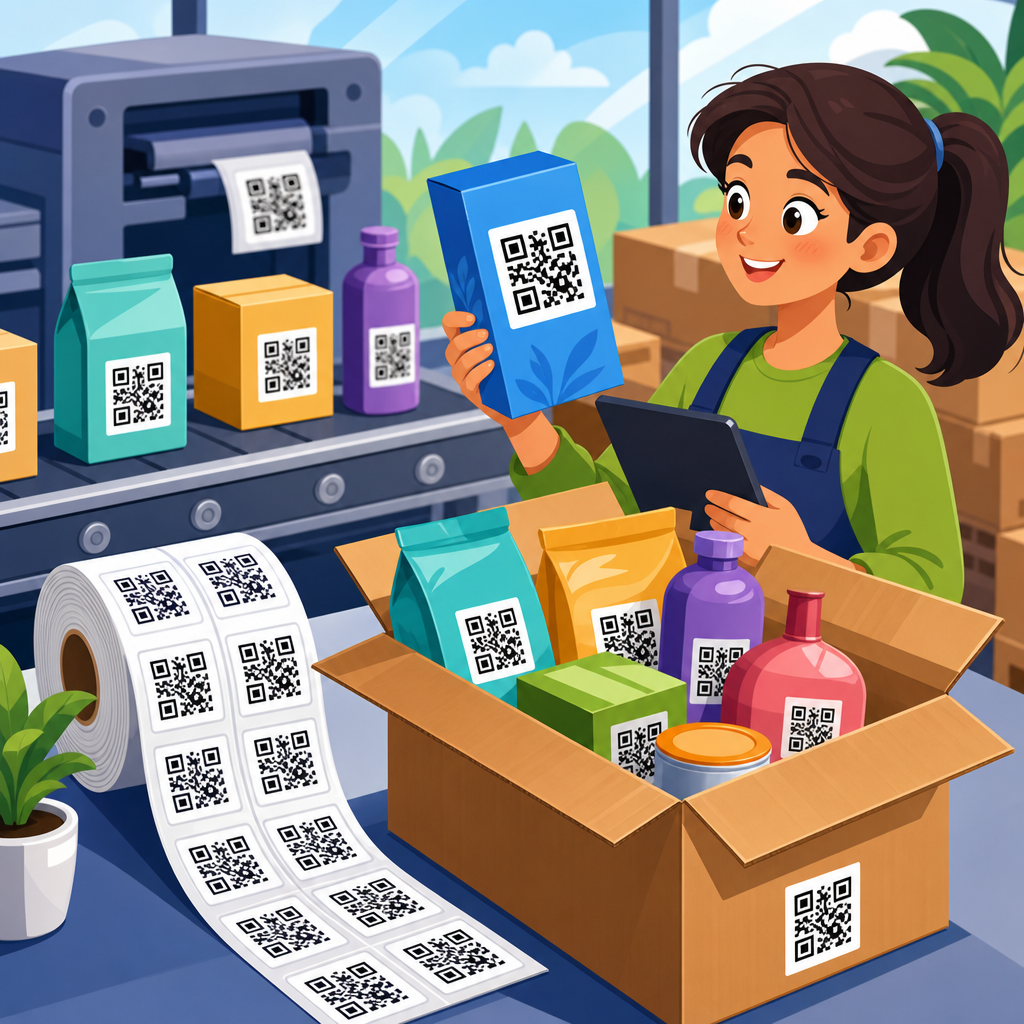
Size depends on viewing distance and placement. For print, tiny codes are a common failure point, especially on posters and shelf talkers viewed at arm’s length or farther. On packaging, curvature can distort the pattern, so avoid seams and folds. On screens, low-resolution exports and compressed images can soften edges. That is why SVG is preferred for print and why high-resolution PNG is safer for many digital environments. I also avoid placing QR codes over textured photography because visual noise reduces detection speed.
Instructions improve performance. Users should not have to guess what happens after the scan. “Scan to send us a text,” “Scan to request a quote by SMS,” or “Scan to join updates by text” sets expectations and increases confidence. If the action involves consent, timing, or charges, disclose that plainly near the code. Good QR design is not only about machine readability; it is about human clarity at the moment of decision.
Testing, Troubleshooting, and Measuring Performance
Every QR code should be tested across devices before release. My minimum checklist includes iPhone and Android, native camera scan, at least one third-party scanner if your audience may use one, bright light and low light, and both printed and digital versions if the code will appear in multiple formats. For SMS QR codes specifically, confirm that the recipient number appears correctly, the prefilled message is intact, and the user lands in the expected messaging app flow. Also verify that the code still scans after any final export, compression, or print proofing.
When a code fails, the causes are usually predictable. Low contrast, cramped quiet zones, over-designed modules, tiny sizing, reflective surfaces, and blurred printing account for most problems. Another common issue is a mismatch between the advertised action and the encoded behavior. If the sign says “Text for support” but the code opens a different number or an empty draft, trust drops quickly. Troubleshooting should start with the payload, then move to file quality, styling, and environment.
Measurement depends on the code type and your workflow. Dynamic platforms such as QR Code Generator, Bitly, Beaconstac, and Scanova can provide scan counts, time data, and location approximations, though exact features vary. SMS completion is harder to measure than a web click because the final send happens in the user’s messaging app. The practical workaround is to use distinct prefilled keywords or campaign phrases and track incoming message volume by keyword in your CRM, help desk, or shared inbox tool. That gives you attributable performance data without adding friction to the user experience.
Where SMS Fits Within the Bigger QR Code Creation Strategy
SMS is only one QR code type, but it is an important one because it sits close to intent. When someone wants to ask a question, request help, confirm attendance, or start a conversation, text is often faster than a form. Still, it should not be the automatic default. URL QR codes are better for content-rich destinations, vCard codes are better for contact saving, email QR codes are useful when a written record is required, and Wi-Fi QR codes solve access problems in physical spaces. Choosing the right type begins with the user’s next action, not with the tool.
As the hub for how to create QR codes, this page should guide your broader build process. First define the outcome: conversation, click, saved contact, login, app install, payment, or file download. Then choose the payload type that removes the most friction. Next, decide whether the code should be static or dynamic. After that, apply design rules, add a clear call to action, test in real conditions, and connect the response to your operational system. For SMS, that may mean routing messages to a business texting platform, shared support inbox, or local number with staff coverage hours.
A practical example makes the difference clear. A contractor at a trade show may use an SMS QR code on booth signage with “Text for same-day estimate.” On the brochure, a URL QR code can open a gallery of completed projects. On staff badges, a vCard QR code can save contact details instantly. Same audience, different intent, different QR code types. That is how effective QR strategy works: each code is designed around the exact action the user is most likely to take in that moment.
Creating a QR code for SMS is simple, but creating one that performs consistently requires the right format, careful design, thorough testing, and a clear understanding of user intent. The essential process is straightforward: choose SMS as the content type, enter the full recipient number, add a short prefilled message, generate the code, export it in a suitable file format, test it on real devices, and place it with a direct instruction. If you may need edits or analytics later, use a dynamic code. If permanence and independence matter more, use a static code.
The bigger lesson is that SMS QR codes are part of a broader QR code creation discipline. Start with the action you want the user to take, match that action to the correct QR type, and then protect scanability above all else. High contrast, adequate size, clean quiet zones, and realistic testing matter more than decorative styling. Measurement matters too, especially when QR codes are used in campaigns, packaging, customer support, and physical marketing where attribution is otherwise difficult.
If you are building out your QR Code Creation & Tools content, use this page as your hub and branch into deeper guides on dynamic versus static codes, print sizing, QR code testing, SMS marketing compliance, and the best QR code generators for business use. Then create your first SMS QR code, test it in the environment where people will actually scan it, and refine from real user behavior rather than assumptions.
Frequently Asked Questions
What is a QR code for SMS, and how does it work?
A QR code for SMS is a scannable code that launches a new text message draft on a mobile device. When someone scans it with their phone camera or QR scanner, their messaging app opens automatically with key details already filled in, such as the recipient phone number and, in many cases, a prewritten message. Instead of asking people to manually type a number, remember a keyword, or compose a text from scratch, the QR code reduces the process to a quick scan and send.
From a practical standpoint, this works by encoding SMS-specific data into the QR code. The code tells the phone what action to take, and supported devices interpret that data by opening the default SMS application. This is especially useful in situations where speed and convenience matter, such as appointment confirmations, customer service requests, donation campaigns, event check-ins, lead generation, restaurant orders, or school communication. The main advantage is that it removes friction at the exact moment a user is ready to act, which can significantly improve response rates and user participation.
How do you create a QR code for SMS?
To create a QR code for SMS, you start with the two core elements: the destination phone number and the message you want users to send. Most QR code generators that support SMS will provide a dedicated SMS field where you can enter the recipient number and a default text message. Once you input that information, the platform generates a scannable QR code that can be downloaded and used on print materials, signage, packaging, tables, posters, flyers, websites, or digital screens.
In many cases, the SMS format is based on a simple structure such as the phone number plus a message body. After generating the code, it is important to test it on multiple devices, especially both iPhone and Android phones, because behavior can vary slightly depending on the operating system and messaging app. A well-built SMS QR code should open the text app smoothly, display the correct number, and populate the message exactly as intended. Before publishing the code at scale, confirm that the wording is clear, concise, and aligned with the action you want the user to take, whether that is booking an appointment, requesting support, joining a campaign, or responding to a promotion.
What should you include in the prefilled SMS message?
The best prefilled SMS messages are short, specific, and easy for the user to send without editing. In most cases, the message should include a clear keyword, reference, or phrase that helps your team understand the purpose of the incoming text. For example, a business might use a message like “BOOK APPOINTMENT,” “REQUEST QUOTE,” “NEED SUPPORT,” or “DONATE.” This makes incoming responses easier to sort, route, and track. If your workflow requires more detail, you can include a short prompt, but it is usually smart to keep it concise so the message feels effortless rather than burdensome.
You should also think about the user experience after the text is sent. The prefilled message should match the campaign goal and set up the next step logically. For example, if the QR code appears on an event sign, the message might indicate registration interest. If it appears on restaurant tables, it might trigger a service request or special offer opt-in. If it is used for customer support, the message can help identify the issue category quickly. Strong SMS QR campaigns are not just about generating a code; they are about designing a smooth interaction from scan to send to follow-up. That is why message clarity matters so much.
Where can businesses use SMS QR codes most effectively?
SMS QR codes are highly effective anywhere people may want to take immediate action without navigating a website or typing manually. Businesses often use them for appointment reminders, customer service touchpoints, lead capture, promotions, product support, and feedback collection. Event organizers can place them on registration desks, posters, badges, and programs to help attendees ask questions or receive updates. Schools can use them for parent communication, sign-ups, or information requests. Restaurants may use SMS QR codes for loyalty offers, table service, catering inquiries, or customer feedback. Service teams can place them on vehicles, invoices, door hangers, or job completion cards to make it easy for customers to request help or schedule follow-up work.
The reason these use cases perform well is simple: text messaging feels direct and immediate. People already know how to text, and they are often more willing to send a quick message than fill out a longer web form. In real-world campaigns, this can improve participation because the action requires almost no effort. The strongest placements are usually high-intent moments, when a customer is interested, present, and ready to respond. That could be while standing in a store, attending an event, reviewing packaging, waiting in a service area, or reading a flyer. In those moments, an SMS QR code gives them the fastest possible path to connect.
What are the best practices for making an SMS QR code campaign successful?
Successful SMS QR code campaigns combine technical accuracy, clear messaging, and thoughtful placement. First, make sure the code scans reliably by using a high-resolution image, sufficient contrast, and an appropriate size for the viewing distance. A code on a business card should be smaller than one on a poster or storefront window. Second, include a clear call to action near the QR code so users understand exactly what will happen when they scan it. Phrases like “Scan to text us for support,” “Scan to book by text,” or “Scan to send your donation message” remove uncertainty and improve engagement.
It is also important to test every part of the experience before launch. Confirm that the code opens the correct SMS app behavior, that the number is accurate, and that the prewritten message displays properly on different devices. If your campaign connects to a customer support desk, booking workflow, or lead management process, verify that incoming texts are monitored and answered promptly. Speed matters because text is an immediate communication channel. Finally, track performance where possible by using unique phone numbers, campaign-specific keywords, or different QR codes for different placements. That allows you to measure which locations and messages drive the most scans and responses, helping you refine future campaigns for better results.