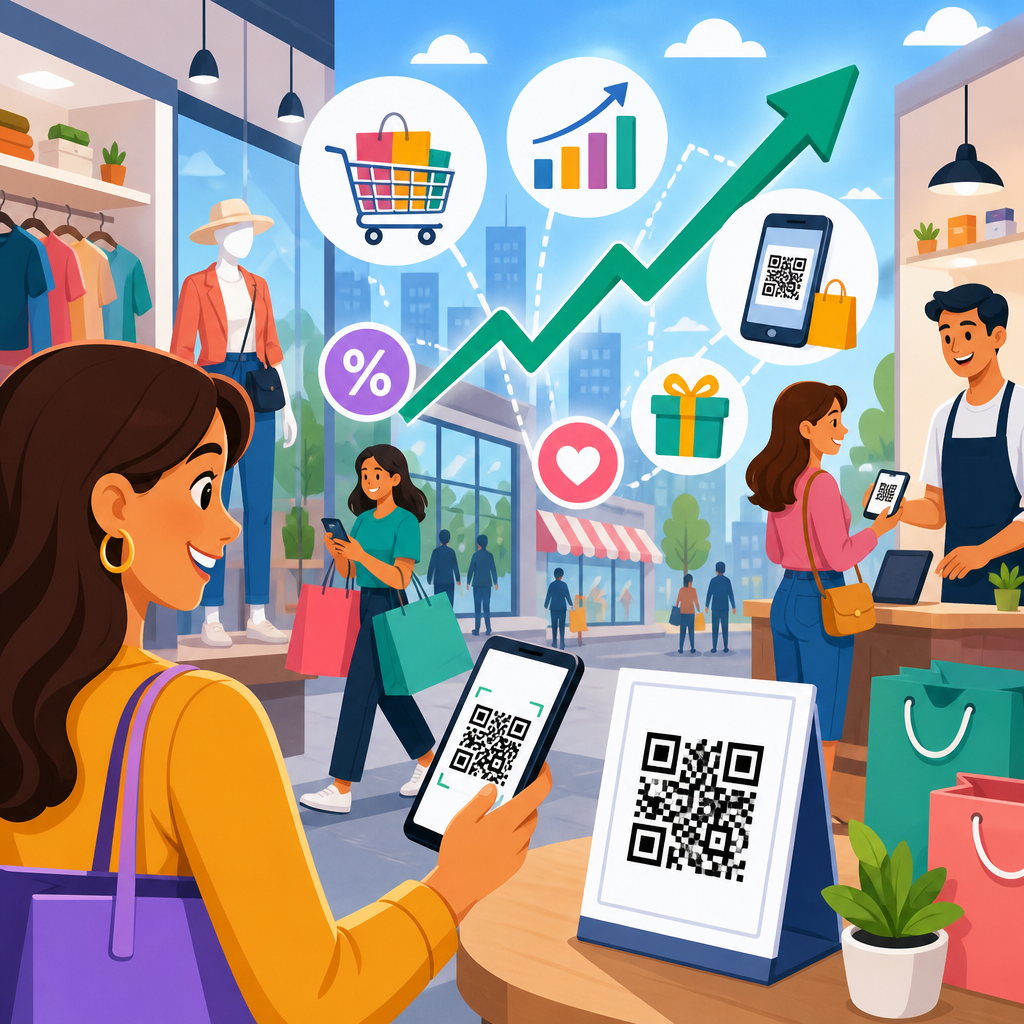
Retail has become one of the strongest forces behind global QR code adoption trends because stores, brands, and shoppers now expect instant digital access at every step of the buying journey. A QR code, or quick response code, is a two-dimensional barcode that stores a link, identifier, payment token, or product record and can be scanned by a smartphone camera in seconds. In retail, that simple scan now supports payment, product discovery, loyalty enrollment, reviews, traceability, pickup, and post-purchase service. I have watched this shift unfold across store audits, packaging programs, and omnichannel launches, and the pattern is consistent: retailers adopt QR codes when they remove friction faster than any alternative.
The importance of this trend is global, not local. Smartphone penetration has made scanning behavior mainstream in both mature and developing markets, while retailer pressure to connect physical shelves with digital content has turned QR codes into practical infrastructure rather than novelty. Global QR code adoption trends are shaped by several forces at once: cashierless expectations, contactless habits, cross-border digital payments, stricter product transparency demands, and the need to measure what happens after a customer sees an item in store. Unlike older barcodes designed mainly for checkout, QR codes can carry consumers into a richer experience, giving retailers data and shoppers convenience.
This matters because retail is where consumer behavior scales. When supermarkets, fashion chains, pharmacies, and marketplaces normalize scanning, the habit spreads into travel, healthcare, hospitality, and public services. The technology also solves a core retail problem: physical space is limited, but customer questions are not. A package cannot explain sourcing, ingredients, setup instructions, returns, warranty terms, and promotional offers all at once. A QR code can. As a result, retail trends do more than increase usage counts; they teach consumers what scanning is for, build trust through repetition, and create standards other industries then follow.
To understand how retail trends are driving QR code growth, it helps to look beyond simple scan volume. The real story includes payment ecosystems, omnichannel fulfillment, packaging innovation, loyalty mechanics, and regional differences in infrastructure. It also includes the shift from static codes to dynamic QR codes, which allow destination changes, campaign tracking, and personalized flows without replacing printed materials. For brands building a long-term QR strategy, global QR code adoption trends reveal where customer expectations are heading and which retail use cases are becoming permanent.
Why retail is the engine of global QR code adoption
Retail drives QR code growth because it produces repeated, low-effort opportunities to scan. A consumer may encounter codes on storefront windows, aisle signage, shelf talkers, product labels, receipts, fitting room mirrors, delivery boxes, and email offers tied to in-store visits. Repetition matters. In my experience, the fastest path to habit formation is not education alone but consistent utility. When a shopper uses a code once to pay, again to see product reviews, and later to redeem loyalty points, scanning becomes ordinary behavior.
Large retailers also have the operational scale to normalize technology quickly. A national grocery chain can place QR codes across thousands of SKUs and hundreds of stores in a single merchandising cycle. A beauty retailer can add codes to tester displays that open ingredient explainers and shade matching tools. A home improvement chain can put installation videos on shelf labels where customers actually need them. These deployments create millions of real-world interactions, which is why retail has become the clearest signal within global QR code adoption trends.
Another factor is cost efficiency. Printing a QR code on packaging or signage is cheap compared with building new hardware touchpoints. Most consumers already carry the scanner in their pocket. That makes the return on investment attractive, especially when dynamic code platforms provide scan analytics by location, device type, time, and campaign. Retailers do not just see that scanning happens; they learn which stores, products, and messages drive action.
Contactless payments turned QR codes into everyday retail behavior
One of the biggest accelerators of global QR code adoption trends has been the rise of QR-based payments. In many markets, retailers adopted scan-to-pay because it reduces dependence on expensive card infrastructure and gives shoppers a familiar mobile workflow. China demonstrated the scale of this model through Alipay and WeChat Pay, where QR codes became foundational to daily commerce. India expanded usage through UPI, which made QR payments accessible from street vendors to organized retail chains. In Southeast Asia, interoperable national payment frameworks have helped merchants accept bank and wallet payments through standardized QR rails.
What changed in retail is that payment scanning trained consumers to trust the format. Once shoppers understand that a QR code can securely complete a transaction, they become more willing to scan for receipts, rewards, coupons, and product content. Retailers benefit because payment is the highest-frequency touchpoint in the store. A behavior repeated at checkout spreads naturally to the rest of the customer journey.
There are tradeoffs. QR payments depend on mobile connectivity, app usability, merchant training, and anti-fraud controls. Markets with entrenched card habits may adopt more slowly for in-store payment even if QR codes grow in other retail uses. Still, payments remain a major catalyst because they convert the code from a marketing device into a transactional standard.
Omnichannel retail made QR codes useful before, during, and after purchase
Modern retail is no longer divided cleanly between stores and ecommerce, and QR codes fit that blended model extremely well. In omnichannel programs I have worked on, the most effective QR placements are the ones that answer an immediate question in context. On a store window, a code can send after-hours shoppers to live inventory or buy-online-pick-up-in-store pages. On a shelf edge, it can open ratings, sustainability details, or compatibility information. On a pickup locker, it can authenticate collection. On packaging, it can handle setup, replenishment, and support.
This versatility explains why global QR code adoption trends are closely linked to click-and-collect, curbside pickup, endless aisle, and ship-from-store operations. Retailers need low-friction ways to bridge physical and digital steps without adding staff workload. A code can trigger the right digital action at the exact handoff point. For example, apparel retailers use QR codes in fitting rooms to request another size, which shortens abandonment. Grocery retailers use them on private-label packaging to connect shoppers to recipes and reorder pages. Consumer electronics retailers place them on displays for spec sheets and comparison tools that would never fit on printed tags.
Dynamic QR infrastructure is especially valuable here because retailers can change destinations by store, market, season, or inventory status while keeping the same printed asset in place.
Product transparency and smarter packaging are expanding scan demand
Packaging has become a major battleground for global QR code adoption trends because consumers want more information than a label can hold. Food, beauty, wellness, and apparel brands are under growing pressure to explain ingredients, sourcing, certifications, care instructions, recycling pathways, and authenticity. QR codes solve this elegantly. Instead of crowding a package with tiny text, brands can link to structured product pages, certificates, batch information, and localized content.
The shift is practical as well as strategic. Regulatory expectations vary across markets, and digital product records make updates easier. Standards bodies and industry initiatives are also pushing connected packaging forward. In fast-moving consumer goods, the move toward next-generation barcodes supported by GS1 has encouraged brands and retailers to think beyond the checkout scan and toward consumer engagement, recalls, and traceability. I have seen packaging teams adopt QR codes first for marketing, then expand into service and compliance because the same symbol can support all three.
Anti-counterfeit use cases add another layer. Luxury, cosmetics, supplements, and infant products face serious trust issues in cross-border commerce. A unique or serialized QR code can help verify authenticity, register ownership, or expose suspicious duplication patterns. It is not a standalone security solution, but combined with secure databases and tamper-evident packaging, it gives consumers a clear verification path.
Regional patterns show that adoption is global, but not uniform
Global QR code adoption trends are best understood region by region because the drivers are not identical. Asia-Pacific has led many retail payment and super app use cases, while North America has seen faster growth in packaging, restaurant ordering, loyalty, and omnichannel support. Europe shows strong momentum where digital product information, sustainability reporting, and cross-border payments intersect. Latin America has expanded QR usage through wallet growth, marketplace ecosystems, and merchant digitization. Africa presents strong upside where mobile-first commerce can leapfrog legacy infrastructure, especially in urban retail and service aggregation.
| Region | Primary retail QR driver | Typical shopper use case | Adoption constraint |
|---|---|---|---|
| Asia-Pacific | Mobile payments and super apps | Scan to pay, loyalty, promotions | Platform fragmentation across markets |
| North America | Omnichannel and connected packaging | Product info, reorder, pickup, reviews | Consumer skepticism from early low-value uses |
| Europe | Transparency and digital product data | Sourcing, sustainability, multilingual info | Regulatory complexity across jurisdictions |
| Latin America | Wallet adoption and merchant digitization | Payments, offers, marketplace links | Connectivity and merchant onboarding gaps |
| Africa | Mobile-first retail services | Payments, ordering, customer service | Uneven smartphone and data access |
These differences matter for strategy. A retailer expanding internationally should not assume the same QR journey works everywhere. In some markets, leading with payment is natural. In others, product education or loyalty will produce higher scan rates and stronger customer trust.
Loyalty, personalization, and first-party data make QR codes strategically valuable
Retailers increasingly value QR codes because they support first-party data collection in a privacy-conscious way. When a shopper scans voluntarily to join a loyalty program, save a recipe, activate a warranty, or access a personalized offer, the retailer gains a measurable signal tied to genuine intent. That is more useful than broad impression data and often more durable than third-party audience targeting.
In practice, the best programs keep the exchange clear. A pharmacy chain may offer a code on receipts that loads digital rewards without requiring a printed coupon. A fashion brand may place personalized codes inside online orders to encourage app downloads, returns management, or style recommendations. A grocery retailer may use shelf signage to connect loyalty members to member pricing and meal planning content. These are not abstract experiments; they are workflow improvements that also enrich customer profiles.
There is an important limitation, though. QR codes only create value when the landing experience is fast, mobile-optimized, and obviously relevant to the scan context. If the code opens a generic homepage or forces a tedious login, consumers stop trusting the interaction. Retailers that win with QR are disciplined about destination design, analytics tagging, and content governance.
What leading retailers do differently when scaling QR code programs
The strongest retail QR programs share a few operating principles. First, they map codes to customer intent, not internal teams. The shopper does not care whether a code belongs to marketing, ecommerce, packaging, or store operations; the experience should still feel coherent. Second, they use dynamic management platforms so URLs, campaigns, and regional destinations can be updated without reprinting assets. Third, they govern naming conventions, analytics, and redirects centrally to avoid duplicate codes pointing to outdated pages.
They also test placement rigorously. In stores, scan success depends on distance, lighting, contrast, quiet zones, and surrounding copy. A code placed too low on a shelf or beside reflective packaging underperforms, no matter how good the offer is. I have seen small changes such as adding a clear call to action, increasing print size, or moving the code from the back panel to the side panel produce significant gains. Retail execution matters because consumers decide in seconds whether a scan looks worth the effort.
Finally, leading retailers treat QR as a service layer. They connect codes to inventory systems, CRM records, product information management platforms, and customer support tools. That integration is what turns a static square into a useful retail asset.
Retail trends are driving QR code growth because they align perfectly with what the technology does best: connect a physical moment to a digital action instantly. Across global markets, payments, omnichannel fulfillment, connected packaging, transparency demands, and loyalty programs have made scanning a normal retail behavior rather than a niche one. The most important lesson is that adoption rises when the consumer benefit is immediate and obvious. Convenience, trust, and relevance beat novelty every time.
For brands and merchants, global QR code adoption trends point to a clear direction. The winning use cases are not isolated campaigns but repeatable customer journeys that lower friction before, during, and after purchase. That means investing in dynamic code management, strong mobile landing pages, region-specific deployment strategies, and reliable analytics. It also means acknowledging constraints such as connectivity, fraud risk, and poor execution, then designing around them with standards-based systems and clear governance.
As this sub-pillar hub under QR Code Trends and Innovations shows, retail is not simply participating in QR growth; it is teaching the world how to use QR codes with confidence. Companies that study these patterns now will be better prepared to launch product-specific, market-specific, and channel-specific QR experiences that actually deliver results. Audit your current retail touchpoints, identify where customers need instant answers, and build from those moments first.
Frequently Asked Questions
Why is retail playing such a major role in QR code growth?
Retail is driving QR code growth because it sits at the center of daily consumer behavior, where speed, convenience, and digital access all matter at once. Shoppers now expect to move smoothly between physical stores and online experiences, and QR codes make that possible with a single scan. In a retail setting, a QR code can instantly connect a customer to product details, reviews, loyalty rewards, mobile payments, how-to content, pickup instructions, or limited-time promotions without requiring extra staff support or complicated technology. That combination of simplicity and usefulness has made QR codes one of the easiest digital tools for retailers to scale across shelves, packaging, signage, receipts, and checkout flows.
Another reason retail has become such a strong force behind adoption is volume. Stores interact with large numbers of customers every day, which creates countless opportunities for repeated scanning behavior. When a shopper scans a code to pay, redeem an offer, or learn more about a product, that interaction reinforces QR codes as a normal part of the buying journey. As more retailers implement them consistently, customer familiarity grows, and that helps accelerate adoption across the broader market. In short, retail is not just using QR codes as a convenience feature; it is helping turn them into a standard digital bridge between physical products and online experiences.
How are QR codes improving the in-store shopping experience?
QR codes improve the in-store experience by giving shoppers instant access to information that would otherwise be difficult to fit on a label, shelf tag, or package. A quick scan can open detailed product specifications, ingredient lists, sizing charts, usage guides, assembly videos, or customer reviews right on a shopper’s phone. This helps customers make more confident buying decisions without needing to search manually online or wait for assistance from store employees. In categories like electronics, beauty, food, and apparel, that added layer of information can directly influence conversion because it reduces uncertainty at the point of purchase.
They also help stores create a more interactive and personalized environment. Retailers can place QR codes near displays to unlock style ideas, bundle recommendations, promotional offers, or brand storytelling content. In some cases, QR codes support self-service shopping by linking to inventory availability, alternate colors or sizes, store maps, or buy-online-pickup-in-store options. This is especially valuable in busy locations where shoppers want fast answers. Instead of replacing the in-store experience, QR codes enhance it by making physical retail smarter, more flexible, and more responsive to what customers want in real time.
What retail use cases are contributing most to QR code adoption?
Several retail use cases are fueling adoption, but the biggest ones are mobile payments, product discovery, loyalty enrollment, and post-purchase engagement. QR-based payments gained traction because they offer a fast, low-friction checkout option that works well for contactless transactions and mobile-first shoppers. At the same time, QR codes placed on shelves, packaging, and displays make product discovery easier by linking customers to rich digital content such as reviews, tutorials, comparison tools, and product origin details. These scans increase engagement while helping brands deliver far more information than traditional packaging allows.
Loyalty and retention are also major drivers. Retailers use QR codes to let customers join rewards programs, access digital receipts, claim offers, or participate in promotions in seconds. After the sale, brands can continue the relationship by placing QR codes on packaging that link to setup instructions, care tips, reorder pages, warranty registration, or review requests. This extends the customer journey beyond checkout and turns a printed code into an ongoing communication channel. Because QR codes can support so many retail functions at once, they are not limited to one department or one stage of the funnel. That wide utility is a key reason adoption continues to expand.
How do QR codes support omnichannel retail strategies?
QR codes are highly effective in omnichannel retail because they connect physical touchpoints to digital destinations instantly. A shopper might encounter a QR code in a window display, on a shelf, on a product tag, inside packaging, or on a printed receipt, and each of those placements can direct them into a broader online experience. For example, a store visitor can scan a code to see whether an item is available in another size, order it for home delivery, save it to a wishlist, or access a digital coupon. This creates continuity between the store, the website, the app, and customer service channels, which is exactly what omnichannel retail is designed to achieve.
They also help retailers track and optimize customer journeys more effectively. With the right setup, businesses can measure scan activity, identify which displays generate engagement, and understand how offline interactions contribute to online conversions. That data helps retailers refine promotions, merchandising, and customer experience strategies across channels. Most importantly, QR codes reduce friction. Instead of asking shoppers to remember a URL, search for a product later, or download information manually, the retailer provides an immediate pathway from interest to action. In an omnichannel environment where convenience often determines conversion, that speed is a major advantage.
What does the growth of QR codes in retail mean for the future of shopping?
The growth of QR codes in retail suggests that shopping will become even more connected, information-rich, and mobile-driven. Consumers increasingly expect every physical product and store interaction to have a digital layer attached to it, whether that means instant payment, personalized offers, product transparency, or fast access to support. QR codes meet that expectation with very little friction, which makes them well suited for the future of retail. As brands invest more in connected packaging, smart shelves, loyalty ecosystems, and digital customer journeys, QR codes are likely to remain one of the most practical tools for linking those experiences together.
Looking ahead, retailers will likely use QR codes in more sophisticated ways, including deeper personalization, better traceability, localized promotions, and stronger integration with mobile wallets, loyalty accounts, and post-purchase services. Shoppers may increasingly scan codes not just to buy, but to verify authenticity, learn about sustainability practices, unlock exclusive content, or manage reorders and subscriptions. In that sense, QR code growth is not just a trend about scanning barcodes. It reflects a larger shift in retail toward seamless, data-informed, customer-controlled experiences. As long as retailers continue prioritizing convenience and digital access, QR codes will remain a powerful part of how modern shopping evolves.