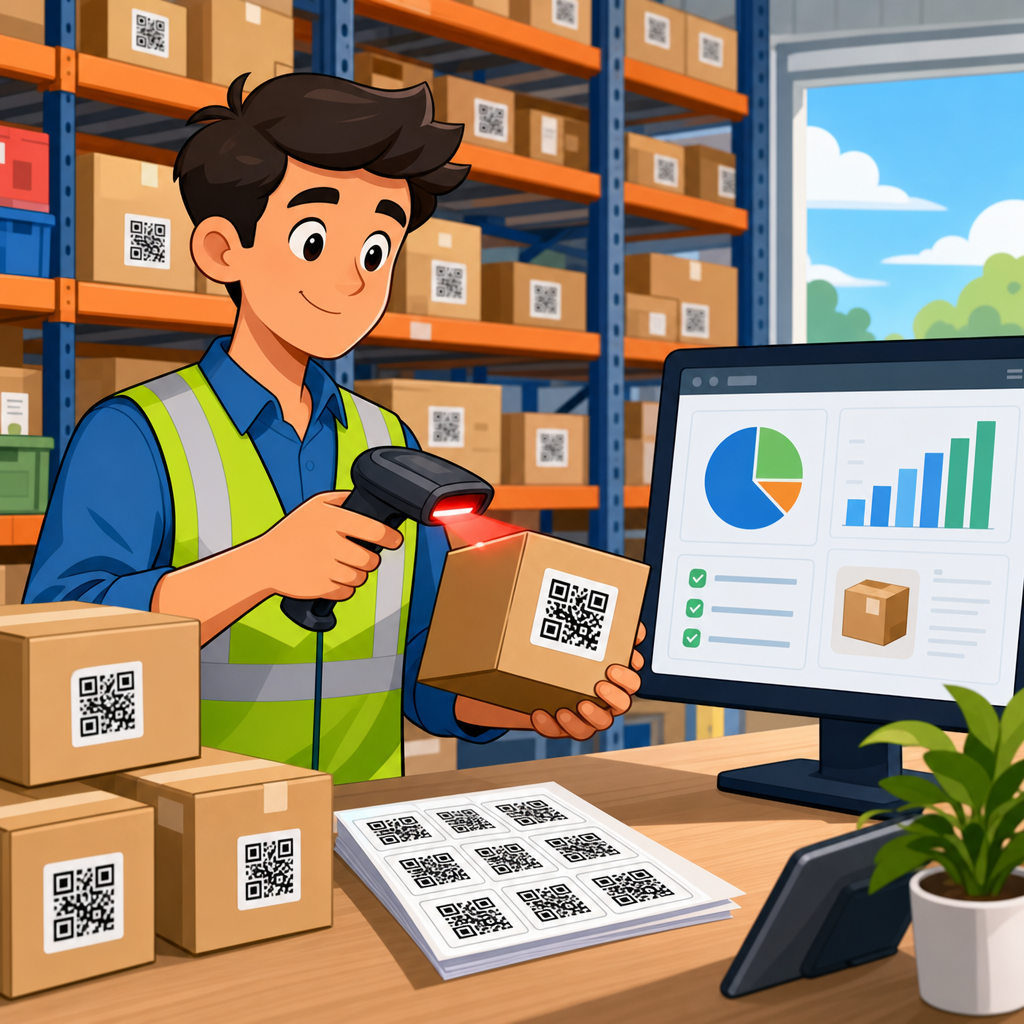
Dynamic QR codes give businesses a flexible way to connect printed materials, packaging, signs, and in-person experiences to digital content without reprinting the code each time a campaign changes. A QR code, or quick response code, is a two-dimensional barcode that stores data a smartphone camera can read instantly. The critical distinction is that a static QR code contains a fixed destination, while a dynamic QR code contains a short redirect URL managed through a platform. That redirect can be updated after printing, which changes the user’s destination while the visible code remains the same. For businesses managing marketing campaigns, product information, event promotions, customer support, or payments, that single capability changes the economics and operational value of QR deployment.
In practice, dynamic QR codes matter because business information changes constantly. Landing pages are revised, inventory runs out, seasonal promotions end, and compliance details need updates. I have seen teams waste budget replacing posters, labels, menus, and mailers simply because a printed static code pointed to an expired page. Dynamic QR codes reduce that waste. They also provide scan analytics, device insights, and campaign controls that static codes generally cannot offer on their own. When companies treat QR codes as measurable marketing and operations assets rather than simple links, they gain more useful data, better customer journeys, and faster response times. This article explains the benefits of dynamic QR codes for businesses, where they work best, how they support different departments, what limitations to consider, and why they deserve a central role in any modern QR code strategy.
What Dynamic QR Codes Are and Why They Outperform Static Codes
A dynamic QR code works by sending the scanner to a short tracking URL first, then redirecting to the final destination configured inside a QR management platform. Because the redirect target lives in software, not permanently inside the printed symbol, a business can update the destination at any time. That means a restaurant can replace a breakfast menu with a lunch menu at 11 a.m., a retailer can switch a product code from an out-of-stock item to a category page, and an event organizer can change a registration page to a livestream link minutes before a session starts. The printed asset stays useful longer, which is the first major business benefit.
The second advantage is measurement. With dynamic QR codes, marketers can track total scans, unique scans, time, location by city or region, device type, and campaign performance by placement. When I have audited offline campaigns, this data often reveals surprises. A window decal may outperform a brochure insert, or packaging scans may spike after customer onboarding emails go out. Those insights help businesses allocate print spend more intelligently and refine calls to action. Static QR codes can be linked to analytics tools in limited ways, but they do not inherently provide the same level of centralized control and reporting.
Dynamic QR codes also support governance. Large businesses need permission controls, naming conventions, folder structures, expiration rules, custom domains, and brand consistency. Platforms such as Bitly, QR Code Generator Pro, Beaconstac, Flowcode, and Uniqode offer dashboards for these needs. For regulated industries, the ability to update disclaimers, notices, or instructions without recalling printed materials can be especially valuable, although legal review is still required. In short, dynamic QR codes outperform static codes because they combine adaptability, analytics, and manageability in one system.
Cost Savings, Operational Efficiency, and Campaign Agility
One of the clearest benefits of dynamic QR codes for businesses is lower reprint cost. Printed materials are expensive not only because of design and production, but because distribution adds labor and time. If a company prints ten thousand flyers with a static code linking to a campaign page that later changes, the asset may become obsolete overnight. A dynamic QR code keeps that flyer viable by letting the team update the destination. The savings compound across menus, catalogs, point-of-sale displays, direct mail, trade show banners, product packaging, invoices, and storefront signage.
Operational efficiency improves because teams can separate print production timelines from digital publishing timelines. I have worked with launches where packaging was finalized months before the product detail page, warranty portal, and multilingual instructions were ready. Dynamic QR codes solved the sequencing problem. The code went to a temporary holding page at first, then switched to the live destination when all digital assets were approved. That prevented delayed shipments and avoided a packaging redesign. For manufacturers and consumer brands, this flexibility is often more valuable than the code itself.
Campaign agility is equally important. Businesses can run A/B tests on landing pages without changing the code. They can redirect traffic by geography, date, inventory status, or audience segment. A hotel chain can place one QR code design in every room, then route visitors to location-specific guest information. A franchise can use common print templates while letting each store update offers independently within guardrails. Dynamic QR codes turn physical media into editable media, which is why they have become a practical bridge between offline touchpoints and digital optimization.
Better Customer Experience Across Marketing, Sales, and Support
Customers scan QR codes because they expect speed. Dynamic QR codes support that expectation by reducing dead links, outdated content, and irrelevant destinations. A business can send first-time scanners to an introductory page and returning users to support resources. It can route mobile users to app deep links and desktop users to web pages if the scan begins on a device that hands off differently. Even simple improvements, such as updating a campaign page after a promotion ends rather than leaving a 404 error, protect the customer experience and the brand.
In marketing, dynamic QR codes make printed calls to action more reliable. On a product package, the code can lead to assembly videos, care instructions, ingredients, sustainability information, or loyalty sign-up pages. In B2B sales, a booth graphic can point to a product selector during an event and then be redirected to a demo booking page afterward. In direct mail, the same code can move recipients from awareness content to limited-time offers as the campaign matures. The business meets customers where they are without changing the printed asset.
For support, dynamic QR codes reduce friction at the moment a customer needs help. I have seen appliance brands place codes near serial labels so owners can scan for setup guides and troubleshooting steps. SaaS companies use them in conference handouts and onboarding kits to route users to updated documentation rather than frozen PDFs. Healthcare providers use controlled QR destinations for appointment preparation instructions, though privacy standards and patient data safeguards remain essential. The common thread is simple: dynamic QR codes help businesses deliver the right information at the right time with less effort for the customer.
Analytics, Attribution, and Smarter Decision-Making
The reporting layer is what turns dynamic QR codes from a convenience into a strategic business tool. Scan analytics show whether people engage with a code, when they engage, and from what context. That helps answer practical questions: Did the in-store sign drive more interest than the mailer? Did scans increase after the television ad ran? Which product shelf talker generated the most post-purchase registrations? Because offline channels are traditionally hard to measure, QR analytics create a valuable attribution bridge between physical exposure and digital action.
Businesses should still apply disciplined measurement standards. A scan is not the same as a conversion, so QR data works best when paired with UTM parameters, web analytics, CRM events, and marketing automation. For example, a real estate brokerage can place dynamic QR codes on yard signs, listing sheets, and postcards, then compare scan sources in Google Analytics 4 and track lead submissions in HubSpot or Salesforce. A retailer can tie packaging scans to loyalty sign-ups and repeat purchases. The result is better budget allocation, because decisions are based on observed behavior rather than assumptions.
| Business Use Case | Dynamic QR Benefit | Example Metric to Track |
|---|---|---|
| Product packaging | Update instructions, offers, or support links without reprinting | Scans per SKU and support deflection rate |
| Restaurant menus | Switch menus by time, season, or location | Lunch versus dinner scan volume |
| Direct mail | Test landing pages and personalize follow-up | Scan-to-form completion rate |
| Events and trade shows | Redirect from registration to live content to post-event offers | Scans by event day and demo bookings |
| Retail signage | Route to inventory-aware pages or store-specific offers | Scans by store and add-to-cart rate |
Well-run programs also use analytics to improve code placement and creative execution. If scan rates are weak, the issue may be poor contrast, insufficient quiet zone, a low-value call to action, or placement beyond comfortable scanning distance. Dynamic QR dashboards expose those weaknesses quickly. Over time, businesses build benchmarks by channel, campaign type, and audience. That institutional knowledge makes every subsequent QR deployment more effective.
Common Business Applications and Best Practices for a Scalable Hub Strategy
Dynamic QR codes fit nearly every department. Marketing teams use them for flyers, posters, catalogs, window displays, social proof pages, coupon delivery, app downloads, and video content. Product teams use them on packaging for manuals, registration, warranty activation, and authentication. Operations teams use them for asset tracking, training materials, SOP access, and field service workflows. HR teams use them at recruiting events to send candidates to current openings. Hospitality brands place them in rooms, lobbies, and menus. Education providers use them on print collateral for admissions, course info, and campus maps.
To scale effectively, businesses need standards. Use a reliable QR code generator that supports dynamic redirects, custom domains, editable destinations, bulk creation, folder organization, and export quality suitable for print. Maintain naming conventions that identify business unit, campaign, location, and asset type. Add UTM parameters consistently so web analytics platforms can classify traffic correctly. Test every code under real conditions, including different phone cameras, lighting, material finishes, and viewing distances. Keep design practical: strong contrast, error correction suited to the environment, and enough white space around the code. A branded frame and clear instruction such as “Scan for setup video” usually outperform an unlabeled code.
Businesses should also plan internal links and content pathways around dynamic QR deployments. A hub page like this one should connect users to deeper resources on QR code tracking, QR code design best practices, static versus dynamic QR codes, QR codes for packaging, QR codes for restaurants, and QR code analytics. That structure helps visitors move from a broad overview to implementation detail, and it helps businesses maintain a coherent content system around QR code creation and tools. Most important, every linked page should answer a specific business question clearly, because QR success depends on relevance more than novelty.
Limitations, Risks, and How to Choose the Right Platform
Dynamic QR codes are not automatically the best choice in every scenario. Because they depend on a redirect service, they require an ongoing platform subscription or managed infrastructure. If the service is discontinued, misconfigured, or allowed to expire, scans can fail. That is why businesses should evaluate vendor reliability, data retention, export options, SLA terms, custom domain support, and administrative controls before rolling out codes at scale. For long-life assets such as equipment labels or building signage, platform continuity matters as much as feature depth.
Privacy and security require attention as well. Businesses should avoid collecting more data than necessary, disclose tracking where appropriate, and follow applicable regulations. If a QR code leads into authenticated systems, payment flows, or personal data forms, the landing page must use secure transport and proper access controls. There is also a phishing risk in the broader market because users cannot see the destination before scanning. Companies can reduce trust issues by using branded domains, clear labeling, and recognizable landing pages. Internal governance should define who can edit destinations and how changes are approved.
When choosing a platform, prioritize the features tied directly to business outcomes: editable URLs, analytics depth, custom domains, team permissions, bulk management, API access, integration with analytics and CRM tools, and high-resolution exports. Then assess usability. If local teams cannot update destinations quickly or read the reports confidently, adoption will stall. The best platform is the one that fits existing workflows, supports future scale, and makes dynamic QR codes dependable across the full customer journey.
Dynamic QR codes give businesses a rare combination of flexibility, measurement, and durability in one simple tool. They lower reprint costs, extend the life of printed materials, improve customer experiences, and turn offline touchpoints into measurable digital channels. For marketing, they make campaigns easier to test, update, and attribute. For operations and support, they keep instructions, resources, and service information current without interrupting production. For leadership teams, they provide clearer evidence of what physical assets actually drive engagement and conversions.
The strongest results come when businesses treat dynamic QR codes as infrastructure rather than decoration. That means choosing a reliable platform, using consistent naming and tracking conventions, testing codes in real environments, and connecting each scan to a purposeful landing experience. It also means acknowledging the tradeoffs: subscription dependency, governance needs, and privacy considerations. Managed well, those risks are manageable and far outweighed by the operational and commercial value dynamic QR codes create.
If your organization is building out its QR code creation and tools strategy, start with dynamic QR codes for the assets that change most often or need the clearest measurement. Audit your current print materials, identify broken or outdated destinations, and replace them with editable, trackable codes. Then expand into packaging, signage, events, and support workflows. Done properly, dynamic QR codes become a practical system for keeping physical experiences connected to accurate, useful, and measurable digital content.
Frequently Asked Questions
What is a dynamic QR code, and how is it different from a static QR code?
A dynamic QR code is a QR code that points to a short, editable redirect URL rather than a single fixed destination. When someone scans it, the platform behind the code sends that person to whatever landing page, file, form, video, menu, app link, or digital experience you currently have assigned to it. By contrast, a static QR code is locked in at the moment it is created. If the original destination changes, the static code cannot be updated, which usually means the business has to create and reprint a brand-new code.
That difference matters because it gives businesses flexibility long after printed materials have already been distributed. A restaurant can place one code on table tents and update the destination from a seasonal menu to a holiday promotion. A retailer can print a code on packaging and later switch it from setup instructions to a product registration page, warranty form, or cross-sell offer. A venue can use the same code on signs while changing the linked content for different events. In practical terms, dynamic QR codes help protect the investment made in packaging, flyers, posters, labels, direct mail, and in-store displays because the code itself can remain the same even as campaigns evolve.
Why are dynamic QR codes especially useful for business marketing and operations?
Dynamic QR codes are useful because they support both marketing agility and operational efficiency. From a marketing standpoint, they make it possible to launch campaigns faster, test messaging, and adapt content in real time without waiting for reprints. If a landing page underperforms, a business can replace it with a better offer. If inventory changes, the destination can be updated to feature available products. If a promotion ends, the QR code can be redirected to a new campaign instead of becoming obsolete.
Operationally, dynamic QR codes can simplify how businesses connect physical touchpoints to digital resources. They can be placed on product packaging, instruction manuals, receipts, trade show booths, storefront windows, employee materials, shipping inserts, and customer service documents. One code can become a persistent bridge between offline and online experiences. Businesses also benefit by reducing waste. Instead of discarding printed assets because a URL changed or a campaign ended, they can simply adjust the redirect in the QR code management platform. That can lower printing costs, shorten turnaround time, and create a more consistent customer experience across channels.
Another major advantage is control. Teams can manage destinations centrally, coordinate updates across departments, and keep campaigns current without physically replacing every printed code in circulation. For businesses that run frequent promotions, maintain multiple locations, or update digital content often, that flexibility can be a significant competitive advantage.
Can dynamic QR codes be tracked, and what kind of data can businesses learn from them?
Yes, one of the biggest benefits of dynamic QR codes is that they can typically be tracked through the platform that manages the redirect. While features vary by provider, businesses can often view scan counts, time and date of scans, device types, and approximate location data. Some platforms also support campaign tagging, integrations with analytics tools, and performance comparisons across different QR codes or channels.
This tracking helps businesses measure how printed and in-person marketing actually performs. For example, a company can compare scans from product packaging versus in-store signage, evaluate whether a direct mail piece drove traffic, or identify which event display generated the most engagement. Instead of guessing whether offline materials are working, businesses gain a clearer picture of customer behavior and can make better decisions based on real data.
The insights can also improve optimization. If scans spike at certain times, businesses can schedule promotions accordingly. If one store location gets strong engagement and another does not, teams can review placement, messaging, or staff prompting. If a code receives many scans but low conversions, the issue may be with the landing page rather than the QR code itself. In other words, dynamic QR code analytics help close the gap between offline exposure and digital measurement, which is especially valuable for marketers focused on ROI and campaign refinement.
How do dynamic QR codes help businesses save money and reduce reprinting?
Dynamic QR codes can save businesses money by extending the usable life of printed materials. Traditional print assets often become outdated when a webpage moves, a promotion changes, a PDF is replaced, or a new campaign launches. With static QR codes, any destination change can force a redesign and reprint. With dynamic QR codes, the business keeps the same visible code and simply updates the underlying redirect destination through the management platform.
That can produce savings across many business functions. Packaging runs can remain usable longer. Sales collateral can stay in circulation instead of being discarded. Posters, brochures, inserts, shelf talkers, menus, and event materials do not need to be replaced every time a URL or offer changes. For businesses with large print volumes or distributed locations, avoiding even one reprint cycle can result in meaningful cost reductions.
There is also a time-saving benefit. Reprinting is not just an expense; it also introduces delays, coordination work, and the risk of outdated materials remaining in circulation. Dynamic QR codes allow teams to react quickly when information changes, whether that means correcting a broken link, updating compliance information, rotating seasonal messaging, or changing a call to action after launch. Over time, that flexibility can reduce waste, improve campaign responsiveness, and help businesses get more value out of every physical asset they produce.
What are the best ways for businesses to use dynamic QR codes effectively?
The most effective use of dynamic QR codes starts with a clear purpose. Businesses should decide exactly what action they want the customer to take after scanning, such as viewing a product page, downloading instructions, joining a loyalty program, booking an appointment, leaving a review, accessing a digital menu, or claiming a limited-time offer. The destination should match the context of where the code appears. A code on packaging should lead to information that supports ownership or encourages repeat purchases. A code on a storefront window should help passersby take the next step immediately, even outside business hours.
Placement and messaging are also critical. A QR code should be easy to see, easy to scan, and paired with a clear call to action that explains why the person should use it. Instead of showing a code alone, businesses should add wording such as “Scan for setup instructions,” “Scan to see today’s specials,” or “Scan to book a demo.” That simple context can improve scan rates because it sets expectations and communicates value right away.
It is equally important to send scanners to a mobile-friendly destination. Since most QR scans happen on smartphones, landing pages should load quickly, display well on smaller screens, and make the next action obvious. Businesses should also test codes in real-world conditions, including different lighting, print sizes, and placement distances. Finally, they should monitor analytics and refine campaigns over time. The real power of dynamic QR codes is not just that they can be edited, but that they can be continuously improved based on actual user behavior. When businesses combine strong placement, relevant content, and ongoing optimization, dynamic QR codes become far more than a convenience; they become a practical, measurable tool for engagement, conversion, and customer experience.