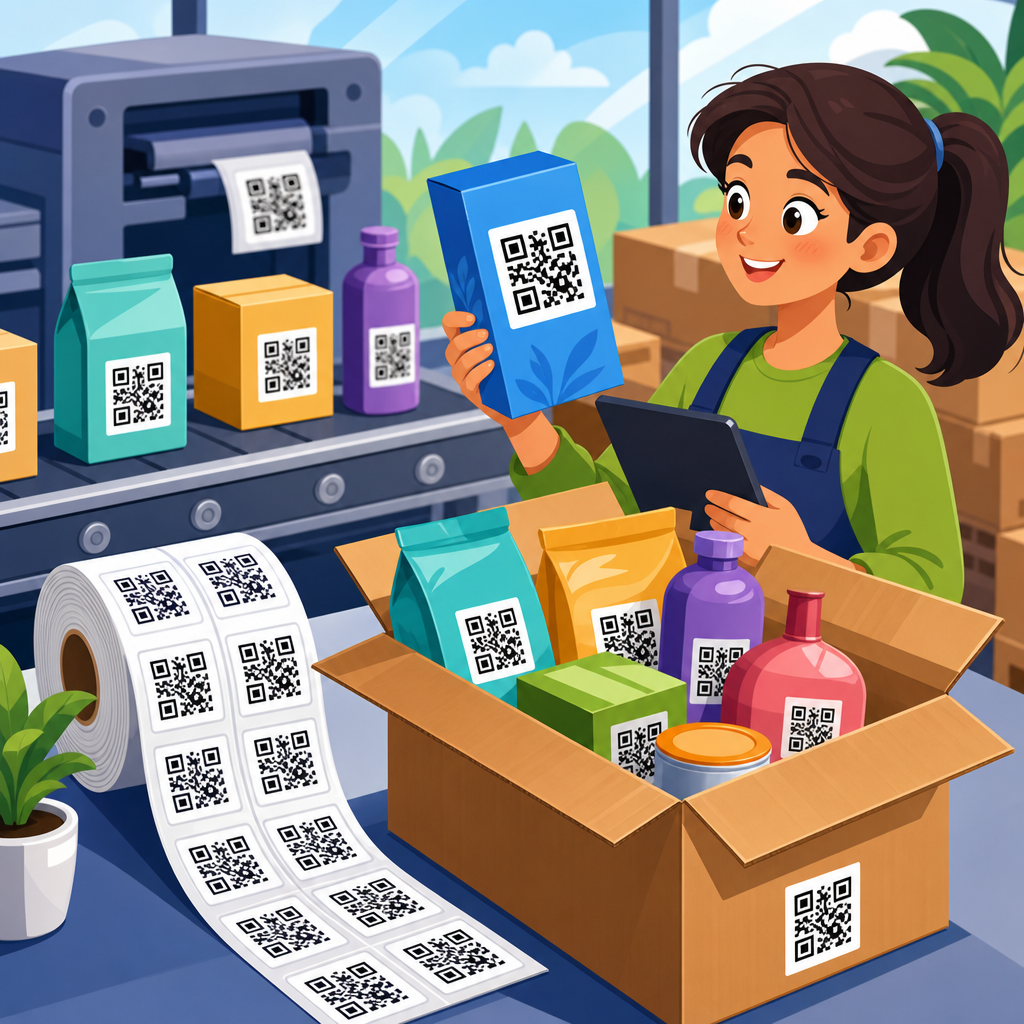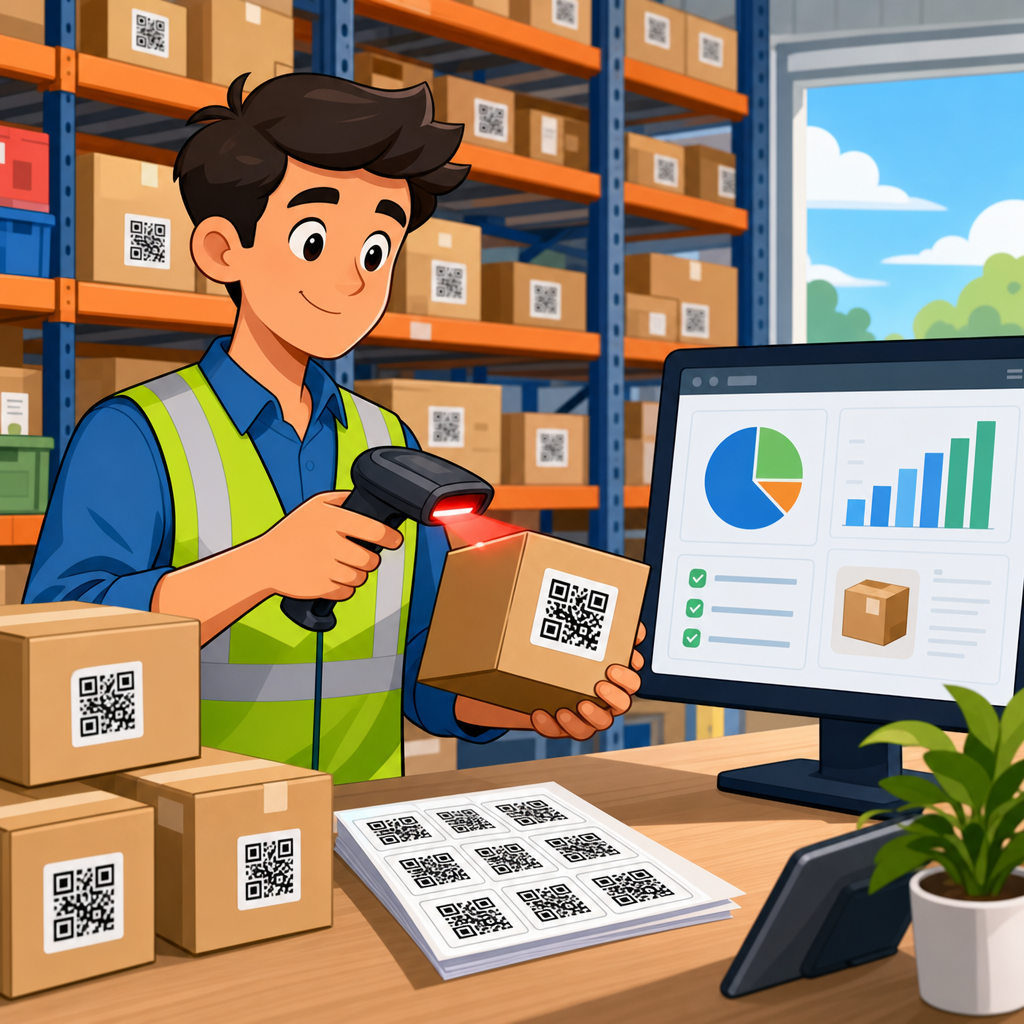
Bulk QR codes for inventory management give operations teams a fast, scalable way to identify assets, track stock movement, reduce manual entry, and connect physical items to live digital records. In practice, bulk QR code creation means generating hundreds, thousands, or even millions of unique QR codes at once from a spreadsheet, database export, or inventory platform instead of building each code one by one. For warehouses, retail back rooms, field service fleets, healthcare storerooms, school districts, and manufacturing plants, that difference is not minor. It changes labeling from a tedious design task into an operational system.
I have implemented QR-based inventory workflows for equipment rooms, parts cages, and multi-site storage environments, and the same pattern appears every time: once item IDs, locations, and status fields are standardized, bulk QR code creation becomes the bridge between the physical world and the inventory database. A worker scans a code and instantly opens the item record, maintenance log, pick list, or transfer form. That saves time, but more importantly, it improves data quality. Fewer typing errors mean cleaner stock counts, better reorder decisions, and more reliable audits.
This matters because inventory failures are rarely caused by one dramatic breakdown. They usually come from small disconnects: labels that are inconsistent, spreadsheets that are outdated, serial numbers that are mistyped, or bins that are moved without documentation. Bulk QR codes solve a core part of that problem by giving every item, carton, shelf, pallet, or location a scannable identity. When designed well, the codes support receiving, put-away, cycle counting, picking, packing, maintenance, returns, and disposal. This article serves as the hub for bulk QR code creation within the broader QR code creation and tools topic, explaining how to plan, generate, deploy, and govern codes at scale.
What Bulk QR Code Creation Means in Inventory Management
Bulk QR code creation is the process of producing many QR codes in one batch, usually by linking each row in a data source to a unique output file. In inventory management, those rows may represent SKUs, serialized assets, storage locations, purchase orders, work-in-progress units, tools, or shipping containers. The code itself can contain a simple unique identifier, such as an asset number, or it can encode a URL that opens a record inside an inventory system, enterprise resource planning platform, or mobile form.
There are two common models. In the first, the QR code stores static data directly, such as item ID, lot number, and location code. In the second, the QR code points to a dynamic destination, usually a short URL tied to a database record. Static codes are straightforward and can work offline, but they are harder to update after printing. Dynamic codes are more flexible because the destination or associated metadata can change without reprinting the label. For inventory teams, dynamic codes usually win when systems evolve, locations change, or maintenance and status fields need to stay current.
The operational value is direct. A receiving clerk scans a pallet label and confirms quantities against the purchase order. A technician scans a tool and logs checkout in seconds. A cycle counter scans a bin location before counting contents, preventing misposted adjustments. A facilities manager scans a boiler asset tag and sees service history, warranty details, and replacement parts. Each scan reduces friction and anchors the transaction to a verified identifier instead of a handwritten note or memory.
How to Structure Inventory Data Before Generating Codes
The success of bulk QR codes depends less on the generator and more on the data model behind it. Before creating labels, define what each code represents and what the scan should do. At minimum, inventory records should have a stable unique ID, human-readable item name, category, location, status, and owner or department if applicable. Serialized assets also need manufacturer, model, serial number, acquisition date, and maintenance interval. Stock items may need SKU, lot, batch, expiration date, and unit of measure.
In real deployments, I start by separating identifiers into layers. Item identifiers represent what something is, asset identifiers represent a unique instance, and location identifiers represent where it belongs. That distinction matters. If a warehouse labels only SKUs, staff can confirm product type but not the exact bin. If it labels only bins, counts may be fast but asset-level traceability disappears. Strong systems use both. A shelf label identifies the location, while each high-value or regulated item gets its own QR code.
Naming conventions also need discipline. Avoid free-form labels like “Back Shelf Left” when a location hierarchy such as WH1-A03-B-02 is clearer and machine readable. The same applies to status values. Standard terms like In Stock, Reserved, In Repair, Quarantine, and Retired work better than inconsistent phrases entered by different teams. When bulk QR code creation is built on normalized data, downstream scanning workflows become predictable, searchable, and reportable.
Choosing Between Static and Dynamic QR Codes
Static and dynamic QR codes are both useful, but they serve different inventory goals. Static QR codes are best when the encoded information will not change, such as a permanent asset number or a location code in a fixed warehouse layout. They are inexpensive to deploy because they do not require a redirect service or URL management layer. They also remain readable with any standard scanner app, even if a software subscription ends.
Dynamic QR codes are better for most modern inventory operations because they separate the printed label from the changing record behind it. If an item moves departments, enters repair, or changes ownership, the destination record can be updated without replacing the label. Dynamic codes also enable scan analytics, access control, and mobile-specific landing pages. For example, a manufacturing team can use a dynamic code on each machine to route operators to inspection forms, lockout procedures, or parts lists depending on role.
The tradeoff is governance. Dynamic systems require URL durability, user permissions, and vendor reliability. If links break, labels fail. For that reason, mature teams use branded domains, documented redirect structures, and exports of code mappings. In practice, the safest method is to encode a durable unique identifier in the URL and keep the business data in the system of record. That preserves flexibility while keeping each printed code tied to one stable reference.
Best Practices for Bulk QR Code Generation and Label Production
Once the data model is ready, bulk QR code generation usually starts from a CSV file, spreadsheet, API feed, or database query. Most QR code tools can merge columns into unique outputs, but inventory teams should care about more than generation speed. The important factors are error correction level, quiet zone, output format, naming convention, and print compatibility. SVG or vector PDF is usually the best choice for labels because it scales cleanly for different sizes and printers. PNG can work for simple desktop printing, but low-resolution exports often lead to scan failures on small labels.
Label design should prioritize readability over branding. Include a short human-readable identifier beneath the code so staff can still work if a label is damaged. Maintain contrast: black on white performs best in industrial settings. Avoid glossy laminates on curved surfaces when overhead lights create glare. For freezer, outdoor, or chemical exposure environments, use materials designed for abrasion, moisture, and temperature changes. Polyester and anodized aluminum tags typically outlast paper labels in harsh conditions.
Testing is not optional. I typically print a pilot batch in the smallest intended size and test scans from common devices at realistic distances and angles. Warehouse teams often discover problems only after deployment, when a code printed beautifully on an office laser printer becomes unreliable on a worn handheld scanner or a forklift-mounted tablet. A small validation run prevents a large relabeling project later.
| Decision Area | Recommended Practice | Why It Matters |
|---|---|---|
| Data source | Use a cleaned CSV or API export with unique IDs | Prevents duplicate codes and broken record links |
| Code type | Use dynamic URLs for changeable records, static IDs for fixed labels | Balances flexibility with long-term reliability |
| File output | Prefer SVG or vector PDF | Keeps codes sharp across label sizes |
| Label text | Add a human-readable ID below the QR code | Supports manual lookup when scans fail |
| Material | Match stock to environment: paper, polyester, or metal tag | Improves durability and scan success over time |
| Pilot testing | Test with actual scanners, phones, and printers | Finds usability issues before full rollout |
Where Bulk QR Codes Fit in Warehouse and Asset Workflows
Bulk QR codes work best when mapped to specific operational moments. In receiving, suppliers or internal teams can preprint pallet or carton labels that connect incoming goods to purchase orders and expected quantities. During put-away, workers scan the item and then the destination bin, creating a simple confirmation sequence that improves location accuracy. For cycle counts, teams scan the location first, count contents, and post variances against the right bin rather than adjusting the wrong record.
In asset management, QR labels often support assignment, maintenance, and retirement. A school IT department can place QR tags on laptops, tablets, and projectors so staff scan devices during issuance and return. A hospital biomedical team can scan infusion pumps to review calibration history and service due dates. A construction company can tag generators, ladders, and power tools, reducing losses across job sites by making accountability visible and fast.
For manufacturing, the value extends beyond stock control. QR codes on workstations, parts bins, and in-process assemblies can link operators to standard work instructions, quality checks, and traceability records. When every scan updates the same backend record, supervisors gain a clearer view of bottlenecks, rework, and component consumption. The result is not just better inventory visibility but stronger operational control.
Tools, Integrations, and Governance for Scalable Deployment
The right tool stack depends on scale and system maturity. Small organizations may start with spreadsheet-driven QR generators and label mail merge tools. Mid-sized teams often connect QR creation to platforms such as Airtable, Google Sheets, Microsoft Excel with Power Query, Zapier, Make, or inventory systems like Sortly, Zoho Inventory, Odoo, or Fishbowl. Larger environments usually rely on ERP, warehouse management systems, mobile device management, and barcode label software such as BarTender, NiceLabel, or Loftware. These tools support serialization, template control, printer integration, and role-based access.
Governance matters as much as software. Decide who owns the identifier schema, who approves label templates, how records are updated, and what happens when an item is retired or replaced. Without governance, duplicate codes and unofficial labels appear quickly. I have seen teams undermine good systems by letting departments create their own naming logic, which leads to two assets sharing similar IDs and users scanning the wrong record. One naming authority and one source of truth prevent that drift.
Security deserves attention too. Inventory QR codes should not expose sensitive data directly if labels are publicly visible. Instead of encoding purchase values, employee names, or service credentials in plain text, point the code to a secured record behind authentication. Retain export files that map IDs to generated codes, and back up redirect structures if using dynamic links. This hub article lays the foundation for deeper topics in bulk QR code creation, including CSV workflows, label template design, dynamic QR governance, scanner testing, and system integrations.
Bulk QR codes for inventory management are most effective when treated as infrastructure, not decoration. The code on the label is only the surface. The real value comes from the underlying identifier strategy, clean item and location data, dependable generation process, durable label materials, and workflows that tell staff exactly what to scan and when. When those pieces are aligned, teams spend less time chasing stock, correcting mistakes, and reconciling audits, and more time moving goods and servicing assets accurately.
The key takeaways are straightforward. Start with a normalized data model and stable unique IDs. Choose static codes for fixed information and dynamic codes for records that change. Generate in bulk from controlled data sources, use vector output for print quality, and test labels in the real environment before scaling. Then connect the codes to practical workflows such as receiving, put-away, cycle counting, maintenance, and transfers. Good QR deployment is operational design, not just code generation.
As the hub page for bulk QR code creation under QR code creation and tools, this article should help you frame the entire subtopic and identify the next implementation steps. Review your inventory structure, define your labeling scope, run a pilot batch, and build from one reliable workflow outward. If you are planning a rollout, start with a single process that causes frequent errors today, then use bulk QR codes to make that process faster, cleaner, and easier to trust.
Frequently Asked Questions
What are bulk QR codes for inventory management, and how do they work?
Bulk QR codes for inventory management are large batches of unique QR codes generated at one time and assigned to specific inventory records, assets, storage locations, bins, pallets, tools, equipment, or products. Instead of creating each code manually, operations teams upload data from a spreadsheet, ERP, WMS, inventory app, or database export and generate hundreds or thousands of codes in a single workflow. Each QR code is tied to a unique identifier, such as an SKU, serial number, asset ID, lot number, or location code, so when the code is scanned, the system can immediately pull up the correct digital record.
In day-to-day use, this creates a direct bridge between physical inventory and live inventory data. A warehouse associate can scan a pallet label to confirm receipt, move stock to a new location, count inventory, or trigger replenishment. A field technician can scan a service item to view maintenance history or update status in real time. A storeroom manager can scan shelf labels and item labels during cycle counts instead of writing information down and entering it later. The real value is speed, consistency, and traceability. Bulk QR code generation makes the rollout scalable, while the scan-based workflow helps reduce manual entry, improve accuracy, and keep inventory records current across fast-moving operations.
Why are bulk QR codes better than creating inventory labels one at a time?
Creating QR codes one at a time may work for a very small inventory list, but it quickly becomes inefficient and error-prone as inventory volume grows. Bulk generation is designed for scale. If a business needs labels for thousands of SKUs, serialized assets, warehouse bins, returnable containers, or field equipment, generating them individually wastes time, increases labor costs, and introduces more opportunities for mismatched data. Bulk workflows let teams map source data once, automate code creation, and produce a standardized label set much faster.
There is also a major quality and governance advantage. When QR codes are generated in bulk from a structured source such as a spreadsheet or system export, the codes follow the same naming rules, data logic, format, and print specifications. That consistency matters in inventory management because inconsistent labels lead to scanning issues, duplicate IDs, and confusion across locations. Bulk generation also makes it easier to support future growth. When new inventory is added, labels can be produced in batches using the same logic instead of rebuilding the process from scratch. For operations teams trying to improve receiving, stock control, auditing, asset tracking, and internal accountability, bulk QR codes provide a much more reliable foundation than manual one-off label creation.
What information can be stored or linked through a QR code in an inventory system?
A QR code used for inventory management can contain either direct data or, more commonly, a link or identifier that points to a live record in a connected system. The exact structure depends on the workflow, but common examples include item IDs, SKUs, serial numbers, lot and batch numbers, expiration dates, storage locations, supplier references, purchase order links, maintenance logs, inspection forms, user instructions, and product specifications. In many business environments, the QR code itself does not need to store every detail. It only needs to provide a secure and unique way to retrieve the right record instantly when scanned.
This linked-record approach is especially useful because inventory data changes over time. Stock levels, status, location, condition, ownership, and service history can all be updated in the platform without reprinting the QR code. For example, the same asset tag can be scanned during check-out, transfer, inspection, repair, and retirement while still pointing to the same central record. In regulated or high-control environments such as healthcare, education, manufacturing, or fleet operations, QR codes can also connect staff to cleaning logs, calibration details, custody records, or compliance documentation. That flexibility is one of the biggest reasons QR codes are so effective for inventory management: they give workers fast access to current information without forcing the label itself to carry every data point.
How do bulk QR codes improve inventory accuracy and operational efficiency?
Bulk QR codes improve accuracy by reducing the amount of manual typing required during inventory tasks. Manual entry is one of the biggest sources of mistakes in receiving, transfers, counts, and asset updates. When workers scan a QR code instead of keying in long item numbers or descriptions, they are much less likely to select the wrong record, transpose digits, or skip required fields. That matters in busy environments where teams process high volumes of stock movement and need fast confirmation that the right item is being handled.
They also improve efficiency because scanning shortens the time needed for routine workflows. Receiving teams can identify incoming goods faster, warehouse staff can verify pick and putaway actions more easily, and cycle counts can be completed with less paperwork and less reconciliation after the fact. Bulk-generated codes extend that benefit across the entire operation because every item, bin, shelf, or asset can be labeled systematically. The result is better visibility into where inventory is, who moved it, and what happened to it. Over time, organizations typically see fewer discrepancies, faster audits, cleaner transaction histories, and stronger real-time inventory control. For businesses managing multiple storage areas, service vehicles, campuses, or retail back rooms, that combination of speed and traceability can significantly improve day-to-day execution.
What should businesses consider before implementing bulk QR codes for inventory management?
Before implementing bulk QR codes, businesses should first define exactly what they want the codes to identify and what actions scanning should support. Some organizations only need item-level identification, while others also need labels for locations, containers, tools, workstations, or mobile assets. It is important to decide whether the QR code will represent a static identifier, a serialized asset, a lot-controlled item, or a dynamic link to a digital record. That decision affects data structure, label design, scanner behavior, and integration requirements. Teams should also confirm which source system will act as the system of record, whether that is an inventory platform, spreadsheet process, ERP, CMMS, or warehouse management system.
Print durability and scan conditions matter just as much as data setup. Labels may need to withstand moisture, abrasion, chemicals, heat, sunlight, freezer storage, or heavy handling depending on the environment. The size of the code, contrast, placement, and material should match the way staff will actually scan items in warehouses, stockrooms, vehicles, clinics, or classrooms. Businesses should also plan for governance: naming conventions, duplicate prevention, reprint procedures, onboarding for new inventory, and permissions for updating records. Finally, it is wise to test the workflow with a pilot batch before a full rollout. A controlled pilot helps verify scan reliability, user adoption, integration behavior, and reporting accuracy so the broader deployment is faster, cleaner, and more successful.