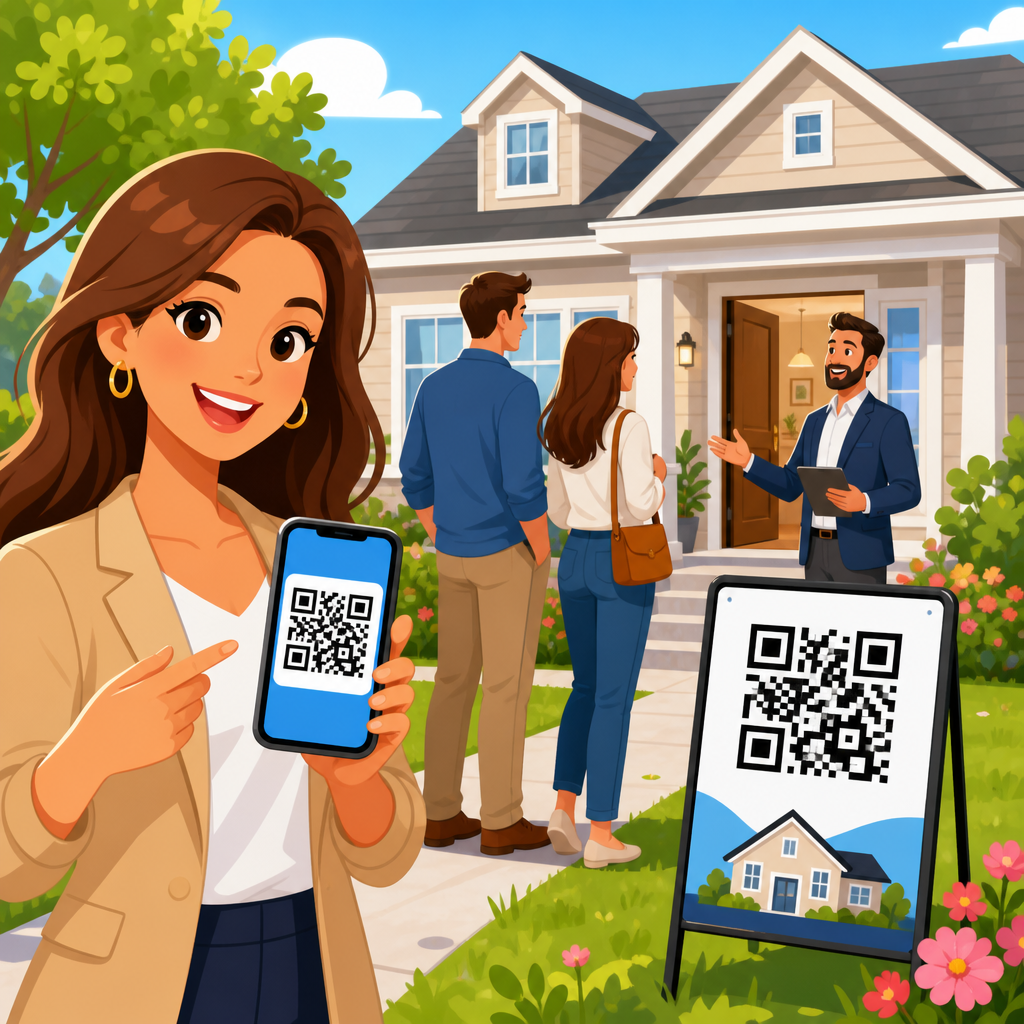
QR codes have become one of the most practical tools in modern real estate marketing, especially for open houses where agents need to connect offline foot traffic with online information instantly. In real estate, a QR code is a scannable two-dimensional barcode that sends a visitor to a digital destination such as a property page, virtual tour, disclosure packet, mortgage calculator, lead form, or agent contact card. Open house marketing includes every tactic used to attract attendees, guide them through the showing, capture inquiries, and move serious buyers toward an offer. When these two ideas are combined well, QR codes reduce friction at every stage of the open house process.
I have used QR codes across listing flyers, yard signs, sign-in stations, brochure boxes, neighborhood postcards, and follow-up emails, and the pattern is consistent: response improves when the code points to one clear next step. Buyers do not want to type long URLs while standing on a sidewalk or walking through a kitchen. They want immediate access to photos, price history, school information, floor plans, and disclosures. Sellers want better reporting on interest levels. Agents want more qualified leads, cleaner attribution, and less reliance on paper handouts that get discarded. QR codes sit in the middle of those needs because they connect the physical property experience with measurable digital engagement.
This matters because open houses are no longer simple weekend events with a sign-in sheet and printed flyer. Buyers now arrive after checking portals, social media, map listings, and neighborhood data. They expect mobile-first experiences and immediate answers. A well-planned QR code strategy helps agents deliver that experience while collecting useful analytics such as scan volume, device type, time of day, and conversion activity. For a real estate business building repeatable systems, this article serves as the central guide to using QR codes for open house marketing, from planning and placement to lead capture, compliance, tracking, and optimization across the broader real estate funnel.
What QR Codes Should Do at an Open House
The best use of QR codes in open house marketing is not to send every visitor to a generic homepage. Each code should support a specific buyer action. Before creating anything, define the intent. Are you trying to increase attendance before the event, provide self-guided information during the showing, capture leads from walk-ins, or continue the conversation after visitors leave? One code can handle one objective well, but trying to force one destination to do everything usually lowers conversion.
For pre-event promotion, QR codes work best on yard signs, directional signs, postcards, door hangers, and social graphics that direct prospects to the listing page, event registration, or a calendar reminder. During the open house, codes can link to a digital feature sheet, 3D tour, improvement list, property disclosures, or a lender prequalification form. After the event, they can route visitors to a follow-up page where they request private showings, download neighborhood guides, or save similar listings. In practice, the highest-performing campaigns use separate dynamic codes for each stage so performance can be tracked accurately.
In real estate, the simplest rule is this: every scan should answer a buyer question immediately. What does the home cost? How many bedrooms? What are the taxes and HOA fees? Are there inspection reports? Can I book a second tour? If the code opens a page that forces the visitor to search again, the opportunity is lost. Strong open house QR code strategy means pairing buyer intent with a mobile landing page built specifically for speed, clarity, and action.
Where to Place QR Codes for Maximum Visibility and Scans
Placement determines performance more than design. A beautifully branded code hidden in the corner of a flyer will underperform a plain code placed at eye level with a direct call to action. At open houses, I prioritize placements where buyers naturally pause: the yard sign, the front door, the kitchen island, the main brochure table, and the exit point. These are moments when visitors are either deciding whether to enter, looking for details, or considering what to do next.
Yard signs are the classic starting point. A passerby scanning from a car or sidewalk needs a large code with high contrast and minimal competing text. The destination should be a fast-loading mobile listing page with photos, price, open house hours, and map directions. Directional signs can use the same logic, especially in neighborhoods with low walkability or scattered intersections. Printed flyers and brochure box inserts should include a code for full details because paper cannot hold enough information without becoming cluttered.
Inside the home, room-specific QR codes can add context when used selectively. A code in the kitchen might link to appliance upgrades, renovation dates, and warranty details. A code in the backyard might show lot lines, permit history for a deck or pool, and seasonal photos. Do not overdo this. Too many codes create visual noise and confuse visitors about which one matters. In most cases, three to five strategically placed codes throughout the property are enough.
Another overlooked placement is the sign-in station. Instead of relying on pen-and-paper forms, agents can use a QR code that opens a digital registration page integrated with a CRM. This reduces illegible handwriting, speeds data capture, and allows automated follow-up. Exit signage also matters. A simple “Scan for disclosures and similar homes” prompt by the door often converts buyers who were not ready to engage earlier but became interested after walking through the property.
Best Landing Pages and Destinations for Real Estate QR Codes
The landing page behind the QR code determines whether the scan becomes a lead. In real estate open house marketing, the best destinations are purpose-built mobile pages that load quickly and present essential information above the fold. At a minimum, include the property address, hero image, asking price, bedroom and bathroom count, square footage, and one immediate action such as “Book a Private Tour” or “Get Full Property Packet.” If the first screen is cluttered, visitors drop off quickly.
A property detail page is usually the core destination, but it should be enhanced for open house traffic. Add open house times, parking instructions, financing options, school highlights, and a map. If your MLS feed page is slow or overloaded with portal-style widgets, create a dedicated landing page in a platform like Carrot, Squarespace, Webflow, HubSpot, or your brokerage website CMS. I have seen conversion rates improve simply by replacing a generic syndication page with a focused page that answers the top five buyer questions upfront.
Other effective destinations include digital feature sheets, Matterport tours, disclosure libraries, offer instruction pages, neighborhood guides, and home valuation pages for potential sellers visiting the event. For luxury listings, a QR code can link to a cinematic video tour or appointment scheduler for qualified buyers. For new construction, it can route to a floor plan selector, site map, and upgrade sheet. The key is relevance. The more tightly the destination matches the reason for scanning, the higher the lead quality.
When collecting leads, ask only for the information you need. Name, email, and phone are usually enough. Long forms reduce completion rates. If you need more qualification data, ask in a second step after the visitor has already shown interest. Include trust signals such as brokerage branding, privacy language, and accurate listing status. In regulated markets, make sure disclosures, fair housing language, and consent checkboxes are handled according to state rules and your CRM settings.
How to Track Performance, Compare Tactics, and Improve Results
Static QR codes have a fixed destination, while dynamic QR codes can be edited after printing and usually provide scan analytics. For open house marketing, dynamic codes are the standard because listings change, events get rescheduled, and performance needs to be measured. A code printed on 100 postcards should not become useless because the open house date changed. Dynamic platforms such as Bitly, QR Code Generator Pro, Beaconstac, Flowcode, and Uniqode allow destination updates without reprinting materials.
Tracking matters because not all scans have equal value. A scan from a yard sign on Thursday evening may indicate pre-event interest, while a scan at the sign-in table on Sunday reflects actual attendance. Separate codes by channel so attribution is clean. Use UTM parameters tied to Google Analytics 4, your CRM, and ad platforms where possible. I typically create distinct codes for the yard sign, flyer, postcard, social post, and in-home sign-in. That setup reveals where serious engagement starts and where budget should be increased or reduced.
| Placement | Best Destination | Main Metric | Common Improvement |
|---|---|---|---|
| Yard sign | Mobile listing page | Scans per day | Increase code size and contrast |
| Flyer | Digital property packet | Lead form completions | Shorten form fields |
| Sign-in station | Registration form | Visitor completion rate | Add clear privacy assurance |
| Exit sign | Private tour scheduler | Appointment bookings | Use stronger call to action |
Measure the full path, not just the scan. A QR code campaign succeeds when scans turn into registrations, showing requests, lender applications, or offers. Review bounce rate, time on page, form completion rate, and assisted conversions. If scans are high but leads are low, the issue is usually the landing page, not the code itself. If scans are low, inspect placement, CTA wording, lighting, and whether the code can be scanned from realistic distances. Open house optimization is often a series of small operational fixes rather than one dramatic redesign.
Design, Compliance, and Common Mistakes to Avoid
A QR code should be easy to scan before it is visually clever. High contrast, adequate quiet space, and sufficient size are nonnegotiable. Black on white remains the safest option. Brand colors can work, but low-contrast combinations often fail outdoors or under glare. Test every code on both iPhone and Android devices before printing. Also test from different distances and angles. If the code appears on a sign that may be viewed from a car, enlarge it substantially and reduce surrounding clutter.
The call to action must tell people exactly what they will get. “Scan for price, photos, and tour times” outperforms “Scan me” because it states the value. Place the CTA directly beside or above the code. If internet connectivity is weak in the area, keep the destination page lightweight and avoid autoplay media that slows loading. A failed first impression hurts trust, especially when buyers are comparing several homes in one day.
Compliance is another major issue in real estate. QR code destinations must display accurate listing information, brokerage identification where required, and updated status changes. If the page contains lead forms, make consent language consistent with your email and text follow-up practices, including TCPA-related considerations when applicable. If a property goes pending, update the dynamic code destination promptly to prevent misleading marketing. For fair housing and accessibility, avoid exclusionary language and ensure landing pages are readable on mobile devices with clear text hierarchy and accessible buttons.
The most common mistakes are sending every scan to the homepage, using static codes for time-sensitive campaigns, printing codes too small, failing to test in real conditions, and asking for too much information too early. Another frequent problem is lack of follow-up. Capturing a lead at an open house is only valuable if the CRM triggers timely email, text, or call workflows. QR codes are not a replacement for process. They are an accelerator for a process that is already well designed.
Building a Real Estate QR Code System Beyond One Open House
The biggest advantage of QR codes in real estate is repeatability. Once the workflow is built, it can be reused across listings, neighborhoods, and campaign types. Start with a template set: one code for listing details, one for digital sign-in, one for disclosures, one for booking private tours, and one for seller lead generation. Then standardize naming conventions, UTM structures, CRM tags, and landing page layouts so reporting remains consistent across the portfolio.
This hub approach matters because open house marketing connects to the entire real estate funnel. The same QR code infrastructure can support just-listed campaigns, broker opens, new construction communities, multifamily leasing, property management inquiries, commercial walkthroughs, and farm-area direct mail. A neighborhood postcard can drive seller leads to a home valuation page. A rider sign can send investors to cap rate and rent-roll details. A vacant land sign can link to surveys, zoning summaries, and drone footage. In each case, the principle remains the same: remove friction, answer the next question, and measure the response.
Teams and brokerages should document a standard operating procedure. Define who creates the code, who builds the landing page, who checks compliance, who tests the user journey, and who reviews analytics after the event. Connect codes to a CRM such as Follow Up Boss, kvCORE, HubSpot, Salesforce, or LionDesk, and automate lead routing based on source. Over time, these systems reveal patterns by property type, price band, and neighborhood. That data improves marketing decisions far beyond one weekend open house.
QR codes work for open house marketing because they make real estate information immediate, searchable, and measurable at the exact moment buyer interest peaks. They help agents bridge the gap between signs, flyers, and in-person visits on one side and listing pages, disclosures, forms, and follow-up workflows on the other. Used correctly, they increase convenience for buyers, create cleaner attribution for marketers, and support a more professional experience for sellers who expect clear reporting.
The main lesson is straightforward: match each code to one clear purpose, place it where visitors naturally stop, send scans to fast mobile pages, and track what happens after the click. Keep design practical, use dynamic codes, stay compliant, and build templates that can scale across your real estate business. Open houses are busy, high-intent environments, and small friction points cost leads. QR codes remove those friction points when they are part of a disciplined system rather than a novelty.
If you want better open house results, audit your current materials and add one optimized QR code workflow this week. Start with the yard sign or digital sign-in page, measure scans and conversions, and improve from there. Once the process is proven, expand it across every real estate touchpoint in your local market.
Frequently Asked Questions
1. How can QR codes improve open house marketing for real estate agents?
QR codes improve open house marketing by creating a fast, frictionless bridge between in-person visitors and the digital information they want most. Instead of asking attendees to type in a long property URL, search for a listing later, or carry around printed flyers they may lose, an agent can place a QR code on signage, brochures, entry tables, and feature sheets so visitors can instantly access a property page, virtual tour, floor plan, disclosure packet, neighborhood guide, or mortgage calculator on their phones. This makes the open house experience more convenient and more interactive.
From a marketing standpoint, QR codes also help agents capture attention at the exact moment interest is highest. A visitor standing in the kitchen can scan a code to view renovation details. Someone curious about the school district can open a local area guide immediately. A buyer who wants to stay in touch can scan a code that opens a lead form, text opt-in, or digital business card. That real-time engagement matters because it reduces the chance that a prospect forgets the property or moves on before taking the next step.
QR codes also support stronger lead generation and follow-up. When connected to landing pages with forms, scheduling tools, or contact buttons, they can turn casual walk-in traffic into trackable inquiries. Agents can see which codes were scanned, which destinations performed best, and which materials drove the most engagement. In short, QR codes make open house marketing more measurable, more efficient, and more useful for buyers and sellers alike.
2. What should a real estate QR code link to during an open house?
The best QR code destination depends on the visitor’s stage of interest, but in most cases it should lead to a mobile-friendly page that helps a buyer take the next logical step. For many open houses, the most effective destination is a dedicated property landing page that includes professional photos, price, square footage, key features, open house details, and clear calls to action such as “Schedule a Private Showing,” “Request Disclosures,” or “Contact the Agent.” This gives visitors a central place to explore the home in more detail while keeping your branding and contact information front and center.
Other strong options include a virtual tour for buyers who want to revisit the home later, a disclosure packet request page for serious prospects, a mortgage calculator for payment-minded shoppers, or a lead capture form offering updates on price changes and similar listings. Some agents also use QR codes to share a digital brochure, seller improvement list, neighborhood highlights, or an agent contact card that saves directly into a phone. These are especially useful when you want to replace paper handouts with a cleaner and more modern experience.
The key is to match the QR code placement with the visitor’s likely intent. A code on the front yard sign might link to the full listing page. A code inside the home might link to room-specific details or a virtual walkthrough. A code near the sign-in table could open a registration form or feedback survey. Whatever destination you choose, make sure it loads quickly, looks good on mobile devices, and gives visitors an obvious next action to take.
3. Where should QR codes be placed at an open house for the best results?
Placement has a major impact on QR code performance. The most effective approach is to use QR codes at multiple touchpoints throughout the open house so visitors can scan them naturally as they move from initial discovery to deeper engagement. Start with exterior placement, such as yard signs, directional signs, window displays, and rider panels. These locations are ideal for attracting drive-by traffic and allowing interested buyers to access property information even if they arrive before the agent is ready or after the event has ended.
Inside the home, the sign-in area is one of the highest-value placements because it captures visitors at the beginning of the experience. A QR code there can open a digital registration form, a listing page, or a document request page. Additional codes can be placed on countertop displays, brochure stands, printed feature cards, and room-specific signage. For example, a code in the living room could open a virtual tour, while a code in a remodeled kitchen could highlight appliance specs, renovation dates, or upgrade costs. This can make the showing feel more informative without requiring the agent to repeat every detail to every guest.
Printed takeaways are also important. Even if you provide flyers, adding a QR code ensures that visitors can continue the experience after leaving. Include codes on brochures, postcards, business cards, and follow-up materials. The most important rule is visibility and ease of use: place the code at eye level when possible, provide enough lighting and white space around it, and add a short instruction such as “Scan for photos, price, and disclosures.” People are far more likely to scan when they know exactly what they will get.
4. How do you create an effective QR code strategy without overwhelming open house visitors?
An effective QR code strategy is focused, intentional, and simple. One of the biggest mistakes agents make is using too many codes without clear purpose, which can confuse visitors instead of helping them. A better approach is to define a small number of high-value actions you want attendees to take. For example, you may want one QR code for the property details page, one for disclosures or documents, one for lead capture or sign-in, and one for scheduling a private tour. That gives buyers useful options without turning the home into a maze of competing links.
Clarity matters just as much as the code itself. Every QR code should include a short label explaining what happens after the scan, such as “Scan for Virtual Tour,” “Scan for Full Property Details,” or “Scan to Request Disclosures.” This removes uncertainty and increases engagement. It also helps to keep branding consistent across every destination. If a visitor scans a code and lands on a page with different visuals, weak formatting, or no obvious next step, trust can drop quickly. The experience should feel polished from sign to screen.
To avoid overwhelming guests, think in terms of buyer journey rather than technology. Give people the right information at the right moment. Exterior signs should focus on basic listing access. Interior materials should support deeper property exploration. Exit-point materials should encourage follow-up, such as requesting financing information or booking a second showing. Test every code in advance, make sure pages are mobile-optimized, and review scan data afterward so you can refine your system. The best QR code strategy feels helpful and seamless, not flashy or forced.
5. What are the best practices for tracking leads and measuring QR code performance from an open house?
To measure QR code performance effectively, agents should treat each code as a trackable marketing asset rather than just a convenience tool. Start by creating unique QR codes for different placements and purposes. For example, use one code for the yard sign, another for the sign-in table, another for printed flyers, and another for a follow-up postcard. This allows you to identify which touchpoints generate the most scans and which moments in the open house journey are driving the strongest engagement.
Whenever possible, connect QR codes to landing pages that include analytics, lead forms, and conversion tracking. This can show not only how many people scanned, but also what they did next. Did they request disclosures, watch the virtual tour, fill out a contact form, or schedule a showing? Those actions are much more valuable than scan counts alone. If you use a CRM, marketing automation platform, or URL tracking tools, you can often tag traffic sources and follow leads all the way through the sales pipeline. That gives you real insight into return on effort.
Best practices also include keeping forms short, making follow-up immediate, and reviewing performance after every event. If a visitor scans a code to receive disclosures or market updates, they should get a fast response. If one code placement performs poorly, test a better sign design, stronger call to action, or a more relevant destination. Over time, these small adjustments can significantly improve lead quality and open house conversion rates. In practical terms, the most successful agents use QR codes not just to share information, but to learn what buyers want and respond more effectively.