QR code tracking sits at the intersection of convenience, measurement, and personal privacy. A simple scan can open a restaurant menu, trigger an app download, verify a product, or attribute a sale to a billboard, but it can also reveal device details, location signals, campaign behavior, and browsing patterns. In practice, the same technology that helps marketers prove return on investment and helps operators reduce printing costs can also create hidden data collection if it is poorly designed. That tension is why data privacy concerns now shape every serious conversation about QR code deployment.
A QR code itself is just a machine-readable symbol that stores information, usually a URL, text string, payment payload, or identifier. Tracking begins when the code points to a destination that logs the scan event. Depending on configuration, that event may include timestamp, approximate geolocation derived from IP address, device type, operating system, language, referral context, and follow-on actions such as form completion or purchase. Static QR codes encode a fixed destination and cannot be edited after printing. Dynamic QR codes resolve through a redirect service, which allows destination changes and richer analytics. Dynamic codes are more powerful for operations and measurement, but they also introduce more privacy obligations because the intermediary service can observe every interaction.
I have worked on QR deployments for retail packaging, event check-in, industrial asset labels, and healthcare communications, and the privacy mistakes are usually mundane rather than malicious. Teams launch campaigns without a data inventory, add analytics scripts by default, keep logs forever, or route scans through multiple vendors that nobody has fully vetted. The result is unnecessary exposure. Privacy problems around QR code tracking matter because the code bridges offline and online behavior. It can connect a person standing at a bus shelter, opening a medicine leaflet, or scanning a conference badge to a digital record. Once that bridge exists, normal privacy rules for websites, mobile apps, customer relationship management systems, and advertising technology all apply.
For organizations, finding the balance means collecting only the data needed to achieve a legitimate business objective, explaining that collection clearly, securing the entire scan path, and offering users meaningful choice where required. For users, it means understanding what a scan may reveal and how to judge whether a code is trustworthy. This article serves as a hub for data privacy concerns within QR code security and privacy. It explains what data is collected, what the main risks are, how laws and standards affect implementation, and what practical controls help organizations preserve useful analytics without turning a scan into surveillance.
What data QR code tracking can collect
Most people assume a QR code “knows” who scanned it. By itself, it does not. The tracking happens on the web or app endpoint behind the code. When a user scans a dynamic QR code that opens a landing page, the redirect server typically records the request. Common fields include date and time, IP address, user agent string, country or city inferred from IP, device category, operating system, browser version, and campaign identifier embedded in the URL. If the landing page loads analytics tags, cookies or mobile identifiers may link the scan to broader browsing activity. If the user fills out a form, logs in, or completes a purchase, anonymous scan telemetry can become identifiable data.
Context matters. A code on cereal packaging might only need aggregate scan counts by region. A code on an employee badge may tie directly to an individual identity. A code used for payments can involve transaction metadata, merchant identifiers, and fraud signals. A healthcare QR code that leads to appointment details, prescription instructions, or patient portal login raises a much higher sensitivity level than a code used for a public museum guide. The privacy analysis should therefore begin with classification: what data is observed at scan, what data is collected after scan, whether the dataset can identify a person directly or indirectly, and whether the content or context makes the data sensitive.
Another overlooked issue is enrichment. Even if a QR platform stores only pseudonymous identifiers, downstream systems may combine those identifiers with customer profiles, loyalty data, call center notes, or advertising audiences. That expansion changes the risk profile dramatically. In audits I have seen teams describe scan logs as anonymous while simultaneously pushing campaign parameters into a customer data platform for profile stitching. If a dataset can be reasonably linked back to a person using available information, it should be treated with the corresponding level of care.
Core privacy risks and why they matter
The first major risk is invisibility. Users often cannot tell, before scanning, whether a code leads directly to content or through a tracking infrastructure. A printed poster rarely explains whether analytics are basic and aggregate or tied to profiling. That opacity undermines informed choice. The second risk is overcollection. Because web analytics tools make data capture easy, organizations may collect geolocation, persistent identifiers, and cross-session behavior they do not actually need. The third risk is data leakage across vendors. A scan may hit a QR management platform, a content management system, a web analytics provider, a tag manager, a marketing automation platform, and a payment processor in seconds. Each handoff expands exposure.
There is also the risk of context collapse. People scan codes in physical spaces where expectations differ from normal web browsing. Someone scanning a code on a medicine box, utility bill, classroom handout, or political leaflet may not expect advertising-grade analytics or retargeting. Even if the collection is technically disclosed in a privacy policy, it may violate reasonable expectations. Regulators increasingly examine whether disclosures are understandable in context, not merely whether a link exists somewhere.
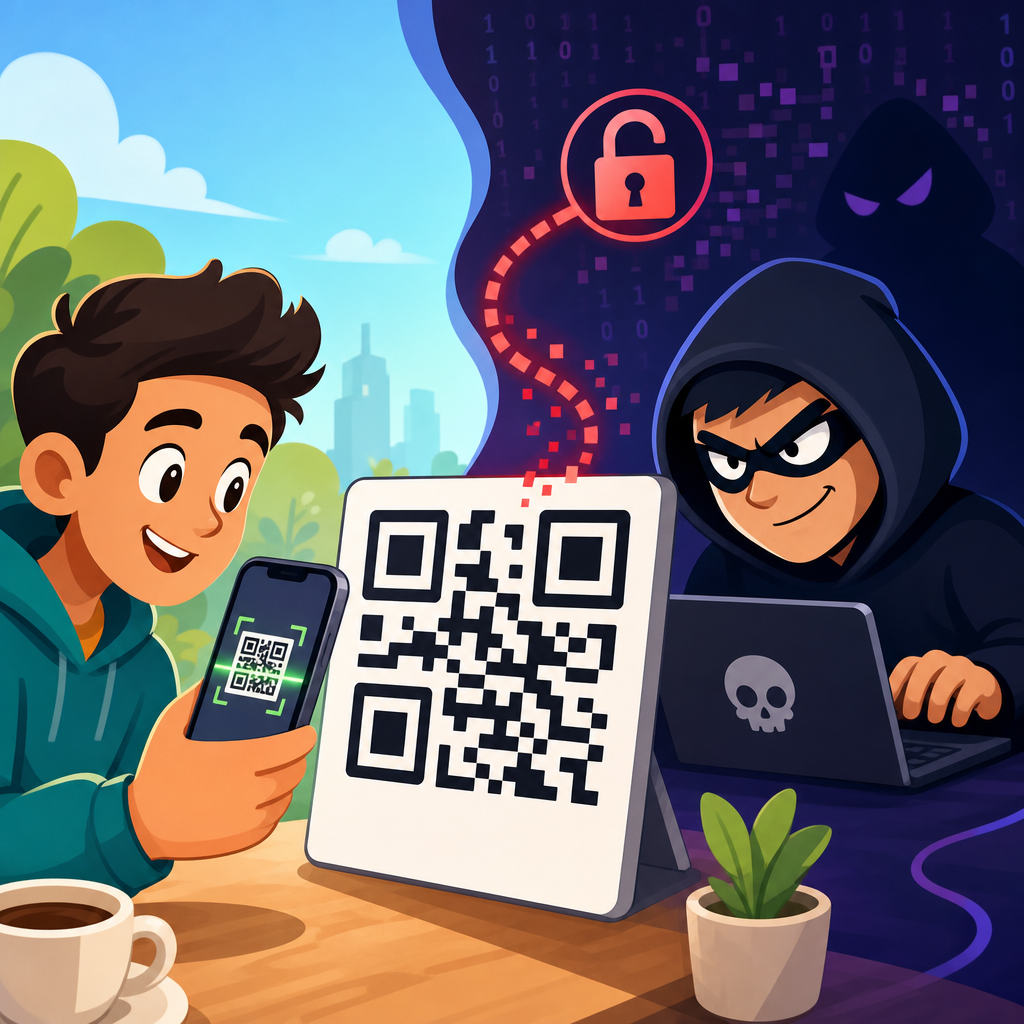
Security failures create privacy harm too. If the destination is not protected with HTTPS, scan data can be intercepted. If redirect rules are weak, attackers may hijack a dynamic code and send users to phishing pages while preserving the original branding. If access controls inside the QR management platform are poor, staff or vendors may export scan logs containing location patterns and user-submitted information. Privacy and security are inseparable here: the safest data is data you did not collect, and the second safest is data you minimized, encrypted, and deleted on schedule.
Common QR code use cases and privacy impact
| Use case | Typical data collected | Primary privacy concern | Lower-risk approach |
|---|---|---|---|
| Retail packaging | Scan count, region, device type, campaign source | Profile stitching with loyalty or ad data | Use aggregate analytics and short retention |
| Event check-in | Name, ticket ID, timestamp, entry location | Identity-linked movement records | Separate attendance logs from marketing systems |
| Restaurant menus | Page views, language, session analytics | Unnecessary third-party tracking on a simple utility page | Serve a lightweight page without advertising tags |
| Healthcare communications | Patient identifiers, appointment details, portal access logs | Exposure of sensitive personal data | Minimize fields, require secure login, audit access |
| Product authentication | Serial number, scan location, fraud signals | Linking ownership and location history | Hash identifiers and avoid permanent user profiles |
| Payments | Merchant ID, transaction metadata, device signals | Fraud monitoring expanding into profiling | Limit secondary use and segment payment logs |
This comparison shows why a single privacy rule is not enough. The same scan event can be low risk in one setting and highly sensitive in another. A restaurant menu page should not silently inherit the full advertising stack used on the brand’s ecommerce site. A patient reminder code should not expose appointment data without authentication. Good design starts by matching data collection to the task at hand, not by copying the default configuration of a marketing platform.
Consent, transparency, and user expectations
Whether consent is required depends on jurisdiction, the type of data collected, and the technologies used after the scan. In many regions, strictly necessary processing to deliver requested content may not require opt-in consent, while analytics cookies, advertising pixels, precise geolocation, or cross-context behavioral tracking often do. Laws differ, but the operational principle is consistent: do not assume that scanning a code equals blanket permission for extensive tracking. If you want to measure scans, keep analytics proportionate. If you want to personalize, retarget, or share data beyond the immediate service, provide clear notice and obtain consent where the law demands it.
Transparency must exist at two moments. First, near the code, users need a plain-language cue about what will happen, especially in higher-risk contexts. Examples include “Scan for menu,” “Scan to register warranty,” or “Scan to access your patient portal.” If tracking is significant, a short notice can set expectations: “Opens our site; basic scan analytics apply.” Second, the landing page should provide accessible privacy information in layered form. A concise summary works better than burying the explanation in a long policy. State what data is collected, why, how long it is retained, who receives it, and how users can exercise rights.
From experience, the biggest gain comes from reducing surprises. When users understand the purpose of a scan and encounter a clean, relevant destination, complaints drop and trust rises. Hidden pixels, excessive form fields, and unexplained redirects do the opposite.
Legal and standards landscape
QR code privacy is governed less by QR-specific laws than by general data protection, consumer protection, and sector rules. In the European context, the General Data Protection Regulation sets requirements for lawful basis, purpose limitation, data minimization, security, vendor contracts, international transfers, and individual rights. The ePrivacy framework can also affect cookies and similar tracking technologies on the landing page. In the United States, state laws such as the California Consumer Privacy Act and its amendments create disclosure, access, deletion, and opt-out obligations, especially where scan data is linked to identifiable consumers or shared for targeted advertising. Sector rules matter as well: healthcare organizations may face HIPAA obligations, and payment environments must align with standards such as PCI DSS.
Established security standards provide practical guidance even when they do not mention QR codes directly. ISO 27001 supports governance, access control, logging, vendor management, and incident response. The NIST Privacy Framework and NIST Cybersecurity Framework help map data flows, assess risk, and implement safeguards. For mobile and web delivery, HTTPS with modern TLS, secure redirect handling, content security policy, role-based access control, and retention controls are baseline measures, not optional extras.
Compliance is not just documentation. Regulators look at actual system behavior. If the poster says “scan for menu” but the page loads multiple adtech scripts and shares identifiers with third parties, the gap between stated purpose and technical reality becomes the real risk.
How to balance analytics with privacy in practice
The most effective approach is privacy by design. Start with the business question. Do you need to know total scans by city, or do you need user-level histories? In many campaigns, aggregate reporting answers the core question. Use dynamic QR codes for manageability, but configure them to log only the minimum fields necessary. Drop full IP storage where possible, truncate or hash identifiers, disable precise geolocation unless it is essential, and avoid loading third-party tags on utility pages. If campaign attribution is needed, prefer first-party analytics with limited retention over broad third-party ecosystems.
Segment environments by sensitivity. Marketing QR scans, employee access codes, warranty registration, and patient communications should not all flow into the same analytics property or vendor account. Apply different retention schedules. A public poster campaign may only need ninety days of event-level logs before aggregation. A fraud investigation workflow may justify longer retention, but only with documented rationale and tighter access. Vendor due diligence is equally important. Review data processing agreements, subprocessor lists, breach notification terms, data residency options, and deletion workflows. Many organizations evaluate the creative design of a code more carefully than the redirect service behind it, which is backwards.
Finally, test the user journey yourself. Scan the code on iPhone and Android, on cellular and Wi-Fi, with browser privacy protections enabled. Inspect network requests. If you see unnecessary calls to ad networks, social pixels, or data brokers, remove them. A balanced QR code program is measurable, but it is also restrained, explainable, and secure.
Building a privacy-first QR code governance model
A sustainable program needs governance, not just one careful campaign. Create an inventory of every QR code deployment, including owner, purpose, destination, data elements, vendors, retention period, and lawful basis where relevant. Require a lightweight privacy review before new codes go live, especially if the destination includes forms, login, payments, or sensitive topics. Define naming conventions and campaign parameter standards so teams do not expose personal data in URLs. Ban practices that create avoidable leakage, such as embedding email addresses or account numbers in query strings.
Training matters because QR projects often cross departments. Brand teams focus on print production, web teams manage destinations, security teams handle domain controls, and legal teams review notices. Without coordination, gaps appear. In mature organizations, one owner approves the end-to-end scan path, from printed asset to redirect service to landing page analytics. Incident response should cover QR-specific failures too, including malicious sticker replacement, redirect compromise, and accidental exposure of logs.
Finding the balance between QR code tracking and privacy is not about abandoning analytics. It is about disciplined collection, honest disclosure, and technical restraint. Organizations should gather the minimum data needed, secure every handoff, respect user expectations, and delete what they no longer need. Users should scan thoughtfully, look for trustworthy domains, and avoid codes that request more information than the task requires. If you manage QR campaigns, audit one live code this week from print to landing page to data store. That single review will reveal whether your program measures responsibly or collects more than it should.
Frequently Asked Questions
What does QR code tracking actually collect when someone scans a code?
QR code tracking can collect a wide range of information, but what is captured depends on how the code and its destination are configured. At the most basic level, a scan may simply register that a code was used, along with the time and date of the interaction. More advanced setups can also log approximate location based on IP address, device type, operating system, browser, language settings, referring source, and whether the user completed a follow-up action such as a purchase, sign-up, or app install. In marketing campaigns, dynamic QR codes often route users through a tracking server before sending them to the final landing page, which allows campaign managers to measure scans by channel, geography, and conversion behavior.
The privacy concern starts when this data moves from aggregate measurement into user-level profiling. For example, a QR code on a poster may seem harmless, but if the scan redirects through analytics tools, drops cookies, or connects with a customer database, it can become part of a much larger behavioral record. That does not automatically make QR tracking invasive, but it does mean businesses should be transparent about what they collect, why they collect it, and how long they keep it. The core distinction is whether the scan is being used to understand campaign performance in a general sense or to identify and monitor individuals in ways they would not reasonably expect.
Are QR codes themselves a privacy risk, or is the risk really in how they are implemented?
The QR code itself is usually not the privacy issue. A QR code is simply a machine-readable way to store information, most often a URL. On its own, it is no more invasive than a printed web address. The real privacy risk comes from what happens after the scan. If the code leads directly to a static page with no tracking beyond standard server logs, the privacy impact may be minimal. If it routes through multiple analytics platforms, collects device identifiers, links scans to customer profiles, or triggers retargeting systems, the privacy implications become much more significant.
This is why implementation matters far more than the code pattern printed on the page. A privacy-conscious organization can use QR codes in a limited, respectful way by minimizing data collection, avoiding unnecessary identifiers, and presenting clear notices when personal data is involved. On the other hand, a poorly designed campaign can turn a simple scan into hidden surveillance. Businesses should think of QR codes as an entry point into a digital experience. The ethics and compliance questions are shaped by the destination, the data flow behind it, and the governance rules applied to that flow, not by the black-and-white square itself.
How can businesses use QR code tracking responsibly without undermining user privacy?
Responsible QR code tracking begins with data minimization. Businesses should collect only the information needed to achieve a legitimate purpose, such as measuring total scans, comparing campaign locations, or confirming whether a printed asset drove traffic. In many cases, aggregated analytics are enough. A company does not need to know exactly who scanned a menu code or which individual walked past a sign if the real goal is simply to understand usage trends. Limiting data collection at the start is one of the most effective ways to reduce privacy risk later.
Transparency is equally important. If scanning a code leads to tracking, account linkage, or data sharing with third parties, users should be informed in a way that is easy to understand. This can be done with short notices near the code, clear privacy policies on landing pages, and consent mechanisms where required by law. Businesses should also secure the data they collect, define retention limits, avoid collecting sensitive information unless absolutely necessary, and ensure that vendors handling QR analytics follow the same standards. When organizations treat QR tracking as a trust issue rather than just a reporting tool, they are much more likely to find the right balance between useful measurement and respectful privacy practices.
What is the difference between useful analytics and invasive QR code surveillance?
Useful analytics focus on patterns, performance, and operational insight. For example, a retailer may want to know which store displays generated the most scans, what time of day people interacted with a code, or whether a packaging QR code led to product registrations. These are common and often legitimate business questions. When data is aggregated, anonymized where possible, and used to improve customer experience or evaluate campaign effectiveness, QR code tracking can provide real value without becoming overly intrusive.
Invasive surveillance starts when the tracking goes beyond reasonable expectations or creates detailed profiles of individuals without meaningful awareness or consent. That can happen if a scan is tied to a known identity, matched with location history, combined with browsing data, or used to influence future advertising in ways the person did not clearly agree to. A good rule of thumb is proportionality. If the level of tracking is far greater than what is needed to provide the service or measure the campaign, the balance has likely been lost. Respectful use asks, “What is necessary?” while invasive use asks, “What can we collect?” That mindset difference is often what separates ethical analytics from privacy overreach.
What should consumers look for before scanning a QR code if they care about privacy?
Consumers who care about privacy should pay attention to context, destination, and follow-up behavior. First, consider where the QR code appears and whether it seems trustworthy. A code on official product packaging, in a reputable store, or on a clearly branded sign is generally less risky than a random sticker placed over an existing code in a public space. If your phone shows a preview of the destination URL before opening it, take a moment to check whether it matches the brand or organization you expect. Suspicious domains, shortened links with no context, or misspelled brand names are reasons to stop.
After scanning, notice what the page asks for and how quickly it starts collecting information. If a simple menu code immediately pushes you to create an account, enable permissions, download an app, or accept extensive tracking, that is a sign to be cautious. It is also wise to review privacy notices, use browser settings that limit tracking where appropriate, and avoid submitting unnecessary personal information unless there is a clear benefit and a trusted reason. QR codes are convenient, but convenience should not override judgment. A few seconds of attention before and after a scan can go a long way toward protecting personal privacy while still allowing users to benefit from the speed and ease QR technology offers.