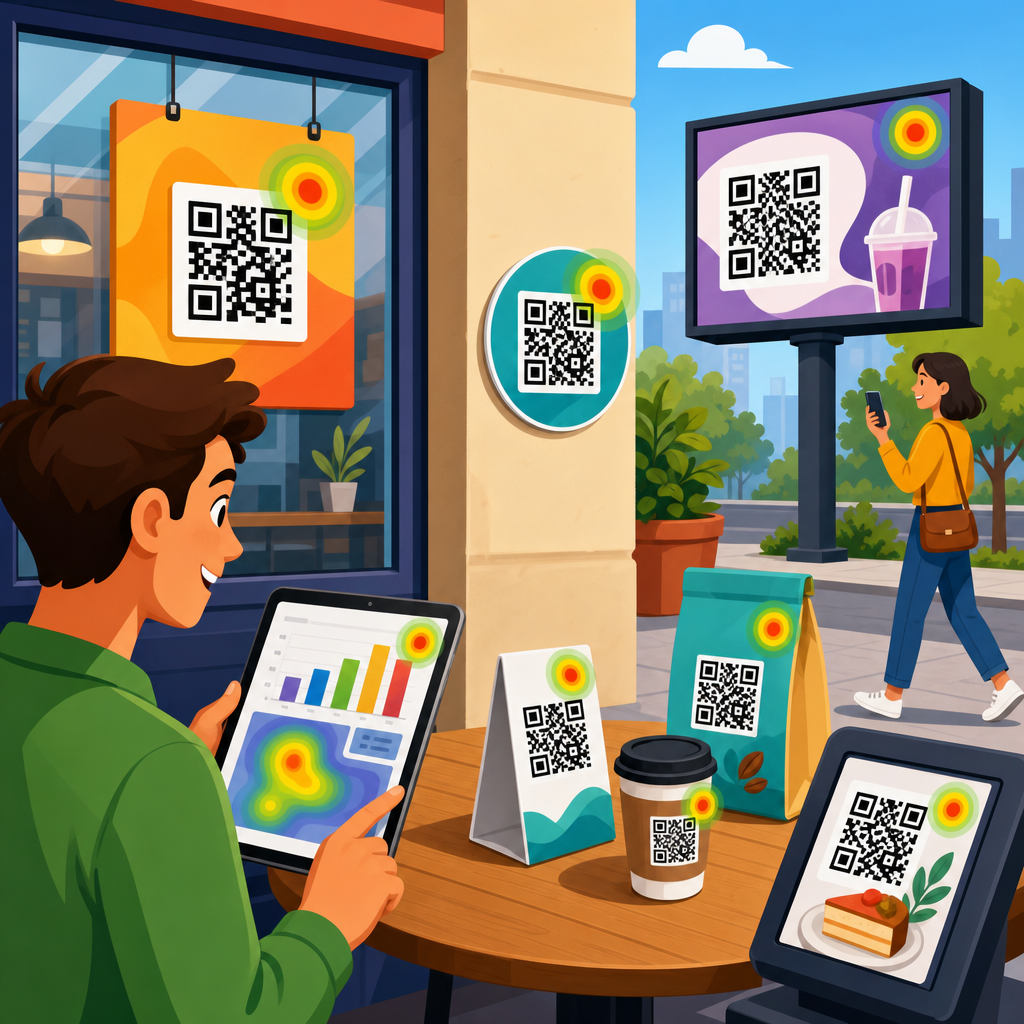
QR code marketing succeeds when every scan is measured against a business goal, not when a campaign merely produces a spike in curiosity. In practice, the teams that get consistent results from QR code marketing track a tight set of metrics that connect the physical world to digital behavior: scans, unique users, visit quality, conversions, revenue, and post-scan retention. That is the core of tracking and analytics in this channel. A QR code is simply a machine-readable bridge, while a dynamic QR code platform, analytics stack, and attribution model determine whether that bridge creates profitable action.
I have worked on QR code campaigns for retail packaging, restaurant ordering, event check-in, direct mail, and out-of-home advertising, and the same pattern appears every time. Marketers often begin by asking how many people scanned the code. That number matters, but by itself it is incomplete and frequently misleading. A high scan count can hide poor landing page performance, weak offer alignment, duplicate scans from the same users, or technical friction after the click. The more useful question is this: which metrics show that the QR code moved someone from attention to intent to conversion?
This matters because QR codes sit at a difficult measurement boundary. They are often placed on offline surfaces such as packaging, flyers, menus, posters, displays, product inserts, and storefronts, yet the action they trigger happens online. Without disciplined tracking, offline spend becomes hard to defend, campaign comparisons become noisy, and optimization turns into guesswork. With disciplined tracking, marketers can identify the highest-performing placements, compare creative variants, improve conversion rate, and prove return on investment across channels. For a sub-pillar within QR Code Marketing & Strategy, tracking and analytics is the operational layer that ties together campaign planning, landing page design, offer structure, location strategy, and reporting.
Key terms should be clear at the start. A scan is the event of a device reading the code and opening the encoded destination. A unique scan attempts to estimate distinct users or devices, usually through cookies, device fingerprints, or session logic, though each method has limitations. A scan-through rate compares scans to estimated impressions when exposure data is available, such as direct mail volume or event attendance. A conversion is the desired action after the scan, like a purchase, form submission, app install, lead capture, coupon redemption, booking, or video completion. Attribution is the method used to assign credit for that conversion. Understanding these definitions prevents reporting errors and helps teams set realistic benchmarks.
Start with the business objective, then map the measurement plan
The first metric decision is not technical. It is strategic. Every QR code campaign needs a primary objective and a hierarchy of supporting indicators. If the goal is lead generation, scans are an input metric, landing page conversion rate is a performance metric, cost per lead is an efficiency metric, and lead quality or sales acceptance is an outcome metric. If the goal is ecommerce, then product page views, add-to-cart rate, checkout completion, average order value, and revenue per scan become central. If the goal is in-store engagement, coupon redemption rate, offer activation, or store locator usage may matter more than online session length.
In my experience, teams get better results when they create a measurement matrix before publishing any code. That matrix lists the campaign objective, target audience, placement, call to action, destination URL, event tags, attribution window, and the exact dashboard fields stakeholders expect. This sounds basic, but it prevents common failures like using the same destination for every code, forgetting UTM parameters, or launching static codes that cannot be edited after print. For hub-level tracking and analytics, the principle is simple: one code should correspond to one clear reporting purpose.
Named tools support this process. Google Analytics 4 is widely used for event-based measurement after the scan. Google Tag Manager helps deploy click, form, scroll, and ecommerce events without repeated code releases. CRM systems such as HubSpot or Salesforce connect QR code leads to downstream pipeline stages. Dynamic QR code platforms add scan logs, geolocation, device type, and timestamp data at the point of entry. When these systems are configured together, the QR code becomes a measurable acquisition source rather than an isolated tactic.
The core QR code marketing metrics every team should track
There is no universal dashboard for every campaign, but a reliable core set exists. Scan volume shows interest. Unique scans estimate audience reach. Scan-through rate indicates how effectively a placement converts exposure into action. Landing page view rate reveals whether the destination fully loads after the scan. Bounce rate or engaged session rate helps assess destination relevance, though these should be interpreted carefully in GA4 because engagement is event-based. Conversion rate measures business effectiveness. Revenue per scan and return on ad spend quantify financial value. Time to conversion, repeat scan rate, and assisted conversions expose path complexity and retention.
Several metrics deserve direct explanation because marketers often confuse them. First, total scans and unique scans are not interchangeable. A restaurant table tent may generate repeated scans from the same diner across a meal, while a product package may be scanned multiple times by one household over weeks. Total scans show ongoing interaction; unique scans better approximate audience breadth. Second, location data can be useful but imprecise. IP-based geolocation can identify city or region trends, but not exact physical placement in many cases. Third, a low bounce-like signal is not always positive. Someone who scans a code to retrieve a coupon and immediately saves it may have completed the intended task in seconds.
| Metric | What it measures | Why it matters | Typical optimization action |
|---|---|---|---|
| Total scans | All scan events recorded | Shows overall response volume | Test bigger placement, stronger CTA, broader distribution |
| Unique scans | Estimated distinct users or devices | Shows audience reach | Reduce duplicate traffic distortion, compare placements fairly |
| Scan-through rate | Scans divided by estimated impressions | Measures how compelling the code placement is | Improve visibility, instructions, incentive, design context |
| Landing page conversion rate | Conversions divided by visits after scan | Measures destination effectiveness | Simplify form, speed up load time, tighten message match |
| Revenue per scan | Total revenue divided by scans | Connects engagement to commercial value | Refine offer, audience targeting, and post-scan funnel |
| Repeat scan rate | Share of users who scan more than once | Signals ongoing utility or remarketing potential | Add loyalty content, saved offers, or serialized experiences |
A practical benchmark framework helps. For direct mail, response rates vary heavily by list quality and offer, so scan-through rate should be analyzed against both delivered volume and downstream lead quality. For retail packaging, repeat scans may be a positive signal if the code offers recipes, refill guidance, warranty registration, or loyalty rewards. For events, time-based scan spikes around session breaks can reveal when signage placement works best. The metric only becomes meaningful when read in campaign context.
Instrumentation: how to build accurate QR code tracking
Accurate reporting starts before design approval. Use dynamic QR codes whenever the campaign has any meaningful budget, because they allow destination edits, per-code analytics, A/B routing, expiration rules, and safer error correction after print. Static QR codes are appropriate only when the destination will never change and granular measurement is not important. Even then, they should still point to a trackable URL structure.
The destination URL should use a consistent taxonomy. I recommend campaign naming conventions that include channel, placement, asset, audience, and offer. A poster in a gym promoting a free trial might use source=qr, medium=offline, campaign=spring_membership, content=locker_room_poster, and term=free_trial if relevant. Those parameters then appear in analytics and can be grouped cleanly. The destination page should fire analytics events for page_view, session_start, form_start, purchase, sign_up, coupon_save, or any meaningful micro-conversion. If the scan opens an app store, deferred deep linking or mobile measurement partners may be required to preserve attribution.
Quality assurance is where many campaigns fail. I always test across iPhone and Android, native camera and third-party scanner behavior, Wi-Fi and cellular conditions, dark mode rendering of landing pages, and redirects under slow connections. A three-second delay after scan can materially reduce completion. Page speed therefore belongs in QR code analytics. Core Web Vitals are not just web metrics; they are conversion metrics in scan-driven journeys. Compress images, remove unnecessary scripts, and keep the first post-scan interaction simple. If possible, route users to dedicated mobile-first pages rather than generic desktop-oriented destinations.
Attribution, conversion tracking, and revenue measurement
Attribution for QR code marketing should be explicit because the channel often influences users who later convert elsewhere. The cleanest scenario is a direct scan-to-conversion journey on the same device, measured with ecommerce or lead events in GA4 and synchronized to the CRM. Real campaigns are messier. A shopper may scan packaging, research later on a laptop, and purchase days afterward through branded search or email. If the business credits only last-click channels, QR codes will be undervalued.
The fix is not to claim too much credit, but to define attribution rules in advance. For low-consideration purchases, a seven-day click window may be enough. For B2B lead generation, thirty days or more may be reasonable, especially when forms trigger sales follow-up. Promo codes unique to a QR placement can improve match-back analysis. So can vanity URLs, offer IDs, serialized packaging inserts, or CRM fields asking where the user found the offer. Assisted conversion reports are particularly useful here because they show whether QR sessions helped start journeys that closed later through another channel.
Revenue measurement should go beyond top-line sales. Track average order value, gross margin where available, refund rate, and customer lifetime value by QR source if your systems support it. A placement that produces fewer initial conversions may still be the better investment if it attracts higher-retention customers. I have seen event-badge QR leads convert at a lower first-touch rate than homepage pop-up leads, yet generate stronger pipeline because the context qualified intent. Measurement should reflect commercial quality, not just volume.
How to analyze performance by placement, audience, and creative
The most actionable insights usually come from segmentation. One code on every asset creates one blended number and very little learning. Distinct codes by placement, store, region, package variation, audience segment, or creative concept make optimization possible. A retail brand can compare endcap signage against shelf talkers. A university can compare admissions postcards against campus posters. A SaaS company at a trade show can compare booth backdrop scans with session-slide scans. Each environment produces different intent, and the metrics should reveal that difference.
Creative context matters more than many teams expect. A QR code with no instruction often underperforms a code paired with a specific benefit such as “Scan for a 15% discount,” “Scan to see assembly video,” or “Scan to reserve your seat.” In analysis, watch the relationship between scan-through rate and post-scan conversion rate. If scan volume is low but conversion is high, the offer may be strong while the placement lacks visibility. If scan volume is high but conversion is weak, the call to action may create curiosity without qualifying intent, or the landing page may break message match. That diagnosis tells you what to fix first.
Cohort analysis also helps. Compare first-time scanners versus repeat scanners, new customers versus existing customers, and urban placements versus suburban placements. Time-of-day patterns can reveal whether commuters scan quickly but convert later, suggesting the need for email capture or save-for-later functionality. Device analysis may show heavy iOS usage in one venue and more Android traffic in another, which can affect wallet pass adoption, payment options, or app deep-link behavior.
Common reporting mistakes and how to avoid them
The first mistake is treating scans as success. Scans indicate response, not outcome. The second is using a single QR code across multiple placements, which destroys analytical clarity. The third is failing to distinguish code-level analytics from site analytics. A QR platform may report a scan even if the destination page never fully loads, while GA4 may only record a session after the page renders. Those numbers will differ, and that difference can itself be diagnostic. If scan counts are high but landing page sessions are low, investigate redirects, load speed, broken links, app interception, or consent banners.
Another mistake is ignoring privacy and consent requirements. Depending on jurisdiction and data practices, cookie consent, CRM policies, and disclosure obligations may affect what can be tracked and stored. Be transparent about data collection, especially for lead forms, loyalty sign-ups, health-related services, or campaigns involving minors. Also avoid overconfidence in geolocation precision. Use it directionally unless you have a stronger signal such as store-specific codes or point-of-sale redemption.
Finally, do not report metrics without decisions attached. A useful monthly QR dashboard answers specific questions: Which placements should be expanded? Which landing pages need revision? Which offers generate the best revenue per scan? Which codes should be retired, redirected, or personalized? Tracking and analytics is not a reporting chore. It is the mechanism that turns QR code marketing into an improvable system.
Key metrics for QR code marketing success are the ones that connect offline attention to measurable business results. Start with a clear objective, assign one reporting purpose to each code, and track scans, unique scans, scan-through rate, landing page behavior, conversions, revenue, and retention together rather than in isolation. Use dynamic QR codes, disciplined UTM structures, mobile-first landing pages, and event-based analytics so the data remains accurate enough to guide budget decisions.
The main benefit of comprehensive tracking and analytics is confidence. You can see which placements work, which audiences respond, which creative drives action, and where the funnel breaks after the scan. That makes QR code marketing easier to scale across packaging, print, events, retail, and direct mail because optimization is grounded in evidence instead of assumptions. It also strengthens the rest of your QR Code Marketing & Strategy program by creating a shared measurement standard for future campaigns.
If you are building or auditing a QR campaign, begin with the measurement plan before the code goes to print. Define the conversion, tag every destination, segment every placement, and review performance weekly until the funnel stabilizes. Do that consistently, and your QR codes will become a trackable growth channel rather than a black box.
Frequently Asked Questions
What are the most important metrics to track in a QR code marketing campaign?
The most important QR code marketing metrics are the ones that connect scans to business outcomes. Start with total scans to understand raw activity and campaign reach, but do not stop there. Total scans can show that a QR code was noticed, yet they do not prove that the campaign influenced meaningful customer behavior. That is why unique users are equally important. Unique users help distinguish repeat interactions from first-time engagement and provide a clearer picture of how many individual people the campaign actually reached.
From there, visit quality metrics become essential. These include landing page sessions, bounce rate, time on page, pages per visit, and click-through behavior after the scan. If people scan but immediately leave, the QR code may be doing its job while the destination experience is failing. Conversion metrics are the next layer and usually matter most to leadership teams. Depending on the campaign goal, conversions could include purchases, form submissions, bookings, app downloads, coupon redemptions, or sign-ups. Revenue per scan, average order value, and total attributed revenue help show whether the campaign is profitable rather than simply active.
Finally, post-scan retention metrics reveal whether the campaign creates lasting value. Track repeat purchases, return visits, subscription renewals, or downstream customer lifetime value if possible. The strongest QR code programs measure the full path from scan to retention. In short, the best metrics are scans, unique users, engagement quality, conversions, revenue, and retention because together they show not just interest, but impact.
Why are unique scans more useful than total scans when measuring QR code performance?
Unique scans are often more useful than total scans because they provide a better estimate of audience reach. Total scans count every interaction, including multiple scans from the same person. That can be helpful in some situations, especially if repeat engagement is part of the campaign goal, but by itself it can be misleading. A campaign with 1,000 total scans may sound impressive until you learn that only 250 individual users scanned the code and many of them did so multiple times.
Unique scans help marketers answer a more strategic question: how many real people did this campaign attract? That number is usually more meaningful when comparing placements, creative approaches, packaging designs, retail displays, direct mail pieces, or event materials. It also makes benchmarking easier across campaigns with different customer behaviors. For example, a restaurant table tent may naturally produce repeat scans from staff or frequent visitors, while a product package QR code may be scanned once per buyer. Looking only at total scans can blur those differences.
That said, unique scans should not completely replace total scans. The relationship between the two metrics tells a story. If total scans are much higher than unique scans, the campaign may be generating repeat interest, shared usage, or friction that causes people to rescan because they did not complete the intended action the first time. Used together, total scans and unique scans help marketers separate curiosity, repetition, and true audience reach, making performance analysis much more accurate.
How do you measure whether QR code traffic is high quality?
High-quality QR code traffic is measured by what users do after they scan, not just by the act of scanning itself. The first signal is landing page engagement. Look at bounce rate, time on page, scroll depth, pages viewed per session, and interactions with key page elements such as product galleries, forms, videos, or call-to-action buttons. If users stay, explore, and click deeper into the experience, the traffic is likely aligned with their intent. If they leave immediately, there may be a mismatch between the QR code promise and the destination content.
Traffic quality also depends on context. A QR code on packaging may attract existing customers looking for instructions, loyalty rewards, or product details, while a QR code on out-of-home advertising may capture colder traffic from people with less purchase intent. Because of that, quality should be judged against the campaign objective. For one campaign, a high-quality visit may mean downloading an app. For another, it may mean reading product specifications, locating a store, or redeeming an offer. The key is to define what a valuable session looks like before launch.
Advanced teams often segment quality by device type, location, time of day, traffic source variant, and QR code placement. A dynamic QR code setup makes this much easier because it lets marketers route scans through trackable URLs and collect richer analytics without reprinting the code. When you compare engagement patterns across placements, you can identify where the strongest intent is coming from. In practice, high-quality QR code traffic is traffic that consistently moves users closer to the desired action and produces measurable downstream value.
How can conversions and revenue be accurately attributed to QR code marketing?
Accurate attribution starts with campaign structure. Each QR code should point to a unique, trackable destination, ideally using dynamic QR codes and tagged URLs. This allows marketers to distinguish one campaign, placement, product, store, or audience segment from another. Without distinct tracking parameters, it becomes difficult to know which scans drove which outcomes. A generic landing page URL may collect visits, but it will not provide the level of attribution needed to evaluate performance confidently.
Conversion tracking should then be aligned to the campaign goal. If the objective is ecommerce sales, track completed purchases, revenue, cart value, and assisted conversions. If the goal is lead generation, track form completions, qualified leads, booked demos, or phone calls. If the campaign is focused on offline outcomes, such as in-store redemption or event check-in, use coupon codes, POS integrations, CRM tagging, or customer matching methods to close the loop. The point is to define the conversion event in a way that reflects actual business value, not just digital engagement.
Revenue attribution becomes more reliable when marketers look beyond last-click reporting alone. Some QR code campaigns introduce the customer to the brand, while the eventual purchase may happen later through another channel. In those cases, assisted revenue, multi-touch attribution, and time-lag analysis provide a more realistic view. It is also wise to compare QR code cohorts against baseline performance or control groups where possible. The best attribution models combine direct conversion data, revenue tracking, and broader customer journey analysis so teams can understand both immediate returns and longer-term impact.
What role does retention play in evaluating QR code marketing success?
Retention plays a major role because QR code marketing is not truly successful if it only generates one-time activity. A scan can open the door, but lasting value comes from what happens after that first interaction. If users make a purchase, sign up for a program, download an app, or engage with a brand experience, the next question is whether they return. Retention metrics show whether QR code campaigns are attracting the right audience and creating experiences that build ongoing relationships rather than short-lived spikes in attention.
Depending on the business model, retention can be measured in several ways. Ecommerce brands may track repeat purchases, reorder rates, and customer lifetime value. Subscription businesses may look at renewals, plan upgrades, and churn reduction. Mobile-focused campaigns may measure app opens, feature adoption, or 30-day retention after install. Loyalty campaigns may track repeat store visits, reward redemptions, or continued participation over time. These metrics are especially useful when a QR code is part of packaging, onboarding, events, direct mail, or post-purchase communications where the goal is to deepen engagement after the initial sale.
Retention also helps marketers judge campaign quality more accurately than scan volume alone. Two QR code campaigns may generate similar numbers of scans and even similar conversion rates, but if one group of users returns more often and spends more over time, that campaign is clearly delivering better business results. This is why sophisticated teams treat QR codes as the entry point into a measurable customer journey. When retention is included alongside scans, engagement, conversions, and revenue, QR code marketing can be evaluated not just as a tactic, but as a long-term growth channel.