QR codes have become one of the most practical tools for turning product launch interest into measurable action, especially when brands need to connect physical touchpoints with digital experiences. A QR code, or Quick Response code, is a two-dimensional barcode that stores a destination such as a URL, video, app download, landing page, coupon, form, or product detail page. In product launch campaigns, that simple scan can bridge packaging, retail displays, direct mail, events, influencer kits, out-of-home media, and social content into one coordinated customer journey. When I build launch campaigns, QR codes consistently outperform static printed calls to action because they remove friction at the exact moment curiosity peaks.
The reason this matters is straightforward: launches are expensive, attention is scarce, and attribution is usually messy. A new product may be promoted across paid media, email, public relations, in-store signage, and packaging, yet marketers still struggle to identify which touchpoint actually moved someone from awareness to trial. Dynamic QR codes help solve that problem. Unlike static codes, which point permanently to one destination, dynamic codes route through a short URL that can be edited, tracked, and segmented after printing. That means a code on a shelf talker can be updated from a teaser page to a preorder page, then to a post-launch offer, without replacing the printed asset.
Used well, QR code marketing strategies support every stage of a launch. Before release, a scan can collect waitlist signups, reveal a countdown, or unlock a product demo. On launch day, the same format can send traffic to a purchase page, retailer locator, or livestream. After launch, it can onboard customers with setup instructions, warranty registration, loyalty enrollment, or review requests. This makes QR codes more than a gimmick. They become a measurable campaign infrastructure layer that supports reach, conversion, and retention. The brands seeing the best results are not using one code everywhere. They are designing a QR system with distinct goals, destinations, placements, and tracking logic.
This article explains how to use QR codes for product launch campaigns as a complete strategic hub. It covers planning, channel selection, creative execution, measurement, compliance, and optimization. It also addresses the common questions marketers ask: Where should the code send people? How many codes should a campaign use? What makes a QR code easy to scan? How do you measure ROI? The practical answer is that successful QR code marketing strategies are built around intent, context, and analytics. The code itself is only the gateway; the real performance comes from matching the right scan moment to the right landing experience and then learning from the data quickly.
Start with launch objectives, audience intent, and destination mapping
The first step in any product launch campaign is deciding what each scan should accomplish. I usually define this before generating a single code, because the wrong destination can waste strong creative and high-visibility placement. For awareness, direct scans to a teaser page, trailer, or interactive reveal. For demand capture, use an email or SMS signup page tied to a launch reminder sequence. For conversion, send users to a mobile-optimized product page, preorder page, or retailer selection page. For post-purchase engagement, use onboarding guides, how-to videos, or support content. One campaign often needs several distinct QR codes, each aligned to a specific moment in the customer journey.
Audience intent matters just as much as the business goal. Someone scanning a code on packaging expects different information than someone scanning at a trade show booth. Packaging scans often happen during evaluation or after purchase, so they should answer product-specific questions fast: ingredients, compatibility, setup, sustainability claims, or warranty details. Event scans can support demos, booking, sample redemption, or gated content. A code on a street poster has only seconds to convert curiosity, so the landing page should load quickly and communicate value immediately. In practice, the best-performing launch destinations are short, single-purpose pages with a clear next step and minimal navigation.
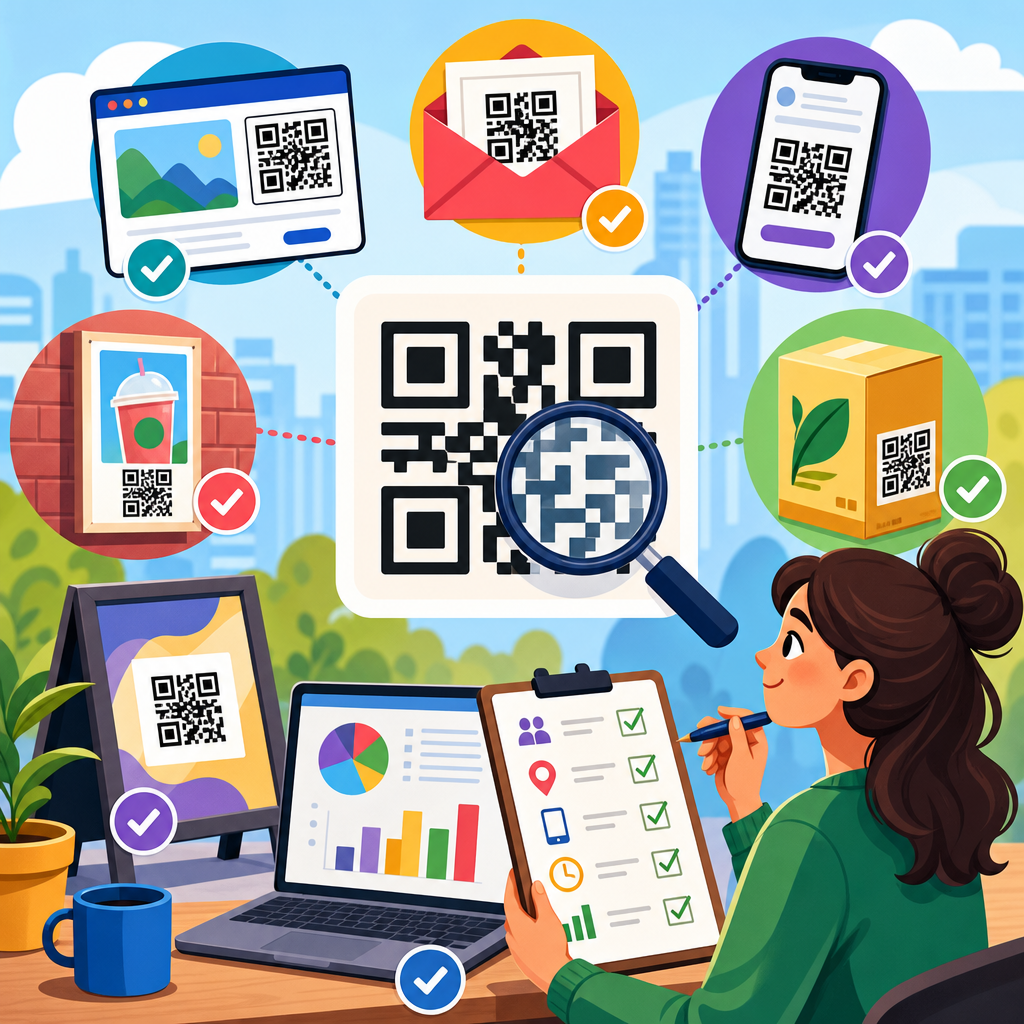
Destination mapping also improves campaign structure. I recommend creating a matrix that links every code to a campaign goal, audience segment, physical placement, and measurement plan. For example, a cosmetics launch might use one QR code on influencer mailers leading to a shade-match quiz, another on point-of-sale displays linking to tutorials, and another on sample sachets driving a first-purchase offer. A consumer electronics brand might place codes on unboxing inserts for setup videos and accessory bundles, while trade show signage sends visitors to a booking page for retail meetings. This kind of mapping keeps teams aligned and prevents duplicate codes from muddying attribution.
Choose the right QR code types, platforms, and campaign structure
For launch work, dynamic QR codes are usually the correct choice because they allow editing, tracking, and segmentation after production. Platforms such as QR Code Generator Pro, Bitly, Beaconstac, Scanova, Flowcode, and Uniqode provide dynamic routing, UTM parameter support, scan analytics, and team management. Static QR codes still have a place when the destination will never change, such as a permanent product authentication page or a standardized compliance resource, but they are less flexible for launch campaigns that evolve weekly. If a media buy, retailer timeline, or product availability changes, a dynamic code protects the printed investment.
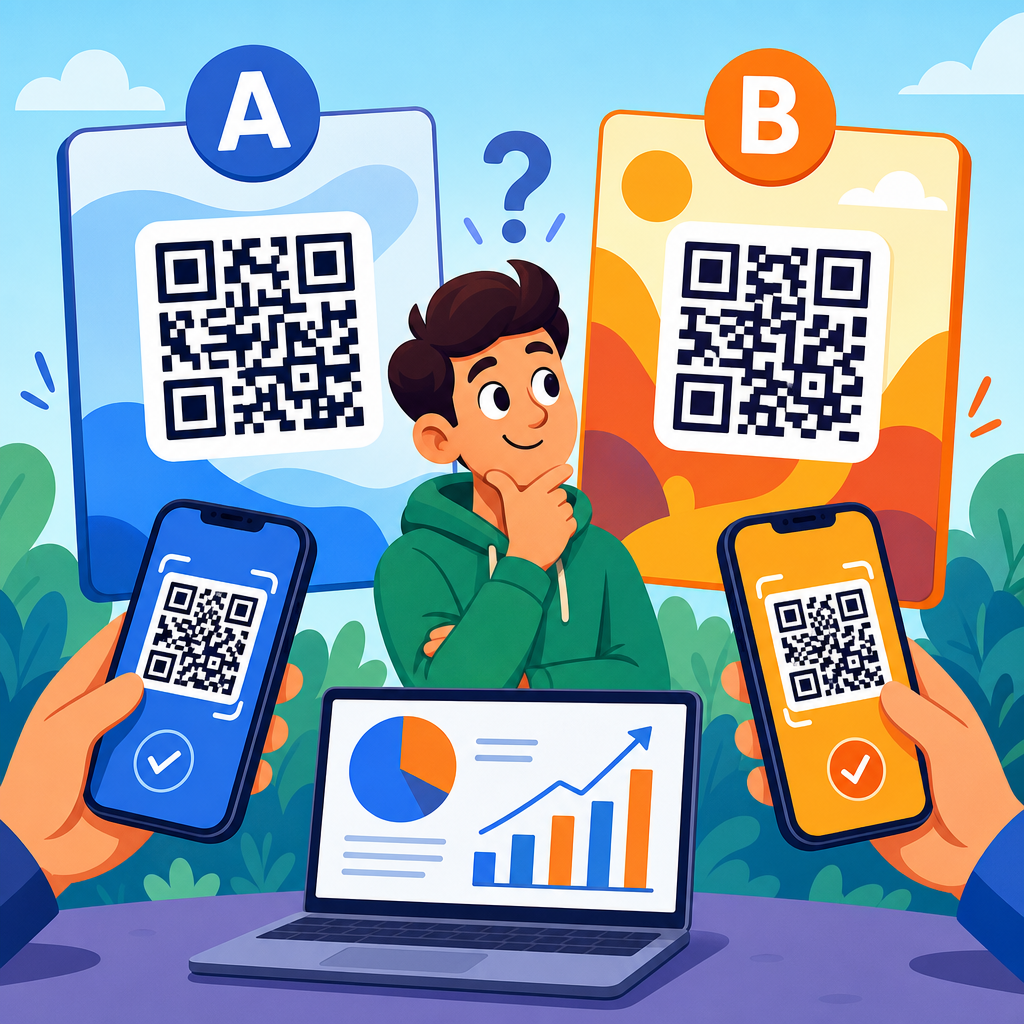
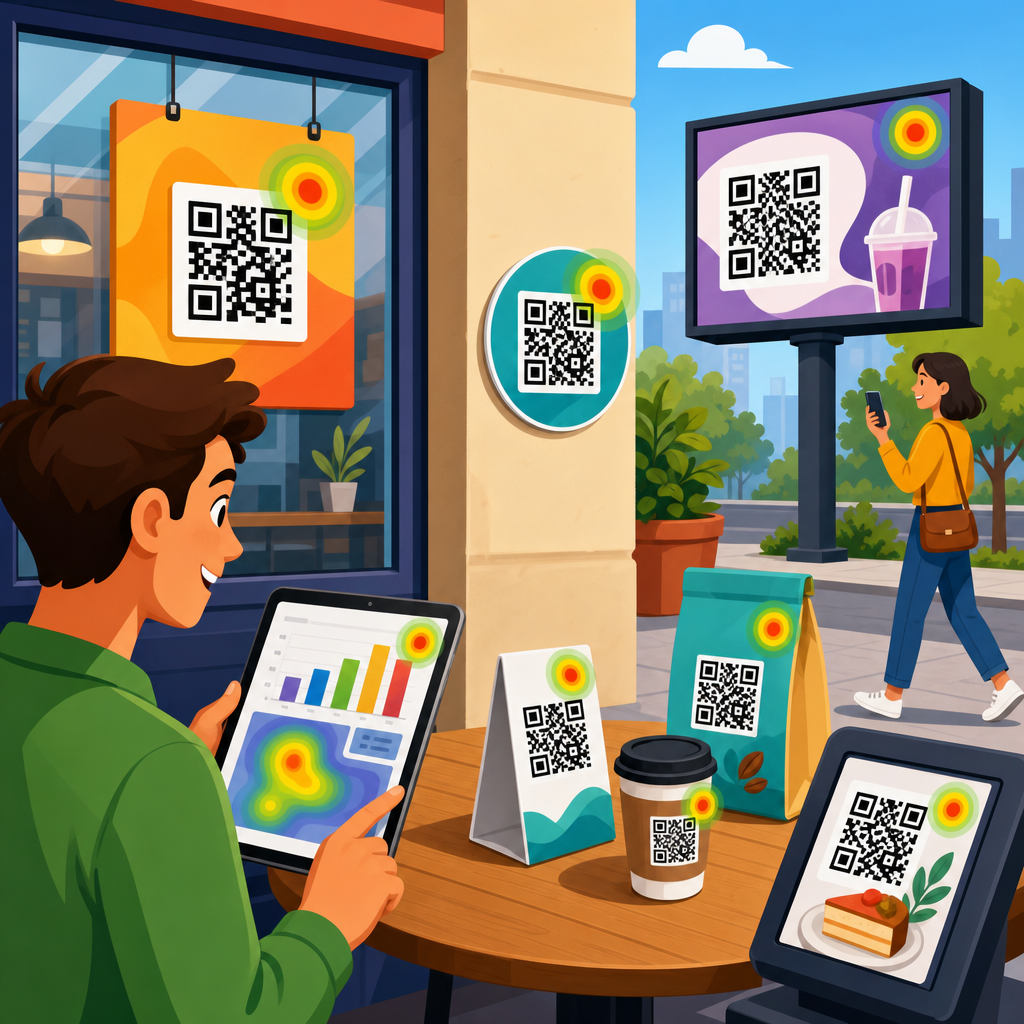
Campaign structure should reflect distribution realities. A common mistake is using one QR code across every asset because it is convenient for design teams. That destroys channel-level insight. Instead, create separate dynamic codes for each major placement, such as packaging, shelf displays, direct mail, event signage, print ads, influencer kits, and window clings. You can still point them all to related experiences while preserving performance data. Distinct codes also let you customize destination content by source. A scan from a retailer endcap can open a “where to buy now” page, while a scan from a public relations insert can prioritize product story and reviews.
Security and reliability need equal attention. Use branded short domains when possible, because unfamiliar redirect URLs can reduce trust. Ensure HTTPS is enabled, and avoid sending users through chains of redirects that slow page loads. If your campaign involves app deep linking, mobile wallets, coupons, or geolocation, test across iOS and Android devices before launch. I also advise keeping ownership of the QR platform inside the brand or agency account rather than under a freelancer’s login. Launch assets often live beyond the first burst, and losing access to routing or analytics in the middle of a campaign creates unnecessary operational risk.
Design scan moments that fit each launch channel
QR codes work best when the placement, message, and user motivation are tightly connected. In retail, the scan moment usually competes with price tags, shelf noise, and decision fatigue, so the call to action must be specific. “Scan to compare shades in AR” performs better than “Scan to learn more.” On product packaging, the code can support discovery or utility: “Scan for recipes,” “Scan for setup in 60 seconds,” or “Scan to claim your launch bonus.” At events, booth traffic responds well to value-led prompts such as “Scan for demo specs,” “Scan to book a buyer meeting,” or “Scan to enter the sample draw.”
Out-of-home and print require extra discipline because scan conditions are less forgiving. A poster in a subway station must use a larger code, stronger contrast, and a destination that loads almost instantly on mobile data. Viewers may be walking, carrying bags, or seeing the ad from an angle. In direct mail, the opposite is true: people have more time, so personalized QR codes can deepen engagement. A luxury brand launching a fragrance can include a code that opens a behind-the-scenes film and appointment booking page. A food brand can put unique QR codes on sample cards to tie in-store tastings to digital coupon redemption.
Influencer and creator campaigns are often overlooked in QR planning, yet they are ideal for launch testing. Insert cards in seeding kits can carry source-specific codes that lead to embargo materials, affiliate landing pages, or audience giveaways. This helps marketing teams distinguish earned visibility from controlled traffic. The same principle applies to sales enablement. If field reps or brand ambassadors are supporting the launch, give them placement-specific QR assets so scans from trade conversations, retail visits, and pop-ups can be measured separately. Strong QR code marketing strategies treat every physical encounter as a distinct entry point, not a generic traffic source.
Create landing experiences that convert launch interest into action
A QR code does not convert on its own; the landing experience does. Every launch page connected to a QR code should be designed for mobile first, with compressed images, fast hosting, clear hierarchy, and one primary call to action above the fold. If the campaign goal is preorder, users should see product benefits, price, availability timing, and checkout options immediately. If the goal is education, open with the answer the customer wants first, such as compatibility, ingredients, or setup time. I have seen otherwise strong product launches underperform simply because the scan led to a desktop page with slow load times and too many competing links.
Message continuity is critical. The promise near the QR code must match the first screen after the scan. If packaging says “Scan for exclusive launch bundle,” the landing page should present that offer instantly, not a generic homepage. If in-store signage says “See how it works,” the destination should start with a short demo video or animated walkthrough. Friction should be minimized. Avoid asking for lengthy forms before delivering value unless lead capture is the main objective. In many launches, progressive conversion works better: give the teaser, demo, or buying information first, then ask for signup, account creation, or review submission later.
| Launch Goal | Best QR Destination | Primary Metric | Example |
|---|---|---|---|
| Pre-launch demand | Waitlist or SMS reminder page | Signup rate | Sneaker brand teaser poster with countdown |
| Launch-day sales | Mobile product or preorder page | Conversion rate | Beauty display linking to shade-specific purchase page |
| Retail support | Store locator or retailer selector | Click-through to retailers | Beverage cooler cling linking to nearby stockists |
| Post-purchase onboarding | Setup guide or tutorial hub | Completion rate | Device insert linking to installation video |
Personalization can further improve results when used carefully. A code on a sample can route users to a page preloaded with the exact product variant they tried. A regional poster can send scanners to a store locator filtered by city. For B2B launches, account-based QR destinations can open product sheets, demo scheduling, and pricing configured for a specific vertical. The key is relevance, not complexity. Every added branch should support a better customer outcome or stronger measurement. If personalization creates confusion, slow load times, or maintenance issues, keep the experience simpler and rely on source-level campaign segmentation instead.
Measure performance, optimize quickly, and manage risk
Strong measurement starts before the first scan. Establish naming conventions for every code, use UTM parameters consistently, and connect scan data with analytics platforms such as Google Analytics 4, Adobe Analytics, CRM systems, ecommerce dashboards, and marketing automation tools. Track more than raw scans. Useful launch metrics include scan-through rate by impression source, unique scanners, landing page engagement, add-to-cart rate, retailer click-out rate, coupon redemption, email capture, and downstream revenue. In store, scan data can also be compared with lift in sell-through or regional sales where a QR-supported display was active versus control locations.
Optimization during the campaign is one of the biggest advantages of dynamic QR codes. If one poster location is generating scans but low conversions, the issue may be the landing page, not the placement. If influencer inserts convert better than shelf signage, that can justify shifting budget toward creator partnerships or direct mail. I regularly review scan patterns by time of day, operating system, geography, and asset type to identify friction. A launch page with a high bounce rate on older Android devices may need lighter media files. A code on glossy packaging may need stronger contrast or a quieter area around it to improve recognition.
There are also practical limitations to acknowledge. QR codes depend on smartphone access, camera recognition, and enough trust to scan. Some audiences still hesitate if the destination is unclear. That is why visible branding, explicit value, and short explanatory text matter. Compliance matters too, especially in regulated categories such as alcohol, supplements, finance, and healthcare. Claims on the landing page must meet the same standards as claims in the printed asset. Privacy requirements apply when collecting personal data, including consent language and region-specific rules. Before launch, test every code in real conditions, not just on a designer’s monitor, then monitor performance daily and refine the campaign while interest is highest.
Build a repeatable QR code marketing strategy beyond one launch
The most effective brands treat each product launch as a learning loop that strengthens future campaigns. QR code performance data reveals which messages, placements, and offers consistently move people forward. Over time, you can build benchmarks for scan rate by channel, expected conversion rate by destination type, and the ideal number of codes per campaign. Those benchmarks improve forecasting and creative planning. They also help teams decide when to use QR codes for awareness, for commerce, or for service. A mature QR code marketing strategy is not about adding codes to everything; it is about deploying them where they reduce friction and create measurable value.
That repeatability should extend into your content architecture. Because this article sits within a broader QR Code Marketing & Strategy hub, it makes sense to support it with focused companion resources on dynamic versus static QR codes, QR code design best practices, landing page optimization, analytics setup, retail execution, event marketing, packaging use cases, and compliance considerations. In campaign planning, I link those subjects internally so teams can move from strategy to execution without gaps. The hub approach mirrors how launch work actually happens: creative, media, ecommerce, retail, operations, and analytics all depend on one another, and QR codes connect those functions cleanly.
If you want better product launch results, start with one disciplined QR framework: clear objectives, source-specific codes, mobile-first destinations, and rigorous measurement. That structure turns a simple scan into a reliable path from curiosity to conversion. Audit your next launch plan, identify every physical touchpoint, and assign each one a purposeful QR experience. Then test, learn, and scale what works.
Frequently Asked Questions
1. How can QR codes improve a product launch campaign?
QR codes help product launch campaigns convert curiosity into action by giving people an immediate way to move from a physical interaction to a digital experience. Instead of asking someone to manually type a web address, search for a product page, or remember a campaign hashtag later, a QR code allows them to scan and land exactly where you want them to go in seconds. That makes the path from awareness to engagement much shorter and much more measurable.
In a launch setting, this is especially valuable because brands often need to connect multiple touchpoints at once, including packaging, point-of-sale displays, direct mail, event signage, influencer kits, and printed promotional materials. A well-placed QR code can send shoppers to a launch landing page, product demo video, waitlist form, store locator, early-access signup, coupon, or app download page. It can also support more advanced goals such as collecting first-party data, encouraging social sharing, or driving registrations for exclusive launch events.
Another major advantage is tracking. When QR codes are tied to campaign-specific destinations, marketers can measure scans, timing, location trends, device usage, and downstream conversions. That data helps teams understand which launch assets are performing best and where interest is strongest. In short, QR codes make product launches more interactive, more convenient for customers, and easier for brands to optimize based on real behavior rather than assumptions.
2. Where should QR codes be placed during a product launch for the best results?
The best placement depends on where your audience first encounters the product and what action you want them to take next. For retail launches, QR codes work well on shelf talkers, endcap displays, window signage, and product packaging because they meet shoppers at the moment of interest. If someone is already looking at the product, a QR code can answer common launch questions quickly, such as how it works, what makes it different, what colors or versions are available, or where to buy it online.
For event-based launches, place QR codes on banners, booth graphics, presentation screens, name badges, handouts, and demo stations. This allows attendees to scan for product specs, comparison charts, early-buyer offers, giveaway entries, or appointment booking. In direct mail and influencer campaigns, QR codes are effective on postcards, inserts, instruction cards, sample packaging, and unboxing materials because they can guide recipients to exclusive landing pages, personalized offers, or behind-the-scenes content that expands the launch story.
Placement should always support usability. The code needs to be large enough to scan easily, positioned in good lighting, and paired with a clear call to action such as “Scan to watch the demo,” “Scan for launch pricing,” or “Scan to claim early access.” Avoid placing codes where they are hard to reach, visually crowded, or disconnected from customer intent. The most effective QR code placements are those that feel like a natural next step in the customer journey rather than an extra task.
3. What should a QR code link to in a product launch campaign?
A QR code should link to the destination that best matches the user’s context and the launch objective. If the goal is awareness, send users to a focused landing page with the product story, launch visuals, key features, and a short explainer video. If the goal is conversion, direct them to a product detail page, preorder page, retailer page, or limited-time offer. If the audience is still early in the decision process, the code may be more effective when it leads to educational content such as a demo, FAQ page, product comparison, or testimonial video.
Many successful launch campaigns use different QR codes for different touchpoints instead of sending everyone to the same destination. For example, a retail display might link to a quick product benefits page, while an influencer insert might lead to a campaign page with social proof and a creator-specific discount. Event signage might send people to a booking form or live demo signup page, while packaging could route users to setup instructions, registration, or a loyalty offer. Matching the destination to the environment improves both user experience and conversion rates.
It is also important to keep the destination mobile-friendly, fast-loading, and tightly aligned with what the user expects after scanning. If someone scans a QR code promising “See the product in action,” they should land on a page where the video or demo is immediately visible. Reducing friction is critical during a launch because attention is limited. The stronger the match between the message, the QR code placement, and the landing experience, the more likely the campaign is to produce meaningful results.
4. How do you track and measure the performance of QR codes in a product launch?
To measure QR code performance effectively, start by assigning each code a unique campaign destination or tracking parameter so you can identify where scans are coming from. This is especially important when the same product launch appears across packaging, retail displays, direct mail, paid print ads, event signage, and influencer materials. Separate tracking lets you compare touchpoints and determine which channels are generating the most interest, engagement, and conversions.
Key metrics typically include total scans, unique scans, scan timing, device type, location data when available, bounce rate, time on page, form completions, purchases, redemptions, and app installs. Beyond the scan itself, the most useful analysis looks at what people do after they arrive. A QR code that receives fewer scans but produces stronger conversion rates may be more valuable than one that gets a high volume of low-intent traffic. That is why QR performance should be evaluated as part of the broader launch funnel, not as a standalone metric.
Teams can improve accuracy by using analytics platforms, tagged URLs, dedicated landing pages, marketing automation tools, and conversion events tied to campaign goals. Dynamic QR codes are especially useful because they can often be updated without reprinting materials and may provide additional reporting features. By monitoring performance during the launch window, brands can quickly adjust underperforming destinations, refine calls to action, and shift attention toward placements that are generating the strongest return.
5. What are the biggest mistakes to avoid when using QR codes for a product launch?
One of the most common mistakes is using a QR code without a clear reason to scan. If customers do not immediately understand the benefit, many will ignore it. A QR code should always be supported by a direct, compelling call to action that explains the value, whether that is accessing a product demo, unlocking an exclusive offer, joining a waitlist, or learning how the product works. Without that context, the code becomes decoration rather than a conversion tool.
Another major issue is sending users to a poor landing experience. Slow pages, non-mobile-friendly layouts, generic homepages, or destinations that do not match the promise of the call to action can quickly lose momentum. During a product launch, people expect speed and clarity. Brands should also avoid printing codes too small, placing them in hard-to-scan locations, using low-contrast designs, or failing to test them across multiple devices and environments before launch materials go live.
Finally, many campaigns miss opportunities by not segmenting QR code use across channels or by failing to track results properly. A single code for every audience makes optimization difficult and hides valuable insights about buyer behavior. It is also a mistake to treat QR codes as purely tactical when they can support a broader launch strategy that includes storytelling, data collection, conversion, and post-purchase engagement. The strongest campaigns use QR codes intentionally, test them thoroughly, and connect them to specific business outcomes from the start.