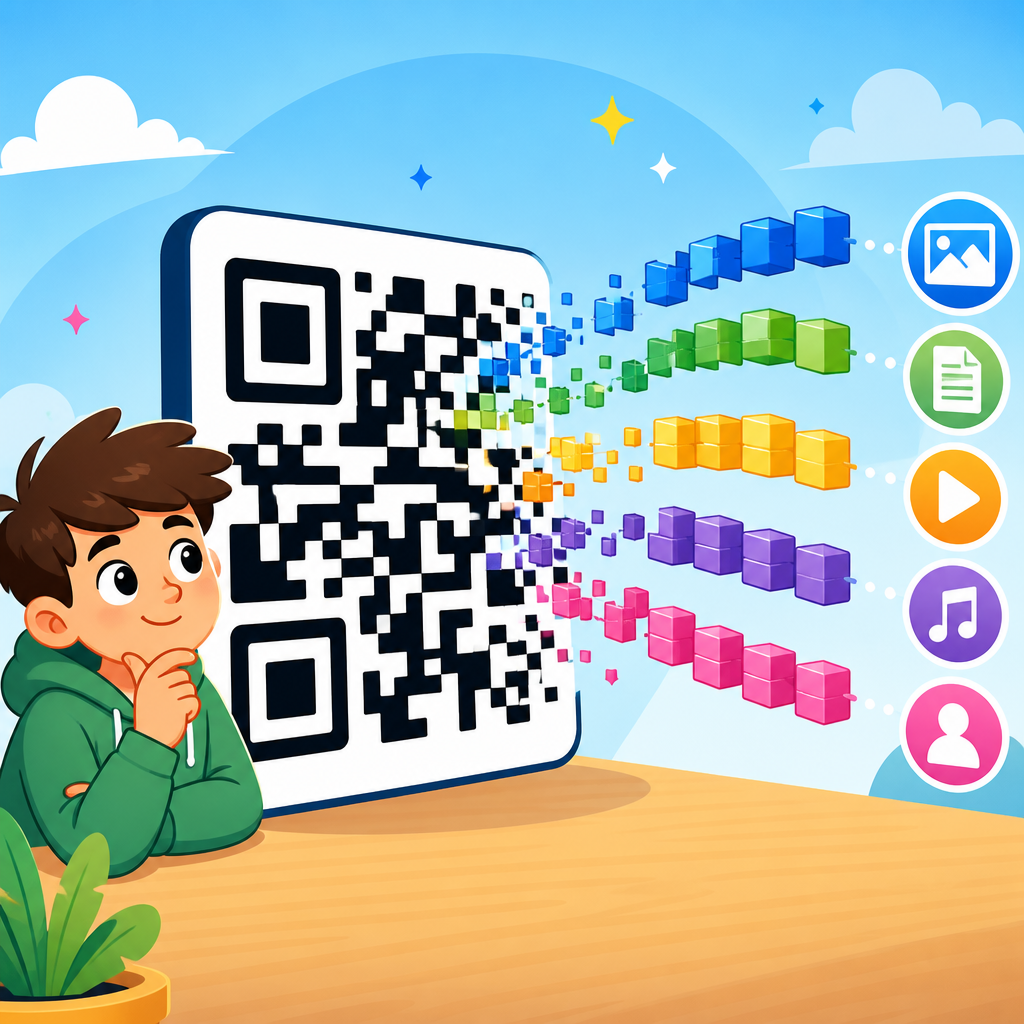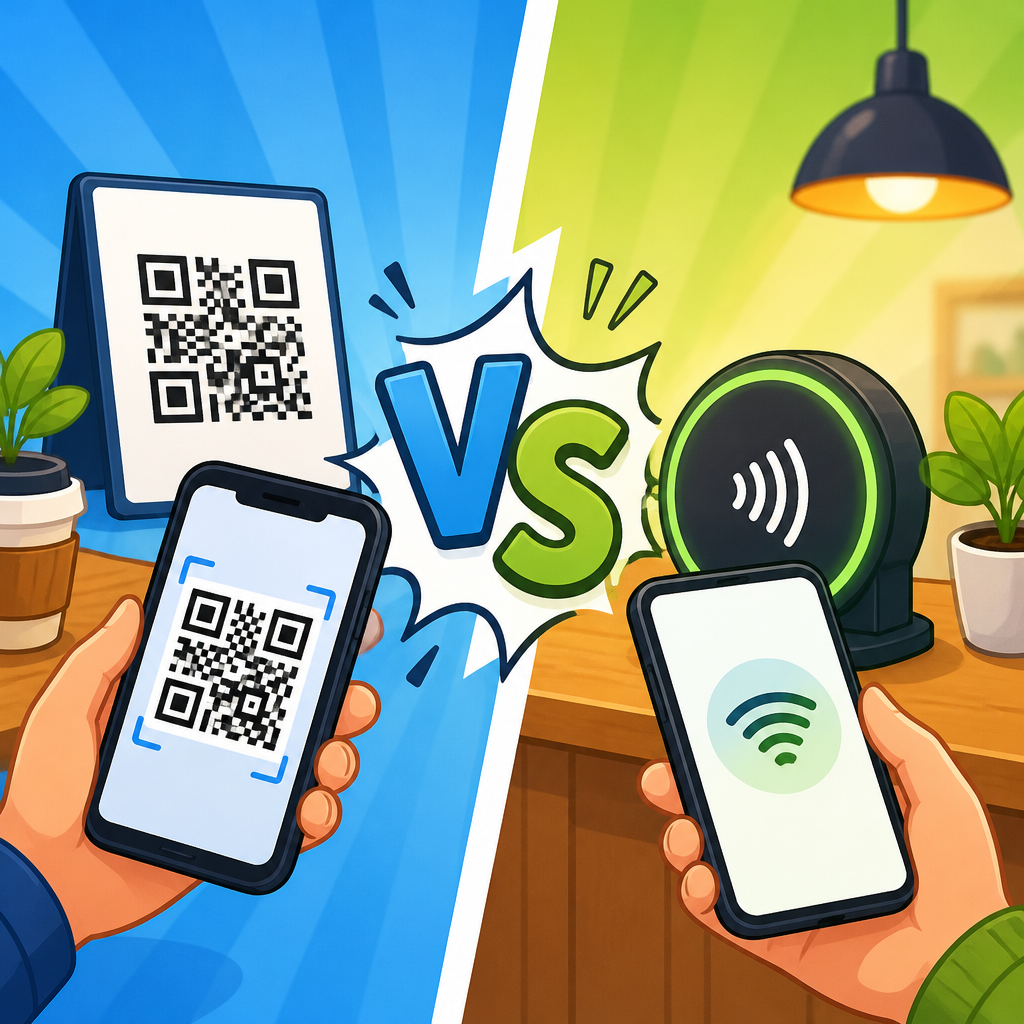
QR codes and NFC solve the same business problem in different ways: they connect a physical object to a digital action. A QR code is a two-dimensional barcode scanned with a camera, while near field communication, or NFC, uses a tiny chip and short-range radio to transmit data when a phone is placed close to it. The practical question behind “QR Codes vs NFC: Which Is Better?” is not which technology is universally superior, but which one matches your cost, audience, environment, security needs, and long-term product roadmap.
This comparison matters because the choice affects adoption rates, campaign measurement, maintenance cost, and user experience. I have implemented both in retail signage, event check-in, restaurant ordering, packaging, and equipment labeling, and the wrong choice usually fails for a predictable reason. Teams often select NFC because it feels more advanced, then discover that older Android settings, iPhone behavior, damaged tags, or replacement logistics slow the rollout. Others choose QR codes for everything, then hit friction in tap-first environments such as access control or repeat customer interactions where speed matters more than visual flexibility. The better strategy starts with the user journey, not the hardware.
For companies planning the future of QR code technology, this topic is especially important. QR codes are no longer just static links printed on posters. They now support dynamic redirects, first-party analytics, secure tokenization, app deep linking, product authentication, digital payments, omnichannel attribution, and AI-assisted personalization. They also sit at the center of connected packaging and smart retail because they can be deployed instantly at massive scale with almost no hardware cost. NFC continues to grow too, especially in payments and high-trust interactions, but QR codes remain the most adaptable bridge between physical media and mobile software. Understanding where each fits is the foundation for making durable technology decisions.
Core Differences Between QR Codes and NFC
The simplest distinction is visibility versus invisibility. A QR code is printed or displayed, so users see it and know an interaction is available. An NFC tag is hidden inside a label, card, table tent, or product, making the action cleaner but less obvious unless it is clearly signposted. Visibility matters because many conversion problems are not technical; they are behavioral. People scan what they can recognize. They do not always tap what they do not realize exists.
The second distinction is infrastructure. QR codes require a camera and software that can interpret the code. On modern smartphones, that usually means the native camera app can scan immediately. NFC requires a compatible device, enabled hardware, and a tag or embedded chip. Apple and Android support has improved, but behavior still varies by model, operating system, and background reading capability. In projects I have overseen, QR codes consistently delivered fewer support tickets because users understood the motion required and devices rarely needed configuration changes.
The third distinction is cost structure. A printed QR code can be generated for free and reproduced on paper, packaging, screens, labels, mailers, receipts, and outdoor media. NFC requires a physical chip, encoding, sourcing, placement, and replacement planning. Unit economics matter. Adding a QR code to 500,000 packages is effectively a design exercise; adding NFC can become a procurement and operations program. That does not mean NFC is poor value. It means NFC must create enough extra convenience, trust, or data quality to justify hardware expense.
User Experience, Speed, and Accessibility
When the question is pure speed, NFC often wins in repeat interactions. A tap can feel more effortless than opening a camera and aligning a code. That advantage is real in environments like office access, hotel room entry, loyalty kiosks, and transit validation. However, in discovery scenarios, QR codes often outperform because they are self-instructing. A poster with a visible code and a clear call to action can convert a passerby instantly. A hidden NFC tag on the same poster may be ignored unless the audience already expects to tap.
Accessibility is more nuanced than many buyers assume. QR codes are highly accessible when designed well: strong contrast, sufficient quiet zone, adequate print size, and fallback text such as a short URL. NFC can help users with motor limitations because exact framing is unnecessary, yet tap points can be inconsistent on different phones, creating confusion. For public-facing campaigns, I usually recommend pairing QR with clear directional copy because it serves the broadest audience with the fewest assumptions. If the interaction is mission critical, a visible fallback path is essential regardless of technology.
Environmental conditions also affect usability. QR codes can fail under glare, low light, scratched surfaces, extreme curvature, or poor printing. NFC can fail when embedded near metal without proper shielding, when tags are physically damaged, or when users do not know where the antenna sits on their device. In warehouses and field service settings, I have seen laminated QR labels outlast low-cost NFC stickers simply because replacement was easier and scanning could happen from a distance. Context decides performance more than novelty does.
Security, Privacy, and Operational Control
Neither QR codes nor NFC are inherently secure by default. Security depends on implementation. A static QR code that points directly to a URL can be copied, replaced, or spoofed. An NFC tag can also be cloned, overwritten if unlocked, or redirected to a malicious destination. The practical difference is that NFC often feels more trusted to end users because there is no visible string or obvious printed surface to tamper with. That perception helps, but it should not be confused with actual protection.
The strongest deployments use dynamic resolution. Instead of encoding the final destination, they point to a controlled endpoint that validates the request, logs metadata, checks geolocation or device signals when appropriate, and then redirects. This is common in enterprise QR management platforms and just as relevant for NFC. If a label is duplicated, token-level analytics can reveal suspicious scan patterns. If a campaign changes, the destination can be updated without reprinting. In product authentication, serialized QR codes have a major advantage because they scale with item-level identity and can be audited centrally.
Privacy is another key factor. NFC interactions can feel private because the user taps intentionally at close range, while QR scans may happen in visible public settings. Yet both technologies can collect similar web analytics once the destination opens in a browser or app. The right approach is transparent disclosure, minimal data collection, and compliance with standards such as GDPR and CCPA where applicable. For regulated use cases, the winning system is usually the one your legal, security, and operations teams can govern consistently.
Cost, Deployment, and Measurement at Scale
At scale, QR codes are usually better because they are cheaper to deploy, easier to test, and simpler to measure across channels. Marketing teams can place different dynamic QR codes on packaging, shelf talkers, direct mail, receipts, and digital signage, then compare performance by asset, region, product line, or store. This is one reason QR codes became central to omnichannel attribution after smartphone camera support became universal. They transform offline media into measurable traffic sources without requiring app installation or specialized hardware.
NFC scales best when the interaction is recurring and the object persists. A conference badge, membership card, hotel key, or smart poster in a flagship store can justify tag cost because users engage more than once or because staff workflows depend on speed. In those cases, NFC can reduce friction and improve throughput. But the hidden cost is operations: sourcing tags, encoding them accurately, tracking inventory, replacing failures, and ensuring readers or phones behave consistently across a mixed device base.
| Factor | QR Codes | NFC |
|---|---|---|
| Upfront cost | Very low; printable or screen-based | Higher; requires chips and encoding |
| User cue | Visible and familiar | Less visible; needs signage |
| Speed for repeat use | Good | Excellent |
| Best fit | Mass campaigns, packaging, education, payments | Access, loyalty, controlled environments |
| Analytics flexibility | High with dynamic redirects | High with managed endpoints |
| Replacement and updates | Easy and cheap | More operationally complex |
Measurement quality depends less on the trigger and more on the data architecture. Use UTM parameters, campaign taxonomies, event tracking, and first-party analytics. Platforms such as GA4, Adobe Analytics, Bitly, Branch, and mobile deep linking systems can support both QR and NFC. Still, QR codes often integrate faster because the entry point is typically a standard URL, which aligns well with existing web analytics and marketing operations.
Future of QR Code Technology: Why This Hub Matters
The future of QR code technology is broader than scanning a square to open a webpage. The next phase is dynamic, secure, personalized, and deeply connected to product data systems. Brands are using QR codes to deliver real-time content based on location, language, inventory status, and customer segment. Consumer packaged goods companies now place codes on labels that link to sourcing details, recipes, recycling instructions, warranty registration, and loyalty offers. In pharmaceuticals and luxury goods, serialized codes help combat counterfeiting by tying each item to a verifiable digital record.
Global standards are accelerating this shift. GS1 Digital Link is especially important because it turns product identifiers into web-resolvable links that can support both retail operations and consumer experiences. That means a single code can help a scanner at checkout, a warehouse system, and a shopper seeking nutrition or authenticity information. As 2D code adoption expands in retail, QR codes become infrastructure rather than campaign accessories. That is a major reason this topic deserves hub-level attention within QR code technology and development.
Payment ecosystems also support long-term growth. In many markets, account-to-account payments and wallet flows use QR as a low-cost alternative to card terminals. Restaurants, parking systems, vending, donations, and peer-to-merchant payments benefit because implementation is fast and hardware requirements are minimal. At the same time, app clips, deferred deep linking, and mobile wallet passes let QR codes launch richer experiences than a simple browser page. The result is a flexible front door into digital journeys that can evolve without replacing physical assets.
AI and automation will expand this further. I already see teams generating variant landing pages, translating destination content, and optimizing calls to action based on scan context. Combined with dynamic QR management, this allows one printed asset to serve many audiences intelligently. NFC can support some of these flows, but QR retains a structural advantage: it is cheap to distribute, easy to syndicate, and visible in every medium from packaging to livestreams. For most organizations planning future-ready customer interactions, QR should be the baseline and NFC the selective enhancement.
Which Is Better for Common Business Use Cases?
For packaging, print advertising, outdoor media, manuals, menus, and broad customer education, QR codes are better. They are cheaper, more visible, and easier to scale globally. For access control, hotel entry, employee ID, tap-to-pair workflows, and environments where users engage repeatedly, NFC is often better because speed and convenience outweigh hardware cost. For payments, the answer depends on region and installed infrastructure: NFC leads in contactless card and wallet tap ecosystems, while QR leads where low merchant setup cost and smartphone-first transfers matter more.
For product authentication and post-purchase engagement, QR usually has the edge because serialized printing and dynamic redirects support item-level identity, analytics, and content updates at scale. For museums, equipment maintenance, and field operations, the best answer is often both. A visible QR code educates and provides universal access; an NFC tag adds speed for trained users or staff. Hybrid deployments consistently perform well because they reduce failure modes. If one interaction path breaks, the other remains available.
The clearest decision framework is simple. Choose QR when reach, flexibility, low cost, and visible calls to action matter most. Choose NFC when repeat speed, physical elegance, or controlled proximity interactions matter most. Choose both when the journey includes both discovery and repeat use. The winning technology is the one your audience will actually use, your team can govern securely, and your budget can sustain beyond the pilot.
QR codes are better for most organizations because they deliver the widest compatibility, the lowest deployment cost, and the strongest foundation for future digital experiences. NFC is excellent in the right context, but it is not a universal replacement. The smartest comparison is not old versus new; it is visible, flexible software-linked infrastructure versus fast, hardware-based proximity interaction. Once you frame the choice that way, the tradeoffs become clear.
As the future of QR code technology unfolds, the gap widens in favor of systems that can adapt after printing. Dynamic QR management, GS1 Digital Link, serialized authentication, advanced analytics, and AI-personalized destinations all increase the value of a simple printed code. That makes QR the natural hub technology for connected packaging, measurable offline media, and scalable customer education. NFC will remain important for payments, access, and tap-first workflows, but its economics limit universal deployment.
If you are building a roadmap under QR Code Technology and Development, start with your highest-volume use cases and map the customer journey step by step. Test QR first, add NFC where speed or repeat interactions justify the extra complexity, and measure everything through controlled redirects and first-party analytics. That approach delivers better adoption now and a stronger platform for what comes next.
Frequently Asked Questions
What is the main difference between QR codes and NFC?
The core difference is how each technology connects a physical object to a digital action. A QR code is a visual, two-dimensional barcode that a user scans with a smartphone camera. NFC, or near field communication, relies on a small embedded chip that communicates wirelessly when a compatible phone is brought very close to it. In practical terms, QR codes are image-based and visible, while NFC is chip-based and usually invisible to the user unless it is labeled.
That difference affects the entire user experience. With a QR code, a person typically opens a camera, points it at the code, and taps a prompt. With NFC, the action can feel more seamless because the user simply taps or holds the phone near the tag. However, that convenience depends on device compatibility, tag placement, and user awareness that tapping is possible. So when businesses compare QR Codes vs NFC, they are really comparing two different interaction models: scan versus tap.
It is also important to understand that both technologies can often trigger similar outcomes, such as opening a website, launching a menu, starting a payment flow, checking in at an event, or sharing contact details. The question is less about what they can do and more about how people access that action, what it costs to deploy, and what conditions the technology has to work within.
Which is better for cost and ease of deployment: QR codes or NFC?
For most organizations, QR codes are the clear winner on cost and deployment simplicity. A QR code can be generated quickly, printed on almost any surface, and distributed at scale with very little expense. Businesses can place them on packaging, posters, table tents, direct mail, labels, receipts, product displays, and signage without needing specialized hardware. If the campaign changes, the printed code may still work if it is tied to a dynamic destination that can be updated behind the scenes.
NFC usually costs more because it requires a physical tag or chip, not just a printed graphic. That means businesses need to purchase NFC-enabled materials, embed tags into products or displays, and think more carefully about production, placement, and durability. While NFC tags are not necessarily expensive on a small scale, costs add up in larger deployments, especially when custom packaging, tamper resistance, or outdoor durability is required.
Ease of deployment also favors QR in many environments because there is less technical friction. Nearly any modern smartphone can scan a QR code using its camera, and staff do not need much training to place or replace a printed asset. NFC can provide a polished experience, but deployment is less forgiving. Tag location matters, some users may not know where to tap, and certain phones may handle NFC interactions differently. If your priority is affordability, speed, and broad accessibility, QR codes are usually the more practical choice.
Is NFC more secure than QR codes?
NFC is often perceived as more secure, but the real answer is more nuanced. Because NFC requires close physical proximity, it can reduce some risks associated with publicly visible QR codes, such as someone replacing a printed code with a malicious one. NFC tags can also be embedded inside materials, making them harder to tamper with casually. In some applications, especially controlled environments like access systems or authenticated product experiences, that physical design advantage can be meaningful.
At the same time, neither technology is automatically secure just because of the format. Security depends heavily on the destination, the data architecture, the authentication flow, and how the implementation is managed. A QR code that points to a secure, encrypted, well-managed platform can be safer than a poorly configured NFC deployment. Likewise, an NFC tag can still direct users to a compromised webpage or be rewritten if it is not properly protected.
From a business perspective, the better question is what kind of security problem you are trying to solve. If you need visible public access at scale, QR codes may be perfectly appropriate when combined with trusted domains, clear branding, and secure landing pages. If you need tighter physical control, lower risk of visible tampering, or a more deliberate close-range interaction, NFC may offer advantages. In short, NFC can improve security in certain use cases, but strong security comes from system design, not from the technology label alone.
When should a business choose QR codes over NFC, and when should it choose NFC over QR codes?
A business should usually choose QR codes when reach, flexibility, and low cost matter most. QR works especially well for marketing campaigns, restaurant menus, product packaging, event signage, retail displays, instructional materials, and print advertising. If the goal is to let as many people as possible access something quickly using a device they already understand, QR is often the strongest option. It is also ideal when visual discoverability matters, because people can see the code and know there is something to scan.
NFC tends to make more sense when the experience benefits from a faster, more premium, or more controlled interaction. It can be a strong fit for access control, smart business cards, product authentication, membership experiences, in-store engagement, connected packaging, or environments where scanning a visible code may feel less elegant. NFC can also be useful when design matters and you want the interaction technology to be hidden inside a product, card, poster, or fixture.
Audience behavior is another critical factor. If your users are likely to recognize and scan a code without hesitation, QR is a safe choice. If your audience is comfortable with tap-based interactions and your environment supports close-range engagement, NFC can create a smoother experience. In many cases, the best answer is not either-or. Businesses often get the best results by using both technologies together, giving users a scan option and a tap option so the experience is accessible, flexible, and resilient.
Can QR codes and NFC be used together in the same campaign or customer experience?
Yes, and in many cases that is the smartest strategy. QR codes and NFC are not true competitors in every scenario; they are complementary tools that solve the same problem in different ways. Using both lets a business serve a wider audience and reduce friction. Someone who prefers scanning can use the QR code, while someone who wants a faster tap interaction can use NFC. This dual approach is especially valuable in retail, events, hospitality, packaging, and experiential marketing.
Combining both technologies also improves reliability. If lighting is poor, a QR code may be harder to scan, but NFC may still work. If a user’s phone settings make NFC less convenient, the QR code provides a fallback. This redundancy matters in high-traffic or high-stakes situations where every interaction counts. It can also support better testing, allowing a business to compare engagement rates, user preferences, and conversion behavior across scan and tap interactions.
From a strategic standpoint, a combined approach acknowledges that “better” depends on context. QR offers visibility, affordability, and scale. NFC offers convenience, subtlety, and a modern touch. When both are available, the business does not have to force a single interaction model on every user. Instead, it can match the technology to real-world behavior, which is often the most effective answer to the question, “QR Codes vs NFC: Which Is Better?”