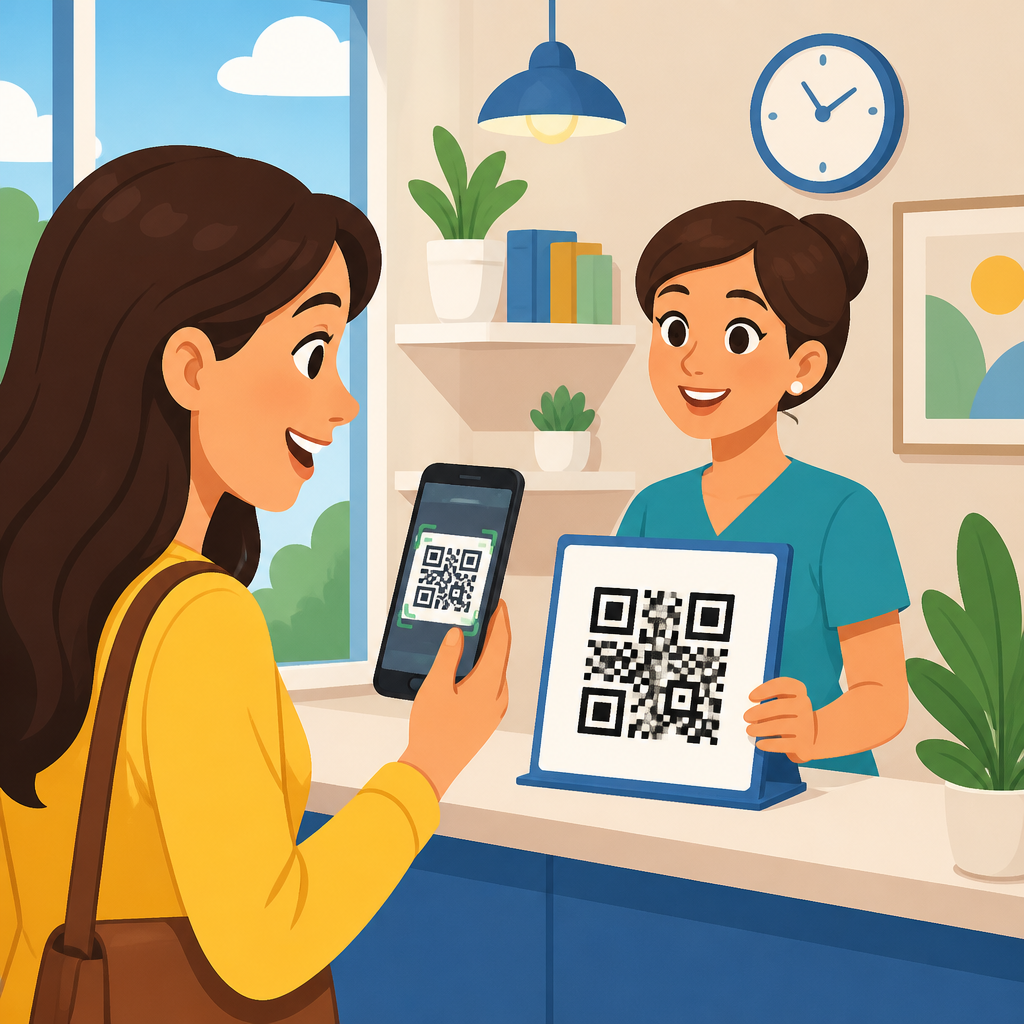
QR codes for appointment scheduling have become one of the most practical tools in healthcare because they remove friction at the exact moment a patient is ready to book care. A QR code, or quick response code, is a scannable two-dimensional barcode that opens a digital destination such as a scheduling form, patient portal, calendar page, or telehealth intake screen. In clinics, hospitals, dental practices, imaging centers, and specialty groups, that simple scan can shorten the path from awareness to confirmed visit from several minutes to a few seconds.
In healthcare, appointment scheduling is not an administrative side issue; it is directly tied to revenue, access, continuity of care, and patient outcomes. I have seen practices spend heavily on outreach while losing patients between seeing a poster, discharge sheet, or recall postcard and actually calling the front desk. Phone bottlenecks, after-hours demand, language barriers, and long hold times create avoidable leakage. A well-placed QR code closes that gap by giving patients an immediate path to action on their own device, at any time, without needing to search for a website or wait for a staff member.
The term matters because healthcare scheduling is more complex than standard booking. It may involve provider selection, insurance verification, referral requirements, service-line routing, pre-visit questionnaires, consent notices, reminder workflows, and protected health information. A scheduling QR code therefore is not just a marketing graphic. It is part of an access workflow that must be easy for patients, useful for operations, and aligned with privacy and security expectations. Dynamic QR codes are usually the better option because the destination can be changed later without reprinting signage, mailers, prescription inserts, or waiting room materials.
For a healthcare organization building a broader QR strategy, appointment scheduling is often the highest-value starting point. It is measurable, understandable, and deployable across nearly every touchpoint: windows, exam rooms, discharge packets, physician referral pads, event booths, direct mail, lab result notices, and social posts. It also supports related use cases under the same healthcare hub, including patient registration, bill pay, medication education, review generation, contactless check-in, and follow-up care navigation. When implemented carefully, QR codes for appointment scheduling improve conversion, reduce staff workload, and make access to care feel significantly easier.
Why healthcare organizations use QR codes for appointment scheduling
Healthcare organizations use QR codes for appointment scheduling because they reduce access friction and convert intent into action immediately. The basic value is speed: the patient sees a prompt, scans, and lands on the exact booking destination. There is no need to type a long URL, search a practice name, or call during business hours. In my experience, this is especially effective for high-intent moments such as after a referral discussion, after discharge, during a community screening event, or when a patient receives a recall notice for preventive care.
Operationally, scheduling QR codes help clinics manage demand without forcing every request through the front desk. Many organizations already use patient access platforms such as Epic MyChart, Athenahealth, Phreesia, Solutionreach, NexHealth, Zocdoc, or a specialty-specific scheduler. The QR code does not replace those systems; it feeds them. That means practices can maintain provider calendars, scheduling rules, and reminder workflows while making the entry point dramatically simpler. Front-desk staff then spend less time repeating basic scheduling steps and more time resolving exceptions such as prior authorization, referral issues, or urgent triage.
Another reason they matter is channel consistency. A healthcare hub page should connect multiple subtopics, and appointment scheduling sits at the center because nearly every patient journey flows through it. A pediatric clinic may use one QR code on vaccine reminder postcards, another in exam rooms for annual wellness visits, and another at community fairs for new patient intake. A dental group might place codes on treatment plan printouts so patients can book hygiene follow-ups before forgetting. An orthopedic practice can send a dynamic code in postoperative materials directing patients to physical therapy or surgeon follow-up based on procedure type.
Where QR codes fit in the healthcare patient journey
QR codes for appointment scheduling work best when mapped to specific stages of the patient journey. In acquisition, they support new patient booking from outdoor signage, search landing pages viewed on desktop, insurance directory profiles, brochures, and physician referral packets. In retention, they support annual exams, chronic care follow-ups, cleanings, imaging recalls, and specialist check-ins. In reactivation, they give overdue patients a one-scan route back into care from email, SMS, direct mail, or statement inserts.
The strongest placements are tied to context. A mammography center can add a QR code to reminder postcards that leads directly to breast screening appointment slots by location. A primary care group can place a code in exam rooms labeled “Need your next annual physical? Scan to book now.” An urgent care network can use lobby posters that route patients to reserve-a-spot scheduling during peak hours. A behavioral health provider can place codes on therapist profile sheets so referred patients can choose a clinician and appointment type without calling. These examples work because the code answers the patient’s immediate question: what should I do next?
Healthcare teams should also distinguish between general scheduling and service-line-specific scheduling. One generic code for “Book an appointment” is easy to produce, but targeted codes usually perform better because they reduce decision fatigue. A cardiology group may need separate destinations for new patient consultations, stress tests, echocardiograms, and follow-up visits. A multi-specialty clinic may need provider, location, language, and visit-type logic built into each destination. The more precisely the scan matches the patient’s need, the higher the completion rate.
How to implement a scheduling QR code workflow correctly
Implementation starts with the destination, not the graphic. Before generating any code, define the exact booking experience: which service, which providers, which locations, what eligibility rules, and what happens after submission. If the organization uses online self-scheduling, the QR code should link directly to that flow with the fewest possible clicks. If full self-scheduling is not possible, the code can open a request form, a callback form, or a secure patient portal message workflow. The key is matching the endpoint to operational reality rather than promising instant booking where none exists.
Use dynamic QR codes whenever possible. They allow updates to URLs, UTM parameters, campaign routing, and location-specific destinations without replacing printed materials. Dynamic codes also support analytics, which matter in healthcare because organizations need to know which channels drive completed appointments. At minimum, track scans, landing page visits, booking starts, completed appointments, no-show rates, and downstream revenue by service line. Google Analytics 4, CRM attribution, call tracking platforms, and scheduling software reports can all contribute, though healthcare teams must configure data collection carefully and avoid exposing protected information in URLs.
Design and testing are not cosmetic details. The code should be large enough to scan easily, surrounded by adequate quiet space, and paired with a clear call to action. Include plain-language text such as “Scan to schedule your follow-up” rather than assuming patients will infer the purpose. Test on both iPhone and Android devices, under clinic lighting, from typical viewing distances, and through common camera apps. I have seen beautiful mailers fail because the code was too small, printed on glossy stock with glare, or linked to a mobile page that loaded slowly and dropped users before the scheduler appeared.
| Implementation area | Best practice | Healthcare example |
|---|---|---|
| Destination | Link directly to the relevant appointment type | Dermatology code opens skin check booking, not the homepage |
| Code type | Use dynamic QR codes for edits and analytics | Hospital updates physician directory without reprinting lobby signs |
| Call to action | State exactly what happens after scanning | “Scan to book your annual physical in under 2 minutes” |
| Compliance | Avoid protected data in visible URLs and printed labels | No patient name or diagnosis embedded in campaign links |
| Measurement | Track scans through confirmed visits | Imaging center compares postcard scans to completed mammograms |
Privacy, security, and compliance considerations in healthcare
Healthcare scheduling QR codes must be convenient without becoming careless. The code itself is usually not sensitive, but the destination and the data flow behind it can be. If the scan opens a patient portal login, a self-scheduling app, or an intake form, the organization needs appropriate safeguards in place, including encrypted connections, access controls, business associate agreements where required, and auditability inside the systems handling patient information. The safest approach is to keep the printed or displayed code generic while placing all sensitive activity behind secure web or portal infrastructure.
Avoid embedding personal details in the QR code destination. For example, a reminder card should not expose a URL containing a patient’s full name, date of birth, diagnosis, or medical record number. Even if the card is intended for one person, printed materials can be lost, photographed, or misdirected. Use tokenized links only where the underlying system is designed for secure, time-limited access, and review that design with compliance and security stakeholders. Established guidance from HHS on HIPAA, plus vendor security documentation, should inform implementation decisions.
There are also practical trust considerations. Patients are increasingly aware that malicious QR codes exist in public settings. Healthcare organizations should reduce suspicion by using branded materials, recognizable domains, concise explanatory text, and consistent placement. A poster with a random short link and no explanation invites hesitation. A sign that clearly shows the hospital name, website domain, and purpose of the scan performs better because it looks legitimate and understandable. Trust is part of conversion.
Best use cases across healthcare settings
Primary care practices benefit from QR scheduling in annual wellness visits, chronic disease follow-ups, flu shots, and new patient onboarding. Specialty groups use it differently. Orthopedics can place codes on postoperative instructions for timed follow-up booking. OB-GYN clinics can use them on prenatal packets for ultrasound and routine visit scheduling. Ophthalmology practices can route patients from recall cards to eye exam slots by location. Dental offices often see strong results on hygiene recall cards, treatment plan handouts, and front-desk displays for whitening or consultation visits. In each case, the code supports a defined next step rather than a generic website visit.
Hospitals and health systems can deploy appointment scheduling QR codes at scale across service lines. Emergency departments may use them in discharge materials for primary care follow-up. Outpatient imaging centers can place them on physician office materials to simplify patient-directed scheduling. Oncology programs can use QR codes in patient navigation packets for nutrition counseling, survivorship visits, or support services. Public health departments can use event signage to book vaccine clinics or screening appointments. The broad lesson is that healthcare QR code use cases work best when they are operationally owned by the team responsible for access, not treated only as a marketing experiment.
Telehealth is another strong fit. A QR code can route a patient directly to a virtual care booking page, device-readiness checklist, or symptom-specific visit selection. This is particularly useful for employers, campuses, senior communities, and pharmacy partnerships where physical materials prompt digital action. Because telehealth often competes on convenience, reducing one or two extra clicks can materially improve conversion.
Measuring success and improving performance over time
Success should be measured beyond scan volume. A high scan count with low completion may indicate the wrong destination, confusing scheduling rules, poor page speed, weak provider availability, or a mismatch between the call to action and the landing page. The core metrics are scan-to-visit conversion rate, appointment completion rate, no-show rate, cost per booked visit, and revenue by campaign or placement. For healthcare access teams, another useful metric is front-desk call deflection: how many routine scheduling calls were avoided because patients booked themselves.
Optimization typically comes from small, disciplined changes. Test a code that links to one provider versus a filtered provider group. Compare “Scan to book” against “Scan to request an appointment.” Separate campaigns by location, specialty, and material type so performance is interpretable. If a postcard drives many scans but few completed visits, review whether mobile users are hitting insurance questions too early or facing limited slot availability. If an exam-room poster outperforms direct mail, the reason may be patient readiness rather than creative quality.
For a healthcare content hub, this topic naturally links outward to related pages on patient check-in QR codes, digital forms, review requests, prescription education, wayfinding, and payments. But the central takeaway remains simple: appointment scheduling is often the clearest proof point for healthcare QR code ROI. Start with one service line, implement securely, measure from scan to completed visit, and expand where the data supports it. When patients can move from intent to action in one scan, access improves, staff workload falls, and growth becomes easier to sustain. If your organization is building a healthcare QR strategy, make scheduling the first workflow you launch and refine.
Frequently Asked Questions
What are QR codes for appointment scheduling, and how do they work in healthcare?
QR codes for appointment scheduling are scannable codes that take patients directly to a digital booking experience. In a healthcare setting, that destination might be an online scheduling form, a patient portal login, a provider calendar, a telehealth registration page, or a specialty-specific intake screen. Instead of asking a patient to type in a long web address, search for the right department, or call during business hours, the code creates a direct path from interest to action with a single scan.
This matters because scheduling is often the first real conversion point in the patient journey. A patient may be ready to book after seeing a brochure in the waiting room, discharge instructions, a follow-up reminder, a direct mail piece, a text message, or signage at a community event. If the next step feels complicated, many patients delay or abandon the process. A QR code removes that friction by connecting them immediately to the right digital destination at the exact moment they are ready to act.
In practice, healthcare organizations can use QR codes in many ways. A primary care office might place one on preventive care postcards to guide patients to annual wellness visit scheduling. A dental practice might use separate codes for cleanings, consultations, and emergency visits. A hospital system could create department-specific codes for imaging, lab appointments, specialist referrals, and post-discharge follow-up visits. The best implementations are simple, mobile-friendly, and tied to clear calls to action so patients know exactly what they will get when they scan.
Why are QR codes so effective for increasing appointment bookings and reducing patient drop-off?
QR codes are effective because they reduce the number of steps between patient intent and appointment completion. Every extra action in a scheduling process, such as typing a URL, navigating a homepage, selecting the right location, or waiting on hold, creates an opportunity for drop-off. A QR code compresses that sequence into one immediate interaction, which is especially valuable in healthcare where patients may already be dealing with urgency, anxiety, or limited time.
They also perform well because they fit naturally into how people use smartphones. Most patients already know how to scan a code, and modern phones can do it instantly through the camera app. That familiarity makes QR-based scheduling feel convenient rather than technical. When used well, the code opens a page that is optimized for mobile screens, pre-selects the relevant service line, and presents a clear next step. The result is a smoother booking experience that can improve conversion rates and reduce missed opportunities.
Another reason they work is placement flexibility. Practices can put QR codes anywhere patients are likely to make a decision: exam rooms, front desks, after-visit summaries, billing inserts, prescription packaging, physician referral pads, email signatures, print ads, and event materials. This lets healthcare teams meet patients where interest happens rather than forcing them into a separate scheduling channel. Over time, that accessibility can support higher booking volume, faster follow-up scheduling, and a more patient-friendly access experience.
Where should healthcare organizations place QR codes for appointment scheduling to get the best results?
The strongest placements are the ones closest to patient intent. That includes check-out desks, waiting rooms, exam rooms, care instructions, post-procedure packets, recall notices, referral materials, and any printed or digital asset tied to a next-step action. For example, a patient finishing an orthopedic consultation may be more likely to book physical therapy if a QR code is printed directly on their care plan. A patient who receives a postcard reminding them about a mammogram may be more likely to schedule if the QR code takes them directly to the imaging calendar rather than the health system homepage.
External-facing placements can also be highly effective. Community screening events, urgent care signage, pharmacy partnerships, campus wellness campaigns, local advertising, and employer outreach materials are all opportunities to capture demand quickly. In these contexts, the key is specificity. A generic “scan here” message often underperforms a clearer prompt such as “Scan to book a same-week dermatology appointment” or “Scan to schedule your annual dental cleaning.” The more clearly the value is stated, the better the response tends to be.
Good placement also depends on usability. Codes should be large enough to scan easily, printed with strong contrast, and positioned where patients have enough time and space to engage. It helps to include a short backup URL for people who prefer not to scan. Most importantly, each code should link to the most relevant destination possible. Sending all traffic to a broad homepage adds unnecessary friction, while linking directly to the correct provider, specialty, location, or appointment type creates a far better patient experience.
Are QR codes for appointment scheduling secure and compliant for healthcare use?
QR codes themselves are simply a method for opening a digital destination, so the real security question is what happens after the scan. In healthcare, the landing page, scheduling system, patient portal, and any data collection process should be designed with privacy and security in mind. If a patient is logging in to an existing portal, submitting personal details, or completing telehealth intake information, the underlying platform should use appropriate safeguards such as encrypted connections, secure authentication, and access controls.
From a compliance standpoint, organizations should be thoughtful about what information is requested and where it is stored. A QR code printed on a flyer is not inherently collecting protected health information, but the form it opens may be. That means healthcare teams should work with compliant scheduling tools and patient communication systems that align with internal privacy policies and regulatory requirements. It is also wise to avoid linking to unsecured forms that request sensitive medical or insurance information without proper protections in place.
Patient trust matters just as much as technical security. People are more likely to scan and complete scheduling when the code appears in a credible, branded context and clearly states what will happen next. Using recognizable logos, plain-language instructions, and official materials helps reassure patients that the code is legitimate. Organizations should also test every code regularly to make sure it leads to the correct page, functions properly on mobile devices, and does not route through confusing or suspicious-looking destinations.
How can practices measure the success of QR codes for appointment scheduling?
Success should be measured beyond simple scan volume. While total scans are useful, the more meaningful metrics are appointment conversion rate, completion rate, time to booking, no-show impact, and downstream patient access outcomes. A code that receives fewer scans but leads to a higher percentage of completed appointments may be more valuable than a widely viewed code with weak conversions. Practices should look at the full path from scan to scheduled visit to understand true performance.
It is also helpful to evaluate performance by placement, audience, and destination. A QR code on recall postcards may drive strong follow-up care scheduling, while one in the waiting room may perform better for future preventive visits. Department-specific comparisons can reveal where patients respond best, and A/B testing can improve results over time. For example, changing the call to action, updating the design, simplifying the landing page, or linking to a more direct scheduling screen can all affect booking outcomes in measurable ways.
For the most actionable reporting, healthcare organizations should connect QR activity with appointment data wherever possible. Dynamic QR codes, campaign tracking parameters, and analytics dashboards can help teams identify which materials, service lines, or locations are producing the best return. When reviewed consistently, this data can support smarter outreach decisions, stronger patient engagement strategies, and a more efficient scheduling experience overall. In short, the best QR code strategy is not just easy to launch, but easy to measure and improve.