Open source QR code libraries give developers a fast, auditable way to add barcode generation and scanning to web, mobile, desktop, and embedded products without locking a roadmap to a single vendor. In practice, these libraries sit at the center of modern QR code APIs and SDKs because they handle the hard parts: matrix encoding, Reed-Solomon error correction, finder pattern detection, masking, version selection, and image decoding across inconsistent cameras and lighting conditions. I have implemented QR features in checkout flows, warehouse tools, event apps, and account authentication journeys, and the same lesson keeps repeating: library choice affects scan speed, print reliability, maintenance effort, and security posture more than teams expect. A solid hub page therefore needs to do two jobs at once. It must explain what open source QR code libraries are, and it must show how they connect to the broader ecosystem of QR code APIs and SDKs that developers evaluate when building production systems.
A QR code library is a software package that generates or decodes QR symbols according to the ISO/IEC 18004 specification. An API is the callable surface exposed by that package, whether through local functions, REST endpoints, or language bindings. An SDK usually bundles the library with platform-specific helpers, documentation, sample apps, and sometimes camera or image-processing modules. Open source matters because teams can inspect implementation details, verify licensing, patch bugs, benchmark performance, and avoid paying per-scan fees for basic functionality. It also matters for compliance-sensitive environments, where transmitting images to a third-party decoding service is not acceptable. For a development team working under deadlines, the best approach is rarely “find any QR package and move on.” It is to choose a library that matches target platforms, payload requirements, error tolerance, image pipeline constraints, and long-term ownership expectations.
This article serves as the hub for QR Code APIs and SDKs within the broader QR Code Technology and Development topic. It covers the core categories developers compare, the best-known open source libraries, practical integration patterns, and the tradeoffs that separate a successful deployment from a fragile demo. If you need a quick answer, here it is: use mature, actively maintained libraries with broad community adoption, test generation and decoding under real camera conditions, validate encoding options against scanner behavior, and treat QR functionality as part of your product’s infrastructure rather than a minor visual feature.
What developers should look for in QR code libraries
The first evaluation criterion is capability breadth. Some libraries only generate QR codes, while others only decode them, and a smaller group does both well. Generation features should include control over version, error correction level, quiet zone, mask selection or automatic optimization, output formats such as SVG, PNG, and bitmap, and support for non-ASCII text through proper mode handling. Decoding features should include image binarization, rotation handling, perspective correction, multiple-code detection, and support for noisy or low-contrast inputs. If your application needs structured data formats such as payment payloads, Wi-Fi credentials, or signed onboarding tokens, look for extensibility rather than hardcoded templates.
The second criterion is platform fit. JavaScript projects often need browser-compatible generation with lightweight bundles, while native mobile apps care more about camera frame throughput and low-latency decoding. Server-side systems may prioritize deterministic rendering, vector output, and batch processing. Embedded projects may need C or C++ libraries with minimal dependencies and predictable memory use. In my experience, many implementation problems come from forcing a browser-focused library into a native scanning workload or using a mobile-first SDK where a simple server-side renderer would be more reliable.
The third criterion is operational maturity. Review release cadence, issue responsiveness, test coverage, package signing, transitive dependencies, and license terms. MIT, Apache-2.0, and BSD licenses are generally straightforward for commercial use, but teams should still review attribution and patent clauses. Also check whether the library follows the QR standard correctly. A package with attractive demos but weak standard compliance will generate support tickets later when printed codes fail at retail counters or older scanners reject edge-case payloads.
Leading open source QR code libraries and where they fit
ZXing, short for Zebra Crossing, is the most referenced open source barcode project in this space and remains the default benchmark for many teams. Originally written in Java, it supports both 1D and 2D barcode formats, including QR codes, and has influenced ports in other languages. Its strengths are maturity, broad adoption, and a decoding pipeline that has been battle-tested for years. ZXing works well in Android, Java back ends, and desktop tooling, while ZXing-JS brings related functionality to browser environments. The tradeoff is that integration can require more tuning than newer, narrower libraries, especially when camera handling is outside the core package.
ZBar is another long-standing option, especially respected for scanning performance in C-based environments and Linux ecosystems. It supports QR and several linear symbologies and has been used in kiosks, embedded devices, and webcam-based utilities. Developers choose ZBar when they need native performance and low-level control. The downside is that wrappers and maintenance quality vary by platform, so teams should inspect the exact fork or binding they intend to ship rather than assuming every package named after ZBar is equally current.
For generation, qrcode by Kazuhiko Arase and its many descendants have been foundational in the JavaScript ecosystem. Libraries such as node-qrcode are widely used for server-rendered PNG or SVG output and are straightforward to wire into web applications, ticketing systems, and email workflows. Python developers commonly use Segno or qrcode. Segno stands out for standard-aware generation, Micro QR support, and clean SVG output, while the Python qrcode package is simple and productive for common tasks. PHP has BaconQrCode, often used in Laravel and Symfony projects for vector rendering. .NET developers frequently adopt QRCoder for strong C# ergonomics and broad output support.
| Library | Primary use | Languages or platforms | Notable strengths | Common caution |
|---|---|---|---|---|
| ZXing | Decoding and generation | Java, Android, ports to JS and others | Mature, widely adopted, multi-format support | Camera integration often needs extra work |
| ZBar | Decoding | C, Linux, embedded, wrappers | Fast native scanning, low-level control | Wrapper quality varies |
| node-qrcode | Generation | Node.js, browser builds | Easy PNG and SVG output | Not a decoder |
| Segno | Generation | Python | Standard-focused, strong SVG, Micro QR | Generation only |
| QRCoder | Generation | .NET | Developer-friendly API, many renderers | Decoding requires another tool |
How open source libraries relate to QR code APIs and SDKs
Many teams search for a QR code API when what they actually need is a local library. The distinction matters. A cloud API usually accepts text or image input and returns a rendered code or a decoded payload over HTTP. That model is useful when you need thin clients, central analytics, usage controls, or language-agnostic integration. However, it adds network latency, introduces privacy considerations, and can become expensive at scale. A local library runs inside your application process, gives full control over payload handling, and typically reduces recurring cost. For on-device scanning in mobile apps, local decoding is almost always the right baseline because users expect immediate results even without perfect connectivity.
SDKs sit one layer above. A mobile SDK may package ZXing or another engine together with camera frame management, autofocus guidance, overlay UI, duplicate-scan suppression, and result callbacks. A web SDK may combine a decoder with WebRTC camera access and browser compatibility shims. When comparing SDKs, ask what open source components they depend on, whether those components can be upgraded independently, and whether the SDK exposes enough settings to tune difficult scan conditions. Black-box convenience is attractive until you need to debug why glossy packaging scans on iPhone but fails on a low-end Android handset.
As a hub topic, QR Code APIs and SDKs should be understood as a stack. At the bottom is the standard itself. Above that is the open source engine that encodes or decodes symbols. Above that are platform wrappers, camera modules, and convenience abstractions. At the top are business workflows such as authentication, payments, inventory, and event check-in. Good architecture keeps those layers loosely coupled so that a decoding engine can be replaced without rewriting the entire product experience.
Implementation patterns for web, mobile, and back-end systems
On the web, generation is usually simpler than scanning. A server can create SVG QR codes for invoices, labels, menus, or account setup screens using node-qrcode, BaconQrCode, or a Python library, then cache the output and deliver it through a CDN. SVG is often the best choice for print and responsive layouts because it remains sharp at any size. For browser-side scanning, developers typically combine a JavaScript decoder with getUserMedia camera access. The practical challenge is not decoding one ideal image; it is managing permissions, camera selection, frame throttling, and inconsistent autofocus behavior across browsers. Test in Chrome, Safari, and Android WebView before declaring the feature done.
On mobile, the camera pipeline dominates success. Even a strong decoder will underperform if preview frames are too low resolution, poorly cropped, or processed on the main thread. Native Android teams often start with CameraX plus ZXing-based decoding, while iOS teams may choose Apple’s AVFoundation barcode detection for platform-native scanning and reserve open source libraries for generation or cross-platform parity. In Flutter or React Native, wrapper quality matters as much as engine quality because plugins often fail around lifecycle events, permissions, or backgrounding. I have seen teams spend days tuning decoding thresholds when the actual issue was an aggressive frame downscale in the plugin layer.
On back-end systems, QR code generation tends to support transactional workflows: boarding passes, shipping labels, warehouse bin IDs, and signed magic links. Deterministic rendering matters here. Set explicit error correction levels, lock image dimensions, preserve quiet zones, and store payload source data separately from rendered assets so codes can be regenerated reliably. For high-volume jobs, benchmark memory and CPU use. Seemingly small choices, such as generating PNG instead of SVG for every email attachment, can multiply infrastructure cost.
Quality, security, and testing in production deployments
A QR code that works in staging can still fail in the field because production conditions are harsh. Print gain can thicken modules, reflective surfaces can confuse thresholding, curved labels distort perspective, and brand customizations can destroy contrast. The best prevention is a test matrix that includes low light, motion blur, cheap Android cameras, older office printers, and physical distance variations. ISO compliance is necessary but not sufficient; real-world readability depends on quiet zone preservation, module size, contrast ratio, and disciplined artwork constraints.
Security deserves equal attention. QR codes often carry URLs, tokens, payment instructions, or device-pairing data. Validate and sanitize payloads before encoding, sign sensitive data where tamper resistance matters, and avoid putting secrets directly into the symbol when a short-lived opaque token would do. On the decoding side, treat scanned content as untrusted input. Enforce URL allowlists for internal workflows, parse structured data defensively, and log scan events without storing unnecessary personal information. If images are uploaded for server-side decoding, set file size limits and protect image-processing paths against malformed input.
Maintenance is the last differentiator between a hobby implementation and a durable product feature. Pin versions, monitor upstream advisories, and keep a small corpus of known-good and known-bad test images for regression checks. Libraries evolve, and a performance improvement in one release can change edge-case behavior in another. Teams that own QR functionality well document payload formats, rendering rules, scan thresholds, and fallback flows. That documentation shortens onboarding and makes later migrations far less risky.
Open source QR code libraries are the practical foundation of QR code APIs and SDKs for developers because they deliver control, transparency, and deployment flexibility across nearly every platform. The right choice depends on your actual workload. If you need mature multi-format decoding, start with ZXing or a trusted port. If you need native scanning performance in constrained environments, evaluate ZBar carefully. If you need straightforward generation for web or server applications, tools such as node-qrcode, Segno, BaconQrCode, and QRCoder are proven options. Then build upward: pair the engine with the correct camera stack, rendering path, test strategy, and security model.
The main benefit of taking an open source first approach is not just lower cost. It is better engineering leverage. You can inspect the implementation, benchmark it under your own conditions, and replace layers without losing control of the whole system. That matters when your QR feature moves from a prototype to a revenue path, an operational workflow, or a security-sensitive user journey. Use this hub as the starting point for deeper comparisons of generation libraries, scanning SDKs, payload design, and deployment patterns, and audit your current QR stack with real devices and real labels before your next release.
Frequently Asked Questions
What are open source QR code libraries, and why do developers use them instead of building QR functionality from scratch?
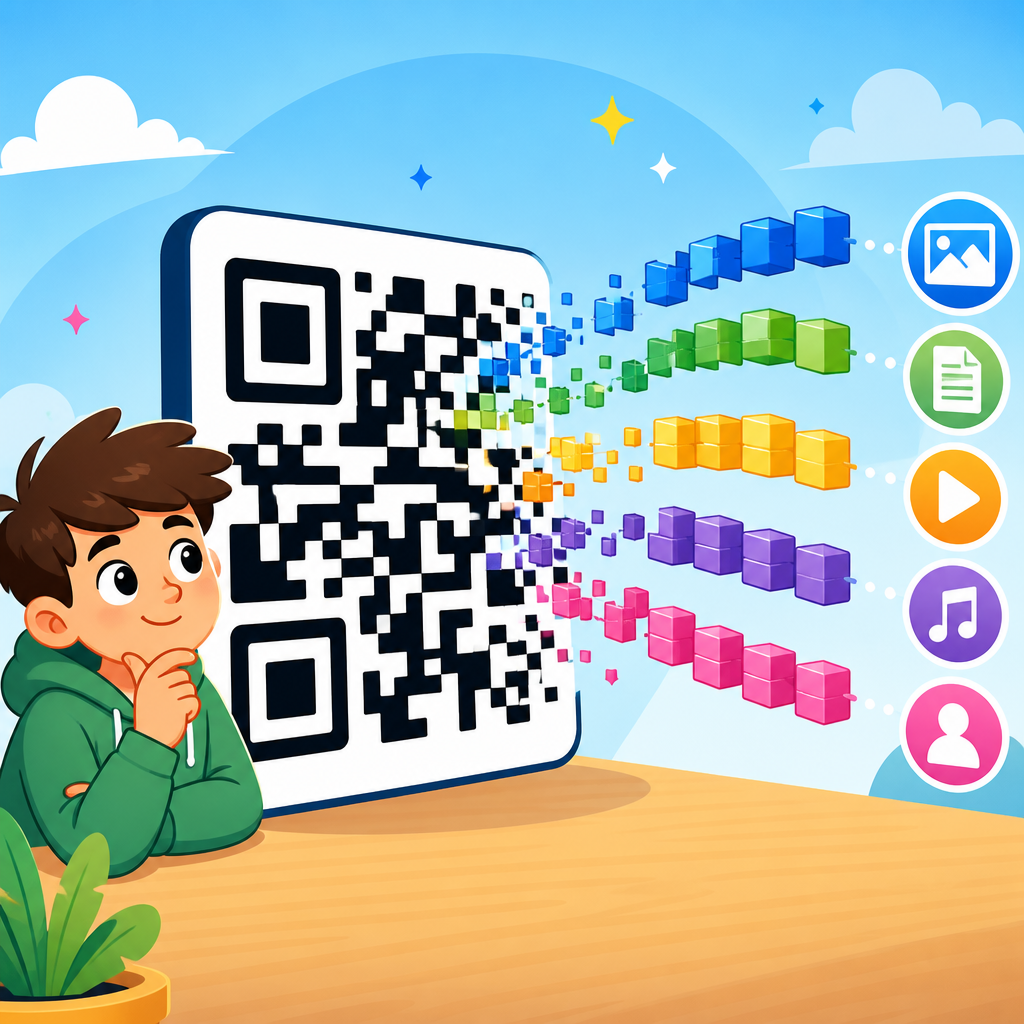
Open source QR code libraries are reusable codebases that handle the technical work required to generate, read, and process QR codes inside software products. Rather than writing low-level barcode logic from the ground up, developers can integrate a library that already supports core QR code operations such as data encoding, version selection, masking, quiet zone handling, Reed-Solomon error correction, and image decoding. On the scanning side, many libraries also include finder pattern detection, perspective correction, binarization, and routines that help decode QR symbols captured in poor lighting, at odd angles, or with noisy camera input.
Developers rely on these libraries because QR code implementation is more complex than it first appears. A simple “draw a square pattern” approach is not enough for reliable real-world performance. Production applications often need to support different device cameras, inconsistent focus, varying image resolutions, damaged codes, and mixed operating conditions across web, mobile, desktop, kiosk, or embedded environments. Open source libraries save time by providing tested implementations of these algorithms and allowing teams to build on proven work instead of recreating highly specialized barcode logic.
Another major advantage is transparency. Because the source code is available, engineering teams can audit how data is encoded or decoded, inspect performance bottlenecks, evaluate maintenance quality, and patch issues directly when needed. This is especially useful in regulated, security-conscious, or long-lived products where vendor lock-in is a concern. In many development stacks, open source QR code libraries also form the technical foundation beneath commercial QR code APIs and SDKs, making them a practical starting point for teams that want flexibility, control, and lower integration risk.
What features should developers look for when choosing an open source QR code library?
When evaluating an open source QR code library, developers should start with the fundamentals: does it support both generation and decoding, or only one side of the workflow? Some libraries are optimized for creating QR codes, while others are focused on camera-based scanning and image analysis. The right choice depends on whether your application needs to produce static codes, scan them in real time, or do both. It is also important to confirm support for QR-specific capabilities such as error correction levels, encoding modes, character set handling, logo tolerance, and output options including PNG, SVG, canvas, bitmap, or vector rendering.
Performance and reliability should be treated as first-class selection criteria. For scanners, look for strong decoding accuracy under non-ideal conditions such as glare, blur, low contrast, skewed angles, and partially obstructed symbols. For generators, check whether the library handles version optimization automatically and whether it produces standards-compliant output that scans consistently across common devices. Developers should also assess platform compatibility. Some projects are designed for JavaScript in the browser, some for Android or iOS, some for server-side runtimes, and others for C, C++, Java, Python, Rust, or cross-platform embedded environments.
Maintenance quality matters just as much as raw features. A library with regular updates, active issue resolution, clear documentation, test coverage, and a healthy contributor base is generally a safer long-term choice than a stagnant repository. License terms should be reviewed carefully as well, especially for commercial deployment. Finally, consider extensibility: can the code be customized for camera pipelines, preprocessing steps, performance tuning, or integration into your existing build system? The best open source QR code library is not just technically capable; it fits your product architecture, your team’s language stack, your performance requirements, and your long-term maintenance model.
How do open source QR code libraries handle error correction and difficult scanning conditions?
One of the reasons open source QR code libraries are so valuable is that they implement the mathematical and image-processing logic that makes QR codes resilient in the real world. On the generation side, QR codes use Reed-Solomon error correction, which allows a scanner to recover data even when part of the symbol is dirty, scratched, obscured, or degraded. Libraries typically expose error correction levels so developers can choose the right balance between data capacity and robustness. Higher error correction improves recoverability, but it also increases symbol density, which can affect readability at small print sizes or low-resolution capture.
On the decoding side, libraries often combine several stages to recover a usable QR matrix from imperfect input. This can include grayscale conversion, thresholding or adaptive binarization, edge analysis, finder pattern detection, alignment correction, perspective transformation, and timing pattern interpretation. These steps help the decoder isolate the code from a cluttered background and compensate for rotation, tilt, lens distortion, uneven lighting, and motion blur. More capable libraries may also support multi-code detection, inverted code recognition, and preprocessing hooks so developers can improve scan quality before attempting a decode.
In practice, successful scanning depends not only on the library but also on how it is integrated. Camera resolution, autofocus behavior, frame rate, cropping strategy, and user interface guidance all influence decode success. Developers often get the best results by pairing a strong open source decoder with smart application-level decisions such as defining scan regions, adjusting exposure when possible, filtering noisy frames, and providing visual feedback to users. A well-chosen library dramatically reduces the complexity of this work because it already solves the core QR recovery problems that are difficult to implement accurately from scratch.
Are open source QR code libraries suitable for production applications and commercial products?
Yes, open source QR code libraries are widely used in production systems and commercial software, provided they are selected and integrated carefully. Many mature libraries have been battle-tested across industries including retail, logistics, healthcare, ticketing, payments, manufacturing, and identity workflows. Their production suitability comes from standards compliance, broad platform support, community review, and years of fixes for edge cases that only show up at scale. For many teams, using a respected open source library is actually lower risk than building proprietary QR logic internally, because the implementation has already been exercised by a much larger user base.
That said, production readiness should never be assumed automatically. Teams should review the project’s maintenance history, issue backlog, release cadence, test coverage, and documentation quality. Security and legal review are also important. Even though QR code libraries are usually not high-risk in the same way as network-facing frameworks, they still process external input and may be linked into critical workflows. You should verify dependency health, scan for known vulnerabilities, and ensure the license is compatible with your commercial distribution model. Common open source licenses may be perfectly acceptable, but they must still be evaluated in context.
For enterprise use, it is also wise to validate the library under your exact workload. Test scanning across representative devices, camera modules, operating systems, image sizes, and environmental conditions. Measure CPU and memory usage if the code will run on mobile or embedded hardware. If your product roadmap includes customization, confirm that your team can realistically maintain patches or contribute upstream when needed. In short, open source QR code libraries can be excellent for production, but the best outcomes come from treating them like any other strategic dependency: vet them thoroughly, test them rigorously, and integrate them with clear ownership.
How do developers integrate an open source QR code library into web, mobile, or backend applications?
Integration usually begins by matching the library to the application environment. In web applications, developers often use JavaScript or WebAssembly-based libraries to generate QR codes in the browser or scan them through camera access APIs. A frontend implementation might render a QR code as SVG or canvas for crisp display across responsive layouts, while a scanning workflow reads video frames from the device camera and passes them to the decoder in real time. For mobile apps, integration commonly happens through native Android or iOS libraries, or through cross-platform wrappers that expose scanning and generation features to frameworks such as React Native, Flutter, or Xamarin.
On the backend, QR generation is often part of document workflows, transactional messaging, inventory labels, boarding passes, event tickets, or authentication flows. In these cases, developers integrate a server-side library in languages such as Java, Python, Node.js, Go, C#, or PHP to generate image files or vector output on demand. Backend scanning can also be useful when processing uploaded images, PDFs, warehouse camera feeds, or batch records. The integration details vary, but the typical pattern is straightforward: install the dependency, call the library’s encode or decode functions, pass configuration such as error correction level or output format, and then handle the resulting image or decoded payload inside your business logic.
The most effective integrations go beyond the basic API call. Developers should think about user experience, observability, and operational reliability. For example, browser-based scanning often benefits from permission handling, camera selection, scan box overlays, duplicate result suppression, and fallback behavior for unsupported devices. Server-side generation may require caching, image size controls, and validation to prevent malformed data from propagating into customer-facing assets. In larger systems, QR functionality should also be instrumented with logging and test coverage so teams can detect scan failures, rendering inconsistencies, and performance regressions early. With the right open source library, integration is usually fast, but polishing the full workflow is what turns a working implementation into a dependable product feature.