JavaScript is one of the most practical languages for QR code generation because it can create scannable codes in the browser, on the server, and inside modern apps with minimal friction. In the context of QR Code APIs and SDKs, JavaScript sits at the center of implementation work: it connects user input to encoding logic, renders output as SVG or canvas, calls third-party services, and supports analytics, styling, and batch workflows. A QR code is a two-dimensional matrix barcode that stores data such as URLs, contact details, payment requests, Wi-Fi credentials, or deep links in a pattern of black and white modules. Generation means converting that payload into the encoded structure defined by the ISO/IEC 18004 standard, including error correction, masking, and placement rules, then rendering it into an image or vector format a scanner can reliably read. This matters because teams rarely need only a single static code anymore. They need reusable JavaScript components, maintainable SDK integrations, secure API calls, and production controls around branding, tracking, and performance.
I have implemented QR code generation for checkout pages, event ticketing, restaurant menus, and internal asset systems, and the same lesson always holds: getting a code on screen is easy, but building a dependable QR workflow requires informed technical choices. The choice between a client-side library and a hosted API affects privacy, latency, and branding flexibility. The choice between canvas and SVG affects print quality, file size, and post-processing. The choice of payload structure affects scan success, analytics accuracy, and future maintainability. This hub article explains how to use JavaScript for QR code generation while also mapping the broader QR Code APIs and SDKs landscape. It covers core implementation patterns, leading libraries, integration tradeoffs, server-side generation, security concerns, testing standards, and the architecture decisions that separate prototypes from durable production systems.
What JavaScript Actually Does in QR Code Generation
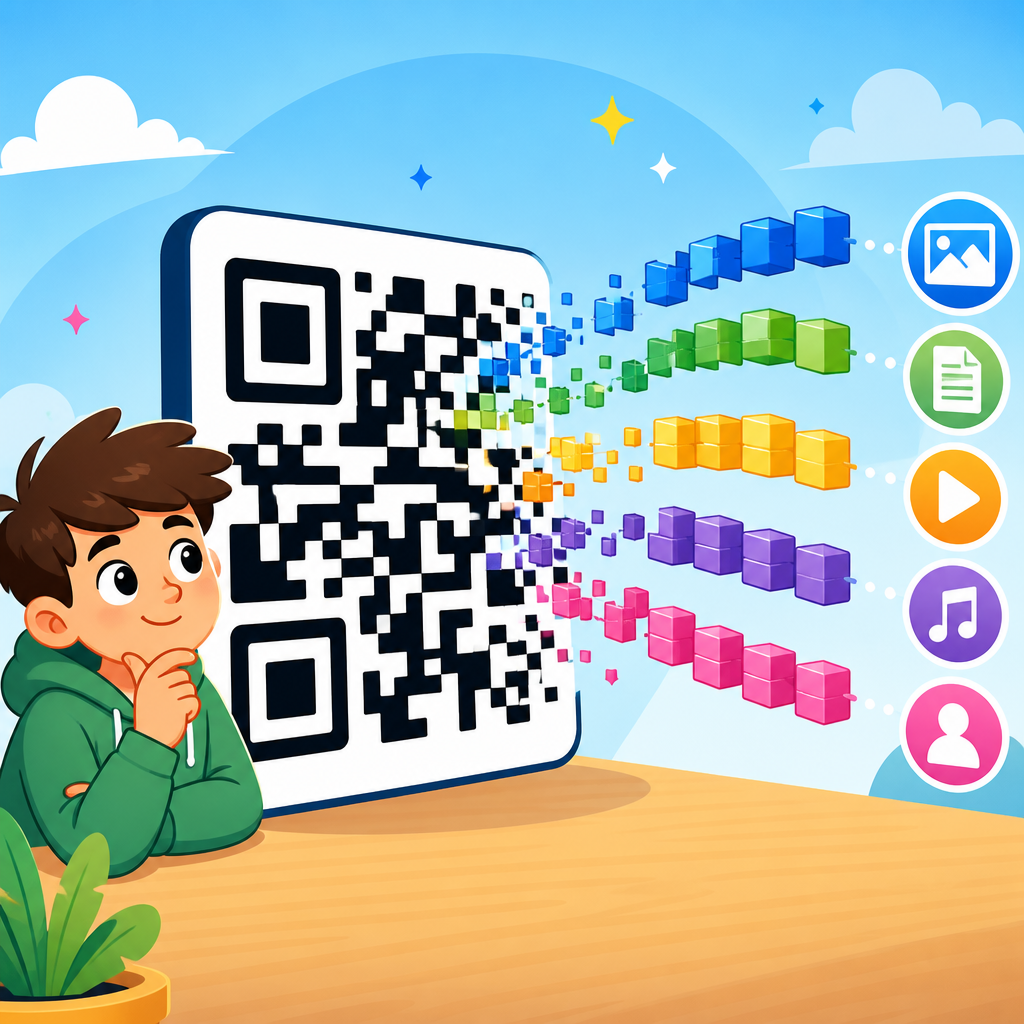
JavaScript typically handles four jobs in a QR implementation. First, it collects or receives the payload, such as a URL, vCard, UPI string, or app deep link. Second, it passes that payload to an encoding engine, either a local library or a remote API. Third, it renders the resulting code into a browser element, downloadable file, PDF workflow, email asset, or application view. Fourth, it manages surrounding product behavior, including form validation, styling controls, dynamic redirects, campaign metadata, and scan tracking. Understanding these layers helps teams choose the right API or SDK rather than treating all QR tools as interchangeable.
In a pure client-side workflow, JavaScript imports a library such as qrcode, QRCode.js, qr-code-styling, or Kazuhiko Arase’s encoder variants and generates output directly in the user’s browser. This approach is fast to deploy and reduces server load. It is ideal for one-off codes, demo tools, and interfaces where users customize colors, logos, or sizes in real time. In an API-based workflow, JavaScript packages the payload and styling options into a request sent to a hosted service, which returns a PNG, SVG, PDF, or short link. This is useful when teams need centralized governance, analytics, dynamic QR behavior, access control, or batch generation. In a hybrid workflow, JavaScript previews a code locally and requests a finalized production asset from an API after validation.
The key implementation decision is where the encoding logic lives. Local generation gives full control and often lower recurring cost. API-driven generation gives operational features that libraries alone do not provide, such as expiration rules, editability, bulk creation, and centralized reporting. When I scope a QR project, I start by asking three direct questions: does the code need to be dynamic, does it need scan analytics, and who owns the final asset lifecycle? The answers usually define the SDK stack immediately.
Client-Side JavaScript Libraries for QR Code Generation
For browser-based QR code generation, the most common starting point is the npm package qrcode. It supports terminal output, Data URLs, canvas, and SVG, making it flexible across web applications and Node.js services. A minimal implementation often looks like this conceptually: capture a URL from a form field, call the library’s rendering method, and inject the generated SVG or canvas into the page. Because the encoder runs locally, response time is nearly instant for standard payloads. This package also exposes options for error correction level, margin, color dark, color light, and output width, which are the controls most teams need first.
QRCode.js remains widely used in simple front-end projects because it is lightweight and straightforward. If a marketing team wants a landing page widget that instantly creates a downloadable code for a short campaign URL, QRCode.js can do the job with very little setup. The tradeoff is that older browser-focused libraries may offer fewer modern build optimizations, weaker TypeScript support, or less active maintenance than newer npm-first packages. For production systems, maintenance history, issue responsiveness, and package audit results matter as much as API simplicity.
When branding is central, many teams reach for qr-code-styling. It extends the baseline idea of QR generation by supporting dot styles, rounded corners, gradients, and logo overlays. That can be valuable for consumer packaging or event collateral, but I treat heavy styling carefully. Every decorative decision changes scanner tolerance. The more aggressively you alter module shape, reduce contrast, or cover the center with a logo, the more you rely on higher error correction and disciplined print testing. Good SDKs expose styling options; responsible implementations enforce safe defaults.
| Option | Best use case | Strengths | Tradeoffs |
|---|---|---|---|
| qrcode | Web apps and Node services | SVG, canvas, Data URL support; active ecosystem | Styling is functional rather than design-heavy |
| QRCode.js | Simple browser widgets | Easy setup and low complexity | Older architecture and fewer modern integrations |
| qr-code-styling | Branded marketing assets | Visual customization and logo support | Higher risk of scan issues if over-styled |
| Hosted QR API | Dynamic codes and analytics | Central management, reporting, batch generation | Recurring cost and external dependency |
Using QR Code APIs and SDKs in Real Applications
A QR code API becomes the better choice when a code must remain editable after distribution or when scan behavior needs to be measured. Dynamic QR systems do not encode the destination URL directly into the visible code. Instead, they encode a short redirect URL controlled by the provider or by your own redirect service. When a user scans the code, that redirect can log metadata and then forward the user to the current destination. JavaScript is often responsible for creating that record, attaching campaign parameters, and retrieving the image asset for display or download.
Common API providers include QR TIGER, Bitly’s QR features, Beaconstac, Flowcode, and custom enterprise platforms built on internal link management services. Their SDK patterns vary, but the JavaScript flow is usually similar: authenticate with an API key or OAuth token, submit a payload object, specify output format and styling, receive an identifier and asset URL, then persist that identifier in your application database. If the code supports future edits, save both the rendered asset reference and the underlying redirect object. Too many teams save only the PNG and lose the ability to manage the code later.
In e-commerce, a JavaScript checkout front end might request a payment QR from a server endpoint that signs the request to a payment gateway API. In logistics, a warehouse dashboard may batch-create item QR codes by sending arrays of SKU-linked records to a generation service. In ticketing, a Node.js backend may generate signed event admission codes as SVGs and embed them in transactional emails. These are all QR Code APIs and SDKs use cases, but they have different requirements for lifetime, security, throughput, and auditability. Choosing an SDK without matching those requirements is one of the most common implementation mistakes.
Browser Rendering, Node.js Generation, and Output Formats
JavaScript gives you two main environments for generation: the browser and Node.js. Browser generation is excellent for immediacy and interactive customization. Node.js generation is better for controlled asset pipelines, batch jobs, PDF composition, and email-safe attachments. When I build a production workflow, I often use browser generation for preview and Node.js generation for final export. That separation keeps the user experience quick while ensuring that saved assets are consistent and reproducible.
SVG is usually the best output format for high-quality QR code generation because it scales without losing sharpness. For print, packaging, signage, and design handoff, SVG avoids the blurry edges that can appear when raster images are resized. PNG is useful for web embeds, email, and systems that do not handle vector assets well. Canvas is useful as an intermediate render target inside browsers, especially when users need instant preview or download buttons. PDF is often generated later by a reporting or document layer rather than by the QR library itself, though many APIs will return press-ready files directly.
File size, scan reliability, and downstream editing all matter. SVG can be minified, styled, and embedded inline, but some content management systems sanitize SVG uploads. PNG is universally accepted but less flexible. If a code will appear in a mobile web app at 256 by 256 pixels, a PNG can be fine. If it will appear on a poster, label, or product insert that may be resized repeatedly, SVG is safer. JavaScript developers should decide this at the architecture stage, not during final QA.
Encoding Choices, Error Correction, and Styling Rules
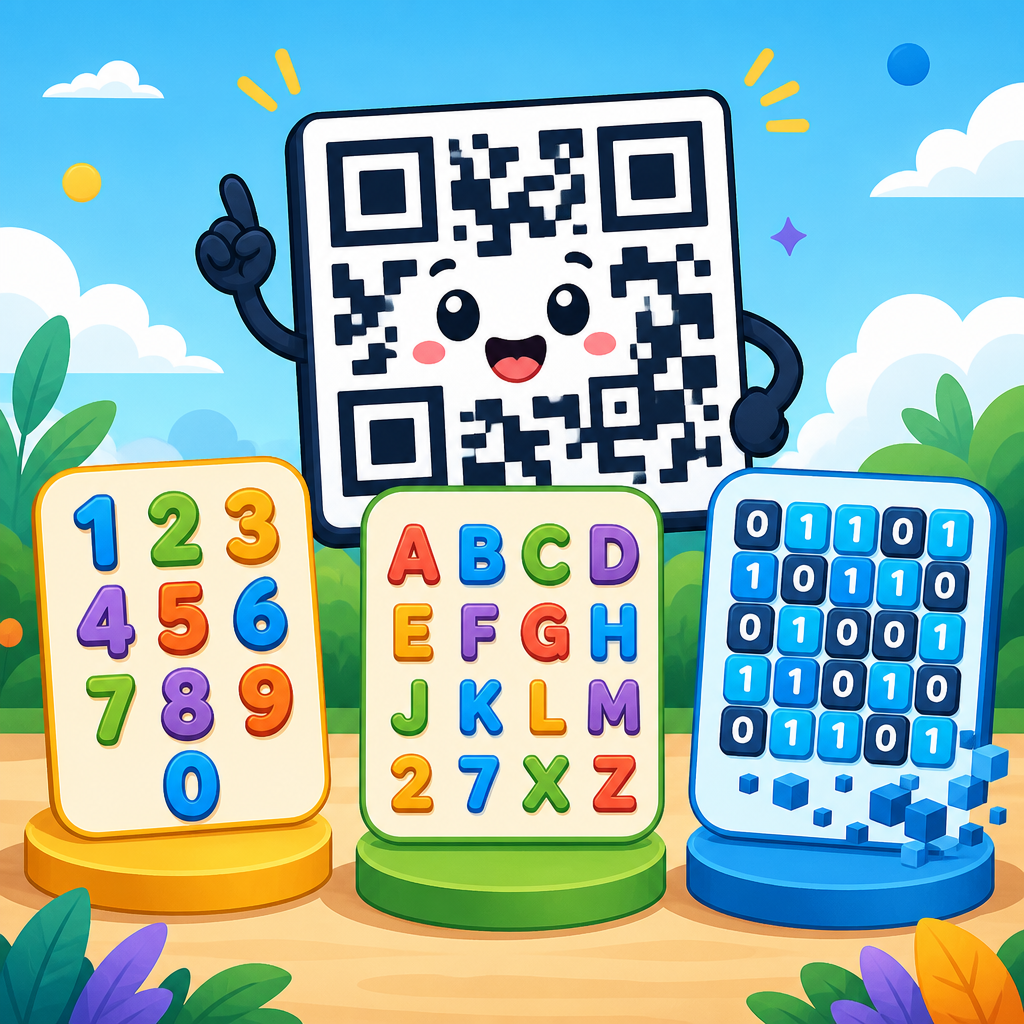
A reliable QR code starts with the right payload and encoding options. QR codes support numeric, alphanumeric, byte, and Kanji modes. Most web implementations use byte mode because URLs and UTF-8 text fit naturally there, but payload length still affects symbol version and density. A short URL will generate a simpler code than a long parameter-heavy link. That is why URL shorteners and dynamic redirect platforms are so useful: they reduce density, improve visual simplicity, and often increase scan success on low-quality prints or distant signage.
Error correction is one of the most important settings exposed by JavaScript QR libraries. The standard levels are L, M, Q, and H, roughly allowing recovery of 7 percent, 15 percent, 25 percent, and 30 percent of damaged codewords. Higher error correction helps when adding logos or expecting physical wear, but it also increases code complexity. I usually recommend M for standard digital use, Q when moderate branding is needed, and H only when design requirements justify the denser matrix. Using H by default is not automatically better; it can produce busier codes that become harder to scan at small sizes.
Styling rules are straightforward and non-negotiable. Maintain strong contrast, ideally dark modules on a light background. Preserve the quiet zone around the symbol, typically four modules wide. Avoid inverting colors unless the scanner environment has been tested thoroughly. Keep logos small and centered, and never obstruct finder patterns. Rounded modules can work, but extreme artistic treatments often fail on lower-end cameras. If the QR code points to something business-critical, prioritize machine readability over decoration every time.
Security, Privacy, Testing, and Production Governance
QR code generation looks simple, but production deployments introduce governance requirements. Never expose privileged API keys in front-end JavaScript. If a hosted QR provider requires secret credentials, route requests through your server, sign them there, and return only the necessary asset data to the browser. Validate user-supplied destinations before encoding them. Open redirect abuse, phishing links, and malformed deep links can turn a QR tool into a security risk if inputs are not normalized and checked.
Privacy matters too, especially with dynamic QR platforms that collect scan metadata such as timestamp, approximate location, device type, or referrer context. If your implementation stores or processes scan analytics, align the workflow with your privacy policy and regional obligations. In regulated environments, I prefer self-hosted redirect tracking or enterprise contracts with clearly documented retention and access controls. The technical convenience of an SDK should never outrank data handling requirements.
Testing should cover more than whether the code scans on one phone. Test multiple devices, older camera hardware, different lighting conditions, and realistic print sizes. Verify that URLs resolve correctly with and without network delay. Confirm that custom app links open the intended destination on iOS and Android. If you render to canvas, test high-DPI screens and export quality. If you generate SVG, open it in the design tools and print vendors your team actually uses. I also recommend automated tests for payload formatting, especially for payment strings, vCards, and Wi-Fi configurations where one misplaced delimiter can break the user experience.
Production governance means maintaining a source of truth. Store the payload, generation settings, asset path, owner, creation timestamp, and lifecycle status. If a campaign ends, retire or redirect the code intentionally rather than leaving stale destinations in the field. For teams managing many codes across departments, this article should function as the hub: use JavaScript libraries for local rendering, use APIs for dynamic and managed codes, use Node.js for repeatable export pipelines, and validate everything against scan reliability, security, and long-term maintainability. Start with a small implementation, document your standards, and build a QR toolkit your developers and marketers can trust.
Frequently Asked Questions
1. What is the easiest way to generate a QR code with JavaScript?
The easiest way to generate a QR code with JavaScript is to use a dedicated QR code library or a QR Code API instead of building the encoding logic from scratch. In most browser-based projects, JavaScript can take a user-provided value such as a URL, email address, phone number, plain text string, or payment payload and pass it to a library that renders the QR code as a canvas element or SVG. This approach is popular because it reduces implementation time, avoids low-level encoding mistakes, and makes it simple to add QR generation directly into websites, dashboards, landing pages, and internal tools.
In practice, the workflow is straightforward: capture the data to encode, validate and sanitize it, choose output settings such as size and error correction level, and then render the finished code into the page. Many JavaScript QR tools also let developers control foreground and background colors, margin, embedded logos, and responsive behavior. If you need server-side generation, JavaScript can do that as well through Node.js, where the same general pattern applies: generate the QR code from input data, export it as PNG, SVG, or data URL, and then save it, return it from an API route, or attach it to another workflow.
For most projects, the “easiest” option depends on the level of control you need. A client-side library is ideal for instant rendering in the browser, while a QR Code API is often better when you want centralized generation, tracking, dynamic QR functionality, or consistency across multiple applications. JavaScript works especially well in both cases because it sits naturally between form input, application logic, and visual output.
2. Should I generate QR codes in the browser or on the server with JavaScript?
That decision depends on your use case, performance requirements, and security considerations. Browser-based generation is a strong choice when you want immediate feedback for users, such as in a form builder, event registration tool, business card generator, or marketing page creator. The user enters data, JavaScript processes it instantly, and the QR code appears without a full page reload. This creates a fast and interactive experience, and it reduces server load because the rendering work happens on the client side.
Server-side generation with JavaScript, usually through Node.js, is often better when you need standardization, automation, persistence, or integration with backend systems. For example, if your application creates thousands of QR codes for inventory labels, digital menus, product packaging, or campaign assets, generating them on the server makes batch workflows easier to manage. It also helps when QR codes need to be stored, logged, watermarked, attached to PDFs, or delivered via API to other systems. In these cases, server-side generation can produce consistent outputs and fit neatly into existing data pipelines.
There are also important data-handling considerations. If the encoded content is sensitive or tied to protected business logic, server-side generation may be preferable because the logic and payload creation remain under backend control. By contrast, public or low-risk content such as simple URLs is often fine to handle in the browser. Many modern implementations use both approaches: JavaScript in the frontend for previews and customization, and JavaScript in the backend for final asset generation, analytics, dynamic redirects, or large-scale distribution. That hybrid model gives teams both responsiveness and operational control.
3. How does JavaScript handle QR code styling, formats, and customization?
JavaScript is particularly useful for QR code customization because it connects visual controls directly to rendering logic. A typical implementation can let users adjust dimensions, colors, padding, dot style, corner shapes, and output format in real time. Depending on the library or SDK you use, JavaScript can render QR codes to canvas for quick on-screen display or generate SVG for cleaner scaling and design flexibility. SVG is often preferred for print workflows and high-resolution branding because it remains sharp at different sizes, while canvas is convenient for fast browser previews and raster export.
Customization goes beyond appearance. JavaScript can also control technical parameters such as error correction level, which affects how much damage or obstruction the QR code can tolerate while still remaining scannable. This becomes especially important when adding logos or more aggressive branding treatments. A heavily styled QR code may look attractive, but if contrast is weak, the quiet zone is too small, or the design interferes with encoded modules, scan reliability can suffer. JavaScript makes it easier to test different settings programmatically and enforce sensible limits before rendering the final output.
In production environments, a good JavaScript implementation balances branding with readability. That usually means using high contrast, keeping enough white space around the code, avoiding overcrowded embedded graphics, and validating the output with real device scans. Some QR APIs and SDKs also expose advanced styling options alongside analytics and dynamic destination management, giving developers a single JavaScript-based workflow for both presentation and functionality. As a result, JavaScript is not just a way to draw a QR code; it becomes the layer that manages design inputs, output quality, and user experience together.
4. Can JavaScript generate dynamic QR codes and connect them to analytics?
Yes, and this is one of the most valuable reasons to use JavaScript in QR code projects. A dynamic QR code typically points to a short redirect URL rather than embedding the final destination directly. That redirect can then be updated later without changing the printed or distributed QR code itself. JavaScript often plays a central role in this setup by sending destination data to a backend service or QR Code API, receiving a dynamic code in return, and embedding it into websites, apps, campaign tools, or internal platforms.
When analytics are involved, JavaScript can help capture metadata during creation, connect QR codes to campaign identifiers, and integrate the results into dashboards. For example, a JavaScript application might create a QR code for a seasonal promotion, assign it a campaign ID, choose a branded style, and then store related information in a database. On the analytics side, scan events can be tied to reporting systems that show totals, timestamps, device patterns, geographic distribution, and destination performance. This matters for marketers, product teams, and operations managers who need more than just a visual code; they need insight into how that code performs in the real world.
Dynamic workflows are also useful for maintenance and scale. If a destination URL changes, the redirect target can be updated without reprinting packaging, signage, menus, posters, or labels. JavaScript applications can expose this capability through an admin interface, automate it through backend logic, or integrate it with third-party QR platforms. In short, JavaScript makes dynamic QR systems practical because it bridges user actions, API communication, stored campaign data, and front-end rendering in one cohesive implementation.
5. What are the most common mistakes to avoid when using JavaScript for QR code generation?
One of the most common mistakes is focusing only on code generation and ignoring scan reliability. Just because JavaScript successfully renders a QR code does not mean the result is usable. Problems often come from low color contrast, insufficient quiet zone, oversized logos, tiny dimensions, or too much encoded data packed into a small visual area. Developers sometimes assume that if the code appears on screen, it will scan everywhere, but real-world conditions such as glare, low light, print quality, camera limitations, and angle distortion can reveal weaknesses quickly. Testing across multiple devices and sizes is essential.
Another frequent issue is poor input validation. JavaScript often sits at the point where users or systems provide data for encoding, so it is important to confirm that URLs are properly formed, text payloads are expected, and special formats such as Wi-Fi credentials, vCards, SMS strings, or payment content follow the correct structure. Without validation, you may generate QR codes that technically exist but lead to broken actions, malformed links, or inconsistent app behavior. In larger systems, it is also wise to normalize data before rendering so that outputs remain predictable and trackable.
Teams should also avoid overlooking scalability and maintainability. A quick front-end demo may be enough for a single page, but production QR workflows often need asset storage, usage tracking, regeneration rules, dynamic updates, and consistent styling across many campaigns or products. If JavaScript code is written without reusable components, centralized configuration, or API abstraction, it can become difficult to manage as requirements grow. The best approach is to treat QR generation as part of a broader application workflow: validate inputs, choose the right rendering method, preserve scan quality, and design your JavaScript implementation so it can support analytics, customization, and batch use over time.