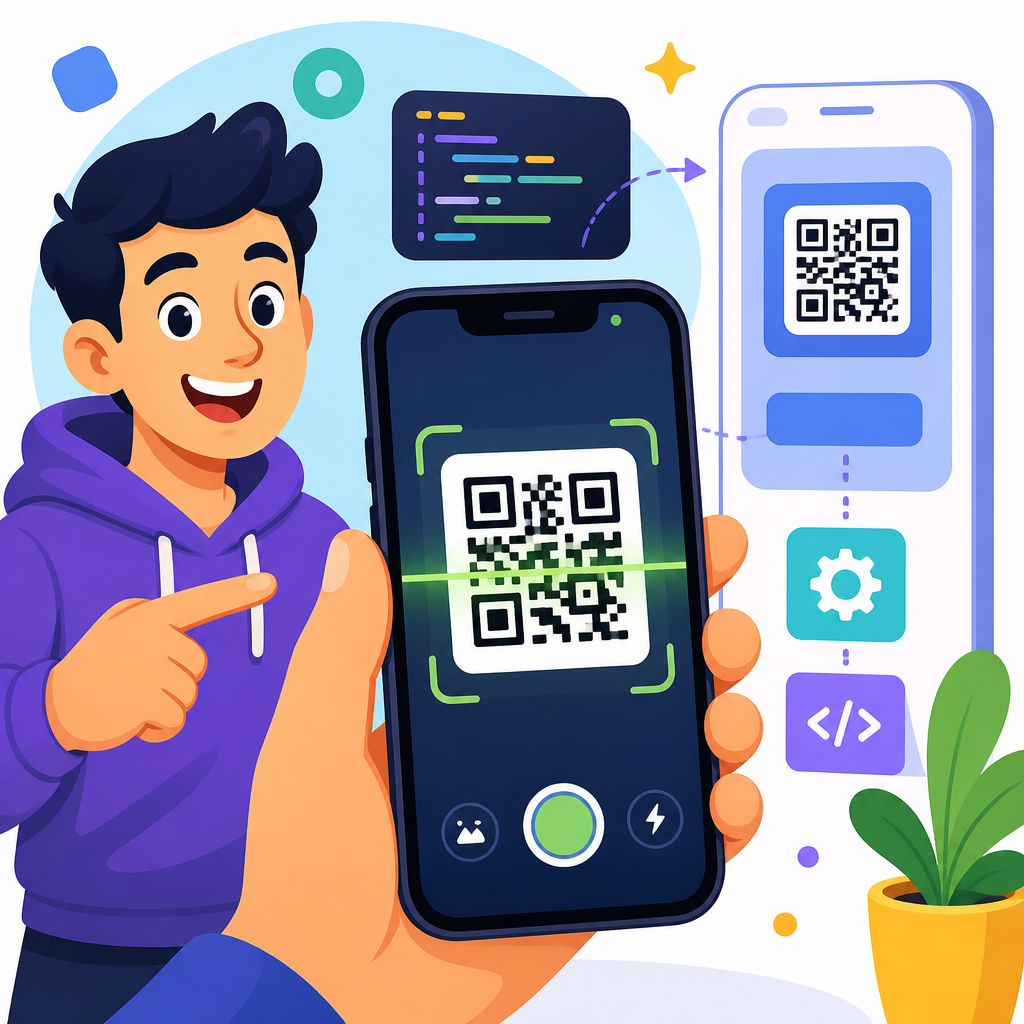
Adding QR code scanning to your app sounds simple, but doing it well requires choices about camera access, decoding speed, platform support, privacy, and long-term maintenance. In mobile products I have worked on, QR scanning moved quickly from “nice utility” to a core workflow because it shortened sign-in, payments, device pairing, ticket validation, inventory lookup, and document retrieval into a single camera action. A QR code, or Quick Response code, is a two-dimensional barcode that stores data such as URLs, IDs, Wi-Fi credentials, and signed payloads. QR code scanning in an app means capturing an image from the camera or gallery, detecting the code region, decoding its contents, validating the result, and then routing the user to the correct next step.
This topic matters because users expect scanning to feel instant and trustworthy. A weak implementation causes blurry previews, missed scans, duplicate triggers, security problems, and support tickets. A strong implementation improves conversion and reduces typing errors while fitting naturally into onboarding and operational workflows. The technology choices usually fall into three buckets: native platform frameworks, third-party SDKs, and cloud or hybrid API services. Native frameworks can minimize cost and dependency risk. Commercial SDKs often improve speed, support more symbologies, and provide better edge-case handling. Cloud APIs can be useful for batch processing or compliance-heavy environments, though they are rarely the best fit for live camera scanning because network latency interrupts the experience.
As a hub topic, QR code APIs and SDKs covers more than decoding a symbol on screen. It includes camera lifecycle management, image preprocessing, barcode localization, payload parsing, content validation, anti-phishing controls, analytics, accessibility, cross-platform wrappers, and testing under real lighting conditions. It also overlaps with operating system capabilities from Apple and Google, browser camera APIs for web apps, and specialized enterprise tools used in warehousing and field service. If you are deciding how to add QR code scanning to your app, the right approach is to start with your use case, then match it to the right stack, performance profile, and compliance requirements rather than choosing the first scanner library that compiles.
Choose the Right Scanning Approach for Your App
The first decision is architectural: will you use native APIs, an embedded SDK, or a remote decoding API. For iOS, AVFoundation has long provided metadata detection through AVCaptureMetadataOutput, and newer Apple frameworks such as Vision can assist with image analysis workflows. On Android, Google ML Kit Barcode Scanning is the most common starting point, while CameraX simplifies preview, focus, and lifecycle handling. For web apps, the Barcode Detection API exists in some browsers, but production teams often rely on JavaScript libraries such as ZXing or commercial WebAssembly-based scanners for broader compatibility.
Native frameworks are usually the best default when your app scans common QR codes and cost control matters. They integrate cleanly with the camera stack, avoid recurring licensing fees, and reduce external dependencies. Their limitations appear when you need aggressive low-light performance, damaged-code recovery, scan-from-video streams, or support across many barcode formats with tuned heuristics. In those cases, commercial SDKs from vendors such as Scandit, Dynamsoft, and Zebra can justify their price. I have seen scan success rates improve noticeably in warehouse aisles and glossy retail packaging simply because the SDK handled motion blur and poor contrast better than the stock platform tools.
Remote APIs make sense for uploaded images, server-side document pipelines, or compliance rules that require centralized processing. Services built on OpenCV pipelines or cloud vision platforms can decode images users submit from email attachments, PDFs, or support forms. They are less suitable for in-app live scanning because even a half-second round trip feels slow compared with on-device decoding. The practical rule is simple: use on-device scanning for live camera experiences, and use APIs for asynchronous or back-office workflows.
Core Components of a Reliable QR Scanner
A production scanner has five layers: camera input, frame processing, decoding, validation, and action handling. Camera input must open quickly, request permission clearly, and manage autofocus, exposure, and torch controls. Frame processing should limit resolution intelligently because huge frames increase CPU load without improving decode reliability. Decoding converts image patterns into a payload. Validation checks whether the payload matches allowed formats, domains, signatures, or business rules. Action handling decides what happens next, such as opening a web view, pairing a device, redeeming a ticket, or displaying an error.
Many failed implementations blur these layers together. The result is code that scans a URL and immediately opens it before checking whether it belongs to an approved domain. That is risky. A better design sends every decoded result through a parser and policy engine first. For example, a logistics app might accept only shipment IDs beginning with “SH-” and reject arbitrary URLs. A healthcare app may require a signed token with an expiration claim before displaying patient-linked data. This separation also makes analytics cleaner because you can measure detection rate, valid payload rate, and successful action rate independently.
Performance tuning matters more than most teams expect. The scanner should debounce repeated reads from the same code, crop the area of interest when possible, and pause scanning once a valid result is captured. In field tests, repeated triggers are one of the most common user complaints because a code can fire three times before the next screen loads. Good scanners solve this with a short lockout interval and explicit state changes rather than relying on fragile UI timing alone.
Popular APIs and SDKs Compared
Most teams narrow the list to a few proven options. The best choice depends on platform mix, performance requirements, licensing tolerance, and support expectations. The table below summarizes common choices used in mobile and web projects.
| Option | Best for | Strengths | Tradeoffs |
|---|---|---|---|
| AVFoundation | Native iOS apps | No extra cost, solid OS integration, fast for standard QR use cases | Apple-only, fewer advanced tuning features than premium SDKs |
| Google ML Kit Barcode Scanning | Native Android apps | Good developer experience, on-device processing, works well with CameraX | Android-only, edge performance varies by device camera quality |
| ZXing | Open-source mobile and web projects | Free, widely known, flexible, broad community history | More implementation effort, inconsistent performance in difficult conditions |
| Scandit | Enterprise scanning at scale | Excellent speed, motion tolerance, multi-code support, strong documentation | Commercial licensing cost |
| Dynamsoft | Web and cross-platform apps needing tuned decoding | Strong browser support, configurable engine, enterprise features | Commercial licensing cost, setup can be more involved |
| Zebra DataWedge or EMDK | Rugged enterprise Android devices | Deep hardware integration, reliable in warehouse operations | Tied to Zebra ecosystems and device procurement choices |
AVFoundation and ML Kit are strong defaults for consumer apps. They keep your binary lean and your architecture straightforward. ZXing remains useful when budgets are tight or when you need a customizable open-source baseline, especially in prototypes and internal tools. Commercial SDKs earn their keep when scanning is mission critical. In retail self-checkout, package receiving, event admission, and medical specimen workflows, every failed scan adds labor and friction. There, the extra percentage points in first-pass success rate matter more than license savings.
Cross-platform frameworks add another layer. React Native, Flutter, Xamarin, and Capacitor wrappers can accelerate development, but they vary in camera stability and native feature exposure. If scanning is central to your app, evaluate the native bridge quality early. I have seen projects lose weeks not because decoding failed, but because the wrapper mishandled autofocus callbacks, permission states, or app lifecycle events after backgrounding.
Implement the Camera and Decoder Correctly
A scanner feels fast when the camera preview appears quickly, focus locks without hunting, and the app highlights exactly what it can read. Use a dedicated scanning screen with a clear framing guide, concise permission copy, and visible torch control. On iOS, AVCaptureSession paired with AVCaptureVideoPreviewLayer remains the standard foundation. On Android, CameraX reduces device-specific camera pain and works well with ML Kit analyzers. For web, getUserMedia should request the rear camera when available and degrade gracefully if hardware access is blocked.
Frame analysis should be designed for throughput. Process a controlled number of frames per second rather than every possible frame if the decoder or device struggles. Restricting the scan region can reduce work and improve responsiveness. Some SDKs expose a region of interest directly; if not, crop frames before decoding. Also tune focus mode for near objects and test with reflective surfaces, curved labels, and cracked screens. In real deployments, those conditions break more scans than clean lab samples ever will.
The user flow after a successful read should be intentional. Display a confirmation state for risky actions, especially if the payload could navigate outside your app or trigger a transaction. For safe internal actions such as checking in an asset, immediate progression is usually fine. Add haptic feedback or a clear sound so users know the scan completed. That small cue prevents repeated movements that can blur the last frames and trigger duplicate events.
Security, Validation, and Privacy Requirements
QR codes are only containers; they are not inherently trustworthy. A scanner must validate content before acting on it. At minimum, parse the payload type, enforce allowlists for domains or URI schemes, and block dangerous patterns such as JavaScript URLs or unsupported deep links. If your app uses QR codes for authentication, pairing, or payments, sign the payload or exchange a short-lived token instead of embedding raw secrets. Expiration times, nonce values, and server-side verification reduce replay risk substantially.
Phishing is a real concern because users cannot visually inspect a QR code’s destination. Good apps show the resolved domain before opening external links, or they route known domains through in-app handlers. For enterprise use, map each scan to a user session and log validation outcomes. That creates an audit trail when someone scans an expired badge or a copied warehouse label. If personal data appears in the code, treat the payload as sensitive information in logs, analytics, screenshots, and crash reports.
Privacy rules also affect implementation choices. On-device decoding keeps images local and generally reduces exposure compared with sending frames to a server. If you do upload images, disclose that clearly and define retention policies. Align with platform guidance and relevant regulations such as GDPR or HIPAA where applicable. In practice, many teams can avoid extra compliance burden by decoding on the device and sending only the minimal validated identifier needed for backend lookup.
Testing, Analytics, and Long-Term Maintenance
Testing a QR scanner requires more than one phone and one code on a monitor. Build a test matrix that includes low light, bright backlight, motion, small print, damaged codes, glossy surfaces, distant scans, and older devices with weaker cameras. Include multiple code versions and error correction levels. QR codes support four error correction levels—L, M, Q, and H—based on Reed-Solomon error correction, with higher levels tolerating more damage at the cost of data capacity. If your app generates codes too, test the generator and scanner together so you can define minimum print size, quiet zone, and contrast requirements.
Analytics should track where scanning fails. Useful metrics include permission grant rate, time to first successful scan, duplicate scan rate, invalid payload rate, torch usage, and device model distribution for failures. These numbers identify whether the problem is camera onboarding, decode performance, or weak downstream validation. In one deployment I reviewed, the scanner itself was fine; the real issue was that field teams printed labels at insufficient size on thermal printers, which cut first-pass read rates until the label template changed.
Maintenance includes monitoring operating system updates, renewing SDK licenses, and retesting wrappers after framework upgrades. Apple and Google regularly change camera permissions, lifecycle behavior, and performance characteristics. Keep scanner logic modular so you can swap decoders without rewriting the flow. That flexibility is valuable when your app evolves from simple URL scans to secure tokens, batch inventory modes, or browser-based companion tools.
Adding QR code scanning to your app is not just a camera feature; it is a product workflow that depends on decoding quality, validation logic, security policy, and real-world testing. Start by defining the job the scan must perform, then choose the lightest technology that reliably supports it. Native frameworks such as AVFoundation and ML Kit are excellent for many consumer and internal apps. Open-source tools like ZXing can fit prototypes and budget-sensitive builds. Commercial SDKs become the right answer when scan speed, difficult environments, and support guarantees directly affect operations.
The most successful implementations share the same traits: fast camera startup, clear permissions, on-device decoding where possible, strict payload validation, duplicate-scan protection, and analytics that reveal failure patterns. They also respect user trust by previewing risky destinations, minimizing retained image data, and using signed or short-lived tokens for sensitive workflows. When teams treat scanning as a complete system instead of a single library import, adoption rises and support burden falls.
If you are building out your QR Code APIs and SDKs knowledge base, use this article as the hub: compare platform options, document your validation rules, test in the conditions your users actually face, and then link each implementation path to detailed guides for iOS, Android, web, and enterprise devices. That approach will help you ship a QR scanner that feels instant, secure, and dependable.
Frequently Asked Questions
1. What is the best way to add QR code scanning to an app?
The best approach depends on your app’s platforms, performance needs, and how central scanning is to the user journey. In most cases, you will choose between native platform APIs, cross-platform plugins, or third-party scanning SDKs. Native tools usually offer the strongest long-term reliability because they are maintained alongside the operating system and can give better access to camera controls, focus behavior, and performance tuning. If your app is built with a cross-platform framework, a mature plugin can speed up development, but you should still confirm that it handles camera permissions correctly, works well across device models, and keeps pace with OS updates.
It is also important to think beyond “can it scan” and focus on “can it scan well in real conditions.” A strong implementation should open the camera quickly, detect codes under uneven lighting, handle tilted or partially visible codes, and return results with minimal delay. You should support the full scanning flow: permission prompts, camera preview, visual guidance, successful detection, error handling, and fallback options if the camera is unavailable. If scanning will support sign-in, payments, ticketing, device pairing, or inventory tasks, reliability matters more than simply getting a decoder to work in a demo.
A practical strategy is to start with the platform’s recommended camera stack and a proven QR decoding library or API, then test on a wide range of real devices. Measure time to first scan, failure rates, battery impact, and behavior in low light. That gives you a solution that is easier to maintain and more likely to stay stable as your app grows.
2. What permissions and privacy considerations should I plan for when adding QR code scanning?
Camera access is the first requirement, but privacy design should go much deeper than a permission dialog. Users need to understand why the app needs the camera and what happens to the scanned data. A clear, context-specific permission request usually performs better than a generic system prompt. For example, if the user is about to sign in with a QR code or pair a device, explain that the camera is only being used to detect and read the code. That sets expectations and can improve consent rates.
From a privacy standpoint, a strong default is to process QR codes on-device whenever possible. Many apps do not need to upload camera frames to a server just to decode a code. Local decoding reduces latency, lowers bandwidth use, and limits unnecessary exposure of visual data. If scanned content must be sent to your backend for validation, keep the transmitted payload minimal and document that flow in your privacy policy. You should also avoid storing camera frames unless there is a clear product or compliance reason to do so.
Security matters because QR codes can point to malicious URLs, trigger risky actions, or carry unexpected data formats. Never assume scanned content is safe just because it came from the camera. Validate URLs, sanitize inputs, and confirm sensitive actions before proceeding. If a code opens a website, show the destination or domain before redirecting. If it initiates login, payment, account linking, or device activation, include server-side verification and expiration logic. Good QR scanning is not just about reading data accurately; it is about handling that data safely and transparently.
3. How can I make QR code scanning faster and more reliable across devices?
Speed and reliability come from the full camera-and-decoder pipeline, not just the decoding library. Start by optimizing the camera preview configuration. A preview that is too high in resolution can slow down frame processing, while one that is too low may reduce detection accuracy. The goal is to choose a resolution that is efficient enough for real-time decoding without sacrificing readability. Continuous autofocus, automatic exposure, and proper frame rate handling also make a significant difference, especially on lower-end devices.
User guidance is another major factor. Many scan failures happen because the interface gives too little feedback. A visible scanning frame, subtle instructions, and clear success indicators help users position the code correctly. In low-light conditions, offering a flashlight toggle can dramatically improve success rates. You should also support orientation changes gracefully and avoid freezing the preview while processing each frame. A smooth camera experience often matters as much as the underlying decoder.
Testing is essential because QR performance varies widely across phones, tablets, camera hardware, and operating system versions. Test glossy surfaces, damaged codes, different print sizes, screens displaying QR codes, and real-world lighting conditions. Watch for edge cases like front-camera use, permission denial, app backgrounding, and slow camera initialization. If scanning is a core workflow, instrument analytics to track scan attempts, successful reads, time to result, and failure reasons. That data will show whether the experience works in production, not just in development.
4. Should I use a built-in platform feature, an open-source library, or a paid QR scanning SDK?
Each option has tradeoffs, and the right choice usually depends on how important QR scanning is to your app. Built-in platform capabilities are often the safest long-term foundation because they are tightly integrated with the operating system and tend to have fewer compatibility surprises. They are a strong fit when you want good performance, lower dependency risk, and predictable maintenance. If your needs are straightforward, this is often the most practical route.
Open-source libraries can be a great middle ground when you need flexibility or when platform APIs do not cover your exact use case. They may offer broad barcode support, custom scanning logic, or easier integration in cross-platform environments. However, you should assess project health before adopting one. Look at release frequency, issue activity, documentation quality, platform support, and community adoption. A library that works today but is poorly maintained can create upgrade problems later, especially when camera permissions or hardware behavior change in new OS versions.
Paid SDKs are worth considering when scanning is business-critical and failure has a measurable cost. They may provide better low-light performance, faster decoding, enterprise support, and tooling for difficult conditions such as damaged labels or industrial use cases. The tradeoff is licensing cost and deeper vendor dependence. Before choosing a commercial SDK, evaluate not just accuracy in a sample app but the total integration experience: bundle size, startup time, offline support, analytics, update cadence, and support responsiveness. In short, use the simplest option that meets your real production requirements, not just your prototype needs.
5. What common mistakes should developers avoid when implementing QR code scanning?
One of the biggest mistakes is treating QR scanning as a minor utility instead of a complete product flow. Teams often focus on getting the camera to detect a code, then overlook permission handling, fallback states, retries, accessibility, and post-scan validation. If the app does not explain why the camera is needed, fails silently when permission is denied, or leaves users stuck after a bad scan, the feature will feel unreliable even if the decoder itself is technically sound.
Another common problem is not validating scanned content carefully. QR codes can contain URLs, login tokens, payment instructions, configuration data, or plain text, and each type requires different handling. Blindly opening links or triggering actions without confirming trust can create security and user experience issues. You should classify expected code types, reject unsupported formats clearly, and verify any sensitive payloads on the server. Expiration, replay protection, and origin checks are especially important for authentication, payments, and device pairing.
Developers also underestimate long-term maintenance. Camera APIs evolve, mobile operating systems change permission behavior, and device fragmentation exposes edge cases over time. A scanner that works well on a few test phones may fail in production because of autofocus quirks, performance bottlenecks, or lifecycle bugs. To avoid that, build with observability in mind, keep dependencies updated, and test continuously on real hardware. The most successful QR implementations are not the ones that launch fastest; they are the ones that remain fast, secure, and dependable as the app and its user base expand.