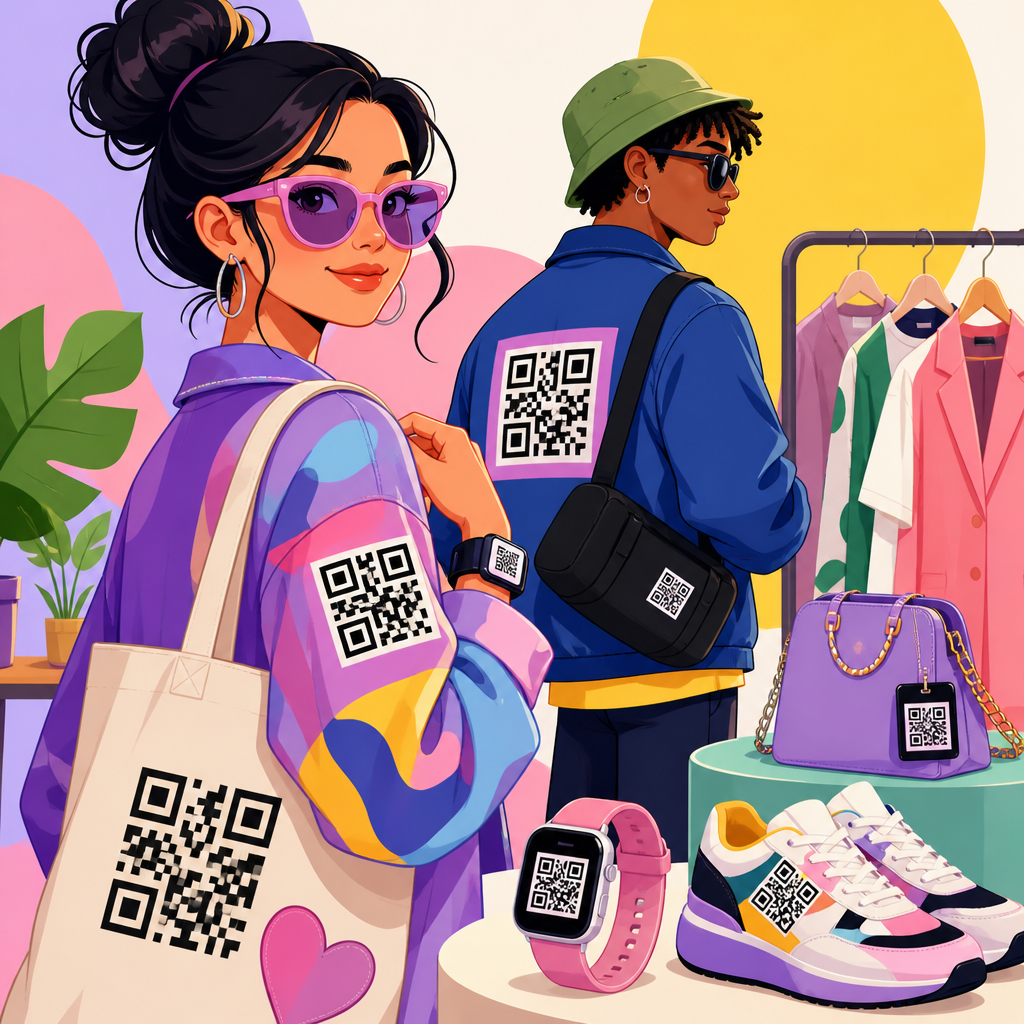
QR codes in fashion and wearables have moved from novelty to infrastructure, giving brands, manufacturers, retailers, and consumers a fast bridge between physical products and digital services. In this context, fashion includes apparel, footwear, accessories, and luxury goods, while wearables covers connected devices such as smartwatches, fitness bands, smart rings, and sensor-enabled garments. A QR code is a machine-readable matrix barcode that stores a URL or other data; when scanned by a smartphone camera or dedicated reader, it can open product pages, verify authenticity, launch support flows, or trigger post-purchase experiences. I have seen this shift firsthand in product launches where a tiny printed code on a hangtag outperformed expensive near-field communication pilots because customers already knew how to scan it. That practical familiarity matters. Fashion supply chains are fragmented, resale is growing quickly, sustainability claims face scrutiny, and consumers expect immediate information before and after purchase. QR codes answer all four pressures with low implementation cost, broad device compatibility, and measurable engagement. They are especially important as brands try to connect stores, ecommerce, customer service, and circular commerce into one continuous journey. This article maps the main emerging use cases, explains how leading brands are applying them, and outlines the operational decisions that separate gimmicks from durable programs.
Product identity, authentication, and digital passports
The strongest use case for QR codes in fashion is persistent product identity. A code attached to a garment, shoe box, care label, watch strap, or accessory card can point to a unique record for that item, not just a generic product page. In practice, that record may include SKU data, factory information, material composition, batch or serial number, warranty status, and ownership history. This matters because counterfeiting remains a major problem in luxury, sneakers, cosmetics-adjacent accessories, and limited drops. When a brand maps each code to a secure database entry, a customer or reseller can scan and verify that the item exists in the brand’s system and has not already been redeemed in suspicious ways. A QR code alone does not stop counterfeiting, because codes can be copied. The durable model combines item-level serialization, tamper-evident placement, server-side validation, and anomaly detection. In my experience, brands that treat the code as a visible entry point, not the security layer itself, get the best results.
Digital product passports extend that same identity function. Regulators, especially in Europe, are pushing industries toward better product traceability and environmental disclosure. Fashion brands are responding by linking QR codes to passports that summarize fiber origin, dyeing methods, repair options, and recycling guidance. For example, an outerwear brand can let a shopper scan a jacket and see where recycled polyester came from, which mill produced the shell fabric, and how to replace a zipper instead of discarding the piece. This information supports compliance, but it also reduces customer service friction. Rather than burying details in PDFs, brands can expose them at the point of use. On premium products, the passport can later become the backbone for resale, repairs, and loyalty, creating a long-lived digital twin for each item.
Retail engagement, storytelling, and conversion
QR codes are also becoming a dependable merchandising tool across stores, pop-ups, packaging, and events. The simple value proposition is immediate depth: limited shelf space can point to unlimited digital context. A shoe display can link to size availability, athlete endorsements, styling videos, and in-stock nearby locations. A handbag hangtag can open craftsmanship stories, care instructions, and waitlist enrollment for matching accessories. This works because the customer controls the interaction with a familiar device, avoiding the friction of app downloads. During capsule launches, I have watched store associates use QR codes to recover sales that would otherwise be lost when a colorway or size is unavailable on site. A scan redirects the shopper to mobile checkout with the selected variant already loaded, preserving momentum.
Luxury and premium brands benefit from storytelling use cases in particular. Fashion purchasing is emotional, and codes can deliver media that a label or box cannot. A dress might link to runway footage, designer commentary, or artisan profiles from the atelier. Streetwear labels use codes during drops to unlock lookbooks, geo-targeted access, or queue information. Beauty-adjacent wearables, such as smart jewelry, can connect to onboarding videos that reduce returns by helping buyers set up the product correctly. The key is relevance. Generic homepage redirects underperform because they add work instead of solving a question. High-performing scans answer a narrow intent: Is this authentic? How do I style it? Is my size available? How do I care for it? Can I buy now and pick up later?
Post-purchase service, care, repairs, and warranty
Once the sale is complete, QR codes become even more valuable because they persist with the product. Care labels, packaging inserts, and etched device surfaces can connect owners to washing instructions, battery guidance, firmware updates, fit adjustments, repair booking, and warranty registration. In apparel, this reduces one of the most preventable causes of product failure: incorrect care. A cashmere sweater can link to specific hand-washing steps and storage recommendations. Running shoes can connect to replacement timelines based on mileage guidelines. In wearables, a smartwatch strap package can open sizing videos and compatibility checks, while the watch itself can link to troubleshooting or battery health resources.
Repairs are a particularly promising emerging use case because they combine customer retention with sustainability goals. Instead of sending owners through a generic support maze, a scan can identify the product, prefill the service form, show available repair tiers, and estimate turnaround time. Brands with established repair programs, including outdoor and premium apparel companies, increasingly use digital flows to triage issues before products are mailed in. That lowers support costs and improves customer confidence. Warranty registration benefits as well. Customers rarely keep paper receipts, but a product-linked QR workflow can associate proof of purchase, ownership, and service history with the item. Over time, that service record becomes an asset for resale and loyalty, not merely a support log.
Resale, rental, and circular commerce
Secondhand fashion has become a strategic channel, not a side market, and QR codes help brands participate in it instead of losing visibility once the first sale ends. When an item carries a scannable identity, resale platforms, brand-owned recommerce programs, and peer-to-peer sellers can verify details faster. A scan can reveal original product specifications, authenticity indicators, condition grading guidance, and care history. For buyers, that reduces uncertainty. For sellers, it improves listing accuracy and trust. This is especially useful in categories where condition and provenance strongly affect value, such as luxury handbags, watches, sneakers, and technical outerwear. In pilots I have reviewed, the strongest resale flows minimize manual data entry by letting the code pull model name, color, season, and materials directly from the product record.
Rental businesses also benefit. Garments in rental circulation need disciplined tracking for cleaning cycles, repairs, and retirement decisions. QR codes can sit inside labels or on discreet tags and connect back-end systems with customer-facing instructions. After each return, staff can scan and log inspection outcomes, while the next renter can scan for fit notes, styling ideas, or event-specific recommendations. Circularity claims become more credible when they are backed by product-level data rather than broad marketing language. A brand can show that a dress was rented twelve times, repaired twice, and ultimately recycled through a named textile recovery partner. That level of transparency turns sustainability from slogan to operational proof.
Connected wearables, onboarding, and companion experiences
Wearables introduce a slightly different dynamic because the product already has digital capabilities, yet QR codes still solve critical setup and service problems. Smartwatches, rings, glasses, medical-adjacent trackers, and sensor garments often require pairing, firmware updates, permissions, and account creation. A QR code on packaging or device screens can reduce setup friction by deep-linking users to the correct operating-system flow or companion app page. This is common in consumer electronics because it works. In fashion-led wearables, the opportunity is broader: a smart ring can link to sizing guidance before purchase, wellness dashboards after activation, and material care guidance throughout ownership. A heated jacket can connect owners to battery charging instructions, wash preparation steps, and replacement-part ordering.
The emerging opportunity is hybrid experience design. Fashion brands are exploring products that are partly physical statement pieces and partly software-driven services. In that model, the QR code is not a fallback; it is the first handshake between object and ecosystem. It can enroll the user in loyalty, attach styling content to a connected accessory, or unlock event access linked to product ownership. Fitness brands use codes on bands and apparel packaging to launch training plans. Festival merchandise can tie a code to digital collectibles or gated content without requiring specialized hardware. The practical lesson is simple: onboarding must be immediate and device-agnostic. If a customer needs to search an app store manually, conversion drops. If the scan lands on the exact next step, adoption improves.
Implementation priorities and measurement
Brands entering this space should design QR programs around business outcomes, not around the code itself. The right destination, placement, and data model matter more than visual novelty. The table below summarizes common emerging use cases and the operational requirements that make them work at scale.
| Use case | Primary customer value | Operational requirement | Key metric |
|---|---|---|---|
| Authentication | Trust that an item is genuine | Unique serialization and server-side verification | Verified scans and fraud alerts |
| Digital passport | Material and origin transparency | Clean supplier data and item-level records | Passport views and dwell time |
| Retail conversion | Buy missing sizes or colors instantly | Deep links to variant-specific checkout | Scan-to-purchase rate |
| Care and repair | Longer product life and easier service | Service workflows tied to product IDs | Repair bookings and reduced returns |
| Resale and rental | Better provenance and listing accuracy | Shareable product history and condition data | Resale conversion and recovery value |
| Wearable onboarding | Faster setup and app activation | Platform-specific deep linking | Activation completion rate |
Measurement should be rigorous. Track unique scans, repeat scans, scan location, conversion by placement, time to first service event, return-rate changes, repair uptake, and resale participation. Use dynamic QR management so destinations can change without reprinting inventory. Apply UTM parameters where appropriate, but connect them to CRM, ecommerce, and service systems so scans are tied to outcomes. Also test physical execution. Contrast, quiet zone, material finish, and placement angle materially affect readability; glossy black-on-dark labels fail more often than teams expect. For luxury packaging, aesthetics must not compromise scan performance. Standards from GS1 and best practices from major QR generators are useful starting points, but real-world testing on multiple phone cameras is mandatory. Finally, respect privacy. If scans attach to ownership records, explain what data is collected, how it is used, and how long it is retained. Trust is part of the product experience, especially in categories as personal as fashion and body-worn technology.
QR codes in fashion and wearables are no longer just marketing add-ons; they are becoming the connective tissue that links design, commerce, service, and circularity. The most valuable programs treat each code as a durable doorway into a product’s full life cycle, from discovery and purchase to care, resale, and recycling. That shift matters because fashion is under pressure to prove origin, reduce waste, fight counterfeits, and deliver richer customer experiences without adding friction. Wearables face parallel demands around onboarding, support, and long-term engagement. A well-designed QR strategy addresses those needs with technology customers already understand. The strongest emerging use cases are clear: item authentication, digital product passports, in-store conversion support, post-purchase care, repair workflows, resale enablement, rental tracking, and wearable activation. Each succeeds when the destination is specific, the data behind it is reliable, and the physical execution is tested in the real world. For brands building a broader QR innovation roadmap, this hub should serve as the foundation: start with product identity, connect it to measurable customer tasks, and expand toward lifecycle services. If you are evaluating your next pilot, choose one product line, define one concrete customer problem, and build the scan experience around solving it completely.
Frequently Asked Questions
How are QR codes used in fashion products and wearable devices?
QR codes in fashion and wearables are used as a practical link between a physical item and its digital layer. On apparel, footwear, handbags, jewelry, and luxury goods, a QR code may connect shoppers to product pages, care instructions, size guides, styling ideas, warranty registration, repair options, and proof of authenticity. In retail settings, brands also use QR codes on hangtags, packaging, shelf displays, and in-store signage to give customers quick access to richer product information without requiring printed materials for every detail.
In wearables, the role becomes even broader. A QR code can help users pair a smartwatch or fitness band with a companion app, activate support services, download setup guides, verify compatibility, or access troubleshooting resources. For connected garments and sensor-enabled apparel, QR codes may link to calibration instructions, usage tutorials, battery care recommendations, and software update information. This is especially useful when the product has ongoing digital functions that extend well beyond the point of sale.
Brands and manufacturers also use QR codes behind the scenes for inventory management, supply chain tracking, resale verification, after-sales service, and product lifecycle documentation. That means the same technology can serve multiple audiences at once: consumers get convenience and transparency, retailers get operational efficiency, and brands gain a direct communication channel tied to a specific item. In mature implementations, the QR code is not just a marketing tool; it becomes part of the product’s long-term infrastructure.
Why are QR codes becoming so important for authentication and transparency in fashion?
QR codes are gaining importance because fashion, especially luxury and premium segments, faces growing pressure around counterfeiting, sourcing transparency, sustainability claims, and resale trust. When a QR code is tied to a secure digital record, it can help verify where a product came from, when it was produced, what materials were used, and whether it matches the manufacturer’s original data. For consumers, that creates confidence. For brands, it helps defend reputation and reduce friction in customer service, returns, and secondary-market verification.
Transparency is another major driver. Shoppers increasingly want more than a logo or product description; they want to know how an item was made, whether labor and material claims are credible, and what environmental standards were followed. A QR code can connect the user to detailed product histories, certifications, repair programs, and circularity information such as take-back or recycling options. This allows brands to present more meaningful information than a standard label could ever hold.
That said, the value depends on implementation. A printed QR code by itself does not automatically guarantee authenticity. The real strength comes when the code points to a controlled, trustworthy digital system that includes unique product identifiers, secure databases, and ideally tamper-aware processes. In other words, QR codes can be a strong part of an anti-counterfeit and transparency strategy, but they work best when integrated with sound product data governance and clear consumer communication.
What benefits do QR codes offer to brands, retailers, and consumers in the fashion industry?
For brands, QR codes create a direct and measurable connection with customers after purchase. Instead of the relationship ending at checkout, brands can continue delivering value through onboarding content, product education, warranty support, styling inspiration, repair booking, and loyalty experiences. This can increase customer engagement, reduce support costs, improve retention, and provide better insight into how products are used over time. It also gives brands flexibility, since digital content can be updated without changing the physical product label or packaging.
Retailers benefit from QR codes because they help bridge physical and digital commerce. In stores, shoppers can quickly access expanded product details, alternative sizes or colors, availability by location, customer reviews, and online ordering options. This can improve conversion while reducing the burden on sales associates to answer every technical or logistical question. QR codes can also support omnichannel services such as buy online, pick up in store, easy reordering, and product-specific promotions.
For consumers, the biggest advantages are convenience, clarity, and confidence. A quick scan can answer practical questions at exactly the right moment, whether that means checking washing instructions, confirming authenticity, registering a smartwatch, or finding a replacement strap. Consumers also gain a more useful ownership experience when products come with digital support throughout their lifespan. In sectors like wearables, where setup and ongoing software interaction matter, this can be especially valuable. Overall, QR codes help turn a static product into a connected service experience.
Are there privacy or security concerns with QR codes in fashion and wearables?
Yes, and they deserve serious attention. QR codes themselves are simply a delivery mechanism, but the destinations they open can raise privacy and security issues if not managed carefully. For example, a code may direct users to a website that collects personal information, device data, location signals, or account activity. In wearables, where products may already process health, fitness, or behavioral information, the surrounding digital ecosystem can become sensitive very quickly. Brands should be transparent about what data is collected, why it is collected, and how it is stored and used.
There is also a cybersecurity angle. Bad actors can place malicious sticker overlays on legitimate products or displays, redirecting users to phishing pages or malware downloads. That is why consumers should pay attention to the URL before submitting any credentials or payment details, and why brands should use secure domains, HTTPS, consistent branding, and anti-tamper packaging where appropriate. Unique product-level codes tied to secure systems are generally stronger than generic codes reused across large product lines.
From a compliance perspective, companies should treat QR-driven experiences as part of their broader digital governance program. That includes privacy notices, consent practices where required, data minimization, access controls, and secure lifecycle management. In short, QR codes can be highly effective in fashion and wearables, but trust depends on responsible deployment. The more a code is tied to authentication, ownership, device pairing, or customer profiles, the more important security and privacy become.
What should brands consider when implementing QR codes on apparel, accessories, luxury goods, and wearables?
Successful implementation starts with a clear purpose. Brands should decide whether the QR code is primarily for product education, authentication, after-sales service, retail engagement, resale support, supply chain visibility, or all of the above. That decision influences everything from where the code appears to whether it should be item-specific or product-line-specific. A luxury handbag, for example, may need a secure identity-linked experience focused on authenticity and provenance, while a fitness band may prioritize app pairing, onboarding, and support.
Placement and durability matter as well. Codes should be easy to find and scan, but they must also fit the product’s design language and expected usage conditions. On apparel, that could mean inside labels, hangtags, or care tags. On footwear and accessories, it may be on packaging, inserts, or discreet internal surfaces. For wearables and connected devices, brands often place the code on packaging, quick-start materials, or the device itself if space permits. The code should remain functional throughout the intended customer journey, not just at the moment of purchase.
Equally important is the quality of the digital destination. A QR code is only as useful as the experience it unlocks. Landing pages should be mobile-friendly, fast, secure, and context-aware. They should provide real value, such as setup guidance, multilingual support, repair options, compatibility details, ownership registration, or sustainability information. Analytics can help brands understand engagement patterns, but content should not feel intrusive or overly promotional. The strongest implementations make the scan feel worthwhile every time, reinforcing trust while supporting commerce, service, and long-term product value.