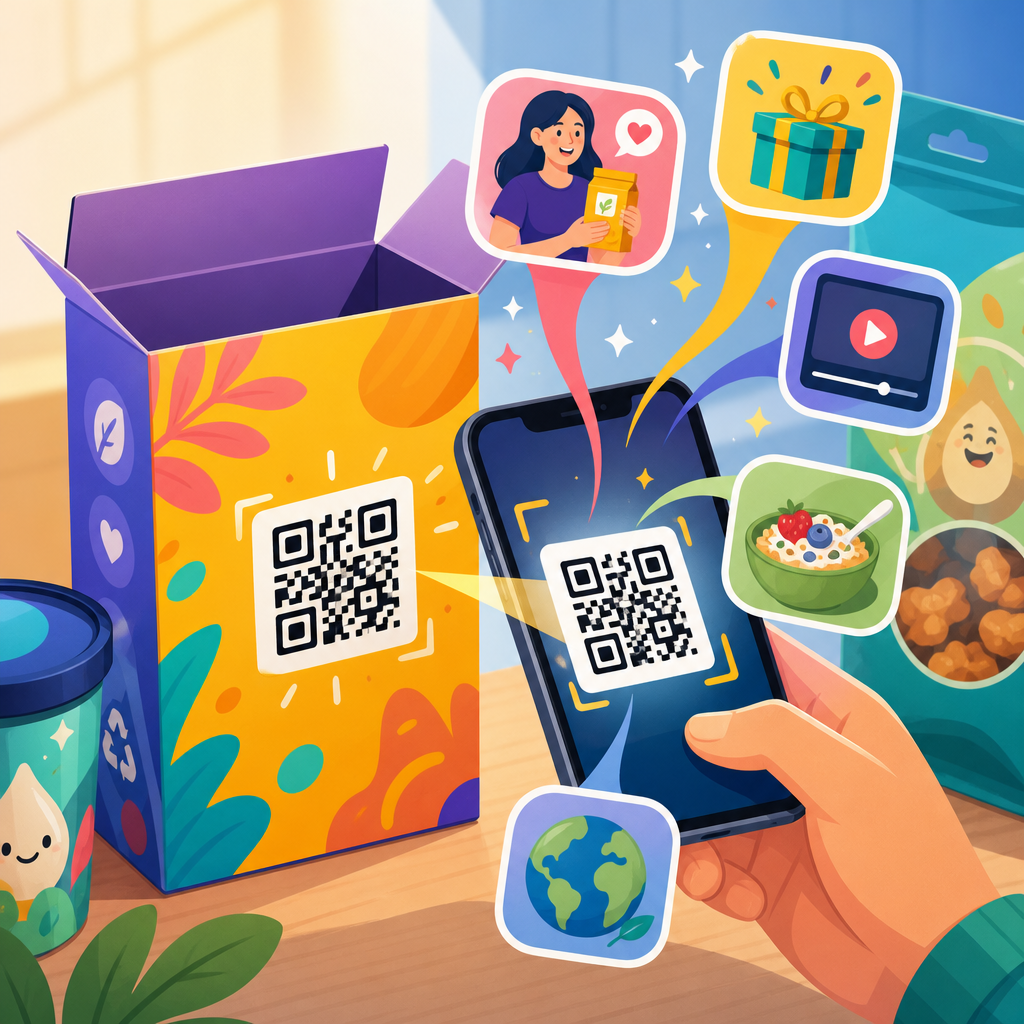
Interactive packaging has moved from novelty to mainstream because QR codes give brands a low-cost bridge between physical products and digital experiences. In practical terms, smart packaging means packaging enhanced with scannable, connected, or sensor-based features that extend what a label, carton, bottle, or pouch can do after it leaves the shelf. Among all smart packaging tools, QR codes remain the most widely adopted because they are cheap to print, familiar to shoppers, and easy to update through dynamic links. I have worked on packaging rollouts where a two-cent design change unlocked recipe content, authentication, customer support, loyalty enrollment, and first-party data capture from the same SKU. That range matters. Packaging is no longer just protection and compliance; it is media, service, and measurement.
Brands use QR codes for interactive packaging because they solve several business problems at once. They can explain a product better than a small label ever could, help shoppers verify authenticity, connect packaging to post-purchase education, and support sustainability by replacing printed inserts with digital content. They also create measurable touchpoints. A scan can reveal where engagement happens, which campaign drives repeat interaction, and what content actually influences conversion or retention. For regulated industries, a code can route users to country-specific instructions, ingredient documentation, or recall notices without reprinting every market variation. For consumer goods, it can turn a static pack into a channel for storytelling, community, and commerce. The result is a packaging strategy that serves shoppers while giving brands cleaner data and more flexibility.
What Interactive QR Packaging Actually Includes
At a technical level, a QR code on packaging encodes a URL, identifier, or product-specific payload that opens a digital experience when scanned with a phone camera. Static codes point to a fixed destination and are best for information that rarely changes. Dynamic codes redirect through a management platform, allowing the destination, analytics, and campaign logic to be updated after printing. That distinction is crucial. In every serious smart packaging program I have helped implement, dynamic codes were the default because packaging remains in market for months, sometimes years, while offers, legal copy, support content, and campaign priorities change constantly.
Interactive packaging can sit on primary packaging, secondary cartons, neck tags, labels, closures, inserts, or shipping boxes. The experience behind the scan can be broad: product origin details, assembly instructions, tutorials, warranty registration, loyalty rewards, refill reminders, games, social campaigns, or buy-again links. Some brands use one code for all units in a production run, while others serialize each item with a unique identifier. Serialization increases cost and operational complexity, but it enables track-and-trace, anti-counterfeit workflows, market diversion detection, and more precise lifecycle messaging. Luxury goods, pharmaceuticals, and premium beverages often justify that investment because the value of authentication and channel control is high.
What makes these programs work is not the code itself but the experience design behind it. A shopper scanning a jar, shoe box, or cosmetics carton expects an immediate payoff. That payoff must be obvious, mobile-friendly, and faster than opening a browser and searching manually. The strongest packaging programs answer simple questions right away: What is this product? How do I use it? Is it genuine? What should I do next? When those basics are covered, brands can layer richer content and data capture without creating friction.
Why Brands Invest in QR Codes on Packaging
Brands invest in QR-powered smart packaging because it improves packaging efficiency, customer experience, and measurement at the same time. A printed package has fixed space, but a QR code expands that space almost infinitely. Instead of adding multilingual leaflets, troubleshooting booklets, or campaign inserts, a brand can print a single scannable entry point and localize the destination by language, market, device, or scan context. This reduces print complexity and can lower obsolescence when claims, instructions, or promotions change.
There is also a strong customer-service case. In electronics, furniture, and personal care, many returns happen because buyers do not understand setup, compatibility, or expected performance. I have seen packaging codes cut support burden simply by sending customers to concise onboarding videos and FAQs before frustration builds. In food and beverage, scans often drive recipes, nutrition transparency, or sourcing stories that reinforce purchase confidence. In beauty, they support shade education, ingredient explainers, and regimen guidance that would never fit on a carton.
Data is the third driver. Retail shelf data usually tells a brand what sold and where, but not what happened after the sale. Packaging scans create post-purchase visibility. Marketers can measure scan rate by market, package version, retailer campaign, and date range; operations teams can monitor unusual geographic scan patterns that hint at gray-market distribution; CRM teams can connect opt-in scans to loyalty profiles for repeat purchase journeys. None of this replaces retail data, but it fills a major blind spot between checkout and customer usage.
Common Use Cases Across Industries
The most effective interactive packaging programs match the scan experience to the category. In food, QR codes commonly deliver recipes, farm-to-fork sourcing details, allergen information, and freshness education. A coffee brand might link each bag to roast notes, brew ratios, and farmer profiles. A dairy brand can direct shoppers to storage guidance and recipe ideas that increase consumption occasions. In beverages, especially wine and spirits, codes often support provenance, tasting notes, cocktail tutorials, and age-gated promotions.
In cosmetics and skin care, QR packaging helps bridge the gap between aspiration and correct use. A serum box can route first-time buyers to a routine builder, patch-test guidance, ingredient explanations, and before-and-after content with dermatologist review. This matters because misuse creates dissatisfaction that is often blamed on the product. In pharmaceuticals and medical devices, packaging codes can direct patients to instructions for use, multilingual leaflets, adverse-event reporting contacts, and authentication services. Here, compliance and readability are more important than campaign creativity, so landing pages must be plain, accessible, and rigorously governed.
Fashion and footwear brands use QR codes on hangtags and shoe boxes for styling content, care instructions, and resale authentication. Consumer electronics brands use them for setup videos, warranty activation, firmware resources, and accessory recommendations. Household goods brands link cleaning products to surface-specific usage guides and refill subscriptions. Across sectors, the pattern is consistent: the code performs best when it removes confusion, adds trust, or deepens product value after purchase.
How Smart Packaging Supports Trust, Traceability, and Compliance
One of the strongest business arguments for QR packaging is trust. Counterfeiting, unauthorized resale, and diluted product information all damage brands. When a QR code is tied to a serialization system, each item can carry a unique digital identity. On scan, the brand can confirm whether that identifier exists, whether it has been scanned before, and whether the location aligns with the intended distribution path. That does not stop every counterfeit operation, but it creates a practical verification layer that is visible to both consumers and channel partners.
Traceability is equally important in supply chains under pressure from regulation and consumer expectations. Standards from GS1, including the use of Digital Link structures, are becoming more relevant as brands prepare packaging for richer product identification and interoperable data sharing. A QR code can connect a package to batch details, certificates, origin records, recycling instructions, and recall information. For products with strict documentation requirements, that digital layer reduces dependence on dense printed text while improving access to current information.
Compliance benefits are often underestimated. Packaging for multiple countries creates labeling challenges, especially when claims or instructions vary. A code can route by geolocation or language preference so each consumer sees the right content version. That flexibility is valuable, but it must be governed carefully. Regulatory teams should treat digital packaging content with the same approval discipline as printed labels. In my experience, the best programs use version control, archived approvals, and market-specific content libraries so nothing published through a scan link drifts out of compliance.
Best Practices for Designing QR Code Packaging That Gets Scanned
Getting a code printed is easy; getting it scanned consistently is harder. Placement, contrast, copy, and context determine results. Codes need quiet space around them, sufficient size for expected scan distance, and strong contrast against the background. Glossy curved surfaces, metallic inks, and package folds can impair readability. Before launch, brands should test scans under retail lighting, with average phone cameras, and at realistic shelf angles. Many disappointing results come from beautiful artwork that ignores real scanning conditions.
The call to action matters just as much as the symbol. “Scan me” is weak. Specific value statements perform better: “Scan for setup in 60 seconds,” “Scan to verify authenticity,” or “Scan for recipes and refill reminders.” If the customer does not know the payoff, many will not bother. Landing pages should load fast, avoid intrusive forms, and deliver the promised value immediately. Progressive profiling works better than demanding an email address before any utility appears.
| Packaging goal | Recommended QR experience | Key metric |
|---|---|---|
| Product education | Short how-to video, FAQs, quick-start guide | Completion rate |
| Authentication | Unique code verification with item status | Valid versus invalid scans |
| Loyalty growth | Instant reward, account link, repeat-scan offers | Opt-in rate |
| Sustainability | Recycling instructions by local rules | Engaged sessions |
| Repurchase | Subscription, refill, or add-to-cart page | Conversion rate |
Brands should also decide whether one experience fits all users. Sometimes it does. Often it does not. First-time buyers need onboarding, while repeat customers may want replenishment or rewards. Dynamic QR systems can recognize campaign source, geography, time period, or repeated scans and adapt accordingly. That is where interactive packaging becomes genuinely smart rather than merely connected.
Measurement, Technology Stack, and Operational Realities
A serious QR packaging program needs more than a generator and a landing page. The stack usually includes a QR management platform, analytics, tag management, consent handling where required, CMS integration, and often CRM or loyalty connectors. Enterprise teams may add product information management, serialization software, and supply-chain databases. Named tools vary by budget and architecture, but the principle is stable: packaging scans should feed systems the business already uses, not create isolated reports nobody acts on.
Core metrics include unique scans, repeat scans, scan rate by units sold, dwell time, completion of target actions, geography, device type, and conversion to support outcomes such as registration or repurchase. Benchmarks vary widely by category and call to action, so brands should avoid comparing a mass-market snack pack to a premium appliance box. I have found that a modest scan rate can still produce strong business impact when the use case is high value, such as reducing returns, validating authenticity, or capturing warranty registrations.
Operationally, packaging teams must coordinate with design, legal, procurement, manufacturing, IT, and marketing. File control is critical. Once artwork is approved, the linked destination must be stable, monitored, and secured. Redirect chains should be minimized for speed. Expired campaigns should not leave dead links in market. Analytics should distinguish scans from employees, agencies, and quality checks so reporting reflects real customer behavior. These details sound small until they are ignored; then the program underperforms for reasons unrelated to customer interest.
The Future of Smart Packaging as a Content Hub
Smart packaging is evolving from single-campaign activation to persistent product infrastructure. The next stage is not simply putting more QR codes on packs; it is making each package a durable gateway to product identity, service, education, and circularity. As broader adoption of advanced product identifiers grows, brands will be able to connect one scan experience to manuals, provenance, subscriptions, recall notices, recycling guidance, and authenticated resale support from the same digital entry point.
This is why smart packaging deserves a hub strategy rather than a one-off article or campaign brief. It touches packaging design, connected product content, anti-counterfeiting, loyalty, sustainability communication, and post-purchase commerce. Teams that treat QR codes as a cheap promotional add-on usually get shallow results. Teams that treat packaging as a digital touchpoint build reusable systems and compound value over time. The winning approach is disciplined: define the customer problem, choose the right code architecture, create a fast mobile experience, connect measurement to business outcomes, and govern the content like any other critical product asset.
For brands evaluating QR codes for interactive packaging, the takeaway is simple: start with utility, not gimmicks. Use the package to answer real questions, reduce friction, and strengthen trust. Then add personalization, loyalty, and richer storytelling where they support the customer journey. When smart packaging is built this way, every box, bottle, and label becomes more helpful to the buyer and more measurable for the brand. Audit your current packaging, identify one high-value scan use case, and build from there.
Frequently Asked Questions
What makes QR codes such a popular tool for interactive packaging?
QR codes have become the go-to entry point for interactive packaging because they solve a real business problem in a simple, affordable way. Brands want packaging to do more than display ingredients, branding, and compliance information. They want it to educate, engage, convert, and continue the customer relationship after purchase. A QR code makes that possible by turning almost any package into a direct link to digital content without adding major cost or production complexity.
One of the biggest advantages is accessibility. Most consumers already know how to scan QR codes with their phones, which removes the learning curve that often limits adoption of newer packaging technologies. From a brand perspective, QR codes are inexpensive to print on labels, cartons, bottles, pouches, and sleeves, making them practical for both large-scale national campaigns and smaller product runs. They also work across many industries, including food and beverage, beauty, health, household products, and apparel.
Another reason for their popularity is flexibility. The same code can connect shoppers to how-to videos, recipes, loyalty programs, product origin stories, sustainability information, promotions, social channels, warranty registration, or augmented reality experiences. Dynamic QR codes are especially valuable because brands can update the destination after products are already in stores or in consumers’ homes. That means packaging can remain relevant longer, campaigns can be optimized in real time, and brands can test different experiences without redesigning the package itself.
In short, QR codes are widely adopted in interactive packaging because they offer a low-cost bridge between physical products and digital experiences. They are familiar, scalable, measurable, and adaptable, which makes them one of the most effective tools for turning ordinary packaging into an active marketing and service channel.
How do brands use QR codes on packaging to improve the customer experience?
Brands use QR codes to remove friction and give customers more value at the exact moment they are holding a product. Instead of forcing people to search online for instructions, product details, or brand information, the package itself becomes the gateway. That convenience can significantly improve the customer experience because it delivers relevant content instantly and in context.
For example, a food brand might link a QR code to recipes, serving suggestions, sourcing information, allergen details, or storage guidance. A beauty brand may use it for tutorials, personalized regimen recommendations, ingredient education, and before-and-after demonstrations. Consumer electronics or household goods companies often connect packaging to setup instructions, troubleshooting help, registration pages, and warranty support. In each case, the code helps customers get more out of the product while reducing frustration and uncertainty.
QR codes also make packaging more interactive and personalized. A scan can unlock exclusive content, welcome messages, loyalty rewards, sweepstakes entries, gamified experiences, or region-specific promotions. Some brands create post-purchase journeys that change over time, such as showing first-use guidance immediately after launch and then inviting repeat buyers into communities, subscriptions, or replenishment programs later. This transforms packaging from a static asset into a living touchpoint.
Just as important, QR-enabled packaging can build trust. Customers increasingly want transparency about ingredients, sourcing, sustainability practices, certifications, and authenticity. A well-placed QR code can provide that information in a clear, organized format without overcrowding the label. When the experience is fast, useful, and mobile-friendly, it reinforces the idea that the brand is helpful, transparent, and customer-focused.
What kinds of digital experiences can a QR code on packaging unlock?
The range of digital experiences is much broader than many people assume. At the most basic level, a QR code can send users to a landing page with product information, FAQs, and contact options. But many brands go far beyond that, using packaging as the launch point for richer forms of interaction that drive engagement and long-term loyalty.
Educational content is one of the most common applications. Brands use QR codes to share videos, tutorials, assembly guides, care instructions, nutrition facts, certification documents, ingredient explanations, and behind-the-scenes manufacturing stories. These experiences are especially valuable when physical packaging has limited space or when information needs to be updated over time.
Marketing and brand storytelling are another major use case. A scan can lead to campaign microsites, founder messages, product launch content, influencer collaborations, playlists, social media activations, or immersive brand narratives. Some companies use QR codes to connect packaging with augmented reality filters, 3D product visualizations, or interactive games that make the unboxing or usage experience more memorable.
Transactional experiences are also increasingly common. Packaging QR codes can support loyalty sign-ups, coupon delivery, subscription enrollment, product registration, reordering, referral programs, event RSVPs, and direct purchases. For repeat-purchase categories, this can shorten the path from product use to the next sale. In regulated or trust-sensitive categories, brands may also use codes for authentication checks, batch traceability, recall notices, or supply chain transparency.
The most effective digital experiences usually share a few traits: they are mobile-first, fast to load, clearly connected to the product, and valuable enough to justify the scan. When done well, the QR code is not just a novelty feature on the package. It becomes a practical service tool, a marketing channel, and a measurable extension of the brand experience.
How can brands measure the effectiveness of QR codes on interactive packaging?
One of the strongest benefits of QR codes is that they make packaging measurable in ways traditional print elements cannot. Instead of guessing whether a package design or message influenced customer behavior, brands can track real interaction data and use it to improve future campaigns. This turns packaging into a source of actionable insights rather than just a passive container.
At a basic level, brands can measure scans, unique users, time of day, device type, geographic patterns, and repeat engagement. With dynamic QR codes and analytics platforms, they can also monitor which products or markets generate the most activity, which calls to action perform best, and where people drop off after scanning. If a code leads to a landing page, additional metrics such as bounce rate, time on page, video completion, registrations, coupon redemptions, and purchases can reveal the true business impact.
Measurement becomes even more useful when packaging QR data is connected to broader marketing systems. Brands can tie scans to CRM records, loyalty activity, campaign segmentation, retail programs, or ecommerce conversions. That makes it easier to understand whether the packaging experience is driving repeat purchases, improving retention, increasing education around the product, or reducing customer support volume. In some cases, different QR destinations can be tested by market, retailer, or product line to identify what resonates most with specific audiences.
To get meaningful results, brands need clear objectives from the beginning. A QR code intended to provide usage instructions should not be judged the same way as one built to drive social follows or direct sales. Success depends on aligning the destination, call to action, and measurement framework with the business goal. When tracking is set up properly, QR-based interactive packaging can provide a rare combination of consumer utility and performance visibility.
What are the best practices for adding QR codes to packaging successfully?
Successful QR code packaging starts with a simple principle: the scan must feel worth it. If the code only leads to a generic homepage or offers little value, customers quickly learn to ignore it. Brands get better results when they give a clear reason to scan, such as “Watch how to use,” “See ingredients and sourcing,” “Unlock rewards,” or “Verify authenticity.” The benefit should be specific, immediate, and relevant to the product in hand.
Placement and design matter as well. The QR code should be easy to find, large enough to scan comfortably, and printed with strong contrast against the background. It should not be distorted, wrapped around difficult curved surfaces without testing, or placed where seals, folds, glare, or damage might interfere with scanning. Brands also need to test codes across devices, lighting conditions, packaging materials, and production runs to ensure reliable performance in real-world environments.
The destination experience is just as important as the code itself. Landing pages should load quickly, be optimized for mobile, and deliver the promised content without forcing users through too many steps. If a brand asks for registration, app downloads, or personal information too early, completion rates may suffer. The best experiences respect the user’s time, provide immediate value, and then offer optional next steps such as joining a loyalty program or subscribing for updates.
Brands should also think strategically about maintenance and longevity. Dynamic QR codes are usually preferable because they allow links and campaigns to be updated without reprinting packaging. Analytics should be set up from the start, and teams should establish ownership for monitoring scans, refreshing content, and fixing broken links. Security and trust are important too, particularly for product authentication and consumer data collection. When brands combine clear messaging, dependable functionality, useful content, and ongoing management, QR codes become a reliable interactive packaging tool rather than a one-time gimmick.