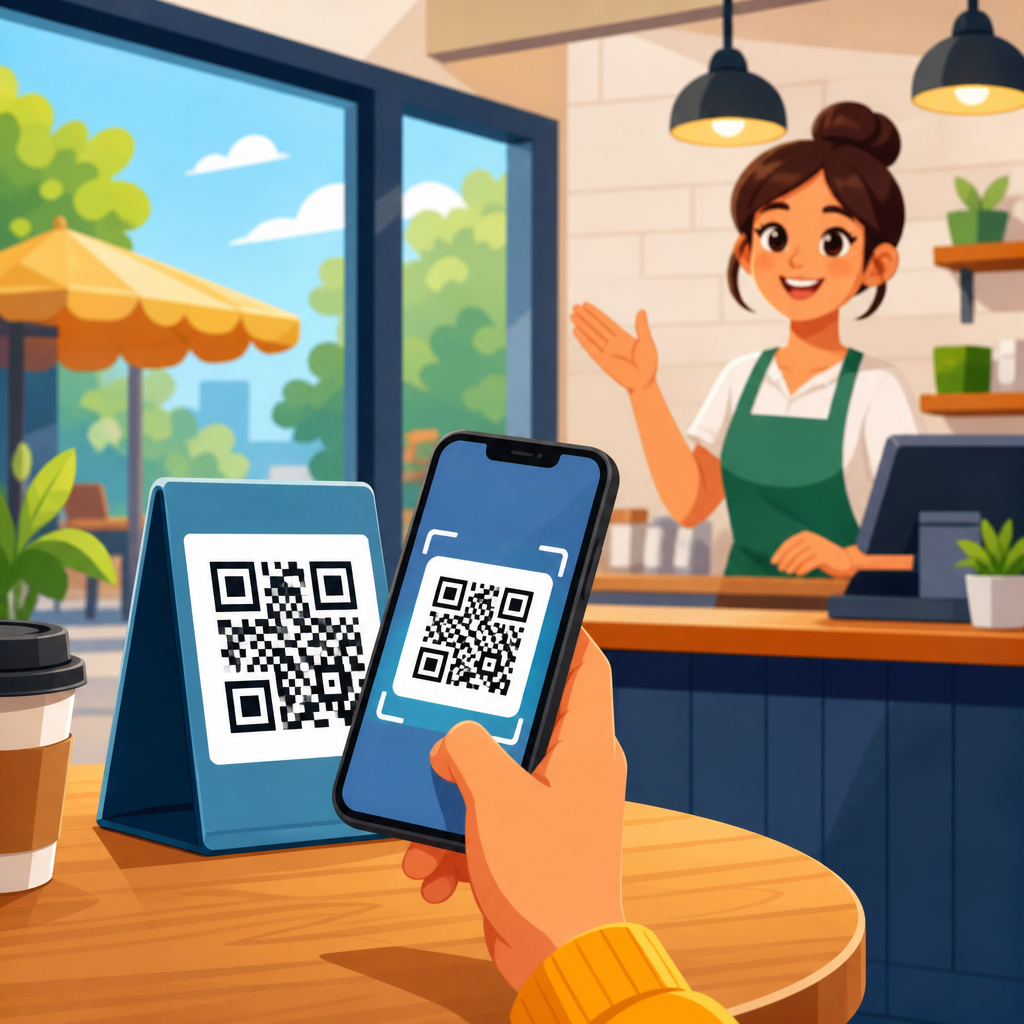
QR codes for contactless experiences have moved from a convenience feature to a core part of digital service design, and their future now shapes how businesses, public institutions, and consumers exchange information without friction. A QR code, or Quick Response code, is a two-dimensional matrix barcode that stores data such as URLs, payment credentials, ticket details, contact cards, Wi-Fi logins, or product identifiers. Contactless experiences refer to interactions that reduce physical touchpoints while preserving speed, security, and usability. In practice, that means scanning a code to open a restaurant menu, verify an event ticket, pair a device, launch a mobile payment, or access a patient check-in form. I have worked on QR deployments across retail, hospitality, and operations teams, and the pattern is consistent: when the code is placed well, linked to a fast mobile destination, and supported by clear instructions, adoption rises quickly because the user effort is minimal.
The importance of this topic goes well beyond menus and poster campaigns. QR code technology now sits at the intersection of smartphones, digital identity, payments, logistics, and analytics. Nearly every modern phone camera can read codes natively, which removes the app-download barrier that once slowed adoption. At the same time, organizations need durable, low-cost interfaces that bridge physical environments and digital workflows. That is exactly where QR codes excel. They are inexpensive to print, easy to update when dynamic links are used, and measurable when tracked through campaign parameters or platform dashboards. As industries plan for the future of QR code technology, the central question is no longer whether people will scan. It is how QR codes will evolve into trusted, context-aware gateways for richer contactless experiences across commerce, healthcare, travel, manufacturing, and civic services.
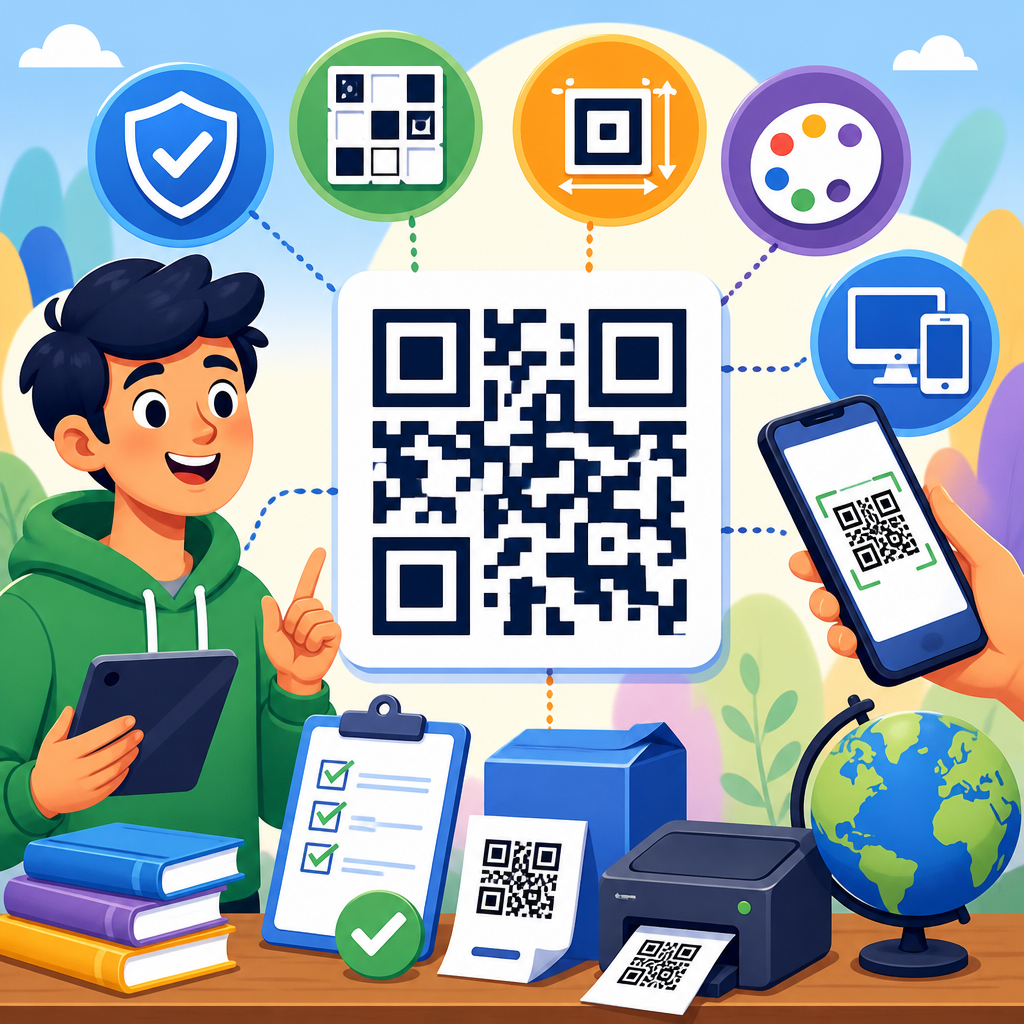
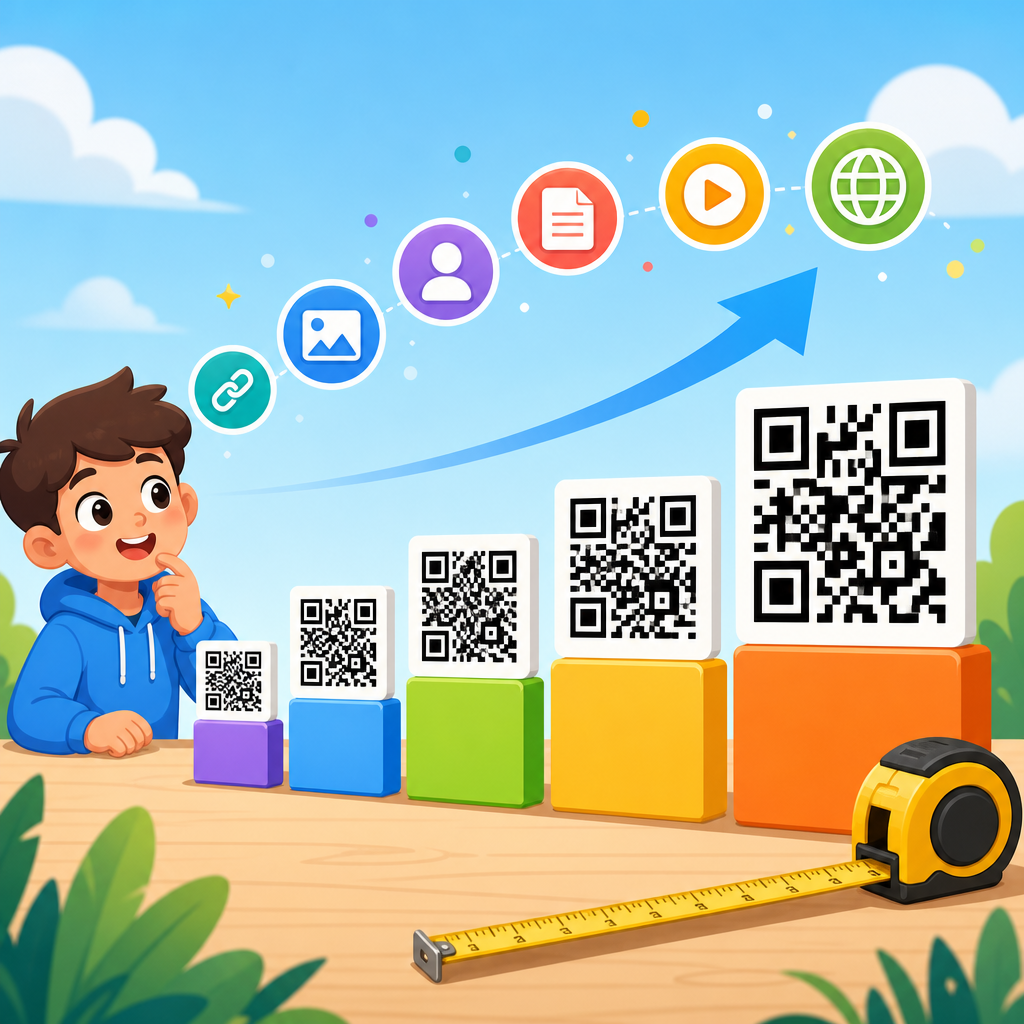
Understanding the future requires a clear view of the current technical foundation. There are static QR codes, which encode fixed data directly into the symbol, and dynamic QR codes, which point to a short URL that can be edited, tracked, or redirected later. Error correction, based on Reed-Solomon coding, allows a code to remain readable even if part of it is damaged or stylized. Standard versions support different data capacities, while design choices such as quiet zones, module contrast, and print size determine scan reliability. These details matter because the best contactless experience is invisible: the scan works instantly, the page loads quickly, and the next action feels obvious. Poor contrast, overloaded destinations, or weak network performance break that flow. Future-facing QR strategy therefore depends as much on mobile UX, data governance, and security as on the square pattern itself.
This hub article covers the future of QR code technology through the lens of contactless experiences. It explains where QR codes are headed, which sectors are using them most effectively, what technologies are expanding their role, and what practical standards teams should follow when building for long-term success. The goal is simple: give decision-makers, marketers, product teams, and developers a clear framework for understanding why QR codes remain relevant and how to deploy them in ways that will still perform as user expectations, regulations, and device capabilities continue to change.
Why QR codes became the default bridge between physical and digital
QR codes became dominant because they solve a costly interface problem: physical spaces cannot be updated as quickly as digital systems. A printed sign in a store, airport, clinic, or warehouse is static, but customer needs change by the hour. Dynamic QR codes let teams keep the sign in place while changing the destination behind it. During the pandemic, restaurants replaced disposable menus with code-based ordering. Since then, the same model has expanded to hotel check-in, transit schedules, museum guides, and self-service support. The broader lesson is that QR codes reduce both operational latency and contact friction. When a user scans once instead of waiting in line, requesting paper, or typing a long URL, the organization saves labor and the user reaches the task faster.
Another reason QR codes became the default is compatibility. Near-field communication can be elegant, but it requires close proximity and more specialized infrastructure. Bluetooth supports richer interactions, yet pairing and permissions can add complexity. QR codes work with paper, screens, packaging, labels, kiosks, and receipts using hardware people already carry. That universality matters in mixed environments where not every customer has the same device or app. I have seen QR outperform more advanced options simply because staff needed a training-light solution that could be launched across dozens of locations in weeks, not quarters. The future of QR code technology builds on that same strength: low deployment cost combined with broad accessibility.
How industries are expanding contactless use cases
Retail uses QR codes for product information, self-checkout, loyalty enrollment, digital receipts, and post-purchase support. A customer can scan a shelf tag to compare variants, verify ingredient lists, or see live inventory before asking for help. Hospitality uses codes for mobile room service, amenity guides, local recommendations, and checkout flows. Healthcare organizations use them for patient intake, appointment confirmation, wayfinding, vaccine records, and device instructions. Manufacturing teams place QR codes on equipment for maintenance histories, safety procedures, and spare-parts ordering. In logistics, codes tie parcels and pallets to real-time tracking events and proof-of-delivery workflows. Each use case turns a passive object into an interactive service point.
Travel and public services show the next phase most clearly. Airlines and rail networks already rely on scannable boarding and ticketing, but future deployments combine QR access with identity verification, multilingual support, and disruption management. A station poster can route travelers to platform updates, rebooking options, and compensation forms in seconds. Cities use QR codes on permits, parking zones, public art, and emergency notices because they create a direct line to accurate, updateable information. The pattern across sectors is consistent: as organizations digitize more customer journeys, QR codes become the simplest visible trigger for contactless action.
| Industry | Common QR Use Case | Primary Contactless Benefit | Future Direction |
|---|---|---|---|
| Retail | Product info and mobile pay | Faster decisions at shelf | Personalized offers tied to inventory data |
| Hospitality | Menus and room services | Less waiting and fewer touchpoints | Integrated ordering, tipping, and feedback |
| Healthcare | Check-in and patient forms | Lower front-desk friction | Secure links to records and care instructions |
| Manufacturing | Asset labels and procedures | Instant access to technical data | Digital twins and predictive maintenance links |
| Transport | Tickets and service updates | Rapid self-service access | Identity-linked mobility credentials |
What the future of QR code technology will look like
The future of QR code technology is not about replacing the symbol; it is about making the scan more intelligent, secure, and context-aware. Dynamic routing will become standard. Instead of sending every user to the same destination, platforms will adapt based on device type, language, time, geography, campaign source, or customer status. A single code on product packaging can send a first-time buyer to setup instructions, a returning customer to refill ordering, and a service technician to a maintenance portal. That level of routing already exists in mature campaign tools, and it will become expected in operational systems as well.
Another major shift is tighter integration with first-party data and automation platforms. QR scans increasingly trigger workflows in systems such as Salesforce, HubSpot, Adobe Experience Cloud, Zapier, and enterprise resource planning software. For example, a code scanned at an event booth can open a personalized landing page, log engagement, notify sales, and start a follow-up sequence. In service environments, a code on a machine can create a timestamped service event, pull the correct manual, and record technician actions. The code itself remains visually simple, but the process behind it becomes far more sophisticated. That is why future QR strategy belongs not only to designers and marketers, but also to product, security, analytics, and operations teams.
Expect stronger convergence with augmented reality, digital identity, and connected packaging. Brands already use QR codes to unlock product provenance, recycling instructions, and loyalty experiences. As camera-based interfaces improve, scans will increasingly lead to 3D product demos, visual overlays, or authenticated ownership records. Regulatory pressure will also shape development. In sectors handling personal data, teams must align code flows with privacy rules, retention limits, and consent design. The best future implementations will not be the flashiest; they will be the ones that deliver instant utility while respecting user trust.
Security, trust, and governance in QR-powered interactions
Security is the main factor separating a convenient scan from a risky one. Because QR codes can hide long destinations, users may not immediately recognize a malicious link. Phishing attacks have used fraudulent codes placed over legitimate signage, especially in parking payments and public kiosks. The solution is not to avoid QR codes, but to deploy them with visible trust signals and technical controls. Organizations should use branded domains, HTTPS everywhere, short but recognizable URLs, mobile-safe pages, and code placement that is difficult to tamper with. For high-risk actions such as payments or credential access, additional verification should be required after the scan.
Governance matters just as much as technical security. Dynamic codes need ownership, expiration rules, and audit trails. I have seen teams lose track of who controls redirects, which creates broken links and compliance issues months later. Good governance means maintaining an inventory of active codes, destinations, campaigns, and physical locations. It also means testing scans across device types, screen brightness levels, and network conditions. Payment environments should align with established standards from EMVCo where relevant, while healthcare and enterprise deployments should respect sector-specific security frameworks. Contactless convenience only scales when users trust that a code will do exactly what the label promises.
Design and measurement practices that make QR experiences work
Most QR failures are not caused by the code format. They come from weak implementation. A good QR experience starts with context: tell users what they get when they scan and why it is worth the effort. Use enough size for the expected distance, preserve contrast, maintain the quiet zone, and avoid placing codes on curved or reflective surfaces when precision matters. The destination page should load fast, match the promise on the sign, and present one clear next action. If a user scans a table tent for payment, the page should not first force them through unrelated navigation or oversized media. Every extra step reduces completion.
Measurement is where mature programs separate from one-off experiments. Teams should track scan rate, unique users, location performance, bounce rate, completion rate, assisted revenue, and downstream retention. UTM parameters, platform analytics, and event tracking in tools such as Google Analytics 4 or Adobe Analytics make this possible. Physical testing remains essential. In one retail rollout I supported, codes near checkout performed well while codes at store entrances underperformed because glare from exterior lighting reduced readability during peak afternoon hours. The fix was not strategic reinvention; it was better material selection and placement. The future of QR code technology will reward teams that treat codes as measurable product touchpoints rather than decorative shortcuts.
Where this subtopic is heading next
As a hub for the future of QR code technology, this topic naturally branches into several deeper areas. One branch covers QR code payments, including merchant-presented codes, interoperability, settlement flows, and regional adoption patterns in markets such as China, India, and Brazil. Another focuses on dynamic QR code generators, management platforms, and redirect logic for enterprises with large physical footprints. Additional articles should examine QR code security, anti-phishing design, analytics implementation, packaging use cases, digital business cards, event ticketing, and industrial asset tracking. Each of those subjects deserves its own detailed treatment because the technology is mature enough that execution differences now matter more than basic awareness.
The central takeaway is straightforward: QR codes are no longer temporary workarounds for contactless needs. They are durable infrastructure for linking real-world moments to digital systems at scale. Their future will be defined by better routing, stronger security, cleaner mobile UX, richer analytics, and tighter integration with identity, payments, and operational data. Organizations that treat QR codes as part of service architecture rather than campaign decoration will get the most value. Review your current scan journeys, audit where friction or trust gaps appear, and build the next generation of QR-powered contactless experiences with the same rigor you would apply to any core digital product.
Frequently Asked Questions
What are QR codes, and why are they so important for contactless experiences?
QR codes, short for Quick Response codes, are two-dimensional barcodes that can store a wide range of information, including website links, payment details, digital menus, event tickets, product information, contact cards, and Wi-Fi credentials. Their importance in contactless experiences comes from how quickly they connect the physical and digital worlds. Instead of handing over paper materials, touching shared screens, or manually entering long URLs, users can simply scan a code with a smartphone and instantly access what they need.
That speed and simplicity make QR codes especially valuable in environments where convenience, hygiene, and efficiency matter. Restaurants use them for digital menus and ordering, retailers use them for self-service product information and checkout, healthcare providers use them for patient forms and appointment check-ins, and transportation services use them for ticketing and access control. In each case, the QR code reduces friction by removing unnecessary steps from the interaction.
More broadly, QR codes have become a core layer of digital service design because they are inexpensive to deploy, easy for consumers to understand, and compatible with most modern smartphones without requiring special hardware. As organizations continue to design services that prioritize low-touch, fast, and self-directed experiences, QR codes remain one of the most practical tools for enabling contactless engagement at scale.
How do businesses use QR codes to create better customer experiences?
Businesses use QR codes to streamline customer journeys from the first interaction to post-purchase engagement. In a contactless setting, a QR code can replace multiple traditional touchpoints. For example, a customer might scan a code to view a menu, place an order, pay a bill, join a loyalty program, download a receipt, or leave feedback, all from their own device. This reduces waiting, minimizes physical contact, and gives customers more control over the experience.
QR codes also improve convenience by making information instantly accessible at the right moment. In retail, they can link shoppers to product specifications, reviews, inventory availability, or promotional offers. In hospitality, they can provide room service options, property guides, and digital concierge services. At events, they can support registration, ticket validation, seating information, and real-time schedule updates. Because the interaction happens through the customer’s phone, the process feels intuitive and efficient.
From an operational standpoint, QR codes help businesses update content without reprinting materials when dynamic codes are used. A single code can continue to work even if the underlying destination changes, which is useful for seasonal promotions, updated safety instructions, revised menus, or evolving service workflows. Businesses also benefit from measurable engagement data, such as scan volume, time, and location, which can inform decisions about customer behavior and service optimization. When implemented thoughtfully, QR codes do more than enable contactless access; they improve the overall service experience by making interactions faster, clearer, and more responsive.
Are QR codes secure for payments, sign-ins, and sharing personal information?
QR codes can be secure, but their safety depends on how they are created, managed, and used. The code itself is simply a container for data or a destination, so the real security considerations involve the link, payment process, or form that appears after scanning. When businesses use trusted payment gateways, encrypted websites, secure login systems, and verified destinations, QR codes can support safe contactless interactions for payments, authentication, and information exchange.
For payments, many secure QR systems work by connecting the user to a protected payment environment where sensitive data is processed according to established security standards. For sign-ins, organizations may use QR-based authentication to simplify access while still relying on secure identity verification in the background. In healthcare, education, and public services, QR codes can also direct users to secure digital forms, appointment systems, or check-in workflows that reduce paperwork and in-person handling.
That said, users and organizations should remain cautious. Fraudsters can place fake QR codes over legitimate ones or use codes that lead to phishing pages. Best practices include checking that the code comes from a trusted source, previewing the destination URL when possible, avoiding codes in suspicious locations, and making sure the landing page uses HTTPS. Businesses should regularly inspect physical QR code placements, use branded domains when possible, and educate customers about safe scanning habits. In short, QR codes are not inherently risky, but like any digital access point, they require sound security practices and clear trust signals.
What types of contactless experiences can QR codes support beyond menus and payments?
While menus and mobile payments are among the most recognized uses, QR codes support a much broader range of contactless experiences across industries. In offices and public buildings, they can enable visitor registration, touch-free check-in, room booking, access to safety instructions, and wayfinding. In healthcare settings, they can connect patients to intake forms, appointment confirmations, prescription information, and post-visit guidance. In education, QR codes can link students to class resources, attendance check-ins, digital handouts, and campus service information.
In travel and transportation, QR codes are widely used for ticketing, boarding, baggage tracking, parking access, and destination information. Museums, galleries, and tourist attractions use them to deliver self-guided tours, multilingual content, exhibit details, and interactive experiences without requiring shared devices. Manufacturers and logistics teams use QR codes for asset tracking, maintenance records, quality control, and supply chain visibility. Even residential and workplace environments use them for guest Wi-Fi access, smart device setup, package pickup, and service requests.
The reason QR codes adapt so well is that they function as a flexible trigger for digital action. They can open a webpage, launch an app, start a chat, save contact details, connect to a network, verify identity, or retrieve a personalized record. As more services shift toward self-service and mobile-first interactions, QR codes are becoming a standard interface for low-friction engagement. Their role is no longer limited to convenience; they now support continuity, scalability, and accessibility in many kinds of contactless systems.
What is the future of QR codes in contactless service design?
The future of QR codes in contactless service design is closely tied to the growth of mobile-first experiences, smart environments, and real-time personalization. QR codes have already evolved from being simple link-sharing tools into infrastructure for digital access, identity, transactions, and service delivery. As businesses and institutions continue to reduce friction in customer and citizen interactions, QR codes are likely to remain a preferred bridge between physical spaces and digital systems because they are affordable, familiar, and easy to deploy.
One major trend is deeper integration with dynamic content and analytics. Instead of pointing to static information, future QR implementations will increasingly adapt based on location, time, device type, user profile, or inventory status. A single code in a store might show different product recommendations throughout the day, or a code in a transportation hub might display route changes in real time. This makes contactless experiences more relevant and responsive without requiring users to download complex tools or navigate multiple steps.
Another important development is integration with broader ecosystems such as digital wallets, identity verification platforms, loyalty systems, augmented reality, and connected devices. QR codes may serve as the entry point to experiences that feel more seamless, secure, and personalized than today’s basic scan-to-open interactions. At the same time, design quality will matter more. Organizations will need to focus on clear instructions, visible trust signals, accessibility, fast-loading mobile pages, and strong security controls. In that sense, the future of QR codes is not just about the code itself. It is about how well that code fits into a thoughtfully designed, low-friction service experience that meets modern expectations for speed, safety, and convenience.