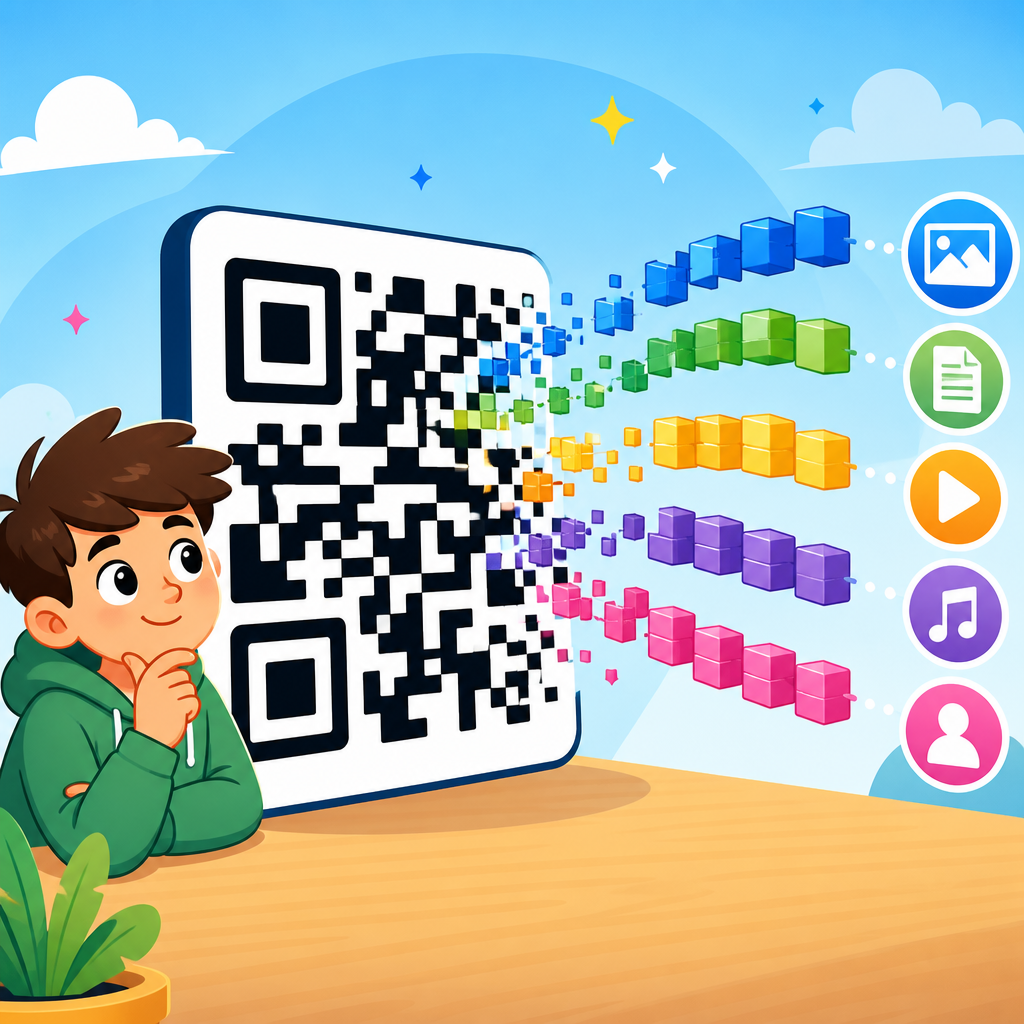
QR code specification breakdown starts with a practical truth: if you build, print, scan, validate, or regulate QR symbols, you need to understand the standard beneath the black and white squares. A QR code is a two-dimensional matrix symbology originally developed by Denso Wave in 1994 for high-speed component tracking, then standardized internationally through ISO/IEC 18004. That specification defines how data is encoded, how modules are arranged, which error correction rules apply, and what scanners must interpret consistently. Without that shared rulebook, one generator could produce symbols another scanner would misread, especially under real-world conditions such as low light, curved packaging, or partially damaged labels.
In practice, “QR code standards and formats” covers more than a single symbol type. It includes Model 1 and Model 2 history, Micro QR Code, rMQR, rectangular Micro QR, frame placements, masking patterns, data modes, version sizes, Reed-Solomon error correction, quiet zones, character set rules, and application-layer formats such as URLs, vCard payloads, Wi-Fi credentials, GS1 Digital Link, and payment schemes. I have had to troubleshoot failed deployments where the symbol itself was valid, but the content syntax, print contrast, or quiet zone violated operational expectations. The specification matters because compliance is not abstract; it determines scan speed, interoperability, and failure rates across phone cameras, industrial imagers, kiosks, and logistics systems.
This hub article explains the QR code specification from the ground up in plain terms while staying technically accurate. It answers the questions most teams ask first: What standard governs QR codes? How do versions and module counts work? Which data modes should you use? What is error correction really doing? How are mask patterns chosen? What print and placement rules affect scan reliability? And where do application standards fit on top of the base symbol standard? If you design systems around QR code technology and development, this breakdown gives you the vocabulary and structure needed to evaluate generators, printers, scanners, and implementation choices with confidence.
Core Standard: ISO/IEC 18004 and the QR Code Family
The governing standard for QR Code is ISO/IEC 18004, which defines the symbol architecture, encoding methods, error correction, and reference decoding rules. Denso Wave published the original symbology, but ISO standardization is what made broad multi-vendor interoperability possible. When practitioners refer to a “valid QR code,” they usually mean a symbol that conforms to this specification, not merely one that looks like a QR code to the eye. The standard includes multiple variants over time, with Model 2 becoming the dominant mainstream form used in consumer and industrial applications today.
Model 2 QR Code is the format most people encounter on packaging, posters, tickets, menus, and machine labels. It uses three finder patterns in the corners, alignment patterns in larger versions, timing patterns, format information, and optional version information. Earlier Model 1 symbols exist historically but are uncommon in current deployments. Micro QR Code was designed for smaller data volumes and tighter marking areas, especially in electronics and component labeling. More recently, rectangular Micro QR, often written as rMQR, addresses narrow print spaces where a square symbol is inefficient. Each variant solves a different physical constraint while following standardized decoding logic.
For teams selecting a format, the first decision is not aesthetic but operational: what data must fit, on what surface, at what print quality, and with which scanners? A square Model 2 symbol works well for general consumer use. Micro QR helps when every millimeter matters. rMQR is useful on elongated labels, medical devices, cable tags, and small electronics housings. The standards matter because a scanner firmware that supports only Model 2 may not decode rMQR without updates. Specification awareness prevents costly assumptions during hardware procurement and packaging design.
Symbol Anatomy: Modules, Versions, Finder Patterns, and Quiet Zone
A QR code is built from modules, the tiny dark or light squares arranged in a fixed grid. Symbol size is defined by version. Version 1 is 21 by 21 modules, and each higher version adds four modules per side, up to Version 40 at 177 by 177 modules. That growth creates more capacity but also demands finer printing and better optics. In field testing, I have seen teams choose a larger version than necessary because they assumed “more space equals better scanning.” The opposite is often true: oversized data density on a small label can reduce reliability if module size drops below what the printer and scanner can support.
Three large finder patterns sit at the top left, top right, and bottom left corners. These enable the scanner to locate the symbol and estimate orientation quickly. Timing patterns, alternating dark and light modules, run horizontally and vertically to establish the grid. Alignment patterns appear in larger versions to correct distortion, particularly on curved surfaces or images taken at an angle. Format information stores the error correction level and mask pattern. Version information appears on Version 7 and above. These functional patterns are reserved areas; encoders must not place payload data there.
The quiet zone is a mandatory blank margin around the symbol, typically four modules wide for standard QR Code. It is one of the most common sources of production failure. Designers often place borders, text, or graphics too close to the code, assuming modern phones can compensate. Some can, but industrial scanners and lower-quality camera pipelines may struggle to separate the symbol from background clutter. Quiet zone violations are especially damaging when contrast is low or when the code is printed on reflective materials. In audits, fixing margin violations often improves scan performance faster than increasing error correction or enlarging the symbol.
Encoding Rules: Data Modes, Character Sets, and Structured Data
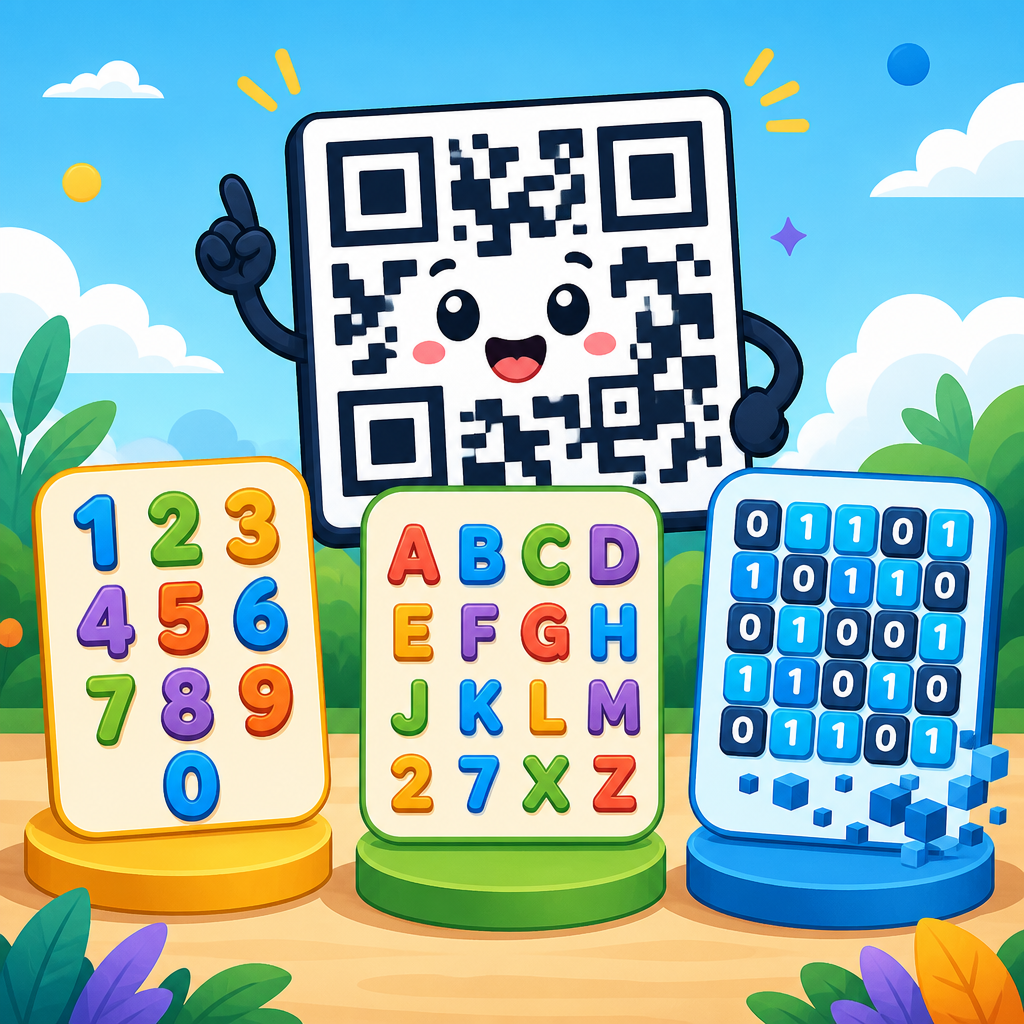
The specification defines several data modes so the encoder can represent content efficiently. Numeric mode is the most compact for digits only. Alphanumeric mode supports a limited uppercase character set plus space and selected symbols. Byte mode is the workhorse for general text and binary data, typically using ISO/IEC 8859-1 by default, with Extended Channel Interpretation, or ECI, available to signal other character sets such as UTF-8 in implementations that support it. Kanji mode compresses Shift JIS character pairs efficiently. Choosing the right mode affects symbol size directly.
Mode choice is not merely technical housekeeping; it changes print economics and user experience. A coupon identifier containing only digits should use numeric mode, not byte mode, because it will fit into a smaller symbol at the same error correction level. A multilingual URL slug may require byte mode with explicit content handling upstream. Mixed payloads can switch modes within one symbol for efficiency. Good encoders optimize those transitions automatically. Weak generators often force byte mode for everything, creating larger-than-necessary symbols that scan more slowly and become fragile on small labels.
Above the symbol layer, many deployments rely on structured payload conventions. A web URL is the most familiar example, but business cards often use vCard or MeCard, wireless onboarding uses Wi-Fi network strings, and product identification increasingly uses GS1 syntax or GS1 Digital Link URIs. Payment ecosystems add their own data templates, such as EMVCo merchant-presented QR for wallets and banking apps. The QR specification does not guarantee that every scanner will interpret every payload type semantically; it guarantees only that the encoded bytes can be recovered. Application compatibility therefore sits one layer above symbol validity.
Error Correction, Masking, and Capacity Tradeoffs
QR Code uses Reed-Solomon error correction to recover data when part of the symbol is damaged, obscured, dirty, or poorly printed. Four levels are defined: L, M, Q, and H, commonly described as allowing recovery from about 7 percent, 15 percent, 25 percent, and 30 percent of codewords respectively under standardized assumptions. Those percentages are useful guidance, not a promise that any missing visual area of that size will decode. Damage location matters. Obscuring finder patterns or format information can break decoding long before the nominal percentage is reached.
Higher error correction improves resilience but reduces data capacity and may force a larger version. That tradeoff matters in production. A museum wall graphic can often afford level H because space is available and environmental wear is likely. A tiny medical device label may need level M or Q to keep modules printable. Brand teams sometimes place logos in the center and assume high error correction makes this safe. Sometimes it does, sometimes it does not. The only responsible approach is to generate within spec, test across target devices, and verify scan rates under realistic lighting, motion, and print degradation.
Masking is another essential part of the specification. Encoders apply one of eight mask patterns to avoid problematic visual structures such as large same-color blocks or patterns that resemble finder patterns. The encoder calculates penalty scores defined by the standard and selects the mask with the lowest score. This is not cosmetic optimization; proper masking materially improves decoder performance. When I review custom encoder implementations, mask selection bugs are among the first issues I check because they can create symbols that seem valid yet scan inconsistently across devices.
| Specification Element | What It Controls | Practical Impact |
|---|---|---|
| Version | Grid size from 21×21 to 177×177 | Determines total capacity and minimum printable module size |
| Error correction level | Amount of redundant recovery data | Improves resilience but reduces payload capacity |
| Data mode | How characters are encoded | Affects symbol size and compatibility |
| Mask pattern | Visual distribution of dark and light modules | Improves scanner recognition and consistency |
| Quiet zone | Blank margin around the symbol | Critical for edge detection and reliable scanning |
Format Variants, Print Quality, and Real-World Compliance
Not every QR implementation challenge comes from encoding. Many failures are physical. Module contrast, dot gain, substrate glare, curvature, motion blur, camera autofocus, and low illumination all influence performance. ISO/IEC 15415 is commonly used to grade the print quality of two-dimensional symbols, including QR codes, by measuring factors such as symbol contrast, modulation, fixed pattern damage, grid nonuniformity, and axial nonuniformity. In industrial settings, verifiers from vendors such as Cognex, Keyence, and REA measure these characteristics so teams can catch quality drift before labels reach customers or production lines.
Print technique matters. Thermal transfer labels can produce sharp edges for logistics and healthcare, while direct part marking on metal or plastic may require laser etching or dot peen with very different reflectance behavior. On glossy consumer packaging, reverse printing a light code on a dark field may look attractive but often scans worse than a standard dark-on-light symbol. Curved bottles and flexible pouches benefit from larger modules and conservative data density. For smartphone-first campaigns, testing should include older midrange phones, not only flagship devices with strong computational photography pipelines.
Compliance also means using the right content format for the use case. A retail package may carry a QR code that technically resolves to a short URL, yet a standards-based product identifier can deliver better downstream interoperability across apps, scanners, and supply chain systems. In regulated sectors, content persistence matters as much as scanability. Medical device labeling, pharmaceuticals, and aerospace traceability programs often require strict control over identifiers, retention, and auditability. The symbol standard gives you the container; governance determines whether the data inside remains meaningful and trustworthy over time.
How to Choose the Right QR Code Format for a Project
Start with the business requirement, not the generator tool. Define what the code must do, who will scan it, how long it must remain valid, and where it will appear. If broad consumer access is the goal, a standard Model 2 QR code with a short HTTPS URL is usually the safest baseline. If the label area is extremely small and the scanner fleet explicitly supports it, Micro QR or rMQR may be better. If the code must survive abrasion or partial obstruction, prioritize robust print quality and suitable error correction before adding branding treatments.
Next, calculate capacity conservatively. Keep payloads as short as possible, encode efficiently, and avoid stuffing analytics parameters directly into visible URLs when a redirect service can preserve measurement with fewer characters. Match the error correction level to the environment instead of defaulting to H. Maintain a four-module quiet zone, strong dark-to-light contrast, and enough physical size for the weakest expected scanner. Then test actual samples, not screenshots, across the devices and apps your audience uses. The teams that succeed treat QR code specification as an engineering constraint, not a design afterthought.
A solid QR code specification breakdown leads to one central conclusion: reliable performance comes from respecting both the symbol standard and the application context. ISO/IEC 18004 defines the architecture that makes QR codes interoperable, from versions and finder patterns to data modes, masking, and Reed-Solomon error correction. But compliance on paper is only the starting point. Real-world success depends on adequate quiet zones, printable module size, strong contrast, scanner support for the chosen variant, and content formats that downstream systems actually understand.
For teams working in QR code technology and development, the biggest benefit of understanding standards and formats is predictability. You can choose the right symbol family, estimate capacity accurately, avoid unnecessary data bloat, and prevent common production failures before they reach customers. You also gain a framework for evaluating generator libraries, print vendors, verification equipment, and mobile scanning behavior using objective criteria instead of guesswork. That reduces rework, improves scan rates, and makes cross-platform deployments far easier to maintain at scale.
Use this hub as your foundation for deeper work on QR code standards and formats, then map each project decision back to the specification: symbol type, encoding mode, error correction, print method, and payload syntax. When those choices are deliberate, QR codes stop being fragile marketing graphics and become dependable infrastructure. Review your current implementation against these rules, test with real devices, and tighten the areas where specification discipline will deliver immediate gains.
Frequently Asked Questions
What does the QR code specification actually define?
The QR code specification defines the technical rules that make a QR symbol readable, interoperable, and consistent across different software, printers, cameras, and scanning environments. At its core, the standard explains how data is converted into bits, how those bits are grouped into codewords, and how they are placed into the matrix of black and white modules. It also defines the structural elements of the symbol, including finder patterns, alignment patterns, timing patterns, format information, and, in larger versions, version information. These are not decorative features; they are what allow a scanner to locate the symbol, correct for tilt or distortion, determine the masking pattern, and interpret the encoded payload correctly.
Beyond layout, the specification also sets rules for supported encoding modes such as numeric, alphanumeric, byte, and Kanji, along with how mode indicators and character count indicators are represented. It defines error correction using Reed-Solomon coding, which is one of the reasons QR codes remain readable even when partially damaged or obscured. The standard further covers mask pattern selection, quiet zone requirements, symbol versions and sizes, and data capacity limits. In practical terms, the specification is the reason a code generated by one system can usually be scanned by another system anywhere in the world. Without that shared standard, QR codes would be unreliable, inconsistent, and much harder to deploy at scale.
Why is ISO/IEC 18004 important for anyone creating or using QR codes?
ISO/IEC 18004 is important because it is the internationally recognized framework that governs QR code design and interpretation. If you are generating codes for packaging, manufacturing, logistics, payments, marketing, healthcare, identity workflows, or public services, compliance with this standard helps ensure that your symbols behave as expected across devices and scanning applications. It provides a common technical language for developers, print vendors, hardware makers, and regulators, reducing ambiguity about how a valid QR code should be structured and read.
For practitioners, the value of ISO/IEC 18004 is highly practical. It helps avoid failures caused by incorrect symbol construction, poor sizing assumptions, invalid masking, or incompatible encoding choices. It also matters for procurement and quality assurance. When organizations specify standards-based QR codes, they are better positioned to evaluate software libraries, scanner hardware, verification tools, and print workflows against recognized criteria rather than vendor claims alone. In regulated or high-volume environments, that consistency is critical. A standards-based approach supports interoperability, lowers scanning friction, and reduces the risk of unreadable or noncompliant symbols entering production.
How are data and error correction organized inside a QR code?
Inside a QR code, data is not simply written left to right like text on a page. The specification defines a precise sequence for encoding content into a bitstream, including mode indicators, character count information, the encoded payload itself, terminator bits where needed, and padding to reach the required length. That bitstream is then divided into codewords. Some of those codewords represent the actual data, while others are dedicated to error correction. The error correction codewords are generated using Reed-Solomon algorithms, which allow a scanner to recover information even if portions of the symbol are dirty, scratched, covered, or printed imperfectly.
The standard also defines that QR codes can be produced at multiple error correction levels, commonly known as L, M, Q, and H. These levels trade data capacity for resilience. A lower level allows more data in the same symbol size but tolerates less damage, while a higher level uses more of the available space for recovery data and therefore supports more robust scanning in challenging conditions. Once created, the data and error correction codewords are interleaved and placed into the matrix according to fixed placement rules. A masking pattern is then applied to improve visual balance and reduce problematic module arrangements that could confuse scanners. This is one of the most important concepts in the specification: a QR code is engineered not just to carry data, but to remain readable in real-world conditions.
What are versions, modules, and patterns, and why do they matter?
In QR code terminology, a version refers to the overall symbol size and capacity. Standard QR codes range from Version 1 through Version 40, with each higher version adding more modules in both dimensions. A module is the smallest individual square in the matrix, the basic building block of the symbol. As versions increase, more modules become available to hold data and structural information. That means larger versions can encode more content, but they also demand more careful attention to print quality, scan distance, and available space because smaller individual modules can become harder to resolve reliably.
The patterns inside the symbol serve distinct technical roles. Finder patterns, located in three corners, help scanners detect the code and determine orientation. Timing patterns help establish the grid so the scanner can identify the placement of modules accurately. Alignment patterns, which appear in larger versions, help compensate for distortion, especially when codes are printed on curved surfaces or captured at awkward angles. Format information tells the scanner which error correction level and mask pattern were used, while version information appears on larger symbols to identify the version number. These elements matter because they are the infrastructure of the code. Even if the payload data is valid, poor handling of these required structures can make a symbol unreadable. Understanding them is essential for anyone who generates, prints, verifies, or troubleshoots QR codes professionally.
What common mistakes cause QR codes to fail, even when they seem to follow the specification?
Many QR code failures happen not because the encoding is wrong, but because the symbol is poorly implemented in the physical or digital environment where it is used. One of the most common issues is inadequate quiet zone, the clear margin around the code required by the specification to help scanners distinguish the symbol from surrounding graphics or text. Another frequent problem is choosing a symbol that is too dense for the intended print size, which makes modules too small to reproduce or capture cleanly. Low contrast, glossy substrates, curved packaging, ink spread, compression artifacts in digital files, and placing logos over functional areas can also undermine scan performance even when the underlying data structure is technically valid.
There are also specification-adjacent mistakes that affect interoperability. Examples include using an unnecessarily high error correction level that forces a larger or denser symbol than the application can support, selecting an inefficient encoding mode that wastes capacity, or relying on generator tools that do not correctly implement masking or format information. In operational settings, teams sometimes skip verification and assume that if a smartphone can scan the code once, the job is done. In reality, robust QR deployment requires testing across expected devices, lighting conditions, distances, print runs, and environmental wear scenarios. The specification provides the rules, but successful performance depends on respecting those rules all the way through design, production, and use. That is why experienced teams treat QR codes as engineered symbols, not just graphics.