QR codes look simple on a package, poster, boarding pass, or payment terminal, but their global reliability depends on a dense framework of standards, testing methods, encoding rules, and implementation practices. A QR code is a two-dimensional matrix barcode made of black and white modules arranged in a square grid, designed to store data that can be read quickly by imaging devices. Standardization is the reason a code created in Tokyo can be scanned in Toronto, embedded in a vaccine certificate in Europe, or printed on industrial parts in Germany and still behave predictably. Without shared standards, each software vendor and hardware manufacturer would interpret symbol size, error correction, character encoding, and print quality differently, making widespread use impossible.
When people ask how QR codes are standardized globally, they usually mean more than one thing. They mean who defines the symbol structure, how data formats are encoded, how scanners know where the code begins and ends, what error correction level is used, how print quality is measured, and how industry-specific implementations such as payments or product packaging remain interoperable. In practice, global QR code standardization sits at several layers: the core symbol specification, application standards that define what the encoded data means, and quality standards that determine whether a printed or displayed code is likely to scan in the real world. Understanding those layers matters for developers, marketers, manufacturers, and compliance teams because a technically valid code can still fail if the data format, contrast ratio, or quiet zone is wrong.
I have worked with QR code deployments in packaging, ticketing, and payment flows, and the same pattern appears every time: teams focus on generating a code image first, then discover late in the project that interoperability depends on standards choices made much earlier. The most important global reference point is ISO/IEC 18004, the international standard that defines the QR Code symbology itself. Around that foundation sit related standards from ISO/IEC for testing and print quality, plus sector rules from organizations such as GS1 and EMVCo. Together, these standards ensure that QR codes are not just visually familiar, but structurally consistent, machine-readable, and fit for specific commercial uses across countries and platforms.
The core global standard: ISO/IEC 18004
The central global standard for QR codes is ISO/IEC 18004. This specification defines the symbol architecture and makes QR codes interoperable across software, printers, and scanners. It covers fundamental elements including module placement, finder patterns, alignment patterns, timing patterns, format information, version information, mask patterns, data encoding modes, and Reed-Solomon error correction. In plain terms, ISO/IEC 18004 tells every compliant system what a valid QR code looks like and how its data is organized inside the square.
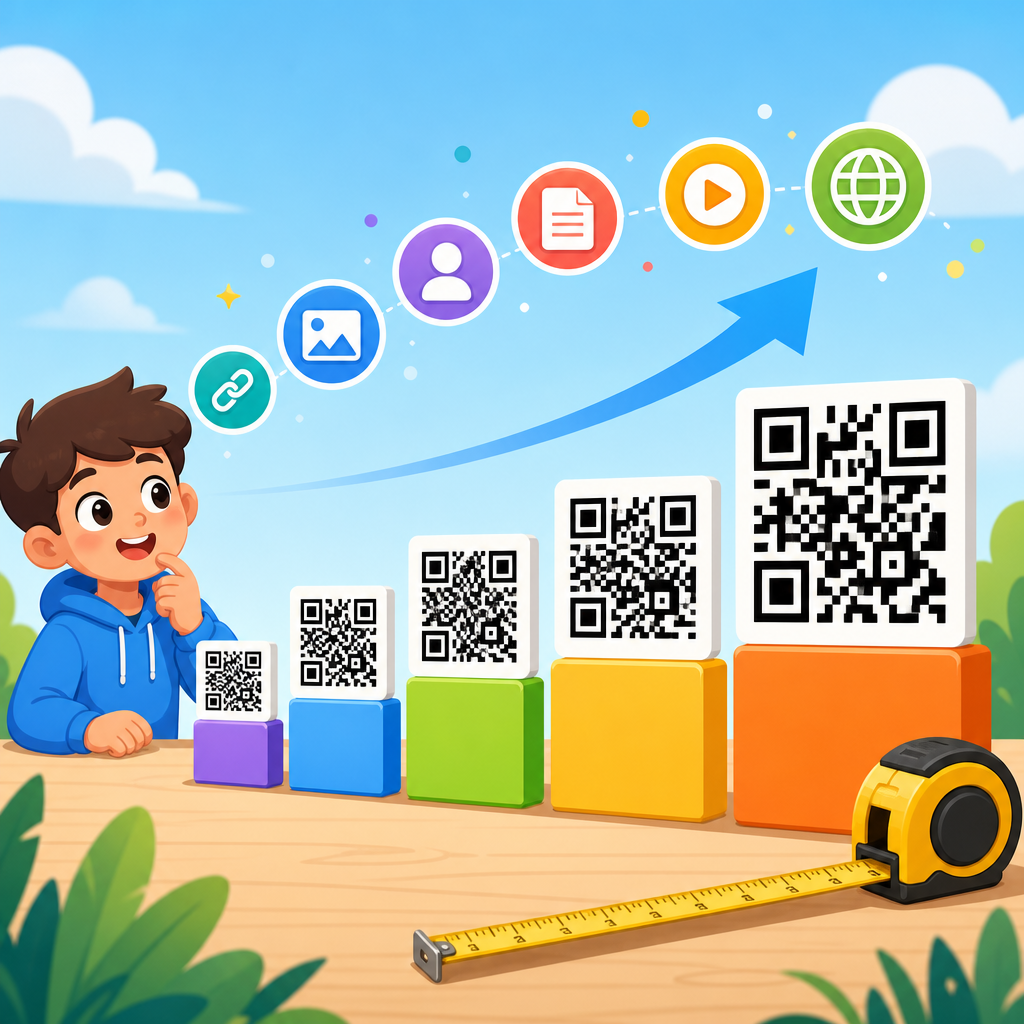
That standard is why all QR codes share recognizable structural features. The three large finder patterns in the corners help scanners locate the symbol regardless of orientation. Timing patterns establish the grid. Alignment patterns improve distortion correction on larger versions. The standard also defines 40 versions, with increasing data capacity as the symbol grows. Version 1 is a 21 by 21 matrix, and each higher version adds four modules per side. This predictable progression allows software libraries such as ZXing, ZBar, and commercial SDKs from Denso Wave partners or Scandit to generate and decode symbols consistently.
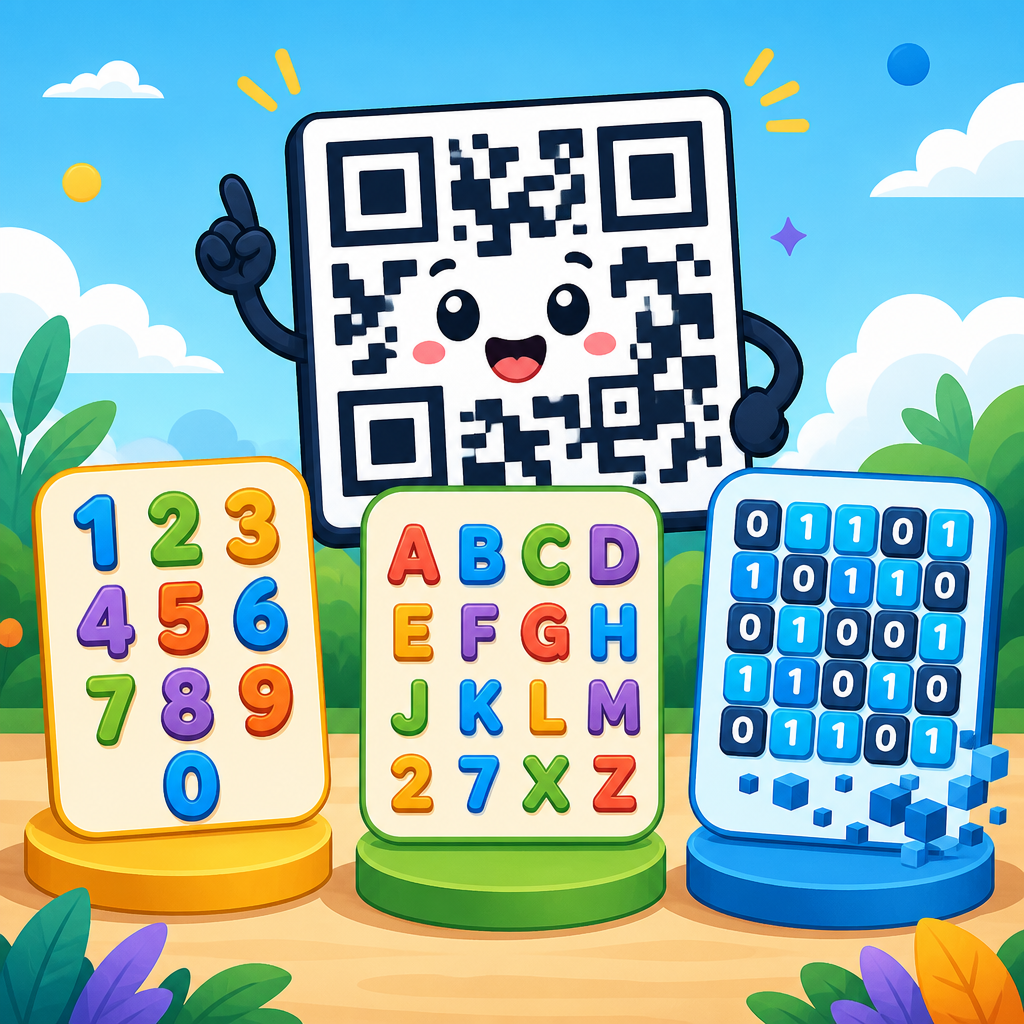
ISO/IEC 18004 also standardizes the supported data modes. Numeric mode stores digits efficiently, alphanumeric mode supports a limited character set, byte mode handles broader binary or text data, and Kanji mode compresses Shift JIS characters. Error correction levels L, M, Q, and H trade capacity for resilience, with higher levels allowing recovery from more damage or obstruction. In field projects, I usually recommend M or Q for printed marketing assets and H for harsh industrial conditions, but the correct choice depends on available space, expected wear, and camera quality. The standard does not force one universal level; it creates a common menu of valid options.
How encoding rules create cross-border interoperability
A QR code image is only half the story. Interoperability also depends on encoding rules that determine how characters, control information, and data segments are represented. ISO/IEC 18004 specifies mode indicators, character count indicators, structured append behavior, and encoding sequences so that decoders can reconstruct the original content exactly. This matters because the same visible text can be encoded in different ways, and not every scanner handles edge cases equally well. Standardization reduces ambiguity.
Character encoding is a frequent source of trouble in multilingual deployments. Byte mode can carry many forms of text, but the receiving application must interpret bytes correctly. UTF-8 is widely expected in modern systems, while older implementations may still assume legacy encodings. In global campaigns, I have seen perfectly generated codes produce garbled accented characters because the backend expected ISO-8859-1. The symbol remained standard-compliant, but the full user experience broke. Best practice is to align symbol generation, scanner software, and destination application on a documented character encoding policy before launch.
Another important point is data minimization. Although QR codes can hold thousands of characters, larger payloads produce denser symbols that scan less reliably at small print sizes or on reflective screens. Standardization provides capacity limits, but good implementation uses concise payloads, redirects, and stable identifiers rather than stuffing every possible field into one code. That is especially important when the code must work across low-cost Android phones, older warehouse imagers, and self-service kiosks under uneven lighting.
Application standards define what the payload means
Global standardization does not stop at the symbol. Different industries need rules for interpreting the data inside the QR code, and those rules come from application standards. A scanner can decode characters from any compliant symbol, but it will not know whether the payload is a URL, a product identifier, a payment request, or a clinical record unless sector-specific conventions define it. This is where organizations such as GS1, EMVCo, IATA, and national payment bodies play a major role.
GS1 standards are especially important in retail, logistics, and healthcare. A GS1 QR code uses Application Identifiers to encode structured data such as Global Trade Item Numbers, batch numbers, serial numbers, and expiration dates. That structure allows supply chain systems in different countries to parse the same code consistently. For example, a pharmaceutical package can carry product identity, lot traceability, and expiry data in one symbol, enabling dispensing checks, recalls, and anti-counterfeit workflows. The value comes from both the QR code standard and the GS1 data syntax layered on top of it.
Payment ecosystems show the same pattern. EMVCo specifications govern many merchant-presented and consumer-presented QR payment schemes. Countries such as India, Singapore, Brazil, and Thailand have built large-scale payment rails on standardized payload formats so banking apps can read a merchant QR code regardless of the bank that issued it. The code image itself follows QR symbol rules, while the payment payload uses tagged data objects, merchant identifiers, currency fields, and integrity checks defined by the payment standard. That is how millions of transactions occur across devices and providers without custom integration for every pair of participants.
Print quality, direct marking, and scan performance standards
A code can be mathematically valid and still fail in production if it is printed poorly. That is why global QR code standardization includes print quality and verification standards, not just symbol design rules. ISO/IEC 15415 is the key standard for measuring the print quality of two-dimensional symbols such as QR codes when they are printed on labels, paperboard, or packaging. It grades symbols using parameters such as symbol contrast, modulation, fixed pattern damage, axial non-uniformity, grid non-uniformity, and unused error correction.
In manufacturing environments, direct part marking introduces additional complexity. Laser-etched or dot-peened codes on metal or plastic may be affected by surface curvature, reflectivity, and low contrast. ISO/IEC 29158, widely known in industry by its earlier AIM DPM guideline lineage, addresses quality assessment for directly marked symbols. This matters in aerospace, automotive, and medical device traceability, where a code may need to remain readable after heat, abrasion, chemicals, or years of service. In those contexts, verification equipment from vendors such as Cognex, Keyence, and Axicon is used to grade code quality before products leave the line.
| Standard or Framework | Primary Role | Common Use Case |
|---|---|---|
| ISO/IEC 18004 | Defines QR Code symbology structure and encoding rules | Generating and decoding interoperable QR symbols |
| ISO/IEC 15415 | Measures printed 2D code quality | Packaging, labels, tickets, documents |
| ISO/IEC 29158 | Assesses directly marked symbol quality | Laser-marked industrial parts and medical devices |
| GS1 specifications | Defines structured business data inside codes | Retail, logistics, healthcare traceability |
| EMVCo QR specifications | Standardizes payment payload formats | Banking apps and merchant payments |
Quiet zone failures are one of the most common reasons standardized QR codes still scan badly. The required blank margin around the symbol helps the scanner separate the code from surrounding artwork. Designers often crowd the code with borders, logos, or patterned backgrounds, reducing decoding reliability. Verification catches these issues early. In practice, if a campaign depends on broad consumer scanning, I advise testing printed samples on multiple phone models under daylight, warm indoor light, and low-light conditions in addition to formal verifier grading. Standards define the baseline, but field testing exposes real-world friction.
Variants, model differences, and why not every square code is the same
People often use “QR code” as a catch-all term for any square 2D barcode, but several related symbologies exist. Model 2 QR Code is the dominant form used today and the one most people recognize. Micro QR Code is a smaller variant designed for limited-space applications. There is also rMQR, a rectangular micro QR format standardized more recently for narrow spaces such as component labels. Each variant has its own structural rules and intended use cases, even though they share a family resemblance.
Standardization matters here because software support is uneven. A smartphone camera that reads standard Model 2 codes may not support every specialized variant equally well. Industrial imagers often offer broader compatibility, but deployment teams should not assume it. If you are labeling tiny electronics or healthcare instruments, a space-saving variant can be attractive, yet the safer choice may still be a standard QR code if consumer-device readability is required. The right decision depends on scanner ecosystem, print method, available space, and data volume.
It is also important to distinguish QR codes from Data Matrix, Aztec Code, and PDF417. Those symbologies have their own standards and strengths. Data Matrix is common in direct part marking because it performs well in very small sizes. Aztec is widely used in transportation ticketing because it does not require a large quiet zone. PDF417 is suited to larger data payloads and appears in identity documents and boarding passes. Choosing among them is not a matter of trend; it is a standards-based engineering decision tied to environment and use case.
Governance, compliance, and future direction
Global QR code standardization persists because governance is distributed but coordinated. ISO and IEC maintain the foundational international standards through formal technical committees and revision processes. Industry groups such as GS1 and EMVCo define implementation layers for commerce and payments. National regulators and trade bodies then reference those standards in procurement rules, healthcare traceability systems, transit programs, and digital identity initiatives. This layered governance model is what allows worldwide consistency without forcing every sector to use the exact same payload structure.
A clear example of the future direction is the retail shift toward richer product identification at point of sale. The GS1 Sunrise 2027 initiative has accelerated interest in replacing or complementing linear barcodes with two-dimensional symbols that can hold web links, serial numbers, batch data, and sustainability information. That move depends on standardized parsing rules, retailer scanner upgrades, packaging redesign, and coordinated ecosystem testing. It is not simply a matter of printing a QR code where a UPC once sat. The standards must line up from packaging artwork to POS firmware to enterprise master data.
Security and trust will continue to shape standardization as well. A QR code can point users to phishing pages just as easily as to legitimate services, so technical standardization alone is not enough. Safer implementations use HTTPS, signed payload frameworks where appropriate, domain governance, app-based validation, and short but transparent redirect chains. For organizations building at scale, the lesson is straightforward: follow international symbol standards, choose the right application standard, verify print quality, and document the full data lifecycle. If you are planning a QR code program, start with the standards map before you design the first symbol.
Frequently Asked Questions
What does it mean that QR codes are standardized globally?
When people say QR codes are standardized globally, they mean that the structure, encoding rules, symbol patterns, error correction behavior, and decoding expectations for QR codes are defined by internationally recognized technical standards rather than by individual companies or local markets. That common framework ensures a QR code generated in one country can be interpreted correctly by scanners, smartphones, ticketing systems, payment readers, and industrial devices elsewhere. In practical terms, the finder patterns in the corners, timing patterns, alignment patterns, data encoding modes, version sizes, and error correction levels all follow shared rules, so compatible devices know exactly how to locate, read, and decode the symbol.
This matters because QR codes are used in environments where reliability is essential, including logistics, healthcare, travel, manufacturing, public information, and mobile payments. A code printed on packaging in Japan, displayed on a boarding pass in Canada, or embedded in a digital health certificate in Europe must behave predictably no matter who scans it. Standardization makes that possible by eliminating guesswork. Instead of every vendor creating its own interpretation of a square barcode, manufacturers and software developers work from the same technical blueprint. That blueprint supports interoperability at a global scale, which is the real reason QR codes feel simple and universal to end users.
Which organizations and standards define how QR codes work?
The global behavior of QR codes is primarily governed by formal standards bodies and technical specifications, most notably through ISO and related barcode standardization frameworks. The best-known core specification is the ISO standard for QR Code symbology, which defines how the symbol is built and how data is encoded and decoded. These standards describe the allowable symbol versions, module arrangements, masking methods, format and version information, character encoding options, and Reed-Solomon error correction mechanisms that give QR codes their resilience.
Beyond the core symbol standard, additional organizations influence how QR codes are implemented in real-world sectors. GS1, for example, plays a major role in retail, healthcare, and supply chain applications by defining how standardized identifiers, application data, and business information can be carried in barcodes, including QR codes. In payments, regional and international bodies may define data payload structures so that financial apps and merchant systems can process QR-based transactions consistently. The aviation, medical, and government sectors also often layer their own implementation rules on top of the base QR standard. So while the symbol itself is standardized at the technical level, many industries also adopt usage profiles that specify what kind of data should go inside the code and how systems should interpret it.
How do QR code standards ensure that a code can still be scanned in different conditions?
Global standards do more than define the appearance of a QR code; they also support reliable scanning under real-world conditions. One of the biggest reasons QR codes are so robust is their built-in error correction. QR standards allow data to be reconstructed even if part of the symbol is dirty, scratched, distorted, or partially obscured. Different error correction levels can be chosen depending on the use case, balancing data capacity against resilience. This is why a QR code on a worn shipping label or a slightly damaged poster can often still be scanned successfully.
Standards also define physical and optical features that help scanners detect the code quickly. The large finder patterns in the corners help imaging systems determine orientation, while timing patterns and alignment patterns assist with grid interpretation and distortion correction. Quiet zones around the symbol are specified so that the code can be separated from surrounding graphics or text. In addition, testing and print quality guidelines help ensure that contrast, module shape, sizing, and placement remain within readable limits. These technical rules are especially important because QR codes are printed on many surfaces and displayed across many screens, from glossy packaging and paper tickets to phone displays and public kiosks. Standardization gives device makers and software developers a common target, which is what enables dependable scanning across lighting conditions, camera qualities, and printing methods.
Are all QR codes the same, or do different applications use different rules?
Not all QR codes are used in exactly the same way, even though they share a common technical foundation. The underlying symbol structure may be standardized, but different industries often apply specific data formatting rules depending on what the code is meant to do. A simple consumer-facing QR code might contain a URL, while a healthcare code could carry structured patient or product information, and a payment QR code might include merchant identifiers, transaction details, and currency data. The scanner can read the symbol because the QR format is standardized, but the meaning of the data may depend on additional sector-specific conventions.
This layered approach is one of the strengths of global standardization. The base QR standard ensures that devices can recognize and decode the symbol, while industry frameworks define how to interpret the payload once it has been read. For example, supply chain systems may rely on standardized identifiers, regulated products may require traceability fields, and public transport systems may use tightly defined ticket structures. That means a QR code can be universally scannable without being universally interchangeable in meaning. In other words, standardization creates a common language for the symbol itself, while specific applications add their own grammar and vocabulary for business, regulatory, or operational needs.
Why is standardization so important for future QR code use in areas like payments, healthcare, and digital identity?
Standardization is critical for the future of QR codes because the more important the application, the less room there is for ambiguity. In payments, a QR code must be read accurately, interpreted correctly, and processed securely across banks, apps, merchants, and countries. In healthcare, a code may connect to medicine verification, patient records, vaccination documentation, or device identification, where errors can carry serious consequences. In digital identity and credentials, consistent formatting and reliable decoding are essential for trust, verification, and cross-border acceptance. Without standardization, every ecosystem would become fragmented, forcing users and institutions to depend on isolated proprietary systems.
Strong standards also support innovation. When developers know the technical framework is stable and globally recognized, they can build new services on top of it with greater confidence. That includes secure authentication flows, product traceability, smart packaging, event access, regulatory compliance, and interoperable public services. Standardization does not freeze progress; it creates a dependable baseline that allows progress to scale. As QR codes continue to move beyond simple web links into regulated and mission-critical workflows, the global standards behind them become even more important. They are the reason a technology that looks like a small black-and-white square can function as a trusted bridge between physical objects, digital systems, and international infrastructure.