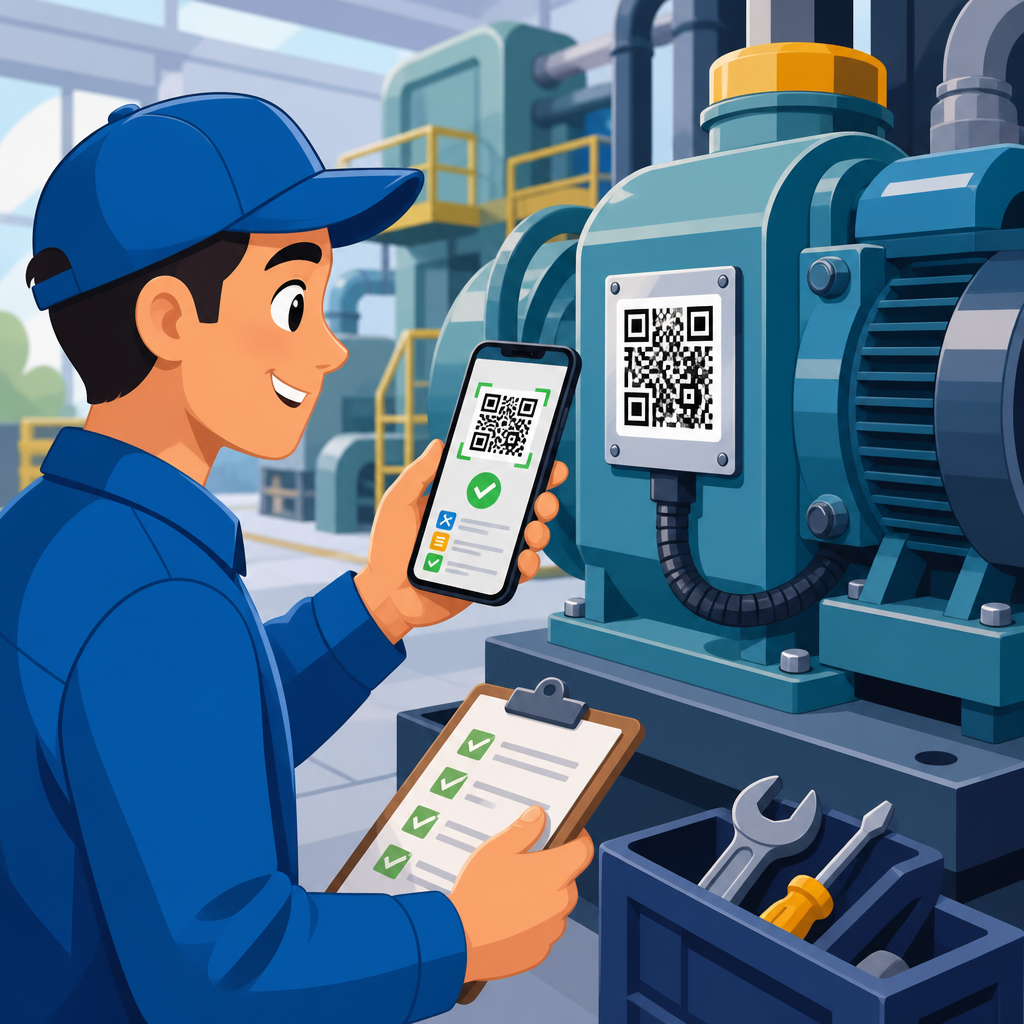
QR codes for equipment maintenance tracking give manufacturing and logistics teams a fast, low-cost way to connect physical assets with the digital records needed to keep operations safe, compliant, and productive. In practical terms, a QR code is a two-dimensional barcode that stores a link, text string, or identifier readable by most smartphone cameras and industrial mobile devices. Equipment maintenance tracking is the discipline of documenting inspections, preventive maintenance, repairs, parts usage, downtime, and technician actions across the life of an asset. When those two elements are combined, each machine, vehicle, conveyor, forklift, compressor, pallet wrapper, and dock door can become instantly scannable, turning maintenance history from a paperwork burden into a live operating system.
I have implemented QR-based maintenance workflows in plants where technicians previously relied on clipboards, laminated checklists, and memory. The difference is immediate. A mechanic scans a code mounted on an air handling unit, sees the last service date, opens the standard operating procedure, checks lockout requirements, records belt tension and motor amperage, and closes the work order on the spot. In logistics settings, a warehouse associate can scan a code on a forklift to report a damaged mast before the next shift uses it. That speed matters because maintenance delays compound quickly: a missed inspection can become an unplanned stoppage, a compliance issue, or a safety incident.
This matters across manufacturing and logistics because both sectors depend on asset availability, traceability, and standardized execution. Manufacturers need predictable uptime to protect throughput, quality, and labor efficiency. Logistics operators need reliable material handling equipment, fleet readiness, and documented inspections to maintain service levels. QR codes support these goals without requiring expensive hardware. They can link to a computerized maintenance management system, enterprise asset management platform, digital checklist, training document, spare parts catalog, or escalation form. The result is better data capture, faster decision-making, and a cleaner audit trail. As a hub topic, this guide explains how QR codes fit into maintenance programs, where they create the most value, which systems and standards shape implementation, and what companies should measure as they scale.
How QR Codes Improve Maintenance Workflows on the Shop Floor and in the Warehouse
The core advantage of QR codes for equipment maintenance tracking is friction reduction. Maintenance teams lose time whenever they must search for an asset record, confirm an equipment ID, locate a manual, or reenter data after a task is complete. A QR code collapses those steps into one scan. The code acts as the front door to the asset’s digital profile. From there, users can open preventive maintenance schedules, service bulletins, parts lists, calibration records, inspection forms, photos, and failure history. On high-mix production floors with hundreds of similar assets, this sharply reduces identification errors. In distribution centers, where assets move constantly and shifts overlap, it creates a common source of truth.
QR-based maintenance also improves response time. Suppose a packaging line operator hears a bearing squeal on a case sealer. Instead of calling maintenance with a vague description, the operator scans the machine code and submits a tagged issue directly against the correct asset. The maintenance planner receives a precise alert with location, timestamp, and often a photo. That makes triage faster and supports better prioritization. The same pattern works in fleet yards, cold storage facilities, and cross-dock terminals. When every issue is tied to a scannable asset, backlog management becomes more reliable because work requests start with clean data rather than guesswork.
Another major gain is standardization. Teams can use QR codes to surface the exact checklist required for a daily forklift inspection, monthly fire door test, quarterly compressor service, or annual lockout device audit. This is especially valuable in multi-site operations where consistency is hard to enforce. The scan can direct users to a role-based workflow: operators see basic care tasks, technicians see advanced service procedures, and supervisors see approval steps and exception reports. In plants with lean manufacturing programs or total productive maintenance initiatives, this supports autonomous maintenance by making routine checks visible and easy to complete. In regulated environments, it helps prove that required steps were followed in the right sequence.
High-Value Use Cases in Manufacturing and Logistics
Not every asset needs the same tracking depth, so the best maintenance QR programs start with high-impact use cases. In manufacturing, critical production assets usually come first: CNC machines, fillers, labelers, boilers, chillers, compressors, mixers, robotics cells, dust collectors, and clean-in-place systems. These assets affect throughput, quality, utilities, and safety. A QR code placed at the point of use can open machine-specific maintenance instructions, lubrication maps, torque specifications, and troubleshooting trees. If a filler repeatedly trips a sensor fault, the scanned history can reveal whether the problem stems from washdown ingress, cable strain, or skipped preventive maintenance.
In logistics operations, the leading use cases include forklifts, reach trucks, pallet jacks, conveyors, dock levelers, shrink wrappers, sortation systems, and refrigerated units. Forklifts are a particularly strong candidate because they already require frequent inspections, operator accountability, and documented defect reporting. A QR code mounted near the operator compartment can launch a pre-shift inspection form, capture battery status or propane levels, and route failed checks to maintenance instantly. For conveyors and sorters, codes at major zones help technicians pull up belt specifications, photo-eye alignment instructions, and recent stoppage trends while standing at the equipment.
Facility assets also benefit. QR codes on electrical panels, HVAC units, emergency lighting, eyewash stations, backup generators, and loading dock restraints make routine inspections easier and more auditable. In one rollout I supported, a plant reduced missed monthly emergency equipment checks because each code opened the exact form tied to the right area and due date. Mobile teams no longer carried binders or returned to a desktop to complete records later. That same model works for third-party service providers. Contractors can scan a code, confirm the asset, perform the assigned work, and leave a digitally time-stamped service note, improving vendor accountability without adding administrative overhead.
| Asset Type | Typical QR-Linked Task | Primary Benefit | Example Metric |
|---|---|---|---|
| Forklift | Pre-shift inspection and defect reporting | Faster removal of unsafe equipment from service | Inspection completion rate |
| Conveyor | Access SOPs, parts lists, and fault history | Shorter troubleshooting time | Mean time to repair |
| Air compressor | PM checklist and oil/filter service log | Better preventive maintenance compliance | PM completion on time |
| Dock leveler | Safety inspection and repair request | Lower risk of loading incidents | Open safety defects |
| HVAC unit | Contractor service documentation | Stronger audit trail | Verified service records |
System Design: What a QR Maintenance Tracking Program Needs to Work
A successful program depends less on the code itself than on the system behind it. The first requirement is a clean asset hierarchy. Each QR code should map to a unique asset ID in a CMMS or EAM platform such as UpKeep, MaintainX, Fiix, IBM Maximo, SAP Plant Maintenance, or Oracle Maintenance. If asset names are inconsistent, duplicates exist, or locations are outdated, scanning will expose bad master data rather than solve it. Before printing labels, define naming conventions, site and area structures, parent-child relationships, and criticality rankings. For example, a conveyor line may be the parent asset, with motors, gearboxes, and sensors tracked as child components where deeper maintenance history is needed.
The second requirement is durable labeling. Shop floors and warehouses are harsh environments. Heat, washdown, abrasion, solvents, UV exposure, and vibration can destroy cheap stickers quickly. Use industrial labels matched to the environment: polyester or anodized aluminum tags for abrasion resistance, laminated labels for general indoor use, and chemical-resistant materials where cleaners are aggressive. Placement matters just as much. Put the code where it is visible, reachable, and safe to scan without opening guarding or entering a hazard zone. Include human-readable asset numbers beneath the code so equipment can still be identified if the label is damaged.
The third requirement is workflow logic. Decide exactly what the scan should do for each user type. A static QR code may point to a fixed URL, while a dynamic code managed through a platform can redirect without reprinting the label. Dynamic routing is usually better for maintenance because links change over time as systems evolve. Common scan destinations include an asset overview page, create-work-request screen, inspection checklist, digital work instruction, parts reorder page, or training module. Access control matters too. Operators may be allowed to submit observations, but only qualified technicians should close electrical work orders or sign off calibration tasks. The best setups reduce clicks, support offline capture when Wi-Fi is weak, and sync later to preserve data integrity.
Data Quality, Compliance, and Integration with Maintenance Platforms
Maintenance tracking only creates value when the data is accurate enough to trust. QR codes help because they reduce manual entry, but they do not guarantee discipline. Teams still need required fields, standardized failure codes, mandatory photo capture for certain defects, and timestamped user authentication. If a technician scans a code and enters “fixed issue” with no root cause, the record has limited planning value. Strong implementations structure the closeout process around coded fields such as symptom, cause, corrective action, labor hours, parts used, and downtime minutes. Over time, this enables Pareto analysis and better reliability decisions.
Compliance is another major driver. Manufacturing plants may need maintenance records to support OSHA expectations, food safety plans, ISO 9001 quality procedures, ISO 22000 programs, Good Manufacturing Practice documentation, or customer audit requirements. Logistics operators may need documented inspections for powered industrial trucks, dock equipment, fire protection systems, and refrigerated assets. QR-linked forms create a consistent audit trail because each record is tied to a specific asset, person, date, and action. Auditors often ask simple questions: was the inspection completed, by whom, using which standard, and what happened when a defect was found? A well-designed QR workflow answers all four immediately.
Integration determines whether the program scales. If scan data sits in isolated forms or spreadsheets, planners and reliability engineers cannot act on it effectively. Connect QR-triggered workflows to the main maintenance system, inventory records, purchasing data, and where appropriate, production context. For example, a failed conveyor motor inspection can automatically generate a work order, reserve a spare from stock, and notify operations of potential downtime risk. Some companies also connect condition monitoring tools, including vibration sensors or SCADA alarms, so technicians can scan the code and view both manual history and machine telemetry in one place. The more complete the asset context, the better the maintenance decisions.
Implementation Roadmap, Metrics, and Common Mistakes to Avoid
The most effective rollout starts small, proves value, and then standardizes. Begin with one site, one asset class, or one workflow that has visible pain today. Forklift inspections, critical line PMs, or contractor service logs are common starting points because they produce quick wins. Document the current process first: how long identification takes, how many inspections are missed, how defects are reported, and where records break down. Then design the future state, print durable labels, train users, and monitor adoption closely for several weeks. Expect revisions. In nearly every launch I have led, the first version needed shorter forms, clearer button labels, or better asset placement before field use felt natural.
Track a focused set of metrics. Good leading indicators include scan rate by asset, inspection completion rate, work request submission accuracy, PM compliance, and percentage of records closed with complete cause codes. Important lagging indicators include mean time to repair, unplanned downtime, repeat failures, maintenance overtime, and audit findings. In logistics settings, you may also track fleet availability, out-of-service time for forklifts, and damage recurrence by asset. Compare results against a baseline rather than assuming improvement. If scan rates are low, the problem is usually not employee resistance alone. It may reflect poor Wi-Fi, cumbersome forms, weak supervisor follow-through, or labels placed where scanning is inconvenient.
Several mistakes appear repeatedly. First, companies print codes before cleaning asset master data. Second, they use consumer-grade labels in industrial settings and then blame the technology when codes fail. Third, they create too many optional pathways, leaving users unsure whether to scan, email, or call. Fourth, they focus on compliance records but ignore technician usability, which leads to shallow data and workarounds. Fifth, they forget change management. People adopt QR maintenance faster when they understand the personal benefit: less paperwork, fewer duplicate reports, clearer priorities, and faster access to the right information. The technology is simple; disciplined process design is the hard part, and it is where long-term value is created.
QR codes for equipment maintenance tracking work because they connect the physical reality of machines and material handling assets with the digital discipline required to run modern operations well. For manufacturing teams, that means faster troubleshooting, stronger preventive maintenance, cleaner documentation, and better uptime protection. For logistics teams, it means safer fleet use, more reliable warehouse equipment, and quicker response when defects appear. The code on the asset is only the visible layer. The real value comes from accurate asset data, durable labels, role-based workflows, and integration with the maintenance platform your team already depends on.
As the hub for manufacturing and logistics QR code use cases, this topic should guide how you evaluate every related workflow: inspections, work requests, parts control, contractor records, SOP access, and audit readiness. Start with assets that create the highest operational risk or administrative burden, then build a repeatable model that other sites can copy. Keep the experience simple for frontline users, but make the data rigorous enough for planners, supervisors, and auditors. When implemented carefully, QR maintenance tracking does not just digitize paperwork. It raises maintenance visibility, improves execution quality, and helps operations make faster, better decisions every day.
If you are planning a rollout, audit your asset list, choose one high-value use case, and map the scan-to-record workflow before you print a single label. That disciplined first step will determine whether your QR program becomes a useful operational tool or just another disconnected layer of software.
Frequently Asked Questions
What are QR codes for equipment maintenance tracking, and how do they work in day-to-day operations?
QR codes for equipment maintenance tracking are scannable labels placed on machines, tools, vehicles, production assets, or facility equipment that connect each physical item to its digital maintenance record. When a technician scans the code with a smartphone, tablet, or industrial handheld device, they can instantly open a maintenance page, inspection checklist, work order, service history, user manual, warranty file, or asset profile. This removes the need to search through paper logs, spreadsheets, or separate software systems to find the right information for a specific piece of equipment.
In day-to-day operations, the process is straightforward. Each asset is assigned a unique identifier, and that identifier is linked to a QR code. Once the code is attached to the equipment, staff can scan it during inspections, preventive maintenance, repairs, audits, or parts replacement. A scan can trigger actions such as logging a fault, recording meter readings, confirming a completed task, viewing standard operating procedures, or checking the last service date. In manufacturing and logistics environments, this creates a faster and more reliable bridge between field activity and the maintenance system.
The practical value comes from speed, accuracy, and consistency. Instead of relying on memory or handwritten notes, technicians work from the latest documented information at the point of service. Supervisors gain more complete records, which supports compliance, uptime, and planning. Over time, QR-based tracking helps organizations build a cleaner history of inspections, recurring failures, maintenance trends, and equipment lifecycle performance, making it easier to improve both reliability and decision-making.
What are the main benefits of using QR codes for maintenance tracking in manufacturing and logistics?
The biggest advantage is immediate access to the right information at the exact location where work happens. In busy plants, warehouses, fleets, and distribution centers, maintenance teams often manage a large number of similar assets. QR codes reduce confusion by letting workers scan the specific unit in front of them and pull up its exact maintenance profile. That saves time, shortens troubleshooting, and helps prevent documentation errors caused by selecting the wrong asset record.
QR codes also support stronger preventive maintenance programs. When service schedules, task lists, and inspection forms are tied directly to an asset, technicians are more likely to complete work consistently and document it accurately. This can reduce missed inspections, overdue maintenance, and reactive breakdowns. Better documentation also helps organizations demonstrate compliance with internal safety procedures, customer requirements, and industry regulations, especially when audit trails need to show who performed work, what was done, and when it happened.
Another major benefit is cost efficiency. QR codes are inexpensive to generate and deploy compared with more complex hardware-based tracking systems. Most teams can start with labels, a mobile-accessible maintenance platform, and devices they already use. At the same time, the operational return can be significant: reduced downtime, faster issue reporting, better spare parts tracking, improved labor productivity, and more accurate maintenance records. For organizations looking for a practical way to digitize maintenance without a major infrastructure overhaul, QR codes offer a low-cost, scalable entry point.
What information should a QR code link to for effective equipment maintenance tracking?
A well-designed QR code system should connect users to the information they need to act quickly and document work properly. At a minimum, each code should link to a unique asset record that includes the equipment name, serial number, internal asset ID, location, manufacturer, model, and current status. From there, users should be able to access preventive maintenance schedules, service history, open work orders, inspection checklists, troubleshooting guides, and safety instructions. These are the core records that make a QR code useful in the field rather than just a digital label.
It is also valuable to include supporting documents that reduce delays during maintenance. These may include equipment manuals, wiring diagrams, calibration procedures, lockout/tagout instructions, parts lists, approved replacement components, warranty details, and vendor contact information. If the maintenance process involves recording condition data, the linked page should also support entries such as run hours, temperature readings, pressure readings, vibration observations, or photos of damage. The more actionable the linked information is, the more likely technicians are to use the system consistently.
Just as important is making sure the linked experience is role-appropriate and easy to use on mobile devices. A technician may need hands-on service instructions and a fast way to close a task, while a supervisor may need trend data, overdue work visibility, and repair frequency insights. The goal is not to overload the QR code itself with data, but to use it as a simple access point into a structured maintenance record system. When the linked content is current, relevant, and easy to navigate, QR codes become a highly effective tool for standardizing maintenance activity across teams and sites.
How do you implement a QR code maintenance tracking system successfully?
Successful implementation starts with asset organization. Before generating any codes, companies should create or clean up their asset register so every machine or piece of equipment has a unique identifier and consistent naming convention. This step is essential because the QR code is only as useful as the data behind it. Teams should verify asset locations, maintenance requirements, ownership, and criticality, then decide what workflows the QR codes will support, such as inspections, preventive maintenance, breakdown reporting, or repair documentation.
Next, choose a maintenance platform or recordkeeping process that works well on mobile devices. Some organizations use a CMMS, EAM platform, or custom database; others begin with simpler digital forms and upgrade later. Once the system is ready, generate QR codes that link to the correct asset records and print them on labels durable enough for the operating environment. In manufacturing and logistics settings, that often means using materials resistant to oil, moisture, abrasion, chemicals, heat, or outdoor exposure. The placement of the labels matters too. Codes should be easy to scan during normal service activity without creating safety risks or being hidden by guards, dirt, or moving parts.
Training and governance are what turn a rollout into a lasting process. Technicians need to know when to scan, what to record, how to report defects, and how to verify completed work. Supervisors should define data standards, review record quality, and track adoption. It also helps to start with a pilot on a limited group of assets, learn from real usage, and refine the workflows before expanding sitewide. With a clear asset structure, durable labeling, mobile-friendly records, and strong team adoption, a QR code maintenance tracking system can be implemented quickly and deliver measurable operational value.
Are QR codes secure and reliable enough for industrial maintenance environments?
Yes, QR codes can be both secure and reliable when they are deployed thoughtfully. From a reliability standpoint, the code itself is simply a visual identifier, so durability depends largely on label quality, placement, and environmental conditions. In industrial settings, teams should use labels designed for the realities of the site, whether that means resistance to dust, grease, solvents, vibration, weather, or frequent cleaning. Regular inspection of labels should be part of the maintenance program so damaged or unreadable codes are replaced before they interrupt workflows.
From a security standpoint, the most important factor is not the QR code image but the system it points to. Organizations should control access to maintenance records through secure logins, user permissions, encrypted connections, and role-based visibility. For example, a technician may be allowed to view procedures and submit maintenance updates, while only supervisors or administrators can edit master asset data. If the QR code links to a public URL without access controls, then the organization should be careful not to expose sensitive operational information. In most cases, linking codes to a secure CMMS or internal application is the better approach.
It is also wise to establish procedures for version control, audit logging, and change management. When technicians scan a code, they should be confident they are seeing the latest approved checklist, SOP, or service requirement. A strong system records who performed each action and when, which strengthens accountability and supports audits. In other words, QR codes are reliable enough for industrial maintenance when they are treated as part of a broader digital asset management process. With the right labeling materials, access controls, and recordkeeping standards, they can function as a dependable and secure tool in demanding operational environments.