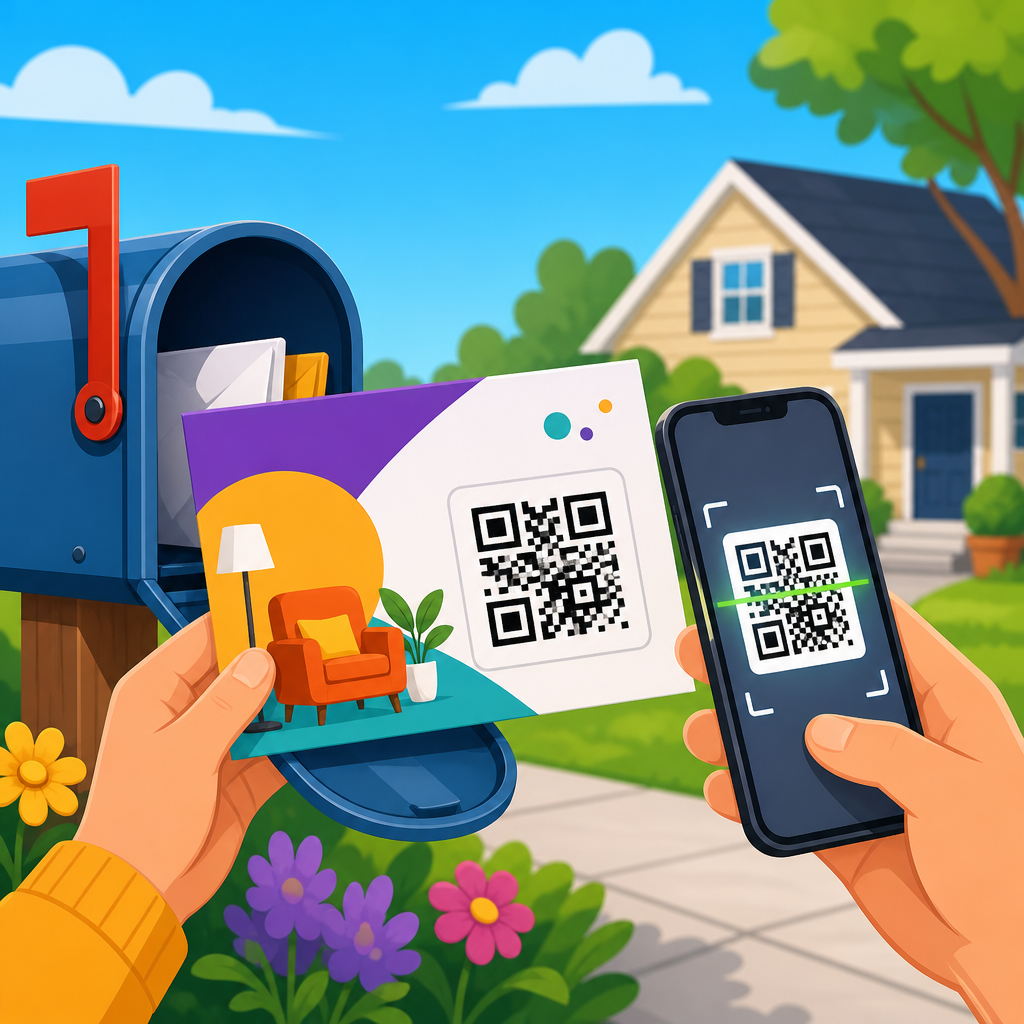
QR codes for direct mail campaigns turn printed postcards, catalogs, flyers, and letters into measurable digital touchpoints, giving marketers a practical way to connect offline attention with online action. In simple terms, a QR code is a two-dimensional barcode that a smartphone camera can scan to open a webpage, save contact details, launch a payment flow, download an app, reveal a coupon, or trigger another mobile experience. In direct mail, that means every printed piece can carry its own bridge to a landing page, product page, appointment scheduler, video, map, or lead form. I have used QR codes in postcard drops, fundraising appeals, and local retail mailers, and the difference is consistent: when the destination is relevant and friction is low, response becomes easier to capture, attribute, and improve.
This matters because direct mail still earns attention in ways digital ads often do not. A physical mail piece reaches the home, can sit on a counter for days, and is not blocked by ad filters or lost in a crowded inbox. But traditional direct mail has always had a measurement problem. Marketers could count redemptions, track phone numbers, or infer lift from sales, yet much of the customer journey remained invisible. QR codes improve that visibility. They let teams connect campaign creative, list segments, mail dates, household geography, and offers to actual scans, sessions, conversions, and revenue. The result is not just better reporting. It is better campaign design, because creative and audience decisions can be tested and refined with real behavioral data.
For a hub article on marketing and advertising, the core idea is straightforward: QR codes help direct mail work like a modern performance channel without stripping away the strengths of print. They support acquisition, retention, loyalty, event promotion, store traffic, and lead generation. They can personalize the journey, shorten the response path, and coordinate print with email, paid social, SMS, and call center follow-up. They are not magic, however. Success depends on offer quality, audience targeting, landing page fit, scanability, compliance, and analytics discipline. Understanding those factors is what separates a decorative square on a mailer from a useful response engine.
Marketers also need the right terms. A static QR code contains a fixed destination and cannot be changed after printing. A dynamic QR code uses a short redirect URL, so the destination can be updated later and scans can be tracked centrally. A call to action, or CTA, tells the recipient why to scan now. A landing page is the mobile destination built for the campaign objective. Variable data printing can personalize names, offers, or URLs at scale. Matchback analysis compares mail recipients with later conversions to estimate true impact. These concepts matter because they shape cost, flexibility, privacy, and reporting. Once those fundamentals are clear, QR codes become a disciplined marketing tool rather than a novelty.
Why QR codes improve direct mail performance
The main job of a direct mail QR code is to reduce friction. Instead of asking a recipient to type a long URL, search a brand name, or remember an offer code, the mail piece gives them an instant path from interest to action. That matters most on mobile, where attention is short and every extra step lowers response. In campaigns I have reviewed, the best-performing mailers paired a highly specific benefit with a simple scan prompt such as “Scan to book your free estimate” or “Scan to see this week’s in-store offer.” Generic prompts like “Learn more” usually underperformed because they did not answer the recipient’s first question: what do I get if I scan?
QR codes also make direct mail more measurable. A properly configured dynamic code can capture scans by date, time, device type, approximate location, and campaign identifier. Once traffic reaches a tagged landing page, platforms such as Google Analytics 4, Adobe Analytics, HubSpot, Salesforce Marketing Cloud, or Marketo can attribute downstream activity. Marketers can then compare lists, formats, offers, and creative treatments. For example, a home services brand might test a postcard against a letter package, each with its own QR code and landing page. If the postcard generates more scans but the letter produces higher appointment rates, the team can optimize both creative and spend instead of relying on guesswork.
Another benefit is channel integration. Direct mail has often been managed separately from digital media, yet consumers do not experience channels in isolation. A catalog recipient may scan a QR code, browse products, abandon a cart, receive an email reminder, then return through paid search. QR codes provide the connective tissue. They let marketers align print offers with retargeting audiences, CRM journeys, and conversion APIs. Used well, they help answer practical questions: Did the spring mailer increase store visits? Which household segments scanned most often? Did the luxury brochure drive higher average order value than the discount postcard? Those answers support budget decisions at a level direct mail teams have historically struggled to achieve.
Best use cases in marketing and advertising
QR codes in direct mail are versatile, but certain use cases consistently deliver value. Lead generation is one of the strongest. Real estate agents can mail neighborhood market updates with a code linking to an instant home valuation form. B2B software companies can send dimensional mail to target accounts with a code leading to a product demo page prefilled with firmographic data. Healthcare clinics can use reminder cards with a code for scheduling screenings or consultations. In each case, the scan removes barriers between awareness and form completion.
Retail and ecommerce brands often use QR codes to connect print with product discovery and purchase. A seasonal catalog can place a code beside featured items to open a curated mobile collection. A beauty brand can mail shade guides that link to tutorial videos and a limited-time bundle page. Grocery chains can add codes to weekly circulars that launch digital coupons tied to loyalty accounts. These are effective because the mail piece provides tactile browsing while the digital experience handles inventory, personalization, and checkout.
Event marketing is another natural fit. Universities, nonprofits, trade show organizers, and venues frequently mail invitations that include a code for RSVP, calendar add, ticket purchase, or donor registration. Local businesses can promote grand openings or workshops by linking to a map, registration form, and reminder flow. Automotive dealers often use QR codes on service reminders to drive appointment bookings, while political campaigns use them on fundraising letters to direct supporters to mobile donation pages. Across these examples, the pattern is the same: the QR code succeeds when it delivers one clear next step with immediate relevance to the printed message.
| Use case | Best QR destination | Primary metric | Example |
|---|---|---|---|
| Lead generation | Short mobile form or scheduler | Cost per lead | Roofing company postcard offering free inspection booking |
| Retail promotion | Product collection or coupon page | Revenue per recipient | Apparel catalog linking to a new arrivals landing page |
| Event marketing | Registration or ticket page | RSVP rate | Museum mailer promoting a members-only preview night |
| Loyalty and retention | Rewards portal or personalized offer | Repeat purchase rate | Coffee chain postcard with bonus points activation |
| Fundraising | Donation page with preset amounts | Average gift size | Nonprofit appeal letter linking to a campaign microsite |
How to design a mailer that gets scans
Scan rate starts with physical design, not software. The code must be large enough, high contrast, and placed where the eye naturally lands. For most postcards and self-mailers, I recommend starting at least 0.8 inches square, then proofing on actual stock with multiple phones. Dark code on a light background is safest. Busy imagery, glossy reflections, tiny quiet zones, or reversed colors can hurt readability. Error correction helps, but it cannot rescue poor production choices. If a code is mission critical, test it after printing, not only on screen proofs.
The CTA matters as much as the code itself. Recipients scan when the value is obvious and immediate. Good examples include “Scan for your personalized quote,” “Scan to claim 20% off by Sunday,” or “Scan to watch a 30-second product demo.” Weak CTAs force the audience to guess. I have seen response rise simply by replacing vague copy with a benefit-driven line and adding a small supporting cue such as “No app required” or “Takes 15 seconds.” Trust markers can also help, especially for financial services, healthcare, or nonprofit campaigns where recipients may hesitate to scan without context.
Personalization lifts performance when used responsibly. Variable data printing can connect each household or segment to a tailored landing page, offer, or store locator. A national fitness chain might mail former members a “welcome back” postcard whose QR code opens a page showing the nearest club and a rejoin offer. A higher education institution could send different academic program mailers that each route to the most relevant inquiry form. Personalization should simplify the journey, not create surveillance anxiety. Avoid creepy copy that reveals too much about the recipient, and make sure data use aligns with consent and privacy policies.
Tracking, attribution, and analytics setup
To measure QR codes for direct mail campaigns correctly, use dynamic codes with clean campaign naming conventions. Each code should map to a specific creative version, audience segment, drop date, and offer. The redirect URL should pass UTM parameters into analytics platforms, and the landing page should be instrumented for key events such as form starts, purchases, phone clicks, store locator use, and appointment completions. If the campaign spans call centers or retail locations, connect those outcomes through coupon codes, CRM fields, call tracking numbers, or point-of-sale flags so scans are not the only success signal.
Attribution requires nuance because direct mail often influences conversions that happen later or through another channel. A recipient may scan immediately and convert days later on desktop, or may see the mailer, not scan, and visit the site directly. That is why experienced teams combine scan data with holdout testing, matchback analysis, and incrementality measurement. For example, mailing 90 percent of a qualified audience and holding out 10 percent can reveal lift beyond natural demand. Matchback can then assign later orders back to mailed households within a reasonable response window. Scans are valuable, but they are not the full story.
Operationally, reporting should focus on metrics that match the business goal. For acquisition, track scan rate, landing page conversion rate, cost per lead, lead quality, and sales acceptance. For ecommerce, track revenue per mailed piece, average order value, and repeat purchase behavior. For local services, appointment show rate and booked revenue matter more than raw scans. Review results by list source, geography, device type, and creative. In one regional campaign, mobile-friendly form length, not offer strength, was the main conversion barrier. The code did its job; the landing page did not. Good analytics surfaces that distinction quickly.
Common mistakes and how to avoid them
The most common mistake is linking a QR code to a generic homepage. That forces the recipient to navigate, search, and rediscover the offer they just saw in print. Every campaign should send users to a focused mobile landing page that mirrors the mailer’s message, visuals, and CTA. Another mistake is printing static codes too early. If pricing, inventory, legal copy, or landing pages might change, dynamic codes provide needed flexibility. They also reduce operational risk when mail production timelines are tight and approvals continue late into the process.
A second set of mistakes involves user experience and trust. Some brands hide the destination, overload the page with pop-ups, or ask for too much information too soon. A direct mail scan is an expression of intent; treat it with respect. Keep the page fast, secure, and easy to understand. Use HTTPS, recognizable branding, concise forms, and clear privacy messaging. If the scan leads to app download, video playback, payment, or SMS opt-in, say so on the mail piece. Surprises reduce completion rates. Accessibility matters too: readable fonts, proper contrast, and pages that work well with screen readers expand reach and lower friction.
Finally, teams often underestimate operational testing. Before launch, test every code on iPhone and Android devices, in bright and low light, on final paper stock, and from realistic scanning distances. Confirm redirects, analytics events, CRM routing, and thank-you pages. Check that postal delivery timing aligns with promotion dates. If multiple versions exist, audit the mapping between creative files and QR destinations. These steps sound basic, but they prevent expensive errors. In direct mail, mistakes are not patched with a quick deploy once thousands of pieces are printed and in the postal stream.
Building a scalable direct mail QR strategy
A scalable strategy starts with a repeatable campaign framework. Standardize code generation, naming conventions, landing page templates, measurement plans, and QA checklists. Maintain a library of proven CTA patterns by objective, such as booking, donation, coupon activation, or product education. Document design specifications for minimum size, quiet zone, color contrast, and placement. When teams reuse tested components, they can launch faster without repeating avoidable mistakes. This is especially important for franchises, multi-location retailers, universities, and national nonprofits, where local teams need flexibility but central marketing needs consistency.
It also helps to think of this hub topic as a network of related plays within marketing and advertising. A direct mail QR code strategy should connect naturally to companion tactics such as QR codes for brochures, catalogs, business cards, out-of-home ads, packaging inserts, and event signage. The same measurement discipline applies across each use case, but direct mail deserves its own playbook because postal timing, list quality, and household-level targeting change the economics. If you are building a content hub, this page should anchor those deeper articles by establishing the foundational principles, terminology, and performance model.
The practical takeaway is simple. QR codes for direct mail campaigns work best when they do three things at once: make response effortless, deliver a relevant mobile experience, and generate reliable data for optimization. Start with one high-intent use case, such as appointment booking or coupon redemption. Use dynamic codes, targeted lists, clear CTAs, and dedicated landing pages. Measure beyond scans, test holdouts where possible, and refine creative based on actual behavior. Done well, QR-enabled direct mail combines the staying power of print with the accountability of digital. If you manage marketing or advertising programs, audit your next mail piece for a single scan-worthy action and build from there.
Frequently Asked Questions
What are QR codes for direct mail campaigns, and why are they so useful?
QR codes for direct mail campaigns are scannable two-dimensional barcodes printed on postcards, brochures, catalogs, flyers, letters, and other mail pieces. When a recipient points a smartphone camera at the code, it can instantly open a landing page, display a special offer, launch a payment page, download an app, save contact information, or trigger another digital action. That simple scan turns a static printed piece into an interactive experience, which is exactly why QR codes have become so valuable in modern direct mail marketing.
The biggest advantage is that they connect offline attention with online action. Traditional direct mail can be highly effective for visibility and brand recall, but it has historically been harder to measure than digital marketing. A QR code solves that problem by creating a direct path from the physical mailer to a trackable digital destination. Marketers can see how many people scanned, when they scanned, what device they used, and what they did after arriving on the landing page. That means direct mail no longer has to be treated as a channel with limited attribution.
QR codes also reduce friction. Instead of asking someone to type a long URL, search for a product, or manually enter a promo code, the scan does the work for them. That convenience often improves response rates because it shortens the distance between interest and action. For example, a real estate mailer can link to a virtual tour, a retailer can send shoppers to a limited-time discount page, and a healthcare provider can connect patients to appointment scheduling. In each case, the QR code helps the reader move from curiosity to conversion in seconds.
How do QR codes improve tracking and measurement in direct mail marketing?
One of the strongest reasons to use QR codes in direct mail campaigns is the ability to measure engagement more accurately. Each code can direct recipients to a specific URL tied to a campaign, audience segment, geographic area, or even an individual mail piece. This makes it possible to monitor scans in real time and evaluate how people respond to a printed campaign after it reaches their mailbox. Instead of relying only on estimated reach or broad response assumptions, marketers gain concrete behavioral data.
That data can support much deeper performance analysis. For example, a company can compare response rates between different offers, list segments, or design variations by assigning separate QR codes to each version. If one postcard headline generates significantly more scans than another, that insight can shape future creative decisions. If one audience segment scans frequently but rarely completes a purchase, the issue may be the landing page rather than the mailer itself. QR codes help isolate those variables and make direct mail optimization much more practical.
They also make multi-channel attribution stronger. A QR code can include tracking parameters that feed analytics platforms, customer relationship management systems, or marketing automation tools. That means marketers can connect a physical mailing to website visits, form submissions, purchases, phone calls, and other downstream conversions. Over time, this helps teams calculate return on investment more confidently and justify direct mail as a measurable performance channel rather than just a branding tactic.
What are the best practices for using QR codes on postcards, flyers, catalogs, and letters?
Successful use of QR codes in direct mail depends on both placement and context. The code should be large enough to scan easily, printed with strong contrast, and positioned where it is visible without cluttering the overall design. In most cases, black on white works best, and the code should not be distorted, overly stylized, or placed on a busy background that could reduce readability. It is also important to test the printed code on multiple devices before a campaign goes live, since scanning performance can vary depending on print quality, lighting, and surface finish.
Equally important is giving people a clear reason to scan. A QR code by itself is not a strategy. It should be paired with a strong call to action that tells recipients what they will get, such as “Scan to claim your 20% discount,” “Scan to schedule a consultation,” or “Scan to view the full product collection.” When the value is obvious, people are more likely to engage. Marketers should also make sure the destination experience is mobile-friendly, fast-loading, and closely aligned with the message on the mail piece. If the postcard promotes a specific offer, the QR code should lead directly to that offer, not to a general homepage.
Another best practice is to use dynamic QR codes when possible. Dynamic codes allow the destination URL to be updated without reprinting the code, which is useful if an offer changes, a landing page needs correction, or a campaign is being redirected to a new experience. They also tend to offer stronger analytics than static codes. Finally, it is wise to include a backup option, such as a short URL or phone number, for recipients who prefer not to scan. This helps ensure accessibility and prevents the QR code from becoming the only path to response.
What can a recipient do after scanning a QR code from a direct mail piece?
A QR code in direct mail can support a wide range of post-scan actions, which makes it flexible for many industries and campaign goals. A recipient might be taken to a product page, a personalized landing page, a video demo, an event registration form, a store locator, a digital coupon, a payment portal, or an online scheduling tool. In some campaigns, the scan can trigger contact downloads, app installs, loyalty signups, survey responses, or social media interactions. The best destination depends on what action the marketer wants the recipient to take next.
This flexibility is what allows direct mail to serve different points in the customer journey. For top-of-funnel campaigns, a QR code may drive education, such as a brochure linking to a buyer’s guide or explainer video. For mid-funnel campaigns, it may support comparison and consideration by linking to case studies, reviews, or a product configurator. For bottom-of-funnel campaigns, it can point directly to checkout, booking, or lead capture. In retention campaigns, it may connect current customers to reorder pages, support resources, or account management tools.
The key is making sure the scan destination matches recipient intent and campaign timing. If someone receives a postcard with a limited-time offer, the experience should feel immediate and simple. If someone receives a catalog, the QR code might be more effective when it unlocks extra content such as style inspiration, inventory details, or interactive shopping. In every case, the QR code should act as a bridge that enhances the print experience rather than interrupting it. When used thoughtfully, it transforms direct mail from a one-way message into a responsive, measurable customer touchpoint.
Are QR codes effective for direct mail campaigns, and how can marketers increase scan rates?
Yes, QR codes can be highly effective in direct mail campaigns when they are paired with a relevant offer, good design, and a smooth mobile experience. Their effectiveness comes from removing barriers. Recipients do not need to remember a website address or wait until they are at a computer. They can respond immediately in the moment of interest, which is especially important in direct mail because attention is often brief. That immediacy can improve response rates, speed up conversions, and make the campaign easier to measure from first scan to final action.
To increase scan rates, marketers should start with audience relevance. The message on the mail piece, the incentive behind the scan, and the digital destination all need to feel useful to the recipient. A generic QR code leading to a general homepage is far less compelling than a targeted code linked to a personalized offer or clear next step. Strong calls to action also matter. People are more likely to scan when they know exactly what they will receive, whether that is a discount, a free resource, an exclusive preview, or instant access to something helpful.
Design and usability also play major roles. The code should be prominent but not overwhelming, and there should be enough white space around it for easy scanning. The landing page should load quickly, display well on mobile devices, and continue the same visual and promotional message from the mailer. Marketers can further improve performance by testing different offers, placements, and wording, then analyzing scan and conversion data to refine future campaigns. In that sense, QR codes do more than improve engagement in a single mailing. They create a feedback loop that helps direct mail become smarter, more targeted, and more accountable over time.