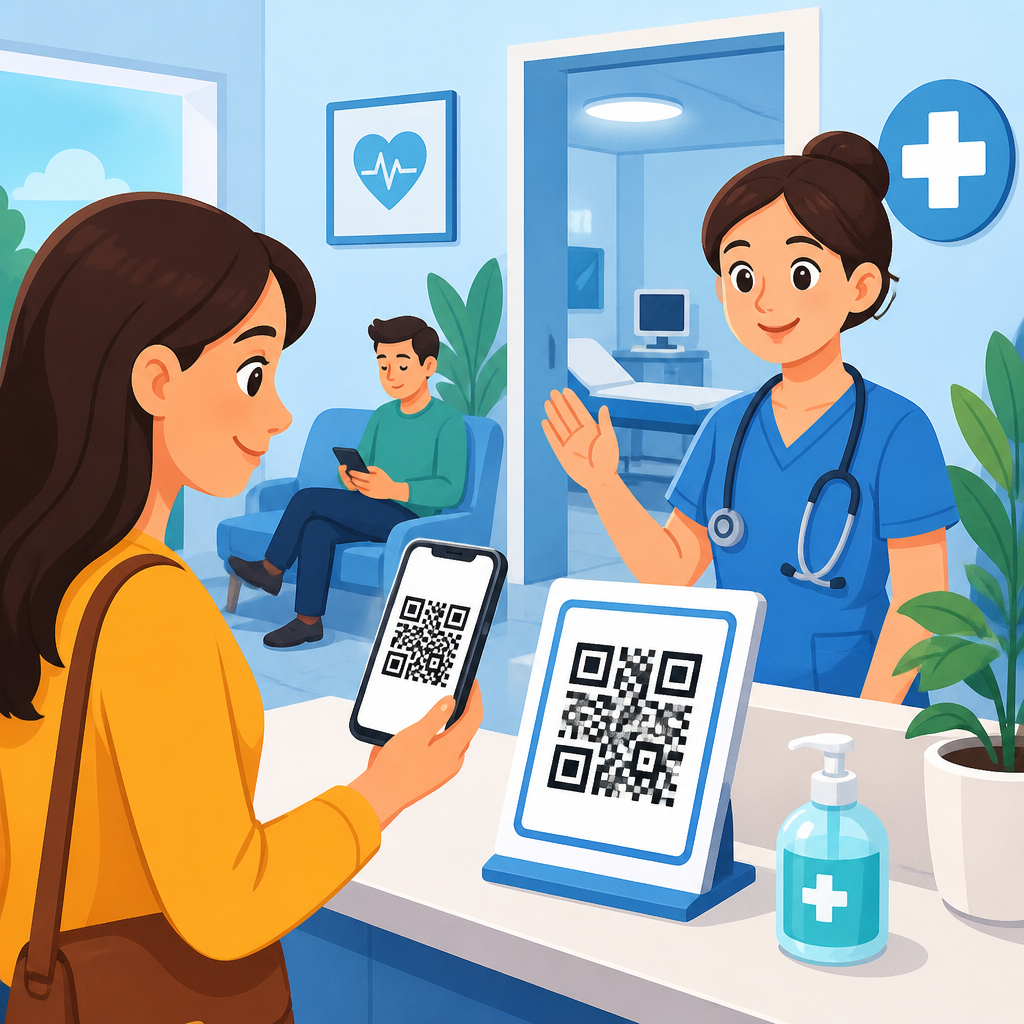
QR codes for contactless healthcare services have moved from a pandemic-era convenience to a core operational tool for hospitals, clinics, pharmacies, laboratories, and public health programs. In healthcare, a QR code is a scannable two-dimensional barcode that opens digital content, launches workflows, identifies assets, or links a patient, caregiver, or device to a secure system. “Contactless” in this context does not mean care becomes impersonal; it means routine touchpoints such as registration, wayfinding, consent, payments, education, check-in, and follow-up can happen with fewer shared surfaces, less waiting, and fewer manual errors. I have implemented QR-based patient intake and discharge flows, and the practical benefit is immediate: front-desk bottlenecks shrink, paperwork drops, and patients complete tasks on their own phones in language they understand. For healthcare organizations facing staffing pressure, infection-control goals, and rising patient expectations, QR codes are a low-cost bridge between the physical care environment and digital service delivery. Used well, they support safer visits, better access to information, stronger workflow visibility, and more consistent patient experience across the continuum of care.
Why healthcare organizations use QR codes
Healthcare leaders adopt QR codes because they solve operational problems without requiring patients to download an app or staff to deploy expensive hardware. A printed code on a poster, wristband, discharge packet, medication label, kiosk, exam-room sign, or appointment reminder can connect users directly to a targeted action. Common healthcare use cases include digital registration, self-rooming, vaccine information access, telehealth launch links, secure bill payment, parking validation, post-visit surveys, and multilingual patient education. During high-volume periods, even a small reduction in average check-in time produces measurable gains. If a clinic reduces registration from seven minutes to four, that three-minute difference across one hundred daily visits returns five staff hours to higher-value work. QR codes also improve data quality because patients enter demographic details, insurance updates, and symptom information directly into structured fields instead of relying on handwritten forms later rekeyed by staff.
Contactless healthcare services also support infection prevention. Shared clipboards, pens, laminated menus, and kiosk touchscreens create repeated touchpoints in waiting rooms and bedside environments. While surface transmission risk depends on context, reducing unnecessary shared contact remains sensible design, especially in urgent care, oncology, dialysis, long-term care, and immunocompromised populations. QR codes additionally help with accessibility and reach. A patient can scan from a mailed letter, bedside tent card, prescription bag, or community poster and land on instructions optimized for mobile reading, large text, audio playback, or translated content. Because dynamic QR platforms allow destinations to be updated without reprinting the code, healthcare teams can revise clinic hours, testing protocols, education materials, or campaign messaging quickly. That flexibility matters in healthcare, where policies, formulary information, and public guidance change frequently.
Patient access, intake, and front-desk workflow
The most common and highest-impact use of QR codes in healthcare is patient access. A pre-visit text or email can include a QR code that opens eCheck-in, identity verification, insurance card upload, copay collection, and consent review before arrival. On site, a sign at the entrance can direct walk-in patients to a digital queue, reducing line formation and redistributing arrivals across available staff. In specialty clinics, I have seen QR self-check-in work particularly well when paired with clear fallback options for older adults and low-digital-literacy patients. The best implementations never force a single channel; they offer scan, kiosk, or assisted check-in. That design protects equity while still moving the majority of routine transactions to self-service.
QR codes also improve wayfinding and care navigation. In large hospitals, patients often get lost between parking, imaging, labs, and specialty offices. Posting location-specific codes can launch turn-by-turn directions, floor maps, department phone numbers, and estimated wait information. Maternity, surgery, and outpatient infusion centers can use visitor-facing codes to explain preparation steps, visitation rules, and delays in plain language. For multilingual communities, one code can open a language selector before displaying instructions, reducing confusion at the point of care. The operational result is fewer “where do I go?” interruptions for staff and fewer late arrivals for appointments. Because timestamps from scan events can be tied to workflow analytics, managers can also identify congestion points and redesign patient flow based on actual behavior rather than anecdote.
Clinical communication, education, and discharge
Healthcare information is often delivered at the worst possible moment: when patients are anxious, sedated, rushed, or overwhelmed. QR codes make education materials available after the visit, when the patient or caregiver can review them calmly. A discharge packet can include codes for wound care videos, medication schedules, red-flag symptoms, dietary guidance, follow-up booking, and secure messaging. In orthopedics, a patient leaving after knee replacement can scan one code for physical therapy exercises and another for signs of deep vein thrombosis or infection. In pediatrics, parents can access fever guidance, hydration advice, and dosing reminders without searching the internet and encountering poor-quality sources.
For chronic disease management, QR codes extend care between encounters. Diabetes educators can link to glucometer tutorials, nutrition plans, and foot-care checklists. Cardiology practices can direct patients to blood pressure logging forms and rehabilitation instructions. Oncology programs can provide antiemetic schedules, neutropenia precautions, and emergency contact pathways. These links should point to content controlled by the organization, reviewed by licensed clinicians, versioned, and written at an appropriate reading level. A good standard is plain language around sixth- to eighth-grade readability for general education, with translated versions validated by qualified medical translators. QR-enabled education is not only convenient; it reduces variation. Every patient receives the same reviewed material instead of relying on whichever pamphlet happened to be in the drawer that day.
Where QR codes fit across healthcare settings
QR code strategy should match the care environment, because a trauma bay, retail pharmacy, dental office, and public health mobile unit have different workflows, risk profiles, and user expectations. The table below shows how organizations typically apply QR codes across settings and what success looks like in practice.
| Setting | Typical QR use cases | Primary benefit | Key implementation caution |
|---|---|---|---|
| Hospitals | Bedside education, visitor guidance, meal ordering, bill pay, post-discharge instructions | Less staff interruption and better patient understanding | Avoid exposing protected health information in open links |
| Primary care clinics | Check-in, forms, preventive screening questionnaires, referrals, surveys | Faster intake and cleaner demographic data | Keep assisted options for elderly and low-literacy patients |
| Pharmacies | Medication instructions, refill enrollment, vaccine consent, side-effect guidance | Better adherence and less counter congestion | Use clear branding to prevent phishing confusion |
| Laboratories and imaging | Preparation instructions, queue updates, result portal links, location guidance | Fewer no-shows and fewer prep errors | Test links on older devices and weak cellular connections |
| Home health and telehealth | Visit launch links, device setup, care plan review, caregiver education | Simpler remote access and reduced support calls | Provide phone support when scans fail |
| Public health programs | Immunization campaigns, testing registration, multilingual guidance, community resource maps | Scalable outreach at low cost | Keep content updated as public guidance changes |
Security, privacy, and regulatory considerations
Healthcare QR codes must be designed with privacy and security in mind from the start. A QR code itself is not inherently compliant or noncompliant; the risk depends on where it points, what data it exposes, and how the linked workflow handles authentication, storage, and audit trails. Protected health information should not be embedded directly in static codes placed in public or semi-public spaces. Instead, the code should link to a secure landing page or application session that requires appropriate authentication before displaying sensitive data. For patient-specific workflows, many organizations use expiring tokens, single-use session links, or identity verification steps tied to date of birth, medical record number, or portal credentials. The safest design is to treat the QR code as a doorway, not the data itself.
Governance matters as much as technology. Compliance teams should review QR deployment against applicable privacy rules, consent requirements, retention schedules, accessibility obligations, and vendor agreements. If a third-party QR management platform is used, healthcare organizations need a business associate agreement when the vendor creates, receives, maintains, or transmits protected health information. Security testing should include link redirection controls, domain allowlists, TLS configuration, mobile browser behavior, and abuse monitoring. Staff also need training on social engineering risks, because patients increasingly know that malicious QR stickers can redirect users to fake payment pages or credential harvesting sites. Clear branding, short recognizable domains, tamper-evident placement, and routine physical inspection reduce that risk substantially.
Implementation best practices and measurement
Successful QR code programs in healthcare start with a narrow workflow, measurable objectives, and frontline input. Begin by mapping a specific journey such as pre-registration, outpatient lab preparation, inpatient discharge education, or pharmacy refill enrollment. Define one primary action per code whenever possible. If a poster presents six unrelated links, scan rates fall because the user must interpret too much at once. Place the code where the decision occurs, add a short instruction such as “Scan to complete check-in,” and include a plain-text fallback URL and phone option. Test across iPhone and Android devices, older cameras, low-light conditions, and common accessibility settings. Contrast ratio, print size, and quiet zone spacing all affect scan reliability.
Measurement should go beyond total scans. The most useful indicators are completion rate, time saved, drop-off point, language selection, repeat scans, support-call reduction, and downstream outcomes such as fewer no-shows or fewer incomplete forms. Dynamic QR platforms with UTM tracking, campaign tagging, and API integrations can feed analytics into CRM, patient access, or business intelligence systems. In one outpatient rollout, we tracked scans by clinic entrance, hour, and language preference; the data showed that Spanish-language completion rates rose when we moved from machine-translated instructions to clinician-reviewed copy. That kind of insight is why QR codes belong in continuous improvement, not just marketing. When a code underperforms, the usual causes are simple: poor placement, unclear call to action, slow mobile pages, too many fields, or a workflow that asks patients for information they do not have at hand.
The future of contactless healthcare services
QR codes are becoming more valuable as healthcare blends in-person, virtual, retail, and home-based care. They now serve as a lightweight identity and workflow trigger between printed materials, physical spaces, connected devices, and enterprise systems. As remote patient monitoring expands, manufacturers can place QR codes on devices to guide onboarding, troubleshooting, and secure data-pairing steps. As digital front doors mature, codes can launch personalized pathways based on service line, appointment type, language, or payer requirements. Combined with FHIR-based interoperability and modern patient portals, QR-driven experiences can reduce administrative friction without replacing human support. The important point is that the code is not the strategy; the patient journey is. Organizations that treat QR codes as part of service design, governance, content management, and analytics see the strongest results.
For healthcare teams building a sub-pillar around QR code use cases, the biggest lesson is to prioritize usefulness over novelty. Start where paper, waiting, and confusion are most expensive. Build secure links, reviewed content, and inclusive fallback paths. Measure what changes for patients and staff, then expand into education, payments, navigation, pharmacy, laboratory, telehealth, and community outreach. QR codes for contactless healthcare services work because they meet people in the real world, on the device already in their hand, at the moment they need the next step. If you are planning healthcare QR initiatives, audit one high-friction workflow this week and design a pilot that removes a single avoidable barrier.
Frequently Asked Questions
What are QR codes used for in contactless healthcare services?
QR codes in contactless healthcare services are used to connect patients, staff, devices, and physical locations to digital workflows quickly and accurately. In a hospital or clinic, a patient might scan a QR code to complete registration forms, verify an appointment, review pre-visit instructions, access telehealth links, or make a copay payment without handling shared tablets, pens, or paper documents. In pharmacies, QR codes can direct patients to medication instructions, refill portals, vaccine consent forms, or prescription status updates. Laboratories often use QR codes to link test kits, specimens, and results to the correct record while reducing manual data entry errors.
Beyond patient-facing uses, healthcare organizations also rely on QR codes for internal operations. Staff may scan codes to track medical equipment, access cleaning logs, confirm maintenance schedules, update bed status, retrieve clinical protocols, or verify inventory in real time. Public health programs can use QR codes for vaccine registration, multilingual education materials, exposure guidance, and community outreach campaigns. The key value is that one quick scan can launch a secure, specific action, helping healthcare systems reduce friction, improve efficiency, and maintain a smoother patient experience without making care feel distant or impersonal.
How do QR codes improve the patient experience without reducing personal care?
QR codes improve the patient experience by removing unnecessary administrative friction while allowing healthcare professionals to focus more attention on direct care. Many of the most frustrating parts of a healthcare visit happen before a patient even sees a provider, such as filling out repetitive paperwork, standing in line at check-in, searching for directions, or trying to understand next steps after an appointment. A QR code can simplify these routine touchpoints by instantly opening intake forms, wayfinding maps, insurance verification pages, discharge instructions, or follow-up scheduling tools on the patient’s own device.
Importantly, contactless does not mean less human. When registration, consent, education, and payments become easier to manage digitally, staff members have more time for meaningful interactions that require empathy, judgment, and reassurance. For example, a nurse can spend less time handing out paperwork and more time answering patient questions. A front-desk team can focus on helping patients who need extra assistance instead of managing long queues. QR codes also support accessibility and personalization by linking to content in multiple languages, larger text formats, video explanations, or condition-specific instructions. Used well, they make care feel more organized, responsive, and respectful of a patient’s time while preserving the human relationship at the center of healthcare.
Are QR codes in healthcare secure and HIPAA-compliant?
QR codes themselves are not automatically secure or insecure; their safety depends on how the healthcare organization designs, manages, and protects the system behind them. A QR code is simply a machine-readable gateway that points to content or triggers an action. If it directs users to unsecured pages, exposes personal health information, or lacks authentication controls, it can create privacy and compliance risks. However, when implemented properly, QR codes can absolutely be part of a HIPAA-compliant workflow. The organization must ensure that any protected health information is stored, transmitted, and accessed through secure platforms with encryption, role-based permissions, audit trails, and identity verification where appropriate.
Healthcare providers should also follow practical security measures such as using trusted QR code management systems, monitoring links for tampering, avoiding exposed patient identifiers in the code itself, and training staff and patients to recognize official codes. Dynamic QR codes are often preferred because they can be updated or disabled without reprinting materials, which helps reduce risk if a workflow changes or a link is compromised. In public-facing settings, providers should place codes in controlled locations and clearly label what each scan will do. In short, QR codes can fit securely into healthcare operations, but compliance comes from governance, technical safeguards, and thoughtful implementation rather than from the code alone.
What healthcare settings benefit the most from QR code workflows?
Nearly every healthcare setting can benefit from QR code workflows, but the greatest gains often appear in environments with high patient volume, frequent handoffs, or complex administrative steps. Hospitals use QR codes for patient check-in, visitor management, room-level service requests, equipment tracking, discharge instructions, and staff access to protocols. Outpatient clinics benefit from faster registration, digital forms, queue management, and simple access to educational resources before and after appointments. Pharmacies use QR codes to streamline prescription pickups, refill requests, medication counseling, vaccine intake, and patient adherence materials.
Laboratories and diagnostic centers are especially strong use cases because QR codes help maintain specimen accuracy, chain-of-custody visibility, and result delivery efficiency. Long-term care facilities can use them for family communication, care updates, maintenance logs, and resident service coordination. Home healthcare programs may place QR codes on devices, care kits, or printed instructions so patients and caregivers can quickly access setup videos, symptom monitoring tools, or support channels. Public health agencies also benefit by using QR codes in campaigns for immunization drives, screenings, health education, and emergency response. The common thread is that QR codes work best where organizations need to reduce manual steps, improve traceability, and make digital access easier for both patients and staff.
What should healthcare organizations consider before implementing QR codes at scale?
Before implementing QR codes at scale, healthcare organizations should start with workflow design rather than the code itself. The most successful programs identify specific pain points, such as long registration times, missed follow-up steps, equipment loss, delayed payments, or inconsistent patient education, and then map QR codes to clear operational goals. Leaders should decide what each code is meant to do, who will scan it, what device they will use, what happens after the scan, and how success will be measured. A QR code that leads to a confusing form, a non-mobile-friendly page, or a dead-end login screen will create frustration instead of efficiency.
Organizations should also account for security, accessibility, and change management from the beginning. That includes using secure destinations, avoiding unnecessary exposure of sensitive information, setting governance for code creation and updates, and choosing dynamic codes when flexibility matters. Accessibility is equally important: patients may have limited digital literacy, language barriers, visual impairments, or no smartphone at all, so healthcare providers should always offer alternative options and clear on-site assistance. Staff training matters too, because frontline teams need to understand how the codes work, how to explain them, and how to troubleshoot common issues. Finally, organizations should monitor performance continuously by tracking scan rates, completion rates, patient feedback, and operational outcomes. At scale, QR codes are not just a convenience feature; they are part of a broader digital experience strategy that should be managed with the same care as any core healthcare system.