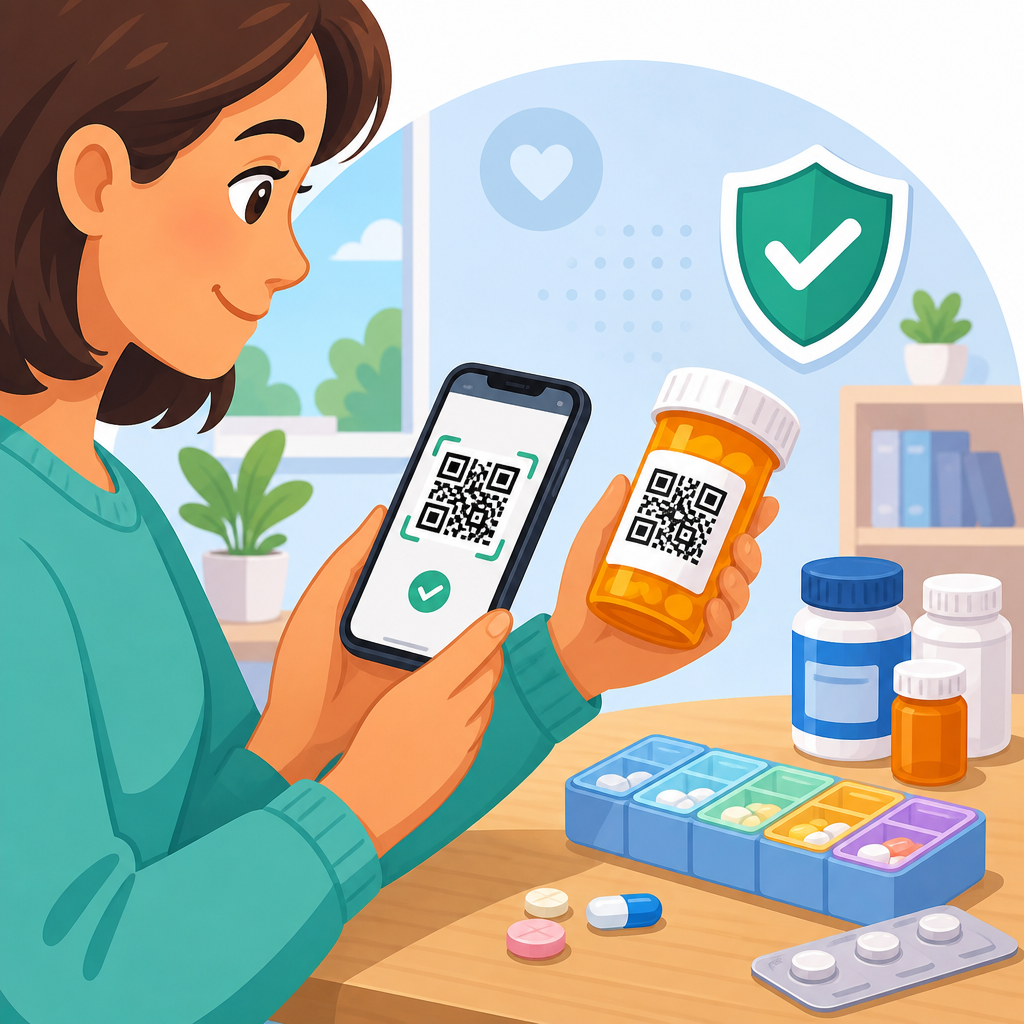
QR codes for medication tracking and safety have moved from a convenience feature to a practical healthcare tool because they connect a physical package, wristband, or medication administration record to verified digital information in seconds. In healthcare, medication tracking means following a drug from manufacturer to wholesaler, pharmacy, clinician, and patient, while medication safety means reducing preventable errors involving the wrong drug, wrong dose, wrong patient, wrong time, or wrong route. I have worked on clinical labeling and inventory projects where a simple scan replaced manual transcription, and the difference was immediate: fewer keystrokes, faster verification, clearer audit trails, and less ambiguity during handoffs. This matters because medication errors remain a persistent operational and patient safety issue across hospitals, pharmacies, long term care, and home health. A well designed QR code system does not solve every problem, but it gives staff and patients a reliable bridge between packaging and trusted data, which is exactly where many failures begin.
Healthcare organizations use QR codes in several distinct ways. A manufacturer can place a code on secondary packaging to encode a product identifier, lot number, and expiration date. A hospital pharmacy can add a code to a unit dose package to support bedside scanning and automated dispensing cabinet replenishment. An outpatient clinic can use QR codes on discharge paperwork so patients can open plain language instructions, side effect guidance, refill links, and adherence reminders. A specialty pharmacy can attach dynamic codes to temperature sensitive medications, linking to chain of custody records and storage requirements. As this healthcare hub article shows, the value is not the square image itself. The value comes from the data standard behind it, the workflow around it, and the governance that keeps the linked information accurate, current, and accessible when decisions are time critical.
To understand QR codes for medication tracking and safety, it helps to separate three layers. First is identification: what exact product, package, or patient specific dose is this. Second is verification: does the scanned item match the order, formulary, lot status, and timing rules. Third is documentation: who scanned it, when, where, and what happened next. These layers support hospital medication administration, pharmacy inventory control, recall management, patient counseling, and anti counterfeiting efforts across the healthcare sector. They also support related subtopics within this healthcare cluster, including vaccine documentation, specimen labeling, device tracking, patient education, and digital health records. When a healthcare organization chooses standards based labeling, role based access, and strong governance, QR codes become a scalable foundation for safer medication use rather than a disconnected pilot.
How QR Codes Improve Medication Identification and Verification
The first safety benefit of QR codes is precise medication identification at the point of use. In practice, that means a scan can confirm a National Drug Code, internal formulary ID, strength, dosage form, lot, and expiration date without relying on visual similarity. This is especially important for look alike and sound alike medications, which continue to challenge busy clinical environments. I have seen unit dose packages of different strengths appear nearly identical under pharmacy lighting; a QR driven verification step reduces the chance that a technician or nurse relies on color or memory alone. Unlike a linear barcode, a QR code can hold more data in a compact space and can still function when printed at small sizes, making it useful for labels, blister packs, and patient specific packaging where space is limited.
Verification becomes more valuable when QR codes connect to clinical systems instead of acting as static labels. In a hospital, the scan can trigger a comparison against the electronic medication administration record, active orders, allergy records, and schedule windows. In a pharmacy, the same scan can confirm that the dispensed item matches the prescription, insurance adjudication details, and counseling requirements. In home health, a caregiver can scan a code on packaging to verify administration instructions, route specific guidance, and warning alerts in plain language. The strongest implementations reduce manual interpretation. Staff should not have to decode what a string of numbers means during a med pass. The system should resolve the identity instantly and present a clear pass or stop message, with escalation steps when there is a mismatch.
Standards matter here. GS1 Digital Link, serial numbers, lot attributes, and structured product identifiers create consistency across manufacturers, distributors, and providers. For organizations building programs now, the practical rule is simple: encode data elements that will be used operationally, not just information that looks impressive in a demo. If recall management is a priority, include lot and expiration in a way downstream systems can parse. If patient education is a priority, use a dynamic destination that can route by language, device type, and role. If anti diversion is a priority, maintain immutable scan logs and exception workflows. A QR code should be treated as an access point to a governed medication record, not a decorative label.
Medication Tracking Across the Supply Chain and Care Continuum
Medication tracking starts long before administration. Manufacturers need traceability for serialization, quality release, and recall readiness. Wholesalers need receiving verification, aggregation handling, and shipment confirmation. Pharmacies need inventory visibility, expiration rotation, and waste reduction. Providers need closed loop administration and adverse event investigation. Patients need refill continuity and clear instructions. QR codes can support each step because they travel with the package and can link every handoff to a timestamped event. In one inventory deployment I supported, pharmacy teams used scans during receiving and restocking to identify short dated products early. That single change improved first expiring first out discipline and reduced emergency substitutions when commonly used injectables neared expiration.
The same approach supports continuity after discharge. A patient leaving the hospital with multiple medication changes often receives printed instructions, bottles from different sources, and limited confidence about what to take at home. A QR code on the discharge medication list can route the patient to an updated regimen, indication based instructions, and a reconciliation prompt that asks, in plain terms, which old medications to stop. This is where healthcare organizations can connect medication safety to broader care management. The scan can lead to refill status, prior authorization updates, transportation resources, or a nurse callback request. It can also support caregivers managing complex regimens for older adults, oncology patients, or children with weight based dosing. In each case, the code reduces the gap between the physical medication and the latest verified instructions.
| Healthcare setting | Primary QR code use | Safety or tracking benefit |
|---|---|---|
| Hospital inpatient pharmacy | Unit dose labeling and order verification | Reduces selection errors and strengthens audit trails |
| Bedside medication administration | Scan patient wristband and medication package | Confirms match to active order, timing, and patient identity |
| Retail or outpatient pharmacy | Prescription pickup, counseling, and refill links | Improves patient understanding and adherence support |
| Long term care | Medication cart checks and multi dose packaging | Supports administration accuracy across shifts |
| Home health and specialty pharmacy | Caregiver instructions and cold chain records | Extends traceability beyond the clinic or hospital |
Tracking also supports investigations that happen after something goes wrong. If a product is recalled, a QR enabled inventory system can identify exactly which lots were received, where they were stocked, which doses were dispensed, and which patients may require outreach. If a refrigerator excursion affects biologics or insulin, linked scan records can show which products were potentially exposed and whether they were subsequently moved, administered, or wasted. This level of precision matters because broad manual searches are slow and disruptive. Organizations that design for traceability can act faster, limit unnecessary quarantine, and communicate with confidence.
Clinical Workflow Design: From Pharmacy Preparation to Bedside Administration
QR codes improve medication safety only when the workflow is engineered around them. The best projects start by mapping the medication use process end to end: procurement, receiving, storage, compounding, dispensing, transport, administration, documentation, and returns. At each step, teams should ask what decision the scan supports and what the user sees after scanning. For a pharmacy technician, the scan may confirm the correct stock bottle during cart fill. For a sterile compounding pharmacist, it may verify ingredients against a batch record and capture beyond use dating. For a nurse, it may validate the five rights plus patient specific precautions such as hold parameters, administration rate, and line compatibility. If the scan only opens a generic web page, it will not improve safety in a measurable way.
Workflow discipline also means planning for exceptions. Labels get damaged. Wristbands smudge. Internet connections fail. Emergency medications may need to be administered before every step is documented. Good healthcare design accounts for these realities with readable human text, backup identifiers, offline caching, and tightly controlled override reasons. The system should log every override and surface patterns for review. In my experience, staff trust scanning when it is fast, predictable, and clearly linked to patient safety. They resist it when scans fail often, alerts are noisy, or the system blocks care without offering a safe alternative path. Governance is therefore as important as technology. Pharmacy, nursing, informatics, compliance, and biomedical teams all need agreed rules for symbology, printer quality, scan placement, maintenance, and training.
Metrics should be established before launch. Strong programs track scan compliance, positive patient identification rates, mismatch rates, expired stock captures, recall response time, and time saved in receiving or documentation. They also review near misses, not just reported harm events. If the organization cannot show that QR codes reduced manual transcription, improved lot visibility, or increased adherence to policy, the deployment is incomplete. Medication safety is a performance discipline. The code is a tool, but the outcome depends on process reliability and continuous review.
Patient Education, Adherence, and Consumer Facing Safety
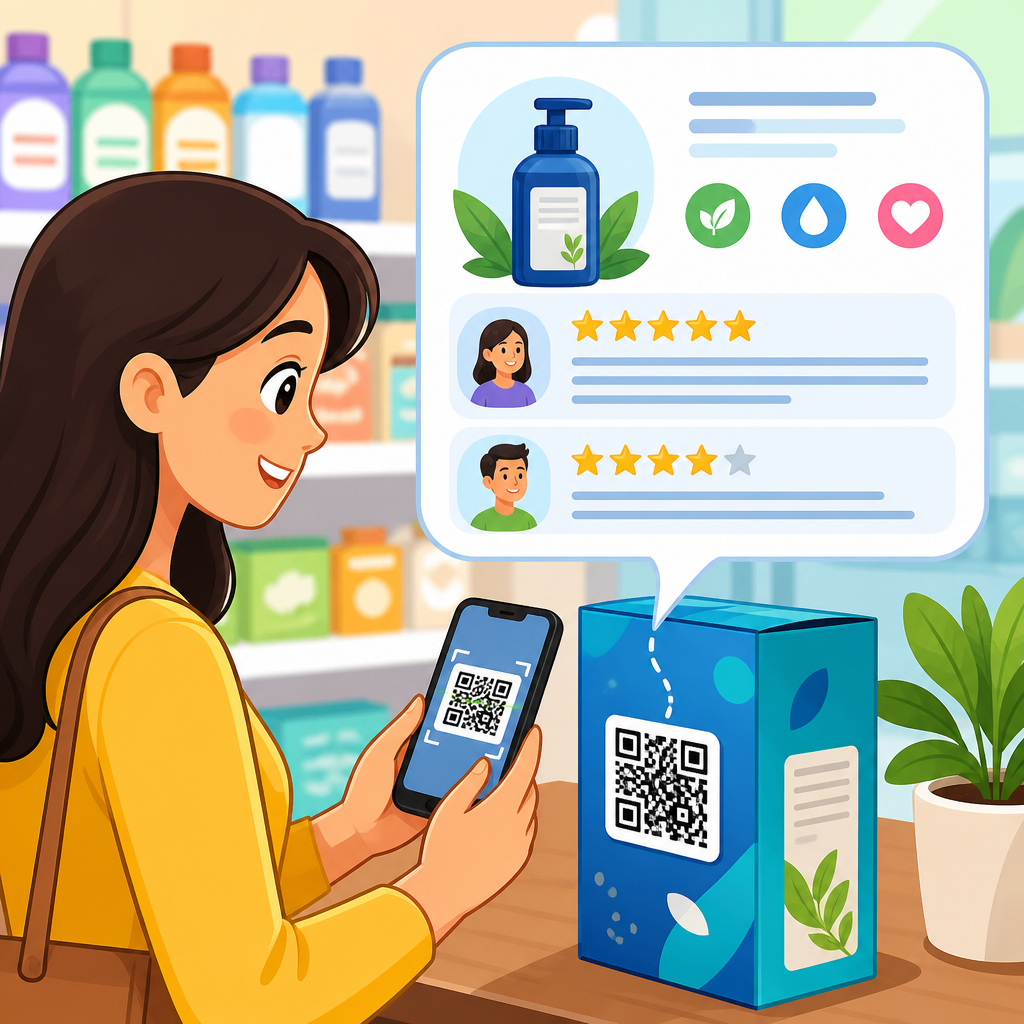
Not every medication risk begins inside a facility. Many errors happen after the patient gets home, especially when instructions conflict, literacy is limited, or multiple prescribers are involved. QR codes can help by connecting the package or after visit summary to clear, current, consumer friendly guidance. A patient can scan to see what the medication is for, how to take it, what to avoid, how to store it, and when to call for help. These links can also provide videos for inhaler technique, injection training, or anticoagulant precautions. For multilingual populations, dynamic routing can present the right language automatically. This is more useful than static paper inserts, which are often lengthy, generic, and disconnected from the actual regimen change made that day.
Adherence support works best when the destination is specific. A code on a prescription label might open refill status, a dose reminder schedule, copay assistance options, and a simple med list the patient can share at follow up appointments. For specialty medications, it can link to side effect checklists, nursing support lines, and shipment tracking. For older adults and caregivers, it can provide large text instructions and interactions to watch for when over the counter products are added. The important point is that safety communication should be tied to the medication event itself. When patients can scan the exact item in their hand and receive verified guidance, confusion drops and confidence rises.
There are limits. QR codes do not solve poor counseling, fragmented prescribing, or unaffordable therapy. They also require a smartphone or scanner and enough digital confidence to use it. Healthcare organizations should therefore treat QR code education as an enhancement, not a replacement, for pharmacist consultation and clinician follow up. The strongest consumer programs combine scanned access with human support, accessible content, and periodic review to ensure linked information remains accurate.
Implementation Standards, Privacy, and Common Pitfalls
Successful healthcare deployments balance usability, compliance, and interoperability. Data encoded in QR codes should follow established identification standards whenever possible, and linked systems should enforce access controls, audit logging, and version control. Protected health information should not be exposed directly in an openly readable code unless there is a compelling controlled use case with appropriate safeguards. A common design choice is to place a tokenized or indirect identifier in the code and resolve the sensitive data only after user authentication. This reduces the risk if a label is photographed or scanned by an unauthorized person. Organizations should also verify print durability, scanner performance on curved or reflective surfaces, and accessibility for users with visual or dexterity limitations.
The most common pitfalls are familiar. Teams deploy codes without deciding which source system is authoritative. They print labels too small for real world scanners. They fail to maintain redirects, so patient facing links break after a website redesign. They overload staff with alerts that do not change action. Or they skip change management and assume a short training session is enough. In healthcare, medication safety technology succeeds when ownership is clear. Someone must own content accuracy, someone must own infrastructure, and someone must own outcomes review.
For organizations building a healthcare content hub around QR code use cases, medication tracking and safety is the anchor topic because it connects directly to adjacent workflows: vaccine verification, device and implant traceability, lab specimen identification, discharge education, and chronic disease management. Start with a tightly defined use case, choose standards based data structures, test in live conditions, and measure results. Then expand deliberately across the medication journey. QR codes work best when every scan answers a real question, supports a real decision, and leaves a usable record. That is the core benefit for healthcare leaders, clinicians, pharmacists, and patients alike. Review your current medication workflow, identify one error prone handoff, and pilot a QR code process that makes the next action clearer and safer.
Frequently Asked Questions
What are QR codes used for in medication tracking and safety?
QR codes are used to connect a medication, package, patient wristband, or medication administration record to trusted digital information instantly. In medication tracking, that means a single scan can help verify where a drug came from, where it has been stored, when it was dispensed, and who handled it along the way. This supports visibility across the supply chain, from manufacturer to wholesaler, pharmacy, clinician, and patient. In medication safety, QR codes help staff confirm critical details before administration, including the right drug, right dose, right patient, and right time. Instead of relying only on printed labels or manual data entry, healthcare teams can scan a code and pull up product information, lot number, expiration date, dosing instructions, warnings, and administration history within seconds.
That speed matters because medication errors often happen when information is incomplete, hard to read, outdated, or buried in separate systems. QR codes reduce friction by linking the physical item directly to its digital record. For example, a pharmacist can scan a package to verify authenticity and expiration, a nurse can scan a bedside medication and patient wristband to confirm a match, and a patient can scan packaging at home to review instructions and safety information. When implemented properly, QR codes create a more reliable handoff between people, systems, and care settings, making them a practical tool for both traceability and error prevention.
How do QR codes help reduce medication errors in hospitals and clinical settings?
QR codes help reduce medication errors by making verification steps faster, more consistent, and easier to document. In hospitals and clinics, one of the biggest safety challenges is ensuring that the medication being given matches the intended order for the correct patient. A QR code can support this process by linking a medication package or unit dose to the electronic medication administration record, formulary data, and product details. When clinicians scan the code, they can confirm whether the medication aligns with the physician order, whether the dose is correct, whether the product is expired, and whether there are special warnings or handling instructions that need attention.
This process is especially useful at the point of care. A nurse may scan the patient wristband first and then scan the medication before administration. If the system detects a mismatch, such as the wrong patient, wrong drug, duplicate dose, or wrong timing, it can alert the clinician before the medication is given. That proactive check is what makes QR-enabled workflows so valuable. They do not replace clinical judgment, but they strengthen it by adding machine-readable verification to a process that has historically depended on manual review and human memory.
QR codes also improve documentation accuracy. Once a medication is scanned and administered, the action can be recorded automatically with the time, user, and product details. This reduces charting errors, supports compliance, and creates a clearer audit trail for quality improvement. In high-pressure environments where interruptions are common, QR codes offer a practical layer of safety that helps teams standardize medication administration and lower the risk of preventable mistakes.
Can QR codes track a medication through the entire healthcare supply chain?
Yes, QR codes can play a major role in end-to-end medication tracking across the healthcare supply chain, especially when they are tied to serialization, inventory systems, and interoperable records. A medication may pass through several stages before reaching a patient: manufacturing, packaging, shipping, wholesaling, receiving, storage, dispensing, administration, and in some cases returns or recalls. At each step, a QR code can serve as the digital bridge between the physical product and its verified data, allowing stakeholders to confirm identity, movement, and status with a scan.
In practical terms, this means a manufacturer can encode product identifiers, lot numbers, expiration dates, and serial information into a QR code. A wholesaler can scan incoming shipments to confirm authenticity and inventory accuracy. A pharmacy can scan stock during receipt and dispensing to maintain chain-of-custody records and reduce manual entry. A hospital unit can scan medications before administration to ensure the product dispensed is the product given. This creates better visibility across handoffs, which is critical for both operational efficiency and patient safety.
QR-based tracking is also valuable during recalls, shortages, and investigations. If a defective lot needs to be identified quickly, organizations can trace affected inventory more precisely and remove it from circulation faster. If there is a question about diversion, tampering, or temperature-sensitive handling, scan records can help reconstruct where a product has been and who interacted with it. While QR codes alone are not the entire tracking system, they are a highly effective data access point that makes supply chain information easier to capture, verify, and use in real time.
What information can a QR code on medication provide to clinicians and patients?
A QR code on medication can provide a wide range of information, depending on how the system is designed and who is scanning it. For clinicians, the code may link to structured data such as the medication name, strength, dosage form, lot number, expiration date, manufacturer, storage requirements, barcode identifier, administration instructions, contraindications, and alerts for high-risk use. It can also connect to the patient-specific medication order, administration history, and electronic health record context, which helps support safer clinical decision-making. In some workflows, the scan may also trigger checks against allergies, duplicate therapies, or timing intervals.
For patients, the same or a related QR code can offer easier access to understandable, up-to-date guidance. That may include directions for use, refill instructions, side effects, interactions, missed-dose guidance, language-specific education, videos, and contact information for support. This is especially useful when printed inserts are dense, technical, or easy to misplace. A scan can bring patients directly to official information on their phone without requiring them to search online and risk finding unreliable sources.
The real advantage is not just the volume of information, but the quality and relevance of it. Because QR codes can point to dynamic digital content, the information can be updated when needed rather than frozen at the time of printing. That makes it easier to share the latest safety notices, revised instructions, or recall information. When backed by secure and validated systems, QR codes turn medication packaging into a direct access point for safer, more informed use by both healthcare professionals and patients.
Are QR codes secure and reliable enough for medication safety programs?
QR codes can be secure and reliable for medication safety programs, but their effectiveness depends on how they are implemented. The code itself is simply a machine-readable way to access data; the real security comes from the systems, controls, and governance behind it. In a well-designed healthcare environment, QR codes should link to validated records, authenticated platforms, and role-based access controls. That means clinicians see the data they need for care, while sensitive information remains protected. Secure infrastructure, encrypted connections, audit logs, and integration with trusted health IT systems all help ensure that the information accessed through a scan is accurate and authorized.
Reliability also depends on data quality and workflow design. If a QR code points to outdated records, poor labeling, or disconnected systems, it will not improve safety. On the other hand, when organizations maintain standardized data, clear scanning procedures, and dependable device performance, QR codes can become a highly reliable part of medication verification. They are especially effective when combined with other safety tools such as electronic prescribing, pharmacy verification, bedside scanning, and clinical decision support. In other words, QR codes work best as part of a broader medication safety strategy rather than as a stand-alone fix.
There are also practical safeguards that strengthen trust in QR-enabled medication programs. These include tamper-evident packaging, product serialization, routine system validation, staff training, and policies for handling scan failures or mismatches. Healthcare leaders should view QR codes not as a novelty, but as a serious operational tool that requires the same discipline applied to any patient-safety technology. When supported by strong processes and secure digital infrastructure, QR codes are more than reliable enough to help improve traceability, reduce preventable errors, and support safer medication use at scale.