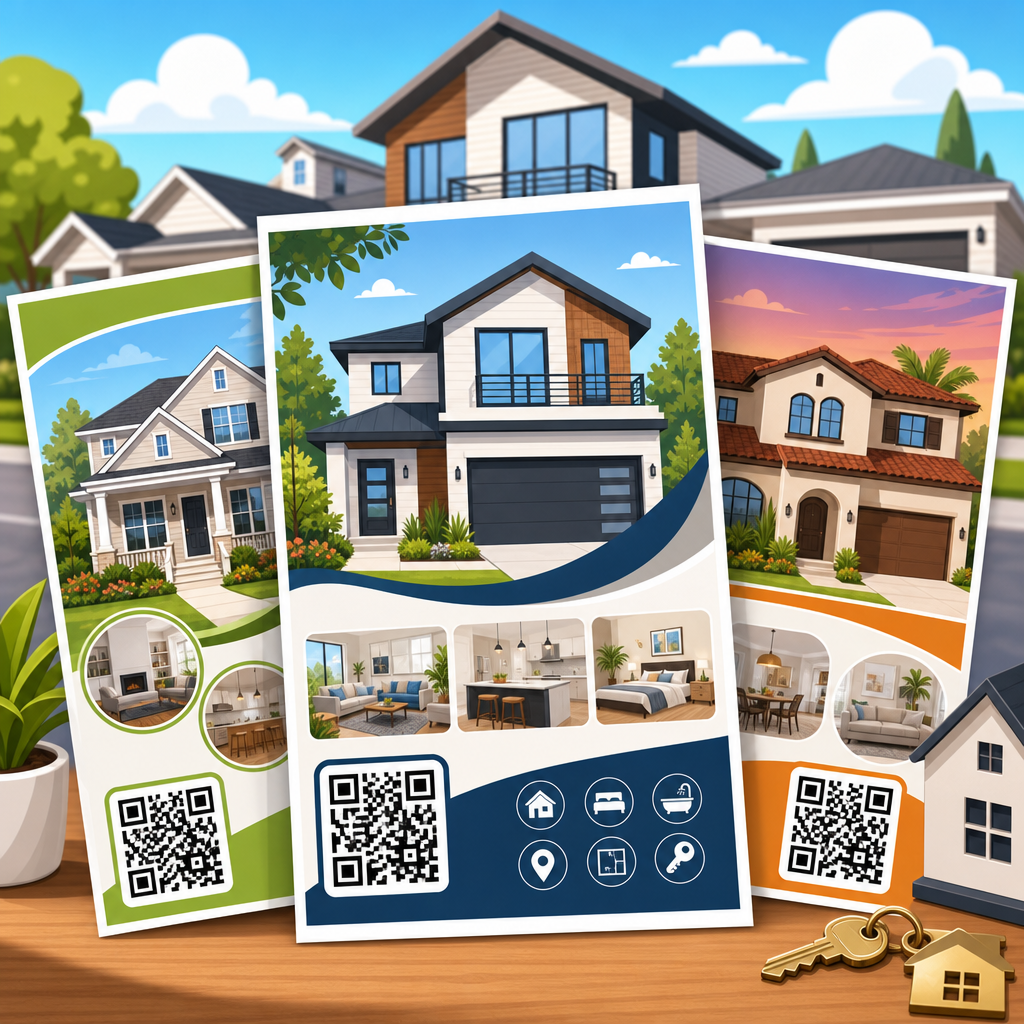
QR code templates for real estate flyers turn a simple printed handout into a measurable lead-generation tool, bridging the gap between offline browsing and online action. In real estate marketing, a flyer usually has one job: capture attention fast and move a buyer, seller, renter, or investor to the next step. A QR code helps that happen by giving people an instant path to a property page, virtual tour, contact form, mortgage calculator, open house registration, or downloadable brochure without asking them to type a long URL.
A QR code template is a repeatable layout that defines where the code appears, what call to action sits beside it, what destination it opens, and how the design supports scanning. For agents, brokers, marketing coordinators, and property managers, templates matter because consistency improves production speed, brand recognition, and campaign tracking. I have used QR codes on listing sheets, window cards, mailers, and open house flyers, and the same pattern always holds: the best-performing pieces do not just include a code; they explain exactly why someone should scan it and what happens next.
This topic matters because real estate marketing is increasingly hybrid. A buyer may spot a flyer in a coffee shop, scan it on the sidewalk, tour the property on a phone, then schedule a showing later from a laptop. Sellers compare agents based on how modern and responsive their marketing feels. Teams need scalable systems, not one-off designs. Strong QR code templates for real estate flyers solve several problems at once: they reduce friction, support attribution, keep materials current through dynamic links, and connect print campaigns to customer relationship management platforms such as HubSpot, Follow Up Boss, kvCORE, or Salesforce.
This article serves as the hub for QR code templates within a broader library of QR code resources, templates, and tools. It explains what a high-performing template includes, which flyer formats work best, how to match a code to the right real estate use case, what design standards protect scan rates, and how to measure results. If you need a reliable framework for listing flyers, open house handouts, rental sheets, neighborhood mailers, or investor packets, start here and build outward with specialized templates for each campaign type.
What a real estate flyer QR code template must include
A real estate flyer QR code template should include five core elements: a scannable code, a plain-language call to action, a destination aligned with buyer intent, brand-consistent design, and a tracking method. Remove any one of those and performance usually drops. A code without a call to action looks decorative. A code linked to a generic homepage wastes intent. A beautiful flyer with a low-contrast code may not scan at all. In practice, the template needs to guide both the designer and the agent so every flyer follows the same functional standard.
The destination should match the moment. On a just-listed flyer, the best landing page is often a mobile-optimized property detail page with photos, price, square footage, map, and a showing request form. On an open house flyer, the code should open an RSVP page, event details, or a digital sign-in form. For luxury listings, a code can lead to a cinematic video tour or interactive brochure. For rentals, it should open availability, pet policy, lease terms, and an application link. Templates work when they are purpose-built, not generic.
The call to action should be specific and benefit driven. “Scan for price, photos, and tour times” consistently outperforms vague wording such as “Learn more.” In my campaigns, adding even seven or eight words that clarify the reward increases scans because people know what they will get before using the camera. Placement matters too. The highest scan rates usually come from codes positioned in the lower right or near the property hero image with enough white space around them. Busy backgrounds, tiny sizes, and crowded text blocks create friction that print marketers often underestimate.
Best flyer types and template use cases
Different flyer formats call for different QR code templates because the audience intent changes. A single-property flyer is the most common format. Its code should drive to a dedicated listing page, not a portal search result, because control over branding, lead capture, and analytics is stronger on owned pages. A neighborhood mailer template, by contrast, may send users to a home valuation form, recent sales report, or landing page about local market trends. That supports seller lead generation rather than buyer inquiry.
Open house flyers deserve their own template because the timing is immediate. People scanning before or during an event want directions, parking notes, start and end times, and a frictionless sign-in option. A strong open house QR code template can also route to a digital brochure with property highlights and disclosures. Investor flyers often require more data-heavy destinations, such as cap rate estimates, rent rolls, zoning notes, renovation upside, and downloadable financial summaries. Rental flyers need fast answers on price, deposit, move-in date, and application requirements because renters abandon quickly if key details are missing.
Recruiting flyers for brokerages are another overlooked category. Here the code may lead to a landing page featuring commission structure, training resources, technology stack, team culture, and a confidential contact form. The same QR code template principles apply, but the content journey differs. Treating all real estate flyers alike creates weak user experiences. The best hub-level approach is to maintain a core template system with modular variants for listings, open houses, rentals, sellers, investors, and recruiting so the destination always matches the reader’s immediate question.
Design standards that protect scan performance
QR code design for real estate flyers is not only a branding decision; it is a usability decision. The code must remain readable across common phone cameras, print finishes, lighting conditions, and viewing distances. A safe minimum print size is generally around 0.8 by 0.8 inches for close-range flyers, though larger is better when space allows. Real estate teams often shrink codes to preserve layout aesthetics, then wonder why scans lag. If the flyer may be posted in windows or on community boards, increase the size because people will scan from farther away.
Contrast is nonnegotiable. Dark code on a light background is the standard for a reason. Reversing the colors, placing the code over photography, or using trendy low-contrast brand palettes can break scannability. Keep a quiet zone around the code; that empty margin helps scanners identify the symbol cleanly. Error correction can help a logo survive in the center of the code, but too much decoration increases risk. Test on multiple devices, including older Android phones, not just the latest iPhone. Real buyers use whatever is in their pocket.
File quality also matters. Use vector formats such as SVG or high-resolution PNG exports when placing codes into InDesign, Canva, Adobe Express, or Figma layouts. Avoid screenshots copied from web previews. Print proofs should be scanned before production, especially if the flyer uses gloss stock, UV coating, or unusual color treatment. I have seen beautiful luxury flyers fail because metallic finishes created glare directly over the code. Good templates specify size, color contrast, clear space, and approved export settings so designers do not improvise on essential technical details.
Recommended template structure and destination mapping
A practical hub for QR code templates should standardize the relationship between flyer goal, code placement, and landing page type. The table below outlines a proven structure used by many real estate teams to keep campaigns consistent while preserving flexibility by property and audience.
| Flyer type | Primary audience | Best QR destination | Recommended call to action | Key metric |
|---|---|---|---|---|
| Just listed | Active buyers | Property detail page with gallery and showing form | Scan for photos, price, and showing times | Showing requests |
| Open house | Local shoppers | Event page or digital sign-in form | Scan for directions and open house details | Registrations |
| Rental | Prospective tenants | Availability page with application link | Scan to view rent, terms, and apply | Applications |
| Seller mailer | Homeowners | Home valuation landing page | Scan for your home value estimate | Lead submissions |
| Investor sheet | Investors | Financial summary or deal page | Scan for numbers, comps, and upside | Downloads |
| Recruiting flyer | Agents | Careers page with confidential inquiry form | Scan to explore splits, tools, and support | Recruiting leads |
This structure prevents one of the most common mistakes in QR code flyer marketing: using one default destination for every campaign. A homepage link may seem convenient, but it rarely answers the question that prompted the scan. Matching the destination to intent improves user satisfaction and conversion rates. It also makes analytics cleaner because each template has a clear success metric tied to the campaign objective rather than a vague count of visits.
Dynamic QR codes, tracking, and analytics workflow
For most real estate flyer campaigns, dynamic QR codes are the better choice. A dynamic code lets you change the destination URL after printing, which is invaluable when a property goes pending, an open house time changes, or a rental becomes unavailable. Instead of reprinting, you can redirect the code to a backup listing, waitlist form, neighborhood page, or contact page. Static codes are acceptable for evergreen destinations, but real estate inventory changes too quickly for static links to be the default.
Tracking should start with UTM parameters so visits appear clearly in Google Analytics 4 or another analytics platform. Pair that with landing pages built to capture a clear event: form submissions, booked showings, brochure downloads, or phone clicks. If your CRM supports source attribution, map each flyer template to a campaign name so lead records identify whether the inquiry came from a yard flyer, office brochure, direct mail piece, or open house handout. This is how teams move from guessing to evidence-based marketing decisions.
Specialized QR platforms such as Bitly, Flowcode, QR Code Generator Pro, Beaconstac, and Uniqode can provide scan counts, time-of-day trends, rough location data, and device breakdowns. Those metrics are useful, but they are only the first layer. The deeper question is whether scans become conversations and closings. In my experience, the highest-value reports connect scan data with CRM outcomes: contact rate, appointment rate, and transaction value. A flyer that gets fewer scans but more qualified appointments is better than one with vanity traffic and no serious intent.
Common mistakes and how to avoid them
The most common QR code mistake on real estate flyers is treating the code as an afterthought added minutes before printing. That leads to weak calls to action, poor placement, and irrelevant destinations. Another frequent error is sending traffic to third-party portal pages that compete with your branding and may distract visitors with other listings. When possible, direct scans to owned landing pages where you control the message, form fields, media, and follow-up path. Control is especially important for luxury, new construction, and investor marketing.
Another avoidable problem is overloading the landing page. The flyer creates a narrow intent signal, so the page should answer the likely question immediately. If someone scans a rental flyer, the top of the page should show rent, photos, location, and apply options, not a generic brokerage banner and unrelated blog posts. Slow mobile load times also hurt results. Compress images, streamline scripts, and test the page over cellular connections because many scans happen away from strong Wi-Fi.
Compliance deserves attention as well. Real estate advertising may require brokerage identification, fair housing compliance, disclosure language, and local regulatory considerations. A QR code does not remove those obligations; it simply changes how details are delivered. Make sure landing pages remain current and legally reviewed where necessary. Finally, never assume a code works because it scanned once during design. Test the printed version in real conditions: indoors, outdoors, in glare, and at arm’s length. Good templates bake testing into the workflow instead of leaving it to chance.
How to build a scalable template library
The strongest real estate teams do not create QR code flyers from scratch each time. They build a template library with approved layouts, CTA language, code specifications, and destination rules for each campaign type. That library might live in Canva for fast production, in Adobe InDesign for tighter brand control, or inside a marketing operations system managed by a coordinator. The exact tool matters less than the governance. Everyone should know which template to use, which QR platform to generate links from, and which landing page format pairs with that flyer.
Create naming conventions that tie together the property, campaign, date, and distribution channel. Define approved CTA options, standard code sizes, and mobile landing page checklists. Build reusable modules for listing photos, amenity highlights, brokerage branding, disclosures, and contact methods. Then review performance quarterly. If one open house template produces stronger sign-in conversion than another, make it the default. A template hub is not a static asset library; it is a living performance system informed by scans, leads, and actual sales activity.
QR code templates for real estate flyers work best when they combine clear intent, disciplined design, and measurable outcomes. The core lesson is simple: a QR code should never be decorative. It should answer a specific question, send people to the right destination, and create a trackable path from paper to action. For listings, that may mean showings and brochure downloads. For sellers, it may mean valuation leads. For rentals, it may mean applications. For recruiting, it may mean confidential conversations with agents considering a move.
As the hub page for this subtopic, this guide gives you the foundation for every flyer-based QR campaign in your real estate marketing system. Use it to standardize layouts, choose the right destination for each use case, and avoid the technical mistakes that reduce scans. Then expand into specialized templates for open houses, luxury listings, rentals, investor deals, and direct mail. If you want better results from printed marketing, start by auditing your current flyers and replacing generic codes with purpose-built QR code templates that are designed to convert.
Frequently Asked Questions
What are QR code templates for real estate flyers, and why are they useful?
QR code templates for real estate flyers are pre-designed layouts that combine a scannable QR code with the visual elements and messaging commonly used in property marketing. Instead of placing a generic code on a flyer with little context, a template helps organize the code, headline, call to action, branding, property image, and supporting text in a way that looks intentional and professional. This matters because real estate flyers have limited space and only a few seconds to capture attention. A well-designed template makes it clear what the QR code does and why someone should scan it.
They are especially useful because they turn a static print piece into an interactive marketing tool. A person can scan the code and immediately visit a listing page, view a virtual tour, register for an open house, request pricing details, download a brochure, or contact the agent. That creates a smooth path from offline interest to online action. It also helps agents and marketers measure performance more effectively. Rather than guessing whether a flyer worked, you can track scans, clicks, and conversions tied to the destination behind the code. In practical terms, QR code templates help real estate professionals generate more leads, improve user experience, and make every flyer more accountable as part of a broader marketing strategy.
What should a real estate flyer QR code link to?
The best destination depends on the goal of the flyer and the audience receiving it. For an active listing, the most effective option is often a mobile-friendly property landing page with high-quality photos, pricing, location details, amenities, and a clear contact form. If the property has strong visual appeal, linking to a virtual tour or video walkthrough can increase engagement by giving buyers a richer experience right away. For open house promotion, a QR code can direct users to a registration page, calendar add-to-event link, or directions page. If the flyer is aimed at sellers, the code might point to a home valuation form, a seller guide, or a landing page explaining the agent’s listing process.
The key is relevance and simplicity. The destination should match the promise made on the flyer. If the call to action says “Scan to view the full photo gallery,” the code should lead directly there, not to a generic homepage where the user has to search. The landing page should also be fast, mobile-optimized, and focused on one next step, such as scheduling a showing, calling the agent, or requesting more details. In many cases, the best-performing QR code destinations are those that remove friction and immediately deliver value. The scan should feel rewarding, not confusing. When the flyer, QR code, and landing page all support the same message, response rates are typically much stronger.
How can I make a QR code on a real estate flyer more effective?
To make a QR code more effective, start by giving people a clear reason to scan. A code by itself is not enough. It should be paired with a compelling call to action such as “Scan for price and photos,” “Take the virtual tour,” “See open house times,” or “Get the full property brochure.” That short line of copy explains the benefit and increases the likelihood that someone will act. Placement also matters. The code should be easy to find without overwhelming the flyer. In most cases, it works best when positioned near the property image, headline, or contact section, where it feels connected to the main offer.
Design and usability are equally important. The QR code should be large enough to scan easily, printed with strong contrast, and surrounded by enough white space so smartphone cameras can detect it quickly. Avoid shrinking it too much or placing it over busy backgrounds. It is also wise to test the code on multiple devices before printing large quantities. On the destination side, send users to a page that loads quickly and is optimized for mobile screens. A slow or cluttered landing page can waste the interest created by the flyer. Finally, use trackable links or dynamic QR codes when possible so you can update the destination if needed and measure performance over time. Effective QR code flyers succeed because they combine good design, clear messaging, and a seamless user journey after the scan.
Can QR codes on real estate flyers help with lead tracking and marketing analytics?
Yes, and that is one of their biggest advantages. Traditional flyers are often difficult to measure because you may know how many were distributed, but not how many people engaged with them. A QR code changes that by creating a digital touchpoint. When someone scans the code, you can track actions such as total scans, time of engagement, device type, geographic patterns, and what users do on the landing page afterward. If the code leads to a form, open house signup, brochure download, or property inquiry page, you can also measure actual lead conversions rather than just initial interest.
This data can improve future campaigns significantly. For example, if one flyer template generates more scans than another, you can learn which calls to action, layouts, or offers resonate best. If scans are high but conversions are low, that may signal that the landing page needs improvement. Agents can also use separate QR codes for different properties, neighborhoods, or distribution channels to compare performance in a detailed way. When connected to CRM systems, email platforms, or analytics tools, QR code responses can become part of a larger lead nurturing process. In short, QR codes make flyer marketing more strategic by replacing guesswork with measurable behavior. That is especially valuable in real estate, where timing, follow-up, and local audience targeting can have a direct impact on closed deals.
What are the best practices for designing QR code templates for real estate flyers?
The strongest QR code templates balance branding, readability, and conversion-focused design. Begin with a flyer layout that highlights the property or offer first, then supports that message with a clearly labeled QR code. The code should never feel like an afterthought. It should be integrated into the design with a concise call to action and enough surrounding space to scan easily. Use clean typography, a strong visual hierarchy, and high-resolution property imagery so the flyer feels polished and trustworthy. Consistent brand elements such as logo, colors, and agent contact details also help build recognition and credibility.
From a practical standpoint, keep the user journey simple. Every template should answer three questions immediately: what this flyer is about, why the viewer should care, and what happens when they scan. Avoid cluttering the flyer with too many competing actions. If the main goal is to get people to book a showing, the QR code should support that single objective. It is also smart to design with print conditions in mind. Make sure the code remains scannable at the final print size, whether the flyer is being used on a bulletin board, in a brochure box, at an open house, or as a direct mail insert. Before finalizing any template, test both the printed output and the scan experience in real-world conditions. The best real estate QR code templates are attractive, easy to understand, technically reliable, and built to move prospects from casual interest to meaningful action.