How to generate QR codes using an API is a practical question for any team building modern payment flows, event check-ins, product packaging, customer support, or app-to-web handoffs. A QR code API is a web service that creates scannable QR symbols on demand, usually from a URL, text string, contact card, Wi-Fi credential, or payment payload. An SDK is a language-specific toolkit that wraps those API calls for environments such as JavaScript, Python, Java, PHP, or mobile apps. In production work, I have found that teams usually start with a simple “turn this link into an image” use case, then quickly need more control over error correction, size, branding, analytics, expiry, security, and high-volume generation.
That is why this topic matters. QR codes look simple, but implementation choices affect scan reliability, page performance, customer trust, and operational cost. Static codes encode data directly and cannot be changed after printing. Dynamic codes point to a short URL or redirect service, allowing destination updates, campaign tracking, and scan analytics without reprinting. APIs make both models scalable. Instead of designing codes one by one, you can generate thousands automatically from a database, attach them to inventory records, embed them in PDFs, or serve them in real time inside an application. For development teams, understanding QR code APIs and SDKs is the difference between a quick demo and a dependable system that works across devices, lighting conditions, print materials, and global user bases.
This hub explains the full landscape of QR code APIs and SDKs: core request patterns, image formats, payload types, security controls, branding limits, batch generation, analytics, testing, and integration strategy. It is written for product managers, developers, and technical marketers who need a reliable reference before choosing tools or designing an architecture. If you need to create QR codes from a backend service, mobile app, serverless function, CRM workflow, or ecommerce platform, the principles are the same. You must choose the right API model, pass validated data, return the right format, and test the code in the real environments where people will scan it. Everything else builds from those fundamentals.
How a QR Code API Works in Practice
A QR code API usually exposes an HTTP endpoint that accepts data plus rendering options and returns an image file or structured response. The simplest version is a GET request with query parameters such as data, size, format, and margin. For larger payloads or authenticated workflows, POST requests are better because they avoid URL length limits and keep sensitive content out of logs. Common response formats include PNG for general web and print use, SVG for crisp vector scaling, EPS or PDF for prepress workflows, and JSON when the service returns a downloadable asset URL, metadata, or tracking object alongside the code.
In real implementations, the request pipeline matters as much as the endpoint. A web app might collect user input, validate the destination URL, call the API from the server, store the returned file in object storage, and place the image on a landing page. A warehouse system might generate a code for each order, merge it into a packing slip, and archive the asset for auditing. A mobile app may skip a remote service and use an SDK or native library locally when speed and offline operation are important. The right approach depends on throughput, latency, privacy, and whether the code must remain reproducible later.
Most APIs also expose controls for QR code version, module color, background color, padding, and error correction level. Error correction is especially important. QR codes support four levels—L, M, Q, and H—roughly restoring 7 percent, 15 percent, 25 percent, or 30 percent of damaged data. Higher correction improves resilience when you add a logo or expect scratches, but it increases density, which can reduce scan performance at small print sizes. In production, I usually start with level M or Q, then test with the actual scanner apps and printing conditions rather than relying on defaults.
Choosing Between APIs, SDKs, and Self-Hosted Libraries
The fastest way to generate QR codes is often a hosted API. You send data, get an image, and avoid maintaining rendering code. This works well for websites, internal tools, and campaigns where speed of implementation matters more than absolute control. Hosted services frequently bundle dynamic redirects, analytics dashboards, branded short links, expiration rules, and access controls. The tradeoff is dependency on a vendor for uptime, rate limits, and data handling. If a code contains customer identifiers, prescription references, or private ticketing data, legal and security review should happen early.
SDKs help when you want vendor features but also want idiomatic integration. A JavaScript SDK may support browser preview generation, while a Python package might simplify authentication and retries in backend jobs. Native mobile SDKs can combine code generation with scanning and payload parsing. The advantage is faster development and fewer integration mistakes. The limitation is portability. If the vendor changes pricing, sunsets a method, or lacks support in one environment, migration can become expensive.
Self-hosted libraries give the most control. Popular open-source options include qrcode for Node.js, segno and qrcode for Python, ZXing for Java and Android, and Core Image on iOS for local generation. These are excellent for static codes, offline workflows, and privacy-sensitive deployments. However, libraries usually do not provide dynamic redirect management or analytics unless you build those services yourself. For many teams, the winning architecture is hybrid: local library generation for predictable internal codes and an external API for dynamic marketing, support, or omnichannel customer experiences.
| Approach | Best for | Key advantages | Main tradeoffs |
|---|---|---|---|
| Hosted API | Rapid deployment, dynamic campaigns, centralized management | Easy setup, analytics, redirects, branded features | Vendor dependency, rate limits, data governance review |
| Vendor SDK | Teams using one platform across web, backend, and mobile | Faster integration, built-in auth, fewer request errors | Lock-in, uneven language support, migration complexity |
| Self-hosted library | Offline generation, privacy-sensitive systems, static codes | Full control, no per-request fee, local processing | No native analytics or redirect layer, more engineering effort |
Supported Payloads, Formats, and Encoding Decisions
Not every QR code should contain just a plain URL. Well-designed QR code APIs support multiple payload types, and choosing the right one improves usability. Common types include website URLs, vCard contact records, calendar events in iCalendar format, Wi-Fi credentials using the WIFI: schema, SMS prompts, telephone links, email actions with mailto, geolocation coordinates, and payment strings such as EMVCo merchant-presented QR data. In logistics and manufacturing, teams may encode serial numbers, GS1 application identifiers, or internal asset references that connect to backend systems after scanning.
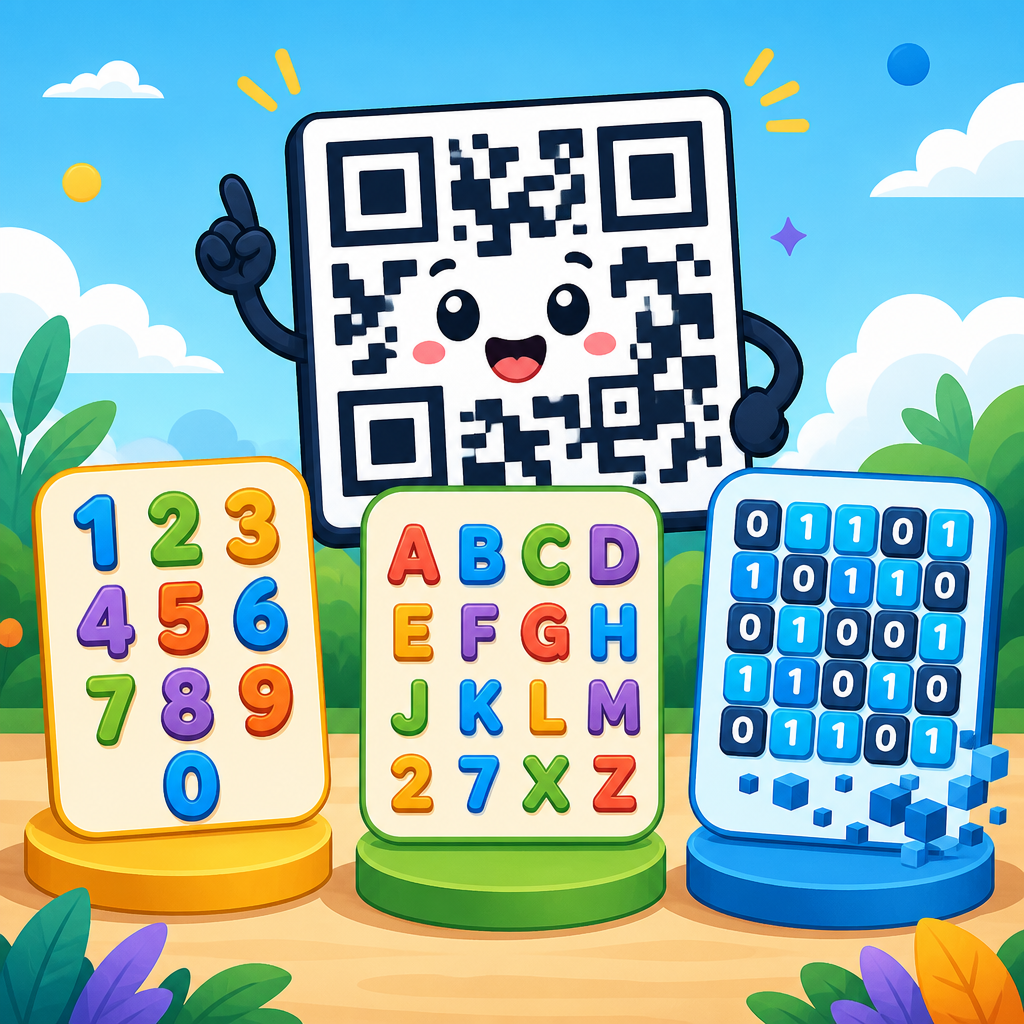
Encoding choices affect compatibility. UTF-8 support is essential for multilingual content. URL normalization prevents broken scans caused by malformed protocols or unescaped characters. Some APIs expose automatic segmentation, allowing the encoder to use numeric, alphanumeric, byte, or Kanji mode where appropriate to reduce symbol complexity. That matters when fitting more data into a smaller printed area. If you are embedding long signed URLs, shortening them through a managed redirect service often creates a more robust code than trying to force the full string into the symbol directly.
Output format should match the downstream use case. PNG is broadly compatible for websites and transactional documents. SVG is usually superior for responsive interfaces and high-resolution print because it scales without blur and remains compact for simpler symbols. For packaging, signage, and labels produced through design systems, vector output is often the safer choice. I advise teams to standardize format rules by channel: SVG for design and print workflows, PNG for email and legacy systems, and JSON metadata when orchestration platforms need file URLs, expiration data, or campaign identifiers.
Design, Branding, and Scan Reliability
A branded QR code can improve recognition, but branding should never compromise function. The core technical constraints are quiet zone, contrast, module shape consistency, and readable finder patterns. The quiet zone is the clear border around the symbol, typically four modules wide. Remove it, and many scanners fail. Dark modules on a light background remain the most reliable option; reverse contrast and low-contrast brand colors can hurt performance under glare or poor lighting. Rounded modules and embedded logos are common, but every change raises the need for testing.
APIs often include parameters for foreground color, background color, frame text, embedded logos, and custom eyes. Use them carefully. A center logo works best when paired with higher error correction, usually Q or H, but there are limits. If the symbol becomes too dense because the payload is long, even high correction may not save scanability. Print size matters too. A useful rule is that larger codes with shorter viewing distance scan more easily, while tiny labels and curved surfaces require conservative design choices. Restaurant table tents, parcel stickers, and billboard creative should never share identical render settings without validation.
Testing should mimic real conditions. I have seen beautiful codes fail because they were placed on glossy packaging under store lighting or shrunk in email signatures until camera autofocus struggled. Test with iPhone and Android default cameras, budget devices, third-party scanner apps, and dedicated scanning hardware when relevant. Verify performance in daylight, fluorescent light, and lower-light indoor settings. If your audience includes printed materials, test on the actual substrate: matte paper, coated stock, corrugated cardboard, plastic, or fabric. Rendering options belong in design standards, not ad hoc requests.
Dynamic QR Codes, Redirects, and Analytics
Dynamic QR codes are usually the most valuable feature offered by a QR code API platform. Instead of encoding the final destination directly, the code contains a short managed URL. When scanned, that URL resolves through a redirect layer that can change destination later. This enables campaign updates without reprinting, broken-link prevention, A/B testing, geolocation routing, device-based deep linking, and scan measurement. For product packaging or out-of-home advertising, that flexibility can save substantial reprint cost and preserve campaign continuity.
Analytics from dynamic codes typically include scan count, timestamp, approximate location by IP, device type, operating system, and referrer context where available. Used correctly, this data helps teams answer operational questions: Which poster placement drove engagement? Which printed insert converts better? Are scans coming from existing customers or new regions? Good platforms also support UTM parameter management, event webhooks, and export to BI tools. Still, analytics are not perfect. Privacy settings, VPN usage, bot traffic, and prefetch behavior can distort location and device data, so decision-making should use trends rather than assuming every scan equals a human interaction.
Redirect logic should be governed like any other production rule set. Use 301 or 302 responses deliberately, document fallback destinations, and monitor latency because slow redirects degrade the scanning experience. If a QR code is used for payments, healthcare instructions, or security verification, dynamic behavior must be tightly controlled with approval workflows and audit logs. Marketing agility is valuable, but ungoverned redirect editing can create compliance risks, phishing exposure, or support failures. The best implementations balance flexibility with role-based access and change history.
Security, Compliance, and Operational Resilience
Security is often underestimated because a QR code is just an image, but the underlying workflow touches URLs, files, customer data, and redirect infrastructure. Input validation is mandatory. Reject malformed links, unsafe schemes, oversized payloads, and untrusted custom domains. If your API supports file download URLs, sign them or place them behind controlled storage. For server-to-server use, prefer API keys stored in a secrets manager, or OAuth where offered. Never expose privileged generation endpoints directly from client-side code unless the vendor specifically supports restricted public tokens.
Compliance requirements depend on use case. Dynamic codes used in regulated sectors may need data residency controls, retention policies, access logging, and vendor assessments. Payment use cases require attention to EMVCo specifications, PCI scope boundaries, and fraud monitoring. Healthcare and education deployments may trigger sector-specific privacy obligations. Even outside regulated environments, phishing risk is real because users cannot read a destination by sight. Branded short domains, HTTPS everywhere, and clear on-page trust signals reduce that risk substantially.
Operational resilience comes from predictable engineering practices. Cache frequently requested static codes, apply retry logic with backoff for transient API failures, and log request identifiers for debugging. Establish rate-limit handling before launch, especially for batch jobs generating thousands of assets. Version your templates so a design change does not silently alter every downstream output. Finally, maintain a fallback path. If a hosted provider is unavailable, critical workflows may need a local generation library or pre-rendered reserve assets to avoid blocking shipments, check-ins, or customer communications.
Implementation Patterns, Testing, and Platform Strategy
Most successful teams standardize QR code generation as a shared service instead of letting every project implement it differently. A central service can expose approved payload types, design presets, redirect policies, analytics tagging, and domain validation rules. That reduces duplicated effort and prevents inconsistent branding. In one common pattern, the service sits behind an internal API gateway, receives a product ID or campaign ID, looks up metadata, calls the generation engine, stores the asset, and returns a canonical URL. Other systems then consume that output in web pages, PDFs, labels, or mobile screens.
Testing should cover three layers: payload correctness, render correctness, and scan correctness. Payload tests confirm that the encoded content matches expected strings and schemas. Render tests verify dimensions, margins, colors, and file formats. Scan tests confirm actual devices decode the symbol and land on the intended destination. Automated image diffing can catch accidental style changes, while scheduled monitoring of dynamic redirects can detect expired certificates, broken destination pages, or malformed routing rules. For high-value workflows, maintain a physical test kit with representative printers, label stocks, and devices.
As a sub-pillar hub for QR Code APIs and SDKs, this topic connects naturally to deeper articles on REST integration, mobile SDK selection, dynamic versus static QR codes, branded code design rules, redirect analytics, batch generation pipelines, payment QR standards, and security best practices. Start by mapping your use case, data sensitivity, scale, and reporting needs. Then choose the simplest architecture that meets those requirements and test it in the environments where people actually scan. A well-implemented QR code API turns a small square image into a dependable bridge between physical and digital experiences.
Frequently Asked Questions
What does a QR code API do, and when should I use one instead of generating QR codes manually?
A QR code API is a web service that creates QR codes dynamically from data you send in a request. Instead of designing and exporting codes one by one, your application can generate them on demand from values such as URLs, plain text, vCards, Wi-Fi credentials, payment payloads, coupon codes, ticket IDs, or customer support links. The API typically returns an image file, SVG, or a downloadable asset that can be embedded in apps, websites, labels, receipts, or emails.
Using an API is the better choice when QR codes need to be created at scale, personalized per user or transaction, or updated automatically as part of a workflow. For example, a payment platform might generate a unique code for each order, an event system might issue a different QR code for every attendee, and a packaging operation might print batch-specific codes tied to inventory or warranty data. In those cases, manual generation is too slow, error-prone, and difficult to maintain.
APIs also help standardize output across teams and channels. Instead of each developer or designer using a different tool, the organization can rely on one service for consistent size, error correction, branding options, output format, and encoding rules. That consistency matters in production because QR codes must remain highly scannable across different cameras, lighting conditions, surfaces, and print methods.
Another advantage is automation. A QR code API can be integrated directly into checkout systems, CRM platforms, event check-in flows, customer service portals, product packaging pipelines, and app-to-web handoff experiences. That means the code is generated exactly when needed, using current data, with less manual effort and fewer operational bottlenecks.
How do you generate a QR code using an API in a real application workflow?
In most implementations, the process is straightforward. Your application sends a request to the QR code API with the content you want encoded and, in many cases, formatting parameters such as image size, margin, foreground and background colors, file type, and error correction level. The API then responds with either the image itself or a URL where the QR code can be retrieved. Your app can display that result immediately, store it for later use, or pass it into a downstream workflow such as printing, emailing, or rendering in a mobile app.
A typical production flow starts with identifying the exact payload to encode. That might be a product URL, a short-lived authentication link, a digital menu, a support case reference, or a structured payment request. Once the payload is prepared, your backend or frontend uses HTTP to call the API. Some teams use a raw REST request, while others prefer an SDK in JavaScript, Python, Java, PHP, or a mobile environment to simplify authentication, request building, retries, and response handling.
After generation, the next step is where production requirements become important. If the QR code will appear on a website or inside an app, you may simply render the returned image. If it will be printed on packaging, badges, shipping inserts, or in-store signage, you may need a vector format such as SVG for crisp output at different sizes. If the code is tied to a transaction or event, you may also log metadata so the generated QR code can be traced back to a user, order, asset, or timestamp.
Many teams also add validation to the workflow. Before exposing the final code to customers, they verify the payload, test scan behavior, and confirm the destination link or content resolves correctly. In high-volume systems, this often happens automatically as part of the application logic, reducing the chance of broken links, malformed data, or codes that look correct visually but fail in real-world scanning conditions.
What data can be encoded in a QR code API, and how should I choose the right format?
A QR code API can encode much more than a basic web link. Common payload types include plain text, HTTPS URLs, phone numbers, SMS messages, email addresses, contact cards such as vCard or MeCard, Wi-Fi credentials, calendar event data, payment instructions, app deep links, and custom business identifiers. The right format depends on what action you want the user to take after scanning and what devices or apps need to interpret the code.
If your goal is broad compatibility, a standard HTTPS URL is usually the safest choice. It works across nearly all smartphones without requiring a special scanner app, and it gives you flexibility to manage the experience on the destination page. For example, a single URL can redirect users based on device type, language, campaign, or product region. This is especially useful for app-to-web handoffs, packaging campaigns, and customer support journeys.
Structured payloads are helpful when the QR code is meant to trigger a specific behavior. A Wi-Fi QR code can let users join a network without typing a password. A vCard can add a contact instantly. A payment payload can prefill recipient and amount information. These use cases improve user convenience, but they also require close attention to formatting rules, supported standards, and regional differences. A small encoding mistake can make the code scan but fail to perform the intended action.
You should also think about payload length. While QR codes can store a lot of data, smaller payloads generally produce simpler patterns that scan more reliably, especially at small print sizes or on lower-quality materials. In many cases, it is better to encode a short URL or token rather than a long string of raw data. That approach also makes it easier to update the underlying destination later without reprinting or redistributing the QR code itself.
What technical factors affect QR code quality, scanning reliability, and production readiness?
Several technical details have a direct impact on whether a QR code performs well in the real world. The most important are size, contrast, quiet zone, error correction level, and payload density. A code that is too small, too visually complex, or printed without enough clear margin around it can become difficult for cameras to detect. Even if it looks acceptable on screen, it may fail when scanned from a label, poster, receipt, or mobile display in poor lighting or at an angle.
Error correction is especially important in production. QR codes can remain readable even if part of the image is damaged, obscured, or stylized, but that resilience depends on the selected correction level. Higher error correction improves tolerance for wear, distortion, and branding overlays, though it also makes the QR pattern denser. Teams often balance this setting based on the use case. For example, a warehouse label may prioritize reliability, while a marketing code with a logo may need careful testing to ensure aesthetics do not reduce scannability.
Output format matters as well. PNG is often fine for websites and apps, while SVG is usually preferred for print because it scales cleanly without losing sharpness. Color choices should maintain strong contrast, typically a dark foreground on a light background. Inverted or low-contrast designs may look modern but can be less dependable across different scanners and environments. If your API supports custom styling, test those visual changes rigorously before deployment.
Production readiness also includes operational concerns. You should consider rate limits, API authentication, caching behavior, file storage strategy, monitoring, and fallback handling if the QR code service is temporarily unavailable. In larger systems, teams often pre-generate some codes, cache frequently used outputs, and log generation events for troubleshooting and analytics. The goal is not just to produce a valid QR image, but to create a dependable end-to-end process that continues working under real traffic, real device variation, and real business constraints.
Should I use a QR code API directly or work through an SDK?
Both approaches are valid, and the best choice depends on your environment, team preferences, and complexity of implementation. Calling the API directly gives you maximum control. You can build custom request logic, manage authentication exactly how you want, and integrate the service into an existing HTTP layer without adding another dependency. This can be a good option for teams that already have strong backend infrastructure or need fine-grained control over timeouts, retries, logging, and security behavior.
An SDK, on the other hand, is designed to make development faster and safer by wrapping the API in language-specific tools. Instead of manually assembling requests and parsing responses, developers use methods tailored to JavaScript, Python, Java, PHP, or mobile platforms. This often reduces boilerplate, speeds up onboarding, and lowers the chance of implementation mistakes. In many cases, SDKs also include conveniences such as typed objects, built-in validation, automatic authentication headers, and clearer error handling.
For production systems, the decision often comes down to maintainability. If multiple developers or teams will work with the QR code service, an SDK can create a more consistent integration pattern. If the service is simple and your application already standardizes outgoing API calls well, direct integration may be just as effective. Some organizations even use both: an SDK for rapid application development and direct API calls for specialized backend jobs or performance-sensitive workflows.
Whichever route you choose, focus on the broader engineering requirements, not just the first successful request. That means securing API credentials, validating inputs before generation, handling transient failures, testing output across devices, and documenting how QR code creation fits into your product flow. A working prototype is easy to build; a reliable, scalable QR