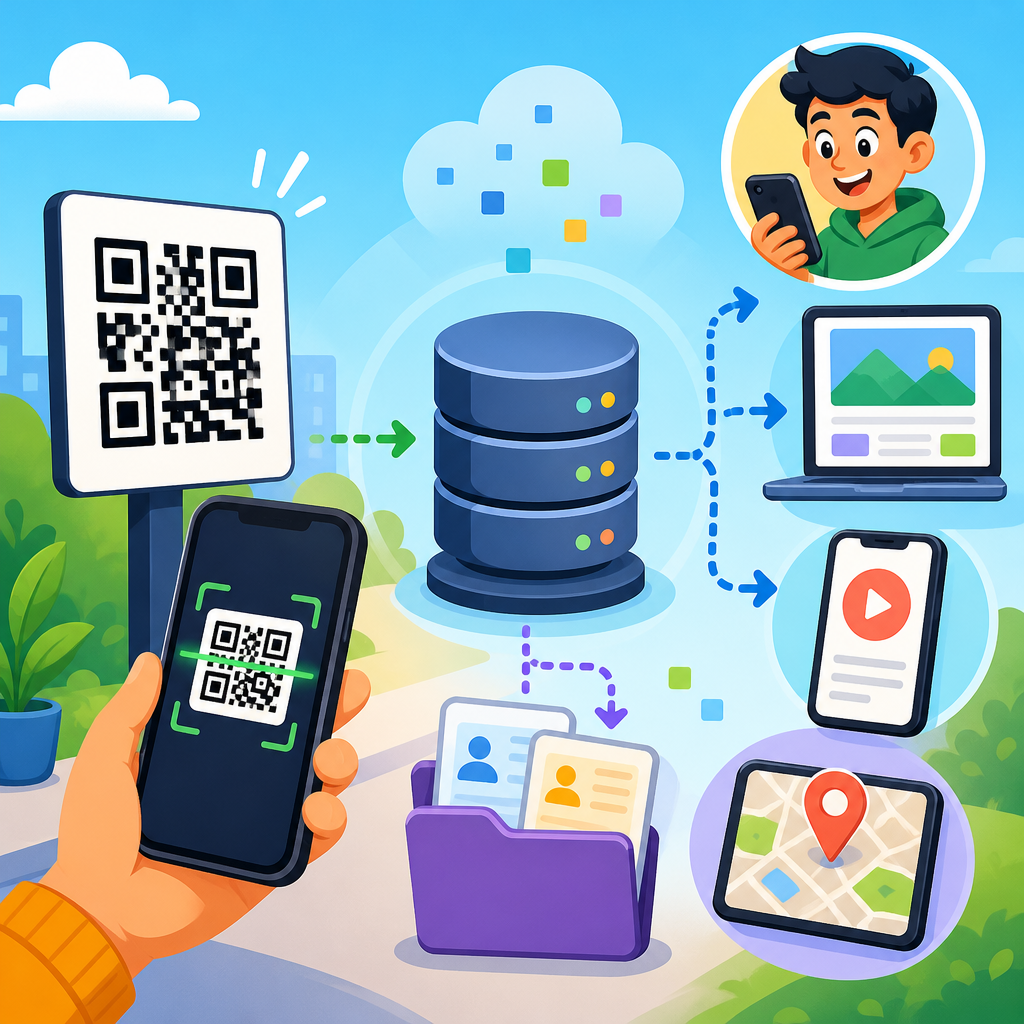
QR code databases are the operational backbone behind modern QR campaigns, authentication programs, asset tracking systems, and dynamic links, because the black-and-white square on a label usually stores only a compact pointer while the real business logic lives in a database. When teams talk about building QR code systems, they are really talking about designing the records, relationships, APIs, security controls, and analytics pipelines that decide what happens after a scan. A QR code database is the structured data layer that stores each code’s identity, destination, metadata, lifecycle state, and scan history. In practice, I have seen the same core pattern used by retailers managing product packaging, manufacturers tracking serialized parts, event teams issuing digital tickets, and marketers running location-aware campaigns. The reason this topic matters is simple: a QR code can be printed once, but the database determines whether it remains useful, editable, secure, and measurable over time. Without a well-designed database, dynamic redirects break, duplicate codes slip into circulation, attribution becomes unreliable, and privacy risks grow. For organizations investing in QR code technology and development, understanding how QR code databases work is essential because every later decision—code generation, content management, mobile scanning behavior, reporting, fraud prevention, and integrations with CRMs or ERPs—depends on the quality of this foundation. This article serves as a hub for building QR code systems comprehensively, explaining the architecture, schemas, workflows, and governance models that turn simple images into dependable digital infrastructure.
Core architecture of a QR code database
At a systems level, most QR platforms use one of two models: static payload storage or database-driven resolution. In a static QR code, the encoded content is complete in the symbol itself, such as a URL, Wi-Fi credential, vCard, or plain text string. The database may still exist for management, but scanning does not require a lookup. In a dynamic QR code system, the symbol usually contains a short URL or token, and the application resolves that token against a database to decide what content to return. That distinction is the first architectural decision because it affects editability, analytics, latency, and security.
The common production setup includes a code generation service, an application database, a redirect service, an analytics event pipeline, and an administration interface. The QR image is generated from a canonical identifier, often a random token, UUID, or opaque short code. When scanned, the request hits a resolver endpoint, which queries the database for the matching record, checks status rules, increments analytics counters or emits events, and returns a redirect or content response. Mature systems also include a cache layer such as Redis or Cloudflare edge caching to reduce database reads on high-volume scans.
Identifiers deserve special care. Sequential IDs are easy to manage but easier to enumerate, which can expose campaigns or tickets to guessing attacks. Opaque identifiers, base62 tokens, and cryptographically random strings are safer for public-facing systems. I typically separate the internal primary key from the public token. The database can use an integer or UUID as the primary key for joins, while the QR code itself carries a public token with strict uniqueness constraints. That small design choice improves maintainability without weakening security.
Data model: the tables and relationships that matter
A QR code database works best when the schema reflects the code lifecycle. The minimum useful entities are QR codes, destinations, owners, campaigns, scans, and access rules. In a simple setup, a qr_codes table holds the public token, status, type, error correction level, creation timestamp, and references to a destination. A destinations table stores the target URL, file asset, app deep link, or structured content. A scans table captures each scan event with timestamp, IP-derived geography, device fingerprint fields, referrer data, and result status. If the business needs content edits over time, versioning tables become important so teams can trace what destination was active when a scan occurred.
Normalization helps prevent duplicated data, but over-normalization can slow reporting. In systems I have built, operational writes and analytics reads often have different needs. The transactional database stores clean relational data, while a warehouse or event store supports aggregates such as scans by region, hour, campaign, or product SKU. This separation avoids burdening the live redirect path with expensive reporting queries.
| Table | Primary purpose | Typical critical fields |
|---|---|---|
| qr_codes | Stores each code identity and state | id, public_token, status, type, destination_id, created_at |
| destinations | Defines where a scan resolves | id, url, content_type, locale, version, active_flag |
| campaigns | Groups codes for marketing or operations | id, name, owner_id, start_date, end_date, objective |
| scan_events | Captures scan analytics and outcomes | id, qr_code_id, scanned_at, country, device_type, response_code |
| owners | Maps codes to users, brands, or departments | id, organization_id, role, permissions |
| rules | Applies logic such as expiration or geo-routing | id, qr_code_id, rule_type, condition_json, priority |
Constraints are as important as tables. Enforce uniqueness on public tokens. Index lookup columns used on every scan, especially public_token and active status fields. Add foreign keys where transactional integrity matters. For event tables at scale, partitioning by date can improve retention management and query speed. If the system supports one-time-use or limited-use codes, add atomic counters and transactional locks so simultaneous scans cannot produce double redemption.
How scan resolution works in real systems
When someone opens a camera app and scans a dynamic code, the process is fast but layered. The phone reads the encoded URL or token. The browser or in-app web view requests the resolver endpoint. The application looks up the public token in the database, validates that the code exists and is active, checks any business rules, logs the event, and serves the destination. If the code is expired, revoked, or malformed, the resolver should return a controlled fallback page rather than a generic error. That response path protects user experience and gives administrators a place to explain next steps.
Rule evaluation is where database design shows its value. A retailer may direct customers in France to a French product page while sending customers in Canada to bilingual content. An event platform may validate that a ticket code has not already been redeemed, then write a redemption timestamp and attendant ID. A manufacturer may map a serialized QR code on each component to a maintenance record and replacement part inventory. In each case, the same scan event triggers a different chain of database reads and writes.
Latency matters. Scan flows fail when redirects take too long on mobile networks. Production teams reduce delay by keeping the hot lookup path simple, indexing the token properly, caching active records, and deferring noncritical analytics enrichment to asynchronous jobs. I also recommend separating the redirect transaction from heavyweight enrichment steps such as detailed bot scoring or warehouse syncs. The user should get the destination first; secondary systems can catch up milliseconds later through a queue.
Building dynamic QR code systems that stay editable
Dynamic QR code systems are popular because they let teams change destinations without reprinting the symbol. The database is what makes that possible. Instead of storing the final page in the QR symbol, the platform stores a short resolver URL connected to a mutable destination record. An administrator can update the target URL, file asset, language variant, or app deep link in the database, and future scans follow the new rule set immediately or after cache expiration.
This flexibility is useful across industries. Restaurants update menus without replacing table stickers. Logistics teams repoint warehouse codes from a legacy internal tool to a new one. Consumer brands rotate campaign pages by season while preserving the same packaging artwork. The database should therefore support drafts, publishing states, scheduled activation windows, and change histories. Those features prevent accidental edits and make compliance reviews practical.
Version control is not optional in enterprise deployments. If a regulated company changes the linked safety sheet for a product, it may need an auditable history showing what content was active on a given date. Storing destination versions, editor IDs, timestamps, and approval states solves that problem. A rollback function is equally important. In real operations, someone eventually publishes a broken link or wrong locale. Reverting quickly from the database side is far cheaper than replacing printed materials.
Security, fraud prevention, and privacy controls
QR code systems are public by nature, which makes the database a security boundary. The biggest risks are token enumeration, malicious redirects, unauthorized edits, replay attacks on redeemable codes, and excessive data collection. Strong random public tokens reduce guessability. Allowlists for destination domains prevent an editor from sending traffic to unsafe sites. Role-based access control, multifactor authentication, and immutable audit logs help protect the administration layer.
For redemption and authentication use cases, signed data and server-side validation matter. A coupon code printed as a plain static URL can be copied easily. A better pattern is a dynamic QR code linked to a database record with status transitions such as issued, scanned, redeemed, voided, and expired. The resolver can verify the current state before allowing redemption. For anti-counterfeit applications, manufacturers often combine serialized identifiers with tamper-evident packaging and anomaly detection in scan events, such as the same code appearing in multiple countries within hours.
Privacy requirements shape database design too. If scan analytics are tied to individuals, the system may fall under GDPR, CCPA, or sector-specific rules. Data minimization is the safest default. Store what is necessary for operations and measurement, avoid keeping raw IP addresses longer than needed, define retention windows, and document legal bases for processing. For many teams, aggregated geography and device categories are enough. If user-level linkage is required, consent handling and deletion workflows must be built into the schema and APIs from the start.
Analytics, integrations, and operational scale
A QR code database becomes far more valuable when it connects to the rest of the stack. Marketing teams want campaign attribution in Google Analytics 4, Adobe Analytics, or a CDP. Sales teams want lead or product interactions synced into Salesforce or HubSpot. Operations teams want scans associated with assets in an ERP, CMMS, or inventory platform. These integrations usually depend on stable identifiers in the database and well-documented webhooks or APIs.
Analytics quality depends on event modeling. A scan event should distinguish between human scans, known bots, duplicate scans, successful redirects, blocked resolutions, and redemption actions. Time zone handling must be consistent, ideally storing UTC plus derived local reporting dimensions. If location is inferred from IP, the system should mark it as approximate rather than exact. High-quality event definitions prevent misleading dashboards and bad decisions.
At scale, database choice depends on workload. PostgreSQL is a strong default for relational integrity, transactional updates, and flexible indexing. MySQL also works well for many web-facing systems. For very high event volumes, teams often stream scan events through Kafka, Kinesis, or Pub/Sub into BigQuery, Snowflake, or ClickHouse for analytics. Redis can absorb hot reads on popular codes. A CDN can cache redirects for fully static resolution rules, though caching must be bypassed for one-time-use, personalized, or rapidly changing destinations.
Reliability is the last operational test. Backups, point-in-time recovery, replication, uptime monitoring, and synthetic scan tests should be standard. QR codes often live in physical environments for months or years, so the supporting database must be treated as long-lived infrastructure, not a disposable campaign tool.
Building QR code systems successfully starts with understanding that the symbol is only the surface and the database is the product. A strong QR code database gives every code a durable identity, a manageable lifecycle, secure resolution logic, and measurable outcomes. It supports dynamic edits without reprints, structured analytics without guesswork, and integrations that connect scans to marketing, service, inventory, and authentication workflows. The practical patterns are consistent across industries: use opaque public tokens, model codes and destinations separately, index the lookup path, version destination changes, protect the admin layer, and collect only the data you truly need. When volume grows, separate transactional operations from analytics processing so scan speed stays fast. When stakes are high, build for auditability, failover, and fraud detection from day one. If you are developing under the broader QR Code Technology & Development umbrella, this hub should guide your next steps in building QR code systems with confidence. Use it to evaluate your current architecture, tighten your schema, and plan the supporting services that turn a simple scan into a dependable business process today.
Frequently Asked Questions
What is a QR code database, and why is it so important?
A QR code database is the system that stores and manages the information connected to each QR code in a campaign, product line, asset program, or authentication workflow. In many modern implementations, the QR code itself does not contain all of the final destination data or business rules. Instead, it often stores a short URL, ID, token, or other compact reference that points to a record in a database. When someone scans the code, the application or web service looks up that record and decides what should happen next, such as opening a landing page, verifying authenticity, logging a scan event, retrieving asset history, or showing region-specific content.
This matters because the database is what turns a static square image into a flexible operational tool. Without the database layer, every QR code would be far more limited, especially if a business needed to change destinations, rotate campaigns, measure performance, enforce access rules, or support serialization at scale. The database allows teams to update content after codes have already been printed, which is essential for packaging, field equipment, inventory labels, and long-running marketing efforts.
It is also important because the database is where relationships live. A single code may be linked to a product SKU, manufacturing batch, owner account, maintenance log, campaign, geographic rules, expiration settings, and security status. In other words, the database is not just a storage container. It is the decision engine behind the scan. That is why organizations building QR systems spend so much time designing schemas, APIs, access controls, and analytics pipelines rather than focusing only on the symbol itself.
What kind of data is typically stored behind a QR code?
The exact data model depends on the use case, but most QR code databases include a unique identifier for each code and one or more records that define what should happen after a scan. For a marketing system, that may include the destination URL, campaign name, UTM parameters, active dates, language rules, and A/B testing settings. For product authentication, it may include serial number, lot number, production date, distribution channel, scan history, and status indicators such as valid, redeemed, flagged, or counterfeit suspected.
In asset tracking systems, the database often stores equipment IDs, location assignments, maintenance schedules, inspection logs, user permissions, and change history. In dynamic link systems, the stored information may include redirect rules by device type, country, time of day, or user segment. In all of these cases, the actual QR code can remain small and simple because the richer data is maintained centrally in the database.
Most mature systems also store scan event data. That usually includes timestamp, approximate location, device or browser information, referral source, IP-derived metadata, and the resolved action taken after the scan. This event layer is crucial for analytics, fraud monitoring, operational reporting, and performance optimization. Many organizations also maintain audit fields such as who created a code, when it was updated, what rules changed, and whether access to the record is restricted. So while people often think of QR codes as just links, the databases behind them are usually much more structured and much more valuable.
How does the database work when someone scans a QR code?
When a user scans a QR code, the device reads the encoded content, which is often a URL or compact token. That scan triggers a request to a server or application endpoint. The backend then uses the token, code ID, or URL path to query the database and find the corresponding record. Once the record is located, the system applies whatever business logic has been configured. It might redirect the user to a web page, fetch product details, confirm whether an item is authentic, log the scan for compliance purposes, or present different content based on the scanner’s region, language, or device.
In a dynamic QR setup, this lookup happens in real time. That is what makes it possible to change behavior without reprinting the code. A team can update the database record, and every future scan can follow the new logic immediately. This is especially useful for promotions, product recalls, event materials, support portals, and serialized products. The QR image stays the same, but the scan outcome can evolve because the database entry changes.
Well-designed systems also separate concerns across multiple layers. One service may handle the incoming scan, another may validate the code and permissions, another may write analytics events, and another may determine the final content or redirect target. Caching may be used for speed, while databases of record preserve consistency and auditability. In enterprise environments, the workflow may also involve API calls to inventory systems, CRM platforms, authentication services, or digital content management tools. So the scan experience may feel instant to the user, but behind the scenes it is often supported by a fairly sophisticated chain of database queries and application logic.
How do QR code databases support security, authentication, and fraud prevention?
Security is one of the main reasons businesses rely on databases rather than embedding all information directly in a QR code. A database-backed system allows the organization to validate each scan against live records and enforce rules that cannot be safely managed in a static code alone. For example, a unique serialized QR code can be tied to a specific item in the database, and the system can check whether that code has already been scanned, whether it belongs to the claimed product, whether it is being scanned in an expected geography, and whether its status has changed to expired, recalled, or redeemed.
This is especially valuable for anti-counterfeiting and product authentication. If counterfeiters copy a visible QR code, a well-designed backend may still detect suspicious behavior by recognizing unusual scan frequency, impossible travel patterns, duplicate serialization events, or scans from unauthorized channels. The database can flag anomalies, trigger alerts, or change what the user sees. Instead of simply resolving to a page, the system can return a warning, request additional verification, or log the event for investigation.
Security controls also extend to the management side. Access to QR records should typically be protected through authentication, role-based permissions, encryption, audit logs, and secure APIs. Sensitive business rules, token mappings, customer associations, and analytics data should not be publicly exposed. Many systems also use signed URLs, expiring tokens, or server-side validation to reduce abuse. In short, the database provides a controlled environment where each QR code can be monitored, governed, and updated over time, making the overall system far more resilient than a purely static implementation.
What should businesses consider when designing a QR code database?
Businesses should start by defining the real purpose of the QR system, because the database design needs to reflect the operational goals behind the scan. A marketing campaign database may prioritize redirect flexibility, audience segmentation, and analytics. An asset tracking database may prioritize lifecycle history, user permissions, and location accuracy. A product authentication database may prioritize serialization, integrity checks, anomaly detection, and immutable audit trails. The use case drives the schema, indexing strategy, API design, and reporting model.
Scalability is another major consideration. Even a simple QR initiative can grow quickly if codes are printed across packaging, field equipment, documentation, and retail environments. The database must be able to handle large numbers of unique records, fast lookup times, and potentially heavy bursts of scan traffic. Teams should also plan for data retention, backup policies, failover architecture, and integrations with other systems such as ERP, CRM, warehouse management, or analytics platforms.
It is equally important to think about governance and maintainability. Businesses should decide who can create codes, who can update destinations, how changes are approved, how retired codes are handled, and how scan events are stored and analyzed. Privacy compliance may also matter depending on what scan data is collected. Finally, organizations should design for adaptability. The best QR code databases are not built only for today’s campaign or workflow. They are built to support changing destinations, new business rules, additional metadata, and future integrations without forcing a complete rebuild every time requirements evolve.