Choosing the right QR code generator affects far more than design convenience; it determines scan reliability, analytics depth, campaign flexibility, and even whether a code will still work months after you publish it. In the QR Code Creation & Tools space, QR Code Generators Reviews & Comparisons sit at the center because every downstream decision, from print size to tracking setup, depends on how the code was created. A QR code generator is the software that converts a destination such as a URL, PDF, vCard, Wi-Fi credential, app link, or payment request into a machine-readable matrix barcode. The most important distinction is between static and dynamic codes. Static codes store the final destination directly in the pattern and cannot be edited after printing. Dynamic codes point to a short redirect URL controlled by the platform, allowing edits, scan analytics, device targeting, and campaign management without changing the printed code. Free and premium tools both generate scannable codes, but they differ sharply in governance, branding control, export quality, bulk creation, privacy, and long-term reliability. After testing generators for packaging, retail signage, restaurant menus, event badges, and direct mail, I have seen the same pattern repeatedly: the cheapest option often works for a single flyer, while paid platforms earn their cost when teams need editable destinations, accurate reporting, and operational consistency. This hub article explains how to compare QR code generators, where free tools are sufficient, when premium platforms become necessary, and which evaluation criteria matter most if you are selecting software for marketing, operations, or product labeling.
What free and premium QR code generators actually offer
Free QR code generators usually focus on quick creation. They let users enter a URL, text string, email address, phone number, or Wi-Fi login and immediately download a PNG or SVG. For simple one-off uses, that can be enough. Teachers sharing a worksheet, a local club linking to a signup form, or a freelancer adding a portfolio link to a business card may not need dashboards, team permissions, or campaign analytics. Many reputable free tools also support error correction level selection, foreground color changes, and vector exports, which are valuable because print quality matters more than decorative features.
Premium QR code generators add a management layer around code creation. In practical terms, that means editable destinations, scan timestamps, location summaries, UTM support, password-protected landing pages, expiration rules, retargeting pixels, folders, subaccounts, and API access. Platforms such as Bitly, QR Code Generator Pro, Beaconstac, Flowcode, BL.INK, Uniqode, and Scanova position QR codes as managed assets rather than disposable files. That distinction matters for organizations running recurring campaigns. If a restaurant changes its menu URL, a static code on ten thousand table tents becomes a replacement project. A dynamic code managed in a premium dashboard can be updated in minutes.
The tradeoff is dependence on the provider. With free static tools, the code exists independently once generated. With premium dynamic tools, long-term functionality relies on the vendor maintaining redirect infrastructure and account access. That is not inherently bad, but it should influence procurement. When I evaluate a platform, I check whether paused subscriptions disable scans, whether export and redirect ownership are documented, and whether custom domains are supported. Those details often matter more than template libraries or logo effects.
Core comparison criteria: scan performance, control, analytics, and governance
The best QR code generator comparison starts with four practical categories: scan performance, destination control, analytics, and governance. Scan performance depends on symbol contrast, quiet zone preservation, correction level, version sizing, and export fidelity. A generator that allows users to over-customize colors, shrink margins, or place oversized logos can create attractive but fragile codes. Reliable tools set sensible defaults and preview print-safe outputs. I favor platforms that warn when contrast is too low or when design choices reduce readability on older phone cameras.
Destination control determines whether the code can evolve after launch. Static generators lock in the content. Dynamic generators create a redirect layer that enables URL editing, scheduled changes, A/B routing, and in some platforms device-specific destinations. For marketers, this is the single biggest dividing line between free and premium QR code generators. For operations teams, it also simplifies asset management because the printed code remains usable through backend changes.
Analytics quality varies widely. Entry-level tools may count total scans only. Stronger platforms report unique scans, time, geography, operating system, and campaign source integration. The best products connect QR scans to existing analytics stacks using UTM parameters, Google Analytics 4 conventions, Meta Pixel, or webhook and API workflows. Governance includes user roles, approval controls, naming standards, folders, audit trails, and custom domains. These features sound administrative, but in larger organizations they prevent broken links, duplicated assets, and off-brand code deployments.
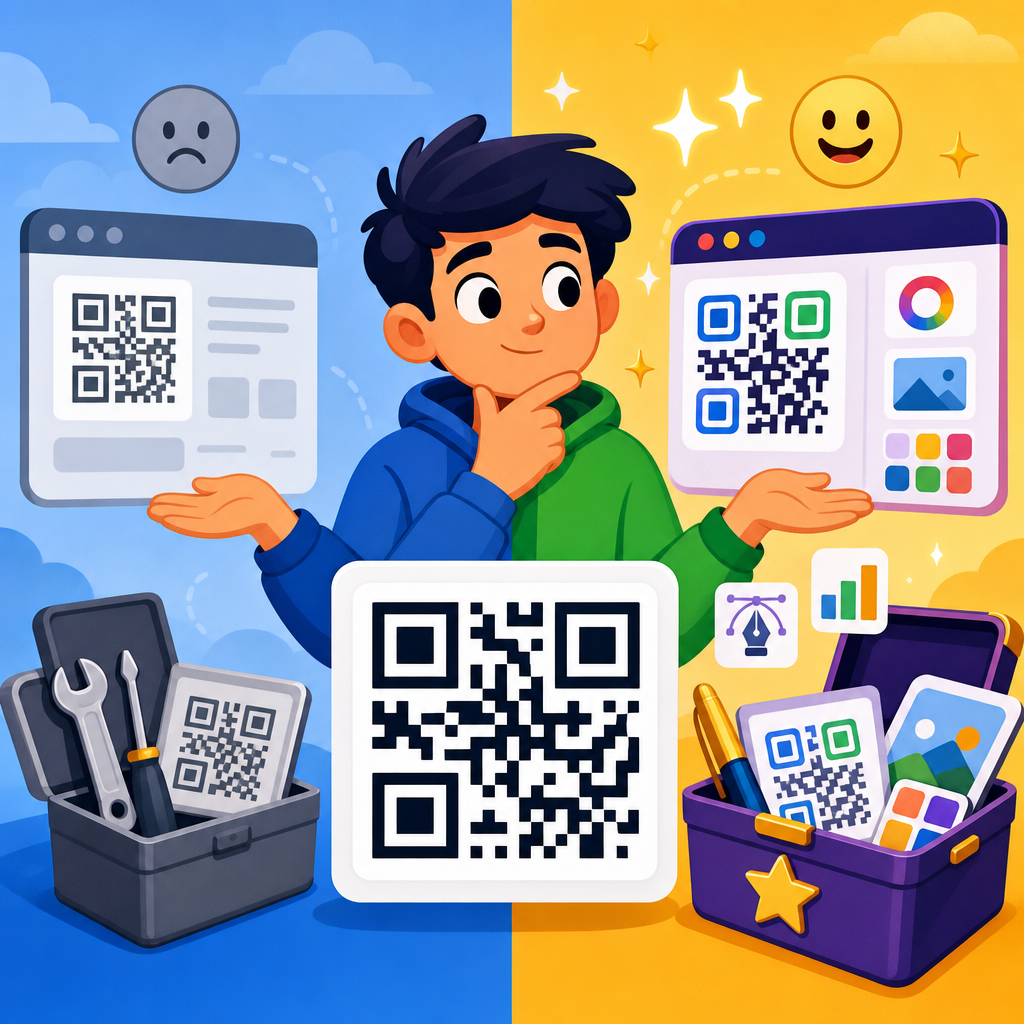
| Criterion | Typical Free Tool | Typical Premium Tool | Why It Matters |
|---|---|---|---|
| Code type | Mainly static | Static and dynamic | Dynamic codes can be edited after printing |
| Analytics | None or basic scan counts | Time, location, device, unique scans | Supports campaign measurement |
| Branding | Limited colors and logo support | Advanced customization and templates | Improves consistency without harming readability |
| File export | PNG, sometimes SVG | PNG, SVG, EPS, PDF | Vector files are better for print production |
| Team features | Usually absent | Roles, folders, subaccounts, audit logs | Reduces errors in multiuser environments |
| Scale | Manual creation | Bulk generation and API | Essential for labels, tickets, and inventory |
When a free QR code generator is enough
Free QR code generators are the right choice in more scenarios than vendors admit. If your destination will not change, if scan tracking is unnecessary, and if you can verify print readability before distribution, a free static code is often the most robust option. A museum volunteer sheet, a wedding RSVP card, a classroom handout, or a short-term poster campaign for a single event can all run successfully on a static code generated at no cost. In these cases, avoiding platform dependency is a benefit, not a limitation.
The best use cases for free tools share three characteristics. First, the content is stable. A PDF brochure archived on a permanent URL or a homepage link is unlikely to require updates. Second, there is low operational risk if the code underperforms. A failed scan on a neighborhood flyer is inconvenient; a failed scan on medical instructions or shipping labels is unacceptable. Third, the organization has no need for attribution beyond overall traffic measurement in its web analytics platform. You can still append UTM parameters before generating a static code, which gives basic campaign visibility without paying for a dashboard.
However, free does not mean careless. I always recommend exporting in SVG when available, keeping dark modules on a light background, preserving the quiet zone, and testing across multiple phones before printing. Some free generators monetize by gating high-resolution files or by creating dynamic codes that stop working unless you upgrade. That is a critical distinction. A truly free static QR code remains functional regardless of account status. If the offer is unclear, inspect the encoded content with a scanner before deployment and confirm whether it points directly to your final URL or to a vendor-controlled short link.
When premium QR code generators justify the cost
Premium tools become worthwhile when the printed asset outlives the initial destination, when scan data influences decisions, or when teams need repeatable workflows. Retail packaging is a clear example. A product box may stay in distribution for a year, yet the company may need to update the landing page by market, season, or promotion. Dynamic QR codes make that possible without scrapping inventory. The same logic applies to restaurant menus, real estate signage, trade show displays, and in-store shelf talkers. Once physical materials are expensive to replace, editability alone can cover the subscription cost.
Analytics are the second major reason to pay. A premium platform can show whether scans peak during store hours, whether one poster location outperforms another, or whether iOS users complete a mobile wallet offer more often than Android users. Those insights support budget allocation and creative testing. In one campaign I worked on, dynamic QR reporting showed that a window decal generated many scans but poor conversions, while a counter card generated fewer scans but substantially higher form completion. Without generator-level reporting, the team would have optimized the wrong asset.
Premium tools also solve scale and compliance problems. Bulk generation is essential for unique codes on event badges, serialized packaging, equipment tags, loyalty cards, and ticketing systems. APIs matter when QR creation must be integrated into a CRM, e-commerce workflow, or manufacturing line. Larger organizations should also evaluate custom domains, single sign-on, data retention policies, and regional hosting. For regulated sectors, vendor security documentation and role-based permissions are not optional extras. They are part of risk management.
How to evaluate specific QR code generator platforms
If you are comparing QR code generators reviews and comparisons across multiple vendors, use a structured shortlist rather than feature hunting. Start with code type support: static, dynamic, and the content categories you need, such as PDF, vCard, app store routing, coupons, forms, or Wi-Fi. Then verify export formats. For print, SVG, EPS, or PDF are preferable because they scale cleanly and preserve edges. PNG is acceptable for digital use but often causes avoidable quality issues in large-format print.
Next, test scan reliability in real conditions. Create a branded code, print it at the smallest size you expect to use, and scan it under indoor lighting, glare, and slight curvature if it will appear on bottles or packaging. Evaluate whether the platform protects the quiet zone and whether the logo treatment remains readable. A sophisticated dashboard is irrelevant if the code struggles on midrange Android phones. Usability matters too. Teams adopt platforms more consistently when naming conventions, folders, templates, and editing flows are clear.
Finally, assess commercial and operational terms. Look for transparent pricing on dynamic code limits, scan caps, user seats, and API access. Confirm what happens if you downgrade or cancel. Review support responsiveness, documentation quality, uptime commitments, and migration options. Vendors with custom domains reduce lock-in because the public redirect can remain under your control. As this sub-pillar hub expands, supporting articles should drill into categories such as dynamic versus static QR codes, bulk generation tools, analytics platforms, branded QR code design, and print testing methods. Those internal topic paths help readers move from broad comparison to implementation decisions, which is exactly how successful QR tool selection usually happens in practice.
The right QR code generator is the one that matches the lifespan, scale, and measurement needs of your project. Free tools are often ideal for stable, low-risk, one-time uses where a static code and careful testing are enough. Premium platforms earn their keep when you need editable destinations, reliable analytics, team workflows, bulk creation, or governance features that protect branded assets over time. The most important lesson is simple: do not compare generators by price alone. Compare them by scan reliability, export quality, dynamic control, analytics depth, and vendor terms. That framework prevents the most common mistake I see, choosing a convenient tool that later creates reprint costs, broken redirects, or missing campaign data. Use this page as your hub for QR Code Generators Reviews & Comparisons, then move into deeper evaluations of dynamic tools, static generators, analytics options, and branded code best practices. If you are selecting a platform now, shortlist three tools, generate test codes, print them at real size, and validate both the user experience and the management workflow before committing.
Frequently Asked Questions
What is the biggest difference between free and premium QR code generators?
The biggest difference is not usually the ability to make a QR code at all. Most free tools can generate a basic code that sends users to a website, phone number, email address, or Wi-Fi network. The real gap appears in what happens after creation. Premium QR code generators typically offer dynamic QR codes, editable destinations, scan analytics, branding controls, campaign organization, error correction options, team access, and stronger long-term reliability. In contrast, many free tools focus on one-time code creation with limited customization and little to no performance tracking.
This matters because a QR code is often part of a larger marketing, operational, or customer experience workflow. If you print a code on packaging, signage, menus, flyers, or direct mail, you may later need to update the destination URL without reprinting the code. That is usually only possible with a dynamic QR code, which is commonly a premium feature. Premium platforms also tend to support UTM tagging, scan location and device data, password protection, expiration settings, and folder-based campaign management, all of which are valuable for businesses running measurable campaigns rather than simply sharing a link.
Another major distinction is quality control and platform stability. Some free QR code generators are excellent for personal or simple business use, but others place restrictions on download resolution, inject branding, or rely on trial-based dynamic codes that stop working when the trial ends. Premium providers are generally more transparent about usage limits, service terms, and support. If your QR code will be distributed at scale or expected to remain functional for months or years, reliability and governance can matter more than the initial purchase price.
Are free QR code generators good enough for business use?
Yes, free QR code generators can be good enough for certain business uses, but only in specific situations. If you need a static QR code for a permanent destination, such as a homepage, a contact card, a PDF that will not change, or a simple in-store sign, a reputable free tool may be perfectly adequate. Small businesses, local events, solo creators, and internal teams often start with free generators when speed and budget are the top priorities. In these cases, the key is choosing a tool that creates truly permanent static QR codes, provides adequate export quality, and does not attach hidden limitations.
Where free tools start to fall short is when the QR code becomes part of an ongoing campaign or customer journey. If you need to change the linked page later, measure scan activity, compare traffic sources, assign different codes to different locations, or maintain brand consistency across multiple assets, a free tool can quickly become restrictive. A business that prints 10,000 brochures and later needs to update the landing page will discover that a static code generated for free may create an expensive reprint problem. Likewise, if leadership expects reporting on engagement, a free generator without analytics will not provide the insight needed to justify campaign spend or optimize results.
For business use, the right question is not just whether a free generator works, but whether it supports the risk level and operational needs of the project. If the code is low stakes, short-lived, and points to a stable destination, free may be enough. If the code is tied to paid marketing, customer acquisition, inventory, events, product packaging, or any asset that is costly to replace, premium features often deliver better long-term value. Businesses should compare not only price, but also editability, scan reliability, file format options, analytics, support, and service continuity.
Why do dynamic QR codes matter so much when comparing tools?
Dynamic QR codes matter because they separate the printed code from the final destination. Instead of encoding the destination directly into the QR pattern, a dynamic code uses a short redirect URL managed by the platform. That means you can change the landing page later without changing the code itself. This single feature has major practical consequences. It protects printed materials from becoming obsolete, allows campaign updates in real time, and gives businesses the flexibility to test different destinations, promotions, or localized experiences long after a QR code has been published.
Dynamic codes are also central to analytics. Because scans pass through the generator platform before redirecting to the final destination, the software can record useful information such as scan counts, timestamps, device types, approximate locations, and in some cases referral context. That makes dynamic QR codes especially important for marketers, retailers, event organizers, restaurants, real estate teams, and product managers who want to understand how offline touchpoints contribute to online engagement. In a comparison between free and premium tools, dynamic functionality is often the dividing line between simple code creation and true campaign management.
There is also a cautionary side to dynamic QR codes. Since they depend on the provider’s infrastructure, the long-term reliability of the code is directly tied to the platform’s business model and uptime. Some tools advertise free QR generation but provide only temporary dynamic codes, limited scans, or trial-based access that expires. That can leave users with printed codes that stop functioning or become locked behind a paid plan. When comparing tools, it is important to verify whether a code is static or dynamic, who controls the redirect, whether edits are included in the plan, and what happens if the subscription changes. Dynamic QR codes are powerful, but only when the platform is trustworthy and transparent.
What features should I prioritize when comparing premium QR code generators?
The most important premium features depend on how you plan to use QR codes, but several capabilities consistently matter across industries. First, prioritize dynamic QR code support with simple destination editing. This is foundational because it protects printed assets and gives you flexibility after launch. Second, look for strong analytics, including scan volume, time-based trends, device breakdowns, and location insights. If your team is using QR codes in marketing or customer engagement, data is what turns a code from a utility into a measurable channel. Third, evaluate export quality and file format options, especially SVG, EPS, or PDF for print, along with high-resolution PNG for digital use.
Branding and design controls are also worth close attention. Premium tools often let you add logos, adjust colors, change frame styles, and customize calls to action. These features can improve visual alignment with your brand, but they must be balanced with scan reliability. The best premium generators help users maintain readability by warning against low-contrast color combinations, overly complex styling, or logo sizes that compromise scanning. A good platform should support customization without increasing failure rates across different phone cameras, lighting conditions, and print materials.
Beyond those basics, consider workflow and governance features. These include bulk generation, folders, campaign labels, multi-user access, role permissions, API access, custom domains, retargeting integrations, password protection, expiration rules, and support responsiveness. For larger teams or agencies, these operational features can be just as valuable as analytics. Also pay attention to pricing structure. Some premium tools charge by number of codes, scan volume, user seats, or feature tier. The best choice is usually not the one with the longest feature list, but the one whose pricing, reliability, and capabilities match your real use case over time.
How can I tell whether a QR code generator is reliable enough for long-term use?
Reliability starts with understanding exactly what type of code you are creating and what the provider guarantees. If you are generating a static QR code, confirm that the destination is embedded directly into the code and will continue working independently of the platform. If you are generating a dynamic QR code, verify that the service clearly states its uptime expectations, redirect handling, subscription terms, and what happens if you downgrade or cancel. A reliable provider should be transparent about whether codes remain active, whether scan limits apply, and whether trial-generated codes expire.
You should also review practical indicators of platform maturity. These include a clear pricing page, accessible support documentation, export options suitable for professional printing, a reasonable privacy policy, and evidence that the company is actively maintained. For business users, integrations, API documentation, team features, and case studies can signal a more established product. Reliability is not just technical uptime; it also includes predictable account management, clear ownership of assets, and confidence that your campaign infrastructure will not change unexpectedly after materials are printed and distributed.
Finally, test before you commit. Generate a sample code, scan it across multiple devices, print it at realistic sizes, and evaluate how quickly it resolves. If you need analytics, test how scan data appears and whether reporting is usable. If design customization matters, make sure branded codes remain easy to scan under less-than-perfect conditions. For high-stakes uses such as packaging, direct mail, storefront displays, event signage, or product documentation, a short pilot is worth the effort. Long-term reliability is ultimately about reducing future risk, and the right QR code generator should make that risk smaller, not larger.