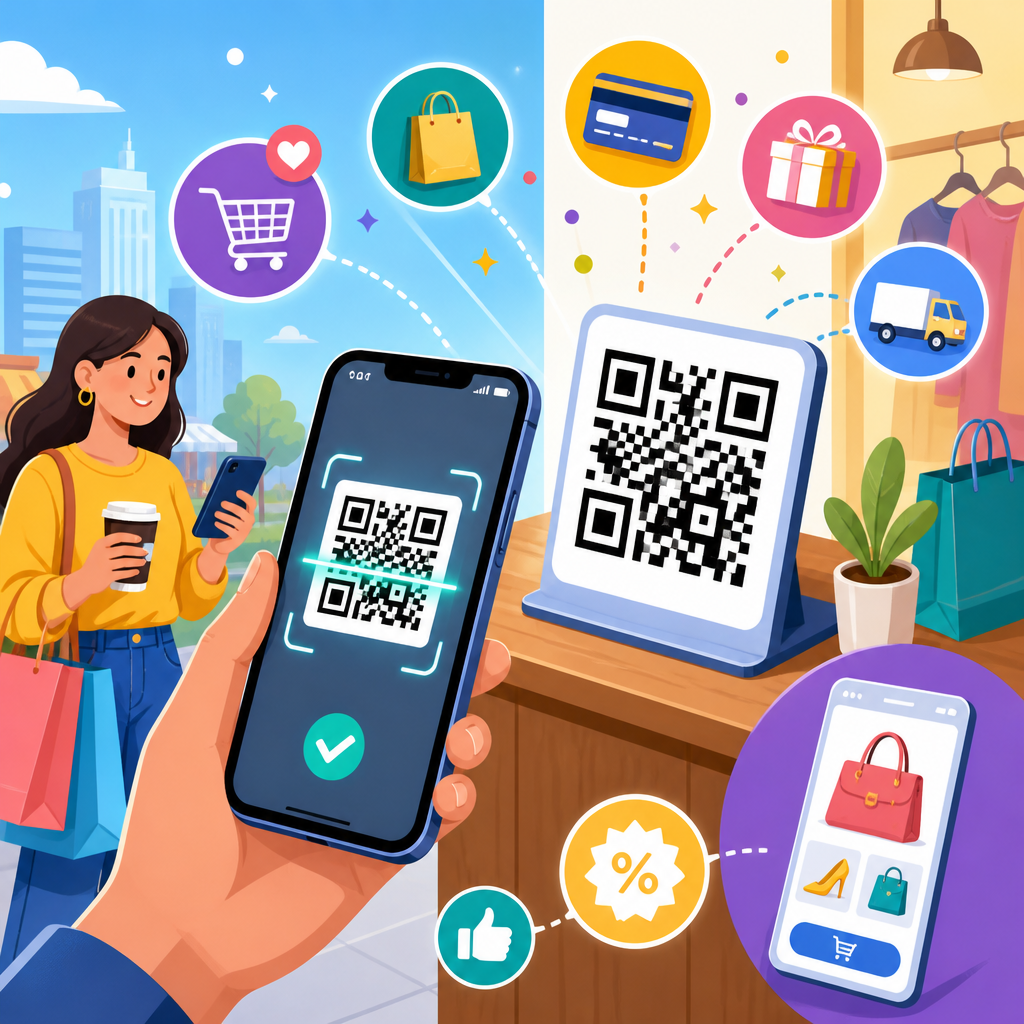
QR codes are moving from simple link shortcuts to core infrastructure for mobile commerce, and that shift matters to every retailer, app team, payments leader, and product manager planning the future of digital buying. In the context of mobile commerce, a QR code is a two-dimensional barcode that stores data such as a URL, payment credential, product identifier, coupon, or authentication token, then transfers the shopper from a physical or digital touchpoint into a transaction flow with one camera scan. I have worked on QR-enabled landing pages, in-store activation campaigns, and payment journeys, and the pattern is clear: when scanning removes friction at the exact decision moment, conversion improves because customers move directly from intent to action. Mobile commerce includes any purchase or commercial interaction completed on a smartphone, from browsing and checkout to account creation, loyalty participation, and post-purchase service. QR codes matter here because they bridge offline and online environments better than most channels; a package, shelf tag, poster, receipt, TV screen, kiosk, or restaurant table can all become a measurable mobile entry point.
The future of QR code technology is not just about more scans. It is about better identity resolution, stronger security, richer first-party data, faster payments, and more context-aware customer experiences. Static QR codes send everyone to the same destination, while dynamic QR codes route users based on location, device type, time, campaign source, or inventory status. That distinction has major commercial implications because dynamic codes can be updated without reprinting and can support attribution, A/B testing, deep linking, and lifecycle messaging. As mobile wallets, open banking rails, and app clip style experiences expand, QR codes become a universal initiation layer that works across operating systems and avoids some of the friction of app installs, search navigation, and manual form entry. For businesses building a future-ready mobile commerce strategy, understanding how QR codes affect payments, discovery, trust, analytics, and customer retention is now essential rather than optional.
QR codes will reduce friction across the entire mobile shopping journey
The biggest commercial impact of QR codes is friction removal. In practice, every extra tap, search query, page load, or form field lowers conversion. A well-placed QR code compresses that path by taking the shopper directly to the most relevant mobile destination: a product page, cart, checkout, financing offer, loyalty signup, warranty registration, or support article. I have seen brands cut campaign waste simply by replacing “visit our site and search this item” messaging with a scan that deep links users into the exact product variant. That matters because mobile screens make navigation harder than desktop, and because physical environments often create urgency: customers are standing in an aisle, comparing prices, or deciding at a restaurant table.
This effect extends beyond discovery. QR codes can prefill carts, apply discounts, attach referral parameters, and trigger wallet passes or in-app sessions. In event commerce, a code on signage can open limited-time merchandise drops. In grocery, shelf-edge codes can reveal allergen details and add items to a delivery basket. In hospitality, room cards and lobby displays can drive upgrades, late checkout purchases, or restaurant reservations. These are not gimmicks; they are examples of a camera-native interface reducing the gap between physical attention and mobile conversion. The future of QR code technology will push this further with smarter routing logic, richer product data, and more seamless handoffs into native app experiences.
QR payments will accelerate wallet adoption, alternative rails, and checkout speed
QR-based payments are already established in many markets, and their influence on mobile commerce will keep growing because they solve both merchant and consumer problems. For merchants, QR payments can reduce hardware dependency and open lower-cost acceptance models compared with some card-present systems. For consumers, they simplify the act of paying by turning a smartphone camera or wallet app into the checkout trigger. Two common models exist: customer-presented QR codes, where the buyer shows a wallet code for the merchant to scan, and merchant-presented QR codes, where the customer scans to approve payment. Both support fast payment initiation, but merchant-presented codes are especially useful for small businesses, pop-ups, service providers, and unattended settings.
The strategic impact goes beyond speed. QR payments can connect to account-to-account transfers, digital wallets, stored value balances, and loyalty systems in a single flow. In regions where instant payment infrastructure is mature, QR commerce often rides on those rails, giving merchants quicker confirmation and customers familiar bank-linked experiences. Even in card-dominant markets, QR codes support remote checkout, invoice payment, peer-to-business transactions, and omnichannel reconciliation. The future of QR code technology here includes tokenized credentials, dynamic transaction amounts, built-in fraud checks, and tighter compliance with payment standards such as EMVCo specifications. As these capabilities mature, QR codes will not replace every payment method, but they will become a standard option because they combine flexibility, low setup cost, and strong mobile usability.
Personalization and first-party data will make QR commerce more valuable
One reason QR codes are becoming central to mobile commerce is their value as a first-party data collection mechanism. A scan captures intent with unusually strong context: where the user was, which asset they scanned, what campaign or product was involved, and what happened next. When the destination experience is designed correctly, that scan can connect to consented profiles, loyalty IDs, browsing histories, and purchase events. This helps brands build better audiences without relying as heavily on third-party cookies or broad probabilistic targeting. Dynamic QR platforms such as Bitly, QR Code Generator PRO, Uniqode, and enterprise campaign tools make it possible to tag destinations, rotate links, and feed analytics into systems like Google Analytics 4, Adobe Analytics, Segment, HubSpot, or Salesforce.
The commercial benefit is not just measurement. Personalization improves because each QR placement can map to a different user need. A code on packaging after purchase should not lead to the same page as a code on an outdoor ad before purchase. One should emphasize onboarding, replenishment, referrals, and support; the other should emphasize product education, social proof, and purchase urgency. I have seen scan rates stay flat while revenue increased simply because the landing experience matched the stage of the customer journey more precisely. In the future, QR codes will increasingly trigger personalized mobile destinations based on CRM status, geofencing, stock levels, language settings, and prior interactions, turning a generic square graphic into a smart commerce gateway.
Security, trust, and governance will determine long-term adoption
QR codes create convenience, but convenience without trust fails quickly. The main risk is not the code format itself; it is the possibility of malicious destination swapping, deceptive overlays, phishing pages, or unclear ownership of the scan target. Mobile commerce leaders must therefore treat QR deployment as a governed channel, not a design afterthought. Best practice includes using branded domains, HTTPS everywhere, clear destination previews where possible, expiration controls for temporary campaigns, tamper-resistant physical placement, and monitoring for unauthorized sticker replacements in public spaces. Dynamic QR management also requires role-based access, audit logs, and change control, especially when codes point to payment pages or authenticated experiences.
Security also affects user confidence at the moment of scan. People are more likely to scan when the code is visually associated with a known brand, a clear value proposition, and a recognizable next step. “Scan to reorder in 10 seconds” performs better than a generic unlabeled code because expectation reduces perceived risk. For payment flows, tokenization, transaction signing, and wallet-level authentication add protection without adding much friction. The future of QR code technology will favor brands that combine usability with governance: short redirect chains, verified app deep links, secure mobile web pages, and fraud detection tuned to scan-origin traffic. Trust is a conversion factor, not just a compliance concern.
Key mobile commerce use cases that will expand over the next five years
QR codes will influence mobile commerce most where they connect physical presence, immediate intent, and measurable action. The strongest future use cases share those qualities and can be prioritized by expected business impact.
| Use case | How the QR code works | Commercial impact |
|---|---|---|
| In-store product discovery | Scan shelf tags or displays for product specs, reviews, and add-to-cart links | Improves assisted conversion and captures demand beyond shelf inventory |
| Packaging reorders | Scan the product package to reorder, subscribe, or buy accessories | Raises repeat purchase rate and lowers reacquisition cost |
| Restaurant and hospitality ordering | Scan tables, room materials, or menus to browse and pay on mobile | Speeds service, lifts average order value, and reduces queue pressure |
| Omnichannel payments | Scan merchant-presented payment codes at checkout, invoices, or kiosks | Expands payment choice and supports low-hardware acceptance models |
| Loyalty and offers | Scan to join programs, redeem rewards, or save wallet passes | Improves retention and creates richer first-party customer records |
These examples are already commercially viable, but the next wave will add product authentication, interactive manuals, connected care instructions, and AI-guided shopping journeys after the scan. Luxury and resale markets, for example, can use serialized QR experiences to confirm provenance and transfer ownership history. Consumer packaged goods brands can turn packaging into a direct sales and education channel long after the first purchase. Service businesses can use codes on vehicles, uniforms, and receipts to prompt rebooking and reviews. The future of QR code technology is therefore tied to lifecycle commerce, not just acquisition.
Implementation choices will separate high-performing QR programs from disappointing ones
Successful QR commerce depends less on the code itself than on the system around it. Start with destination architecture: the post-scan page must load fast, match the promise on the code, and minimize input. Use mobile-first pages, server-side redirects where possible, and compressed assets to keep Largest Contentful Paint low. If the goal is app engagement, configure universal links on iOS and Android App Links so installed users open directly in app while everyone else lands on a useful mobile web fallback. If the goal is attribution, standardize UTM conventions and connect scan events to downstream conversions, not just landing page sessions. If the goal is payment, design for clear amount display, confirmation states, and receipt handling.
Operational discipline matters just as much. Test scan distance, print contrast, error correction level, quiet zone spacing, and environmental placement before rollout. A beautifully branded code that fails under low light or at an angle is a commercial failure. Use ISO/IEC 18004-aligned generation practices, and do not overload the design with logos and colors that compromise readability. Create a taxonomy for every code so teams know owner, campaign, expiry, destination, and KPI. Then review performance by location and intent, not only by aggregate scans. In my experience, the highest gains come from practical refinements: moving a code closer to the decision point, clarifying the value exchange, reducing page weight, and aligning the landing flow to one primary action. That is how QR codes become a durable mobile commerce channel rather than a one-off tactic.
QR codes will reshape mobile commerce because they turn almost any physical or visual surface into a direct, measurable, mobile transaction entry point. Their impact will be strongest where they remove friction, support faster payments, capture first-party intent data, and connect shoppers to personalized experiences at the exact moment of decision. The technology is also evolving in meaningful ways: dynamic routing, wallet integration, deep linking, payment tokenization, and lifecycle use cases are making QR programs more strategic than the simple “scan for a website” implementations many people still picture. For businesses planning the future of QR code technology, the key lesson is straightforward: performance comes from pairing the code with the right destination, governance, analytics, and user trust signals.
This makes QR codes especially important as a sub-pillar within QR Code Technology and Development. They sit at the intersection of design, mobile UX, payments, analytics, security, and omnichannel marketing, which means they can serve as a hub for broader innovation across the customer journey. Teams that invest now should focus on dynamic infrastructure, standards-based payment support, branded and secure scan experiences, and measurement tied to revenue rather than vanity scan counts. Start with high-intent touchpoints such as packaging, shelves, invoices, menus, and service interactions, then optimize based on conversion data. Done well, QR codes will not just support mobile commerce; they will help define how customers discover, evaluate, buy, and return in the next generation of connected retail. Audit your current scan journeys, identify one friction-heavy touchpoint, and redesign it for mobile-first conversion.
Frequently Asked Questions
How will QR codes change the way people shop on mobile devices?
QR codes will make mobile shopping faster, more direct, and much more connected to real-world buying moments. Instead of asking shoppers to search for a product, type in a web address, download an app, or navigate multiple landing pages, a QR code can move them from a store shelf, package, sign, ad, receipt, or email into a specific transaction flow with a single scan. That means less friction between discovery and purchase, which is one of the biggest drivers of higher mobile commerce conversion rates.
What makes this especially important is that QR codes are no longer just a convenience feature. They are becoming a flexible layer of commerce infrastructure. A single code can open a product page, apply a coupon, preload a cart, trigger a payment screen, register a loyalty interaction, verify a user, or connect to post-purchase experiences like returns, support, and replenishment. For retailers and product teams, that creates a more seamless path across physical and digital channels. For shoppers, it reduces effort and shortens the distance between interest and action.
As mobile commerce continues to grow, the brands that remove unnecessary steps will have a major advantage. QR codes help do that by turning almost any touchpoint into a shoppable moment. In practical terms, that could mean scanning a code on packaging to reorder, scanning in-store to view sizes not available on the shelf, or scanning a digital display to buy instantly on a phone. The overall impact is a buying experience that feels quicker, more contextual, and better aligned with how consumers already use their smartphones.
Why are QR codes becoming core infrastructure for mobile commerce instead of just simple link shortcuts?
The shift is happening because QR codes can now support far more than basic redirection. At a technical level, they can carry or reference payment credentials, product identifiers, authentication tokens, promotional data, order details, and other structured information that powers a commerce journey. That makes them useful not only for marketing but also for payments, identity, inventory access, customer engagement, and fulfillment workflows. In other words, they are becoming an entry point into commerce systems, not just a shortcut to a webpage.
For businesses, this matters because mobile commerce increasingly depends on connected experiences across channels and platforms. A shopper may first encounter a product in a physical store, continue the journey on mobile, complete the transaction in an app or browser, and later use the same mobile device for pickup, returns, or support. QR codes work well across each of those stages because they can bridge offline and online contexts instantly. That is why retailers, payment leaders, and app teams are treating them as a scalable activation tool rather than a one-off campaign tactic.
Another reason they are becoming foundational is measurement and adaptability. Dynamic QR codes can be updated without changing the printed asset, and they can be tied to analytics systems that track scans, location context, device type, conversion behavior, and campaign performance. That gives product managers and commerce leaders a way to optimize the customer journey over time. When a technology can connect customer intent, transaction enablement, and measurable performance in one scan, it naturally evolves into core infrastructure.
What are the biggest benefits of using QR codes for retailers, app teams, and payments leaders?
For retailers, the biggest benefit is reduced friction in the buying journey. QR codes can connect shoppers directly to the exact product, offer, or checkout step they need, instead of forcing them to browse manually. This is particularly valuable in stores, on packaging, in out-of-home advertising, and in printed materials where traditional digital entry points are weak. QR codes can also support endless aisle strategies by allowing customers to buy products that are out of stock locally but available online. That improves sales capture without requiring more shelf space.
For app teams and product managers, QR codes offer a versatile mechanism for onboarding, deep linking, and feature adoption. A scan can open a mobile app to a precise destination, trigger account actions, attach referral or campaign data, and create cleaner handoffs between channels. They also help close the gap between physical experiences and app engagement. For example, a code on packaging can lead an existing customer into reorder flows or lead a new customer into registration and loyalty enrollment. That kind of precision supports better retention and more personalized mobile commerce journeys.
For payments leaders, QR codes open up efficient and flexible payment experiences. They can be used for in-person transactions, invoice payments, peer-to-merchant interactions, order-ahead workflows, and low-hardware acceptance environments. In some cases, QR-based payment models reduce dependence on expensive point-of-sale equipment while still enabling secure, trackable transactions. They can also support tokenized credentials and authenticated checkout experiences that align with modern mobile payment expectations. The strategic value is not just cost or convenience; it is the ability to create payment flows that are fast, interoperable, and easier to deploy across many customer touchpoints.
Are QR codes secure enough for mobile commerce and digital payments?
QR codes can absolutely be secure enough for mobile commerce, but security depends on how they are implemented. A QR code itself is simply a container for information or a pointer to a digital action. The security comes from the systems behind it, including encrypted connections, tokenization, authenticated sessions, verified domains, fraud monitoring, and strong mobile app or browser protections. When businesses treat QR interactions as part of a secure commerce architecture, they can support safe shopping, login, and payment experiences at scale.
The main risks usually come from poor governance rather than from the code format itself. For example, malicious actors can place fake QR stickers over legitimate ones, direct users to spoofed websites, or try to exploit weak landing page security. That is why brands should use clear visual trust signals, secure HTTPS destinations, managed code generation, domain consistency, and monitoring tools that detect abuse. If QR codes are used for payments or account access, organizations should also add controls such as one-time tokens, session expiration, transaction verification, and user authentication where appropriate.
From a customer perspective, trust will be critical to adoption. Shoppers need confidence that a scan will take them where they expect and that the next step is legitimate. From a business perspective, secure QR deployment should be treated like any other customer-facing transaction surface. That means coordination across product, payments, security, and operations teams. When those controls are in place, QR codes can support mobile commerce safely while still delivering the speed and convenience that make them so valuable.
What should businesses do now to prepare for the growing role of QR codes in mobile commerce?
Businesses should start by identifying where QR codes can remove friction or unlock new transaction moments in the customer journey. The best opportunities are usually the places where customers currently face delays, confusion, or unnecessary steps. That may include in-store product discovery, shelf-level conversion, packaging-based reorder flows, loyalty activation, contactless payments, service interactions, or post-purchase support. Rather than treating QR as a standalone marketing feature, organizations should map it to specific commerce objectives such as higher conversion, better attribution, lower checkout abandonment, or improved omnichannel engagement.
Next, teams should focus on technical readiness. That includes supporting deep links into mobile apps, ensuring mobile landing pages are fast and optimized for purchase, integrating QR events into analytics and attribution systems, and enabling dynamic code management so destinations can be updated without reprinting materials. Payment and product teams should also evaluate how QR codes can work with wallets, tokenized payment methods, loyalty systems, and identity flows. The goal is to make every scan useful, measurable, and tightly connected to a business outcome.
Finally, businesses should establish governance and testing processes. QR experiences should be reviewed for usability, security, accessibility, and brand clarity. Teams should test scan placement, destination relevance, page load speed, and conversion performance across devices and real-world environments. They should also educate internal stakeholders that QR codes are most powerful when tied to end-to-end customer journeys, not isolated campaigns. Companies that build these capabilities now will be in a stronger position as QR codes continue evolving into a standard interface for mobile commerce, payments, and omnichannel buying.