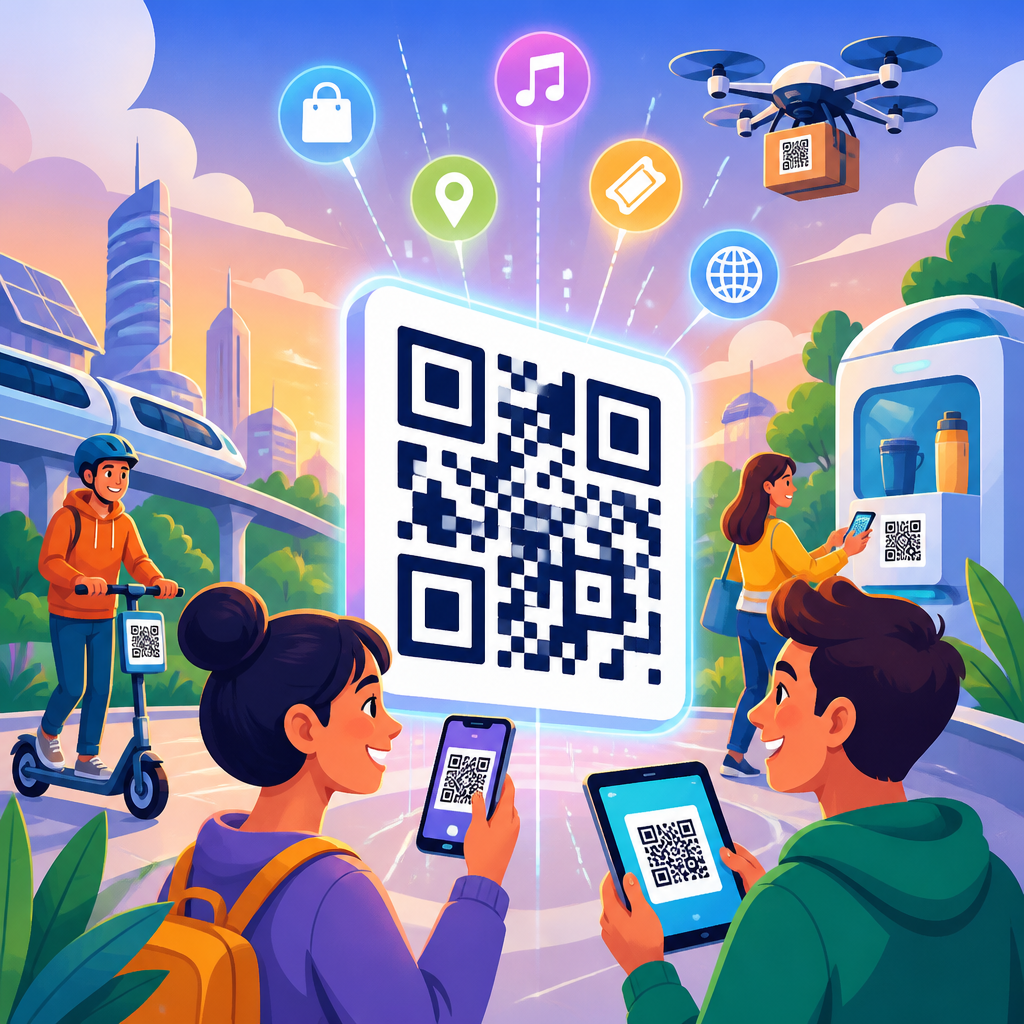
QR code technology is moving from a simple shortcut into a flexible interface layer between physical spaces and digital services. A quick response code, or QR code, is a two-dimensional matrix barcode that stores data such as a URL, payment token, contact card, authentication credential, or product identifier. The future of QR code technology matters because smartphones, mobile wallets, retail systems, logistics networks, and connected devices increasingly rely on low-friction ways to exchange trusted information. In my work with digital campaigns and mobile onboarding flows, I have seen QR codes outperform typed links whenever speed, accuracy, and convenience are priorities.
That growth is not just about marketing. QR codes now support payments, menu systems, equipment tracking, event access, patient intake, and product authentication. Standards bodies such as ISO and GS1 have pushed the category forward by defining how symbols are encoded, scanned, and linked to structured business data. At the same time, camera hardware and computer vision software have improved dramatically. Modern phones can detect damaged or low-contrast codes faster than early scanning apps ever could. As a result, businesses no longer treat QR codes as novelty graphics; they treat them as infrastructure.
When people ask about the future of QR code technology, they usually mean five things: better usability, stronger security, richer data, broader adoption, and longer-term relevance in a world of near-field communication, digital wallets, and ambient computing. Those questions are reasonable. A static QR code that links to a homepage is not the future. The future is dynamic, measurable, secure, and context-aware. It connects packaging to traceability records, posters to live inventory, machines to maintenance logs, and printed media to personalized mobile experiences without forcing users to download anything first.
Several trends are shaping that future now. Dynamic QR codes allow destination changes without reprinting assets. Branded designs make codes recognizable while preserving scan reliability. Authentication layers reduce phishing and counterfeit risk. Industrial uses tie codes to serial numbers, digital twins, and lifecycle records. Retail is shifting toward 2D barcodes at point of sale, especially through GS1 Digital Link, which lets one code serve both checkout systems and consumer smartphones. Taken together, these developments show that QR codes are becoming a durable bridge technology: cheap to print, easy to scan, and versatile enough to serve consumers, enterprises, and public services at scale.
Why QR codes are becoming a core digital interface
The simplest answer to why QR codes have a future is that they solve an expensive input problem. Typing long URLs, account numbers, product identifiers, Wi-Fi credentials, or payment details creates friction and errors. A printed code removes that friction in one scan. Compared with NFC tags, QR codes cost almost nothing to deploy because they can be printed on labels, screens, receipts, packaging, and signage. Compared with proprietary apps, they work across iOS and Android using native camera support. That universality is one reason adoption accelerated after 2020, when restaurants, retailers, and public venues needed touch-light digital access methods quickly.
Another reason is measurement. With dynamic QR platforms, teams can track scans by location, device type, time, and campaign source. In practice, this means a retailer can compare in-store shelf tags with window posters, or an event organizer can see which entrance signs drive the most attendee check-ins. Offline media has historically been hard to attribute. QR codes turn print, packaging, direct mail, and out-of-home placements into measurable channels. That makes them attractive to performance marketers, operations teams, and product managers alike.
The codes also fit well with omnichannel behavior. People discover a product on a shelf, in a catalog, on a billboard, or at a trade show, then expect immediate digital follow-through. A scan can open a product page, launch a wallet pass, start a support chat, or prefill a form. The future of QR code technology is therefore tied to a broader shift: every physical touchpoint is becoming interactive. QR codes are not the only tool enabling that shift, but they remain the cheapest and most interoperable one.
Key innovations shaping the future of QR code technology
Dynamic code management is the first major innovation. Instead of embedding a final destination permanently, a dynamic QR code points to a resolvable short URL or redirect service. That allows marketers to change landing pages, manufacturers to update safety information, and service teams to reroute users to current documentation without replacing the printed symbol. It also supports A/B testing, georouting, language detection, expiration rules, and first-party analytics. In mature programs, the QR code is only the visible marker; the real value sits in the management layer behind it.
Design intelligence is the second innovation. Early best practice was to keep QR codes plain black and white. That remains safest, but modern generators can add logos, custom finder patterns, color schemes, and frame instructions while maintaining scanability through error correction levels defined in the QR standard. The key is disciplined testing under real conditions: glare, small print sizes, low light, curved packaging, and midrange phone cameras. I have seen beautifully branded codes fail because teams prioritized aesthetics over contrast ratio and quiet zone spacing. The future belongs to codes that are both distinctive and technically robust.
Security is the third innovation, and it is becoming central. Consumers now understand that a QR code can open any link, including a malicious one. In response, better systems are adding domain transparency, signed redirects, fraud monitoring, and app-based verification. Some manufacturers pair visible QR codes with cryptographic identifiers or serialized records to verify that a product is genuine. In sectors like pharmaceuticals, luxury goods, and electronics accessories, that anti-counterfeit function is becoming as important as consumer engagement.
| Innovation | What it changes | Practical example |
|---|---|---|
| Dynamic routing | Updates destinations after printing | A restaurant changes seasonal menus without replacing table tents |
| Structured data links | Connects one code to business and consumer data | A cereal box sends scanners to nutrition facts, allergens, and promotions |
| Serialized authentication | Helps verify authenticity and traceability | A cosmetics brand checks whether a product came from an authorized batch |
| Analytics integration | Measures offline to online performance | A transit ad campaign tracks scans by station and time of day |
| Wallet and payment support | Enables fast transactions and stored credentials | A merchant accepts interoperable QR payments at pop-up locations |
How retail, payments, and packaging will change
Retail may be the most important arena for the future of QR code technology. For decades, one-dimensional UPC barcodes were optimized for checkout, not for consumer engagement. That is changing as brands and retailers prepare for 2D barcode adoption at point of sale. GS1 Digital Link is a key development because it can encode a product identifier in a web-compatible format. One symbol can support checkout, recalls, batch details, expiration dates, sustainability information, and consumer content. This is more efficient than printing separate barcodes and campaign QR codes on the same package.
The implications are significant. A fresh food producer can include lot-level traceability. A cosmetics brand can deliver ingredients, usage instructions, and refill options. A medical device supplier can tie packaging to unique device identification records. For consumers, scanning becomes a trusted way to answer practical questions quickly: Is this authentic? Does it contain allergens? How should it be recycled? For businesses, the same scan event can feed demand signals, support content localization, and reduce packaging clutter.
Payments are another major growth area. In many markets, QR payment systems already support peer-to-peer transfers, merchant checkout, transit access, and bill payment. Their advantage is low acceptance cost. A small merchant can start taking digital payments with a printed standee instead of a specialized terminal. The limitation is fragmentation: closed-loop schemes, regional wallet preferences, and varying bank integrations can create user confusion. The future points toward interoperability, tokenization, and smoother wallet handoffs, where a scan opens a prefilled, trusted payment experience rather than a generic web page.
Security, trust, and governance will determine adoption
Security is often treated as a user education issue, but the bigger challenge is governance. If organizations deploy QR codes at scale without ownership, naming conventions, expiration controls, redirect policies, and monitoring, they create operational risk. Broken links frustrate users, while poorly managed redirects can be hijacked or spoofed. Best practice is to assign QR codes to governed domains, maintain asset inventories, and monitor scan anomalies the way security teams monitor suspicious email links. In regulated sectors, those controls should sit alongside privacy reviews and records management policies.
Phishing through QR codes, often called quishing, is a real and growing threat because the destination is not visible at a glance. Good design can reduce that risk. Branded frames that name the destination, short human-readable URLs printed below the code, and secure domains recognized by users all help. Mobile operating systems also play a role by previewing links before opening them. Still, technology alone is not enough. Organizations should teach users to pause before entering credentials after a scan, especially in parking meters, public posters, and unsolicited mailers where tampering is possible.
Trust will also depend on data handling. A QR scan can collect location, device, campaign, and behavioral data. That can be useful, but it must be disclosed appropriately and minimized where possible. If the future of QR code technology includes more personalized experiences, then privacy-by-design principles must be part of deployment. Consent, retention limits, and clear disclosures are not optional details; they are adoption enablers.
What businesses should build now
Organizations preparing for the future should stop thinking in terms of isolated QR campaigns and start building QR systems. That means choosing a platform that supports dynamic redirects, analytics exports, access controls, and error correction testing. It means defining print specifications for minimum size, contrast, quiet zone, and placement. It means mapping scan intent to user context: a package scan needs different content than a lobby sign or a field service label. Most importantly, it means deciding what business process the code improves, not just where the code will appear.
In practical terms, I advise teams to prioritize five use cases. First, packaging and product pages, where one scan can answer pre-purchase and post-purchase questions. Second, service and support labels, especially on equipment, appliances, and industrial assets. Third, payments and wallet passes for lightweight transactions. Fourth, authentication and traceability for high-risk goods. Fifth, event, venue, and workplace access where QR codes can complement identity and scheduling systems. These use cases persist because they save time, reduce errors, and connect physical assets to living data.
Internal linking within a broader QR strategy also matters. A hub page on future applications should connect to deeper guides on dynamic QR codes, QR code security, GS1 Digital Link, QR payments, packaging implementation, analytics, and design best practices. That structure helps users and search engines understand topic depth while guiding readers from overview to execution detail. For teams building a content library around QR Code Technology and Development, this hub should function as the strategic overview and decision framework.
Will QR codes remain relevant alongside newer technologies?
Yes, because QR codes do not need to beat every alternative to remain essential. NFC, Bluetooth Low Energy, computer vision recognition, and voice interfaces each have strengths. NFC is excellent for tap interactions but requires compatible hardware and embedded tags. Vision AI can identify objects without visible codes, but accuracy and implementation cost vary widely. Voice is convenient in some contexts, yet unsuitable in noisy or public settings. QR codes remain relevant because they are cheap, visible, interoperable, and easy to deploy at massive scale.
The more likely future is coexistence. A premium product package might include an NFC tag for tap-to-pair, a QR code for broad compatibility, and an invisible watermark for anti-counterfeit screening. A store shelf might combine electronic labels with QR codes that launch product comparisons. A factory asset might use both a laser-etched Data Matrix code for durable identification and a larger QR code for technician instructions. The winning systems will choose the right interface for the environment instead of forcing one method everywhere.
That is why the future of QR code technology looks strong. It is practical technology aligned with real user behavior. People already know how to scan, businesses know how to print, and software platforms know how to route, secure, and measure interactions. The next phase is not reinvention; it is maturation. Companies that invest now in standards-based, governed, and user-centered QR programs will be better positioned to improve packaging, payments, support, and trust. If you manage digital experiences in physical spaces, start by auditing your current QR use cases and building a roadmap for the next generation.
Frequently Asked Questions
1. What is the future of QR code technology likely to look like?
The future of QR code technology is less about the code itself and more about the growing role it plays as a bridge between physical environments and digital services. QR codes began as a simple way to open a web page, but they are evolving into a flexible interface layer that can trigger payments, identity verification, loyalty rewards, product authentication, device pairing, event check-ins, and personalized customer experiences. As smartphones, mobile wallets, point-of-sale systems, and connected devices become more integrated, QR codes are positioned to serve as one of the easiest ways to move data between the offline and online worlds.
In practical terms, that means QR codes will become more dynamic, secure, and context-aware. Businesses increasingly use dynamic QR codes that can update their destination without changing the printed code, allowing campaigns, menus, manuals, and product packaging to remain useful over time. At the same time, users are becoming more comfortable scanning codes in stores, restaurants, transportation hubs, hospitals, and workplaces. This normalization is important because it lowers friction for future use cases such as secure login, smart packaging, digital receipts, warranty activation, and location-specific content delivery.
Over the long term, QR codes are likely to remain popular because they are inexpensive, easy to deploy, and compatible with nearly every smartphone camera. Unlike specialized hardware systems, QR codes do not require major infrastructure investment. That combination of low cost, wide compatibility, and high flexibility gives them staying power. Even as technologies like near-field communication, computer vision, and augmented reality continue to expand, QR codes are likely to remain a foundational access point for digital interactions across retail, healthcare, logistics, education, travel, and consumer electronics.
2. How will QR codes be used beyond linking to websites?
QR codes are already moving far beyond simple URL redirection, and that trend will continue. One major area of growth is payments. In many markets, consumers can scan a QR code to pay a merchant, split a bill, send funds, or confirm a transaction inside a mobile wallet. Because QR payment systems can be deployed with minimal hardware, they are especially valuable for small businesses, temporary venues, and emerging markets. As digital wallets become more common, QR codes will likely remain one of the most accessible payment triggers available.
Another major use case is identity and access. QR codes can store or reference credentials for ticketing, boarding passes, digital business cards, visitor registration, membership programs, and multi-factor authentication. In enterprise settings, they can help with secure workstation login, equipment access, and employee check-in workflows. In healthcare, they may support patient identification, medication tracking, appointment management, and access to care instructions. In education, they can connect printed materials to learning platforms, assignments, and interactive resources.
Product-related experiences are also expanding quickly. Brands use QR codes on packaging to provide traceability, ingredient information, authenticity checks, setup guides, recycling instructions, and promotional content. In logistics and manufacturing, QR codes can support inventory management, asset tracking, maintenance histories, and handoffs between systems. In connected home and Internet of Things environments, QR codes are useful for onboarding devices, pairing accessories, and simplifying setup. The broader pattern is clear: QR codes are becoming a universal trigger for actions, not just a shortcut to a homepage.
3. Will QR codes become more secure in the future?
Yes, security is likely to be one of the biggest areas of improvement in QR code technology. While QR codes themselves are simply a data container, the systems around them are becoming more sophisticated. One ongoing concern is malicious redirection, where a code leads users to a phishing site or fraudulent payment page. In response, platforms, browsers, wallet apps, and enterprise systems are adding stronger safeguards such as preview links, verified domains, app-level validation, tokenized transactions, and warning prompts for suspicious destinations.
Dynamic and authenticated QR code systems will likely play a growing role in reducing fraud. Instead of containing static public information, future QR experiences may rely more often on encrypted tokens, short-lived session data, signed credentials, or server-validated identifiers. That approach is especially useful in payments, event ticketing, digital identity, and product authentication. For example, a secure QR code might represent a time-sensitive credential that expires quickly or can only be redeemed once, making duplication far less valuable.
Consumer education will remain part of the equation as well. As QR usage grows, best practices such as scanning only trusted codes, checking URLs before proceeding, and avoiding requests for sensitive information on unfamiliar pages will become more widely emphasized. At the business level, companies will need clear governance around code creation, destination control, analytics access, and lifecycle management. So while QR codes will never be risk-free, the future points toward a safer ecosystem built on better verification, stronger backend controls, and more security-aware user experiences.
4. What role will QR codes play in retail, logistics, and smart products?
QR codes are becoming increasingly important across retail, logistics, and smart product ecosystems because they make information exchange fast, inexpensive, and scalable. In retail, a QR code can connect shoppers to product details, reviews, sizing guidance, care instructions, inventory availability, promotions, loyalty enrollment, and contactless checkout options. It can also create a more continuous shopping journey by linking in-store browsing with digital carts, saved wish lists, or personalized offers. For retailers, this opens the door to better customer engagement without requiring every interaction to happen through a proprietary app.
In logistics and supply chain operations, QR codes offer a practical way to identify products, containers, parts, and documents throughout movement and storage. They can support receiving, picking, packing, returns processing, maintenance logging, proof of delivery, and chain-of-custody documentation. Compared with more limited labels, QR codes can encode richer information or point to cloud-based records that update in real time. That makes them especially useful when companies need visibility across warehouses, transportation providers, manufacturing facilities, and retail endpoints.
For smart products and connected packaging, QR codes can act as the customer-facing gateway to a product’s digital identity. A consumer might scan a code to register a purchase, verify authenticity, download a manual, reorder supplies, unlock premium content, or get support tailored to the exact model they own. In sustainability programs, QR codes may help communicate sourcing, repair options, refill instructions, and recycling guidance. This is a significant shift: instead of being just a printed symbol, the QR code becomes part of the product experience and long-term customer relationship.
5. Could newer technologies replace QR codes, or will they stay relevant?
Newer technologies will certainly compete with QR codes in some scenarios, but that does not mean QR codes are going away. Near-field communication, Bluetooth beacons, visual recognition, digital watermarking, and augmented reality all offer compelling capabilities. In some cases, these alternatives can provide a smoother or more invisible user experience. However, QR codes have a major advantage that is difficult to match: they are cheap, visible, device-friendly, and almost universally deployable. A printed QR code can work on packaging, posters, receipts, kiosks, ID badges, product labels, and screens without requiring specialized chips or complex hardware.
That simplicity gives QR codes remarkable staying power. Businesses can launch them quickly, update many experiences through dynamic management tools, and track engagement with limited technical overhead. Consumers also understand the interaction model. They know that opening a phone camera and scanning a code is a normal action, which is a powerful form of usability. Technologies that are familiar and frictionless often last much longer than expected, especially when they fit a wide range of budgets and use cases.
The most realistic future is not replacement, but coexistence. QR codes will likely work alongside NFC taps, wallet passes, smart labels, and computer vision systems depending on context. A premium product might include both an NFC chip and a printed QR code, for example, ensuring accessibility across more devices and environments. In that sense, QR codes are likely to remain highly relevant because they solve a very durable problem: how to create a fast, low-cost connection between a physical object or place and a digital action.