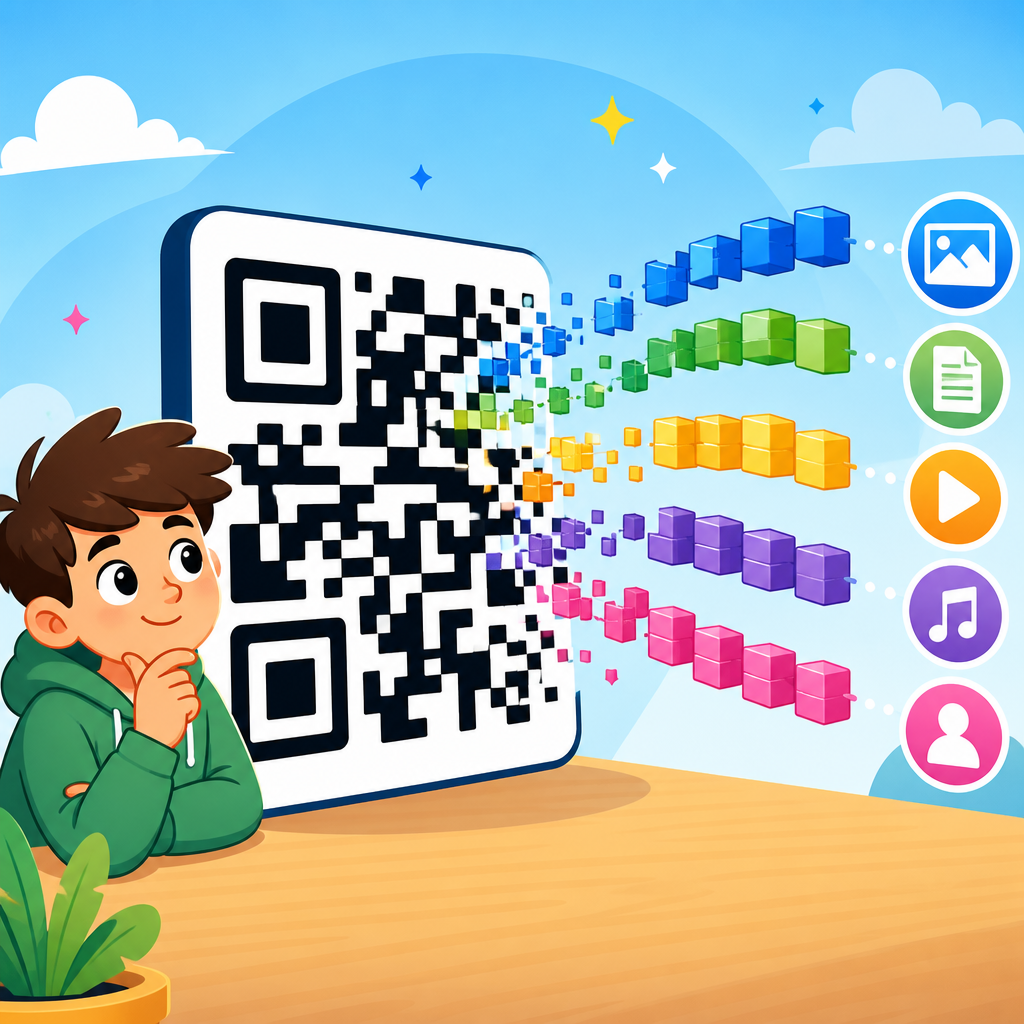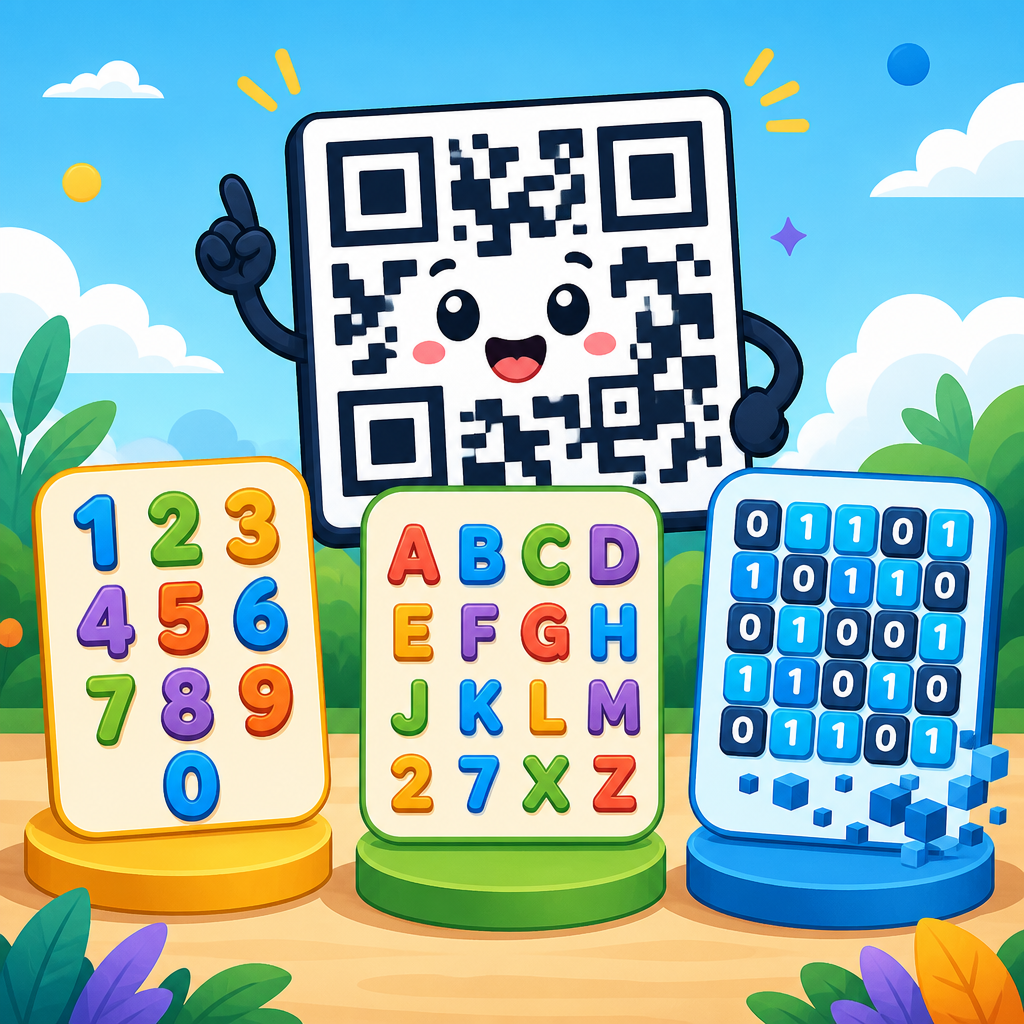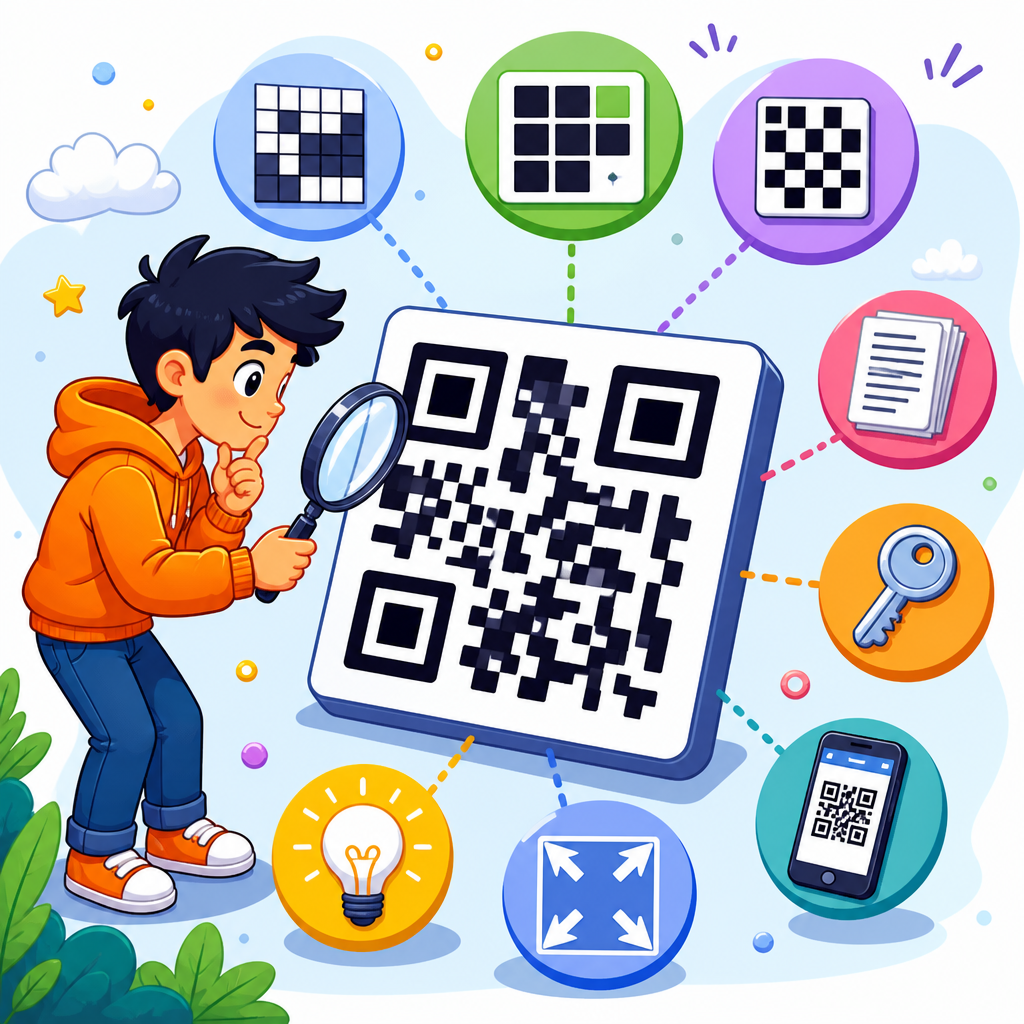
ISO/IEC 18004 is the international standard that defines the QR Code symbol, its data structures, encoding rules, error correction, and print quality requirements. If you build, print, scan, or specify QR Codes in products, packaging, tickets, labels, or industrial systems, this document is the baseline that keeps one symbol readable across different devices and countries. Understanding ISO/IEC 18004 matters because QR Codes are often treated as simple black-and-white squares when they are actually tightly engineered machine-readable symbols with formal rules for size, masking, character modes, quiet zones, and decoding behavior.
In practical terms, the standard answers the questions teams ask every day: what is a valid QR Code, how much data can it hold, why do some branded codes fail, what is the difference between Model 1, Model 2, and Micro QR, and how much damage can a code survive? I have worked with marketing teams that wanted highly stylized codes, packaging engineers limited by label space, and software developers generating symbols at scale. The same lesson comes up each time: the standard is not bureaucratic overhead. It is the reason a code printed in one workflow can still scan reliably on many cameras and decoding libraries.
QR Code stands for Quick Response Code, a two-dimensional matrix symbology originally developed by Denso Wave for fast decoding in manufacturing. ISO/IEC 18004 standardized the symbol so it could be used consistently beyond its original automotive context. The standard defines core terms such as modules, versions, finder patterns, alignment patterns, timing patterns, format information, version information, mask patterns, and Reed-Solomon error correction. It also specifies reference decode algorithms and symbol quality considerations that affect real-world performance.
For anyone researching QR Code standards and formats, ISO/IEC 18004 is the hub document because it connects directly to adjacent topics: character encoding, print contrast, scanner optics, quiet zone compliance, structured append, GS1 usage, payment workflows, and digital link implementations. If a business wants dependable scans instead of intermittent failures, this standard is where the requirements start.
What ISO/IEC 18004 Covers
ISO/IEC 18004 defines the QR Code family at the symbol level. That means it does not merely say a code is a square matrix; it describes how every functional region is arranged and how data is converted into bits, codewords, and modules. The standard covers full-size QR Code and Micro QR Code, with separate rules for symbol dimensions, data capacity, and mandatory patterns. It also distinguishes historical forms such as Model 1 and the widely deployed Model 2. In current production environments, Model 2 is the version most teams mean when they say QR Code.
The standard specifies symbol versions from Version 1 through Version 40 for full QR Code. Version 1 is 21 by 21 modules, and each version increases by four modules per side, ending at 177 by 177 modules for Version 40. Micro QR uses a smaller range intended for tight space constraints. These dimensions are not aesthetic choices. They determine the available data codewords, the number and placement of alignment patterns, and ultimately whether a scanner can resolve the symbol at a given print size and camera distance.
Another major area is data representation. ISO/IEC 18004 supports numeric, alphanumeric, byte, and kanji modes, with Extended Channel Interpretation available for broader character set signaling. The standard also defines mode indicators, character count indicators, terminator handling, padding, interleaving, and error correction block structure. In implementation work, this is where many generator bugs occur. A symbol can look visually correct yet fail because the encoder used the wrong count field length for the selected version group or mishandled padding codewords.
How QR Code Structure Works
A compliant QR Code is built from functional patterns plus encoded data modules. The three large finder patterns in the corners allow the scanner to detect position, orientation, and approximate scale quickly. Timing patterns, alternating dark and light modules running horizontally and vertically, help establish the module grid. Alignment patterns compensate for distortion, especially on larger versions or curved packaging. Format information stores the error correction level and mask pattern, while version information appears on Version 7 and above.
Once those function patterns are reserved, the remaining modules carry data and error correction codewords according to a fixed placement algorithm. The symbol is filled in a zigzag pattern from the lower right, skipping reserved areas. This precise placement is one reason QR Code libraries should be chosen carefully. Mature implementations such as ZXing, ZBar, and commercial SDKs from Cognex, Dynamsoft, and Scandit generally follow the standard well, but edge cases still appear when teams customize encoders or port code across languages.
Masking is essential to readability. ISO/IEC 18004 defines eight mask patterns for full QR Code, each designed to break up problematic visual repetition that can confuse decoders. The encoder calculates penalty scores based on rules covering long runs, blockiness, finder-like patterns, and dark module balance, then chooses the lowest-penalty mask. When I audit failed symbols, poor masking is usually not the issue in established libraries, but branded overlays, gradient fills, and ignored quiet zones routinely overwhelm the benefits of a good mask.
The quiet zone deserves emphasis because it is a standard requirement, not a recommendation. A QR Code needs a margin of clear space around the symbol, typically four modules wide for full QR Code. Without that separation, nearby text, borders, or graphics can interfere with symbol detection. Many design failures happen because the matrix itself is valid, but the surrounding artwork violates this clearance rule.
Data Capacity, Modes, and Error Correction
Capacity in QR Code is always conditional. There is no single answer to how much data a QR Code can hold because the result depends on version, encoding mode, and error correction level. Numeric mode is the most efficient, alphanumeric is next, byte mode is more flexible but less compact, and kanji mode efficiently represents eligible double-byte characters. At the high end, a Version 40 symbol in byte mode can hold thousands of characters, but that theoretical maximum is rarely a good production target because dense symbols require larger print areas and better imaging conditions.
Error correction is one of the standard’s most important features. QR Code uses Reed-Solomon error correction with four selectable levels: L, M, Q, and H. Higher levels add more redundant codewords, allowing recovery from damage or obstruction at the cost of reduced net data capacity. This tradeoff is practical, not academic. A clean black code on white paper for an internal form may scan perfectly at Level M, while a consumer-facing code on corrugated packaging or a code with a centered logo may need Level Q or H to remain dependable.
| Level | Approximate recovery capacity | Typical use case |
|---|---|---|
| L | About 7% | High-capacity symbols in controlled print conditions |
| M | About 15% | General business use, flyers, labels, standard packaging |
| Q | About 25% | Branded codes, moderate wear, more challenging environments |
| H | About 30% | Small logos, harsh handling, industrial or public-facing applications |
These percentages are useful shorthand, but they are not a promise that any damaged code will decode if the damaged area stays under the stated number. Recovery depends on where the damage occurs, print gain, contrast loss, lens blur, and whether function patterns remain intact. In testing, I have seen codes with less than 15 percent visible damage fail because the quiet zone was compromised, while other codes with a scratched center still scanned because the error correction blocks and finder patterns remained recoverable.
Model 1, Model 2, and Micro QR Differences
Model 1 was the original QR Code form, but it is largely of historical interest now. Model 2 improved the symbol design and became the dominant implementation used in software libraries, marketing platforms, ticketing, manufacturing, and payments. Model 2 added alignment patterns and refined data placement, which improved robustness, especially in larger versions. When procurement or documentation simply states QR Code today, it almost always refers to Model 2 as standardized under ISO/IEC 18004.
Micro QR Code is a related but smaller format designed for applications where space is severely limited, such as electronics components, laboratory items, or very small labels. It uses fewer finder patterns and has lower capacity, but the reduced footprint can be decisive when millimeters matter. The tradeoff is obvious: smaller symbols demand cleaner printing and closer, sharper imaging. Teams sometimes choose Micro QR to save space, then discover that their camera workflow or line speed cannot support the smaller module size reliably.
This is why format choice should be based on environment, not just aesthetics. For a retail poster viewed from arm’s length, a standard Model 2 QR Code with moderate error correction is usually the right answer. For a tiny PCB label, Micro QR may be justified if the scanner optics and print process are validated. The standard gives the formal rules; engineering judgment determines whether a valid symbol is also an effective one.
Print Quality, Contrast, and Real-World Scanning
A standards-compliant symbol can still fail in practice if print quality is poor. ISO/IEC 18004 defines the symbol, but successful deployment also depends on print process control, substrate behavior, camera resolution, lighting, and decode software. In packaging reviews, the most common failures are low contrast, excessive dot gain, reversed colors without sufficient luminance contrast, glossy glare, and symbols reduced below the minimum module size the target scanner can resolve.
The safest design remains dark modules on a light background with strong reflectance difference. Black on white is not mandatory, but it is the benchmark because consumer phone cameras and industrial imagers decode it consistently. Pastel-on-pastel combinations often look elegant in brand mockups and then underperform under store lighting. The standard’s intent is clear: decodability comes first, styling second. If a marketing concept requires heavy customization, testing should include several phone models, at different distances, under indoor and outdoor lighting.
Quiet zone violations are also widespread. I routinely see codes placed inside decorative frames or too close to product copy. A designer may preserve the matrix exactly yet remove the clear margin needed for detection. The result is a symbol that passes a visual check and fails in the field. Quality verification should therefore look beyond encoded data and include size, contrast, modulation, and surrounding clearance.
For industrial environments, teams often pair ISO/IEC 18004 compliance with symbol verification tools and process standards. Verifiers from Axicon, REA, and Cognex can measure print characteristics objectively. That matters when a code must scan at line speed or remain readable after abrasion, condensation, or thermal transfer variability. A valid format is the starting point; repeatable quality is the operating requirement.
Implementation, Interoperability, and Hub Topics
For developers, ISO/IEC 18004 should guide both encoder selection and validation strategy. Use established libraries, verify output across multiple decoders, and test edge cases such as long byte strings, mixed modes, ECI signaling, and high-version symbols. Do not assume that because one phone scans a symbol, the implementation is correct. Interoperability means a code generated in one system decodes consistently in many others, including consumer apps, dedicated scanners, and backend parsers.
This standard also sits at the center of broader QR Code standards and formats. Application layers often add their own semantics on top of the symbol. Examples include GS1 Digital Link URIs, payment payload specifications such as EMV-style merchant-presented codes, vCard or MeCard contact payloads, Wi-Fi onboarding strings, and ticketing tokens. ISO/IEC 18004 does not define those business payloads. It defines the carrier. Understanding that separation helps teams troubleshoot correctly: a symbol can be structurally perfect while the embedded data format is wrong for the receiving application.
As a hub topic, QR Code standards and formats should therefore be organized into connected areas: symbol anatomy, versions and capacities, Micro QR, error correction, print verification, character encoding, application payload standards, accessibility considerations, and testing methodology. ISO/IEC 18004 anchors all of them because it establishes what the symbol itself must be before any industry-specific rule is layered on top.
ISO/IEC 18004 is the foundation of reliable QR Code deployment because it defines the symbol’s geometry, encoding logic, correction capability, and required clear space. Teams that understand the standard make better decisions about version size, mode selection, error correction, print placement, and library choice. They also avoid the most expensive mistake in QR projects: assuming visual resemblance is enough. A QR Code is compliant only when its structure, data encoding, and presentation all follow the formal rules.
The most important takeaway is that standards knowledge improves real outcomes. It reduces scan failures, supports interoperability across devices, and gives designers and developers a shared language for tradeoffs. If you are building out a broader QR Code technology program, use ISO/IEC 18004 as the reference point for every related format article, from Micro QR and payload schemas to verification and branded code testing. Start by auditing one live code against the standard’s core requirements: quiet zone, contrast, size, error correction, and payload structure.
Frequently Asked Questions
What is ISO/IEC 18004, and why is it important for QR Codes?
ISO/IEC 18004 is the international standard that defines the QR Code symbol and the technical rules that make it work consistently across different scanners, software platforms, printers, and countries. In practical terms, it is the document that tells manufacturers, software developers, packaging teams, printers, and system integrators what a compliant QR Code must look like, how data should be encoded into it, how error correction is applied, and what quality factors affect reliable scanning. Without this shared standard, one company could generate symbols that look like QR Codes but behave differently from another company’s symbols, creating compatibility problems in the real world.
This matters because QR Codes are not just simple black-and-white boxes. They are structured machine-readable symbols with precise functional patterns, data placement rules, masking methods, and error correction mechanisms. ISO/IEC 18004 establishes those details so that a code printed on product packaging in one country can be scanned by a mobile device, industrial reader, kiosk, or ticketing system in another. It creates a common technical language across industries such as retail, healthcare, logistics, manufacturing, transportation, and consumer electronics.
For organizations that build, print, scan, or specify QR Codes, the standard acts as the baseline for interoperability and quality. It reduces costly scanning failures, improves customer experience, supports international trade, and helps technical teams make informed decisions about symbol size, data capacity, correction level, and production tolerances. In short, ISO/IEC 18004 is important because it turns QR Codes from a visual pattern into a dependable global data carrier.
What technical elements of a QR Code are defined by ISO/IEC 18004?
ISO/IEC 18004 defines the core architecture of the QR Code symbol, including its structure, data encoding logic, and error recovery behavior. Among the most visible elements are the finder patterns, alignment patterns, timing patterns, quiet zone, format information, and version information. These are not decorative features; they are functional components that help scanners detect the symbol, determine its orientation, align the sampling grid, and correctly interpret the encoded data. The standard also specifies the module grid sizes for different QR Code versions, which directly affect how much data the symbol can hold.
The standard goes further by defining how different types of data are converted into the QR Code. This includes numeric, alphanumeric, byte, and other supported encoding modes, along with the rules for switching between modes, representing character counts, and organizing the data stream. It also defines masking rules, which are used to prevent problematic visual patterns that could reduce scan performance. These masks are evaluated according to specific criteria, and the most suitable one is selected to improve readability.
Another major technical area covered by ISO/IEC 18004 is error correction. QR Codes use Reed-Solomon error correction, allowing scanners to recover data even when part of the symbol is damaged, obscured, or poorly printed. The standard defines the available error correction levels and the way data and correction codewords are arranged in the symbol. This is critical in real-world applications where labels may be scratched, packaging may be curved, or environmental conditions may be harsh.
In addition, the standard addresses quality-related expectations tied to symbol generation and reproduction. While print verification may also involve related standards and grading methods, ISO/IEC 18004 establishes the symbol requirements that influence whether a QR Code can be produced and read reliably. Taken together, these technical definitions ensure that QR Codes are predictable, interoperable, and robust from generation through scanning.
How does ISO/IEC 18004 handle error correction, and why does that matter in real-world use?
Error correction is one of the most valuable features of the QR Code standard, and ISO/IEC 18004 defines exactly how it works. QR Codes are designed to remain readable even when they are partially damaged, dirty, wrinkled, or printed imperfectly. The standard accomplishes this through Reed-Solomon error correction, a mathematical method that adds redundant data to the symbol so that missing or corrupted portions can be reconstructed during decoding. This is one of the reasons QR Codes are widely used in environments where perfect print conditions cannot be guaranteed.
The standard specifies multiple error correction levels, allowing users to balance data capacity against resilience. A higher correction level generally means the code can tolerate more damage, but it also reduces the amount of data that can fit into a given symbol size. A lower correction level increases capacity but provides less protection. This tradeoff is important in product design and print specification. For example, a compact code printed on a clean, high-quality label may not need the same level of protection as a code placed on outdoor equipment, flexible packaging, or frequently handled event tickets.
In practical terms, this matters because real-world QR Codes are exposed to many variables: low-contrast printing, ink spread, surface glare, folds, scratches, label seams, curved containers, and camera motion. If teams treat QR Codes as generic graphics and ignore the standard’s error correction framework, they may create symbols that work in ideal tests but fail in actual use. ISO/IEC 18004 helps prevent that by providing a proven structure for data recovery under less-than-perfect conditions.
It is also important to understand that error correction is not a substitute for good design or good print quality. A severely undersized symbol, inadequate quiet zone, poor contrast, or over-stylized artwork can still cause failures. The value of ISO/IEC 18004 is that it gives organizations a disciplined foundation for choosing the right level of resilience while still respecting the physical and optical requirements of readable QR Codes.
Does complying with ISO/IEC 18004 affect QR Code printing, sizing, and scanning performance?
Yes, compliance with ISO/IEC 18004 has a direct impact on printing decisions, symbol sizing, and scanning performance. Because the standard defines the structure and behavior of the QR Code symbol, it influences how much data can fit into a code, how large the modules need to be, how much clear space must surround the symbol, and how tolerant the code will be to print defects or physical damage. These factors all affect whether a QR Code scans quickly and consistently in real-world conditions.
One of the most important practical issues is module size. A QR Code may be technically valid in digital form but still fail when printed too small for the intended scanner, viewing distance, or surface material. The more data placed into a QR Code, the denser the grid becomes, and the more demanding the print process and imaging system must be. ISO/IEC 18004 provides the structural rules that determine this density, which means compliance naturally shapes decisions about symbol size and data content. If a team tries to force too much information into too little space, scanning reliability usually suffers.
Print quality is equally important. A compliant symbol still needs adequate contrast, edge definition, and an undisturbed quiet zone around it. Poor ink control, gain or spread, substrate texture, low-resolution printing, reflections from glossy materials, and distortion from curved surfaces can all interfere with reading. The standard provides the baseline symbol design, but successful implementation depends on translating that design correctly into the physical world. That is why production teams often test QR Codes under actual use conditions rather than relying only on on-screen previews.
Scanning performance is also affected by the type of reader being used. Consumer smartphones, industrial fixed-mount scanners, handheld imagers, kiosks, and embedded vision systems do not all behave identically. A QR Code designed within the standard is far more likely to be interpreted correctly across these different devices, but performance still depends on context such as lighting, focus, motion, and distance. In that sense, compliance with ISO/IEC 18004 is the starting point for reliable scanning, not the final step. It gives you the correct symbol framework so that print, packaging, and scanning systems can work together successfully.
Who should understand ISO/IEC 18004, and when should it be referenced in a project?
ISO/IEC 18004 is relevant to far more people than barcode specialists alone. Anyone involved in creating, specifying, approving, printing, integrating, or reading QR Codes should understand at least its practical implications. That includes product designers, packaging engineers, label converters, software developers, mobile app teams, industrial automation engineers, quality managers, ticketing providers, medical device manufacturers, logistics planners, and procurement teams writing technical requirements. If a project depends on QR Codes working reliably across locations or devices, the standard should be part of the conversation.
The best time to reference ISO/IEC 18004 is at the beginning of a project, not after scanning problems appear. Early use of the standard helps teams make better decisions about data format, symbol version, error correction level, print method, substrate, placement, and minimum size. It also helps avoid common mistakes such as omitting the quiet zone, overloading the symbol with unnecessary data, distorting the code for branding purposes, or selecting print processes that cannot maintain the required detail. Bringing the standard in early reduces redesign costs and shortens troubleshooting later.
It is especially important in regulated, international, or high-volume environments where consistency matters. A QR Code on consumer packaging may need to work across many smartphone models. A code on a medical label may need dependable scanning under strict operational requirements. A code in manufacturing or logistics