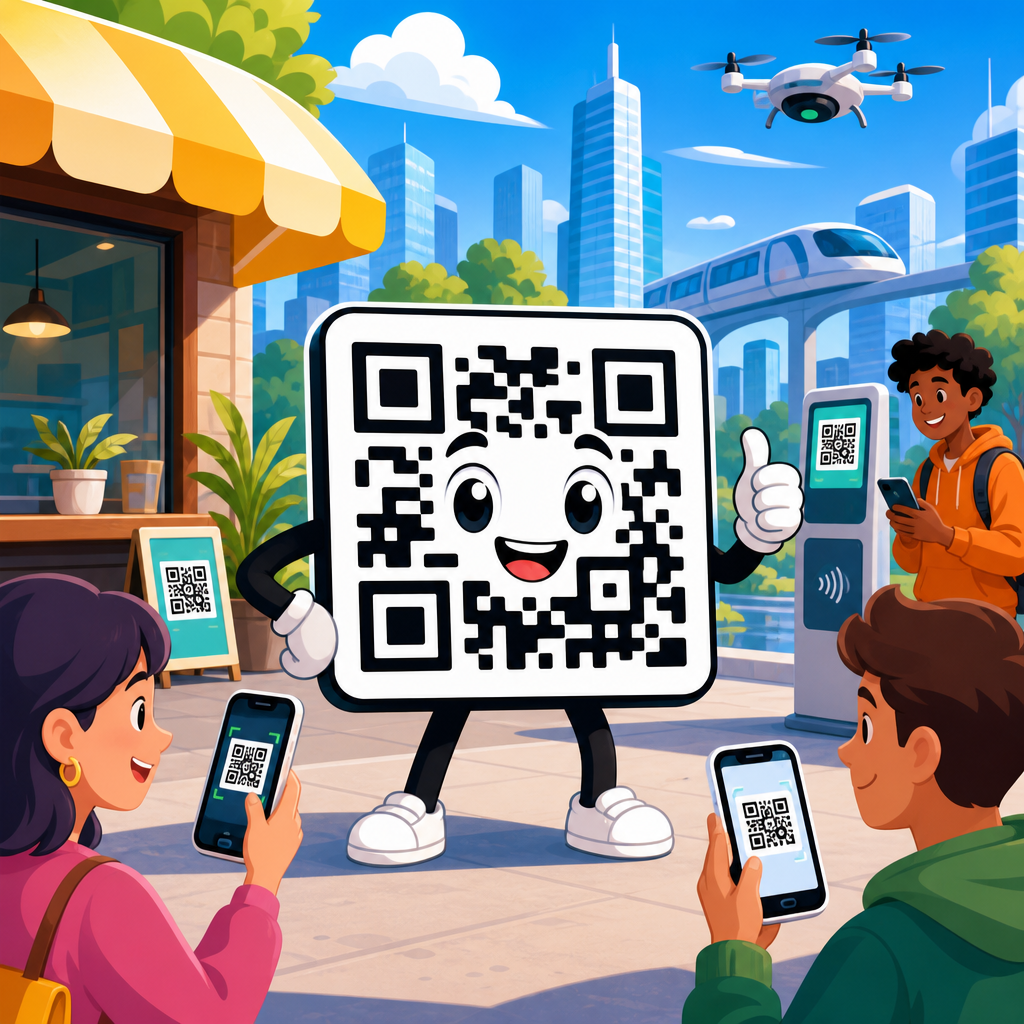
QR codes are still highly relevant in 2026 because they solve a basic problem better than almost any other bridge between physical and digital experiences: they turn a camera into an instant action. A QR code, short for Quick Response code, is a two-dimensional barcode that stores data in a grid of black and white modules, usually linking to a website, file, payment request, app action, menu, ticket, or contact record. Unlike traditional one-dimensional barcodes, QR codes can hold far more information and remain readable even when partially damaged, thanks to built-in error correction. I have worked with QR deployments in retail stores, event venues, packaging systems, restaurant groups, and field service operations, and the pattern is consistent: when the destination is useful and the scan experience is frictionless, people scan.
The reason this topic matters now is that QR codes have moved from novelty to infrastructure. Smartphone camera support is standard on iPhone and Android devices, digital payments rely on them across major markets, and businesses use them to connect packaging, signage, print, and customer service to measurable digital actions. During the pandemic, many consumers first used QR codes for menus and check-ins, but usage did not disappear afterward. It expanded into loyalty programs, product authentication, warranty registration, tapless onboarding, and omnichannel marketing. For a hub page about QR code basics, the central question is no longer whether people understand what a QR code is. The real questions are what QR codes do, how they work, when they perform well, and what makes a code worth scanning in 2026.
At a technical level, a QR code contains structured data arranged in square patterns that a scanner interprets based on finder patterns, alignment patterns, timing patterns, format information, and encoded payload. Common payload types include URL, plain text, vCard contact data, Wi-Fi credentials, SMS templates, email prompts, and payment strings. Static QR codes store fixed content directly in the symbol, while dynamic QR codes point to a short redirect URL that can be updated without reprinting the code. That distinction matters because a printed poster may stay on a wall for six months, while the campaign, destination page, tracking parameters, and call to action may change weekly. Understanding that practical difference is the foundation for using QR codes well.
Relevance in 2026 comes from utility, not trendiness. A good QR code removes steps, reduces typing, improves attribution, and lets offline media act like clickable media. A bad QR code leads to a generic homepage, breaks on mobile, prints too small, or gives people no reason to engage. The businesses getting value from QR codes today are not using them as decorative black squares. They are treating them as conversion tools with design standards, analytics, governance, and clear user intent behind every placement.
What QR Codes Are and How They Work
A QR code is a machine-readable matrix symbol invented in 1994 by Denso Wave for tracking automotive components. Its original purpose was industrial speed and accuracy, but its design made it flexible enough for consumer use. The three large squares in the corners are finder patterns that help a camera locate and orient the code quickly, even if it is tilted. Smaller patterns assist alignment, while timing patterns help determine the grid. The encoded data is converted into binary sequences placed into the matrix according to established standards, primarily ISO/IEC 18004. Because QR codes support Reed-Solomon error correction, scanners can recover data even if part of the code is scratched, obscured, or printed imperfectly.
There are several versions of QR codes, each with a different module count and data capacity. Capacity depends on the character set and error correction level. Numeric content is denser than alphanumeric, and a short URL is far more efficient than embedding a full contact card with many fields. In practice, most marketing and business uses rely on short links because they scan faster and keep the symbol visually simpler. I generally advise teams to avoid encoding large blocks of text unless there is a strict offline need, since network-connected destinations offer better usability, analytics, and content control.
Scanning has also become easier. Native camera apps, Google Lens, manufacturer camera overlays, and payment apps now recognize QR codes with little training required. That is one of the biggest reasons QR codes remain relevant: user behavior no longer depends on downloading a dedicated scanner. Friction dropped, familiarity rose, and the physical world gained a universal interaction pattern that works across posters, labels, receipts, packaging, kiosks, badges, and vehicles.
Types of QR Codes and the Uses That Matter Most
The most useful way to classify QR codes is by function. URL QR codes send users to landing pages, product pages, video explainers, forms, or app deep links. vCard QR codes create contact records for sales reps, recruiters, or real estate agents. Wi-Fi QR codes let guests connect without typing a password. Payment QR codes initiate peer-to-peer transfers or merchant checkout through services such as PayPal, UPI apps, Alipay, or bank wallets. File-download QR codes can open PDFs, installation packages, menus, and guides. Authentication and serialization codes connect a physical item to a unique digital record for anti-counterfeit and supply-chain visibility.
Static and dynamic codes serve different business needs. Static codes are appropriate when the content will never change, such as a permanent Wi-Fi login in a conference room or a fixed phone number on a service van. Dynamic codes are better for campaigns, packaging, and signage because the destination can be edited after printing. They also support scan analytics including time, location approximation, device type, and campaign tagging. In client work, dynamic codes almost always outperform static codes for marketing because they reduce reprint risk and support controlled redirects to mobile-optimized pages.
Micro QR codes, branded QR codes, and frame-enhanced QR designs are also common, but design variation should never compromise readability. A stylish code that fails in low light or at a distance is not a branding win. The best uses balance appearance, contrast, quiet zone spacing, and testing across real devices before rollout.
Where QR Codes Deliver Real Value in 2026
QR codes remain relevant because they fit high-intent moments. In restaurants, they still support menus, table ordering, allergen information, and review requests, especially in multi-location groups updating prices centrally. In retail, a shelf tag can link to stock status, installation instructions, or extended color ranges not carried in-store. Consumer packaged goods brands use codes on labels for recipes, sourcing data, loyalty signups, and recycling guidance. At events, tickets, attendee badges, sponsor activations, and lead capture all depend on fast scanning under time pressure.
Healthcare, manufacturing, and field operations also use QR codes in less visible but more operationally important ways. A clinic may place codes on patient paperwork for appointment prep instructions and digital intake. A manufacturer may label tools and assets so technicians can pull maintenance logs, safety documentation, and parts lists on the spot. Property managers use codes in common areas for visitor access, maintenance reporting, and move-in guides. Education teams place codes in printed workbooks to open videos and supplementary resources. None of these uses depend on novelty; they depend on speed, accuracy, and reduced administrative effort.
| Use case | Primary goal | Typical destination | Key success factor |
|---|---|---|---|
| Packaging | Post-purchase engagement | Setup guide, loyalty page, authenticity check | Clear value after purchase |
| Retail signage | Product education | Specs, reviews, inventory, comparisons | Fast mobile page load |
| Restaurants | Ordering and information | Menu, allergen details, payment | Simple navigation at table |
| Events | Admission and lead capture | Ticket verification, contact exchange, offers | Reliable scanning under crowds |
| Field service | Operational efficiency | Manuals, work orders, maintenance logs | Durable labels and permissions |
What has changed by 2026 is not the code itself but the ecosystem around it. Mobile browsers are better, digital wallets are more common, and businesses expect offline touchpoints to produce measurable data. QR codes are one of the simplest ways to meet that expectation.
What Makes a QR Code Effective Instead of Ignored
The biggest performance factor is destination relevance. People scan when the benefit is immediate and obvious: see the menu, verify the product, claim the offer, watch setup instructions, pay now, or save contact details. They ignore QR codes that are vague, redundant, or risky. “Scan me” is weak. “Scan to view installation video for this exact model” is strong. Context matters as much as code quality.
Print specifications matter too. The code needs sufficient contrast, a proper quiet zone around the edges, an appropriate physical size for scanning distance, and a placement that avoids glare, curvature, and visual clutter. As a rule of thumb, the farther away the user stands, the larger the code should be. For packaging, test on matte and glossy substrates because reflections can ruin otherwise valid designs. For outdoor use, account for fading, dirt, and low-light conditions. Error correction helps, but it is not a license for poor production.
The landing page must match the promise on the sign or package. If the code sends users to a generic homepage, bounce rates rise and trust drops. Strong implementations use dedicated mobile pages, concise headlines, fast loading images, and analytics tags that tie scans to business outcomes. In many campaigns I have audited, the print asset was acceptable but the linked page was the real failure point. A QR code only succeeds when the entire path succeeds.
Security, Privacy, and Trust Concerns
QR codes are convenient, but they also create security risks because the destination is not visible at a glance. Attackers can place fraudulent sticker overlays on parking meters, restaurant tables, or public posters to redirect users to phishing pages or fake payment flows. This risk is real, especially in high-traffic environments. The practical response is not to avoid QR codes but to manage them carefully. Use branded domains, short but recognizable URLs, HTTPS everywhere, tamper-evident placement where possible, and clear instructions about the expected destination.
Consumers have also become more aware of tracking. Dynamic QR systems can capture referral data, device context, timestamps, and approximate location. Businesses should disclose data practices when personal information is collected and minimize unnecessary tracking. If a QR code opens a form, asks for login details, or initiates payment, the destination should feel legitimate immediately through consistent branding and clear ownership. Trust is a conversion factor, not a legal footnote.
For regulated industries, governance matters. Teams should document redirect ownership, expiration policies, analytics access, and review cycles for printed codes. Broken QR links on packaging or physical signage create long-tail failures because the asset may remain in circulation for months or years. A maintenance process is essential.
Best Practices for Creating QR Codes That Age Well
Start with the user task, not the code generator. Define the action you want: buy, learn, register, verify, connect, or pay. Then choose the simplest payload that supports that task, usually a short URL managed through a dynamic platform. Use a generator or campaign system that supports custom domains, UTM parameters, redirect edits, scan analytics, and export formats suitable for print, such as SVG or EPS. Popular tools include Bitly, QR Code Generator, Beaconstac, Uniqode, and enterprise marketing platforms with built-in asset governance.
Design conservatively. Maintain strong contrast, preserve the quiet zone, and test any logo insertion carefully. Verify scans on multiple iPhone and Android devices, under different lighting conditions, and at the actual placement distance. Create mobile-first landing pages with compressed assets and a clear next step above the fold. If the code is in a low-connectivity environment, provide fallback information nearby, such as a short URL or text instructions. Accessibility also matters: place the code where users can approach it, pair it with plain-language instructions, and avoid relying on color alone to communicate the action.
Finally, measure outcomes rather than scans alone. A high scan count with low completion may indicate weak intent, poor page speed, or a misleading call to action. The most successful QR programs tie scans to conversions, registrations, orders, service completion time, or repeat purchase behavior. That is how a basic code becomes a durable business asset.
Are QR Codes Still Relevant in 2026?
Yes, QR codes are still relevant in 2026 because they remain the fastest, most universal way to connect physical objects and spaces to digital actions. They work because cameras are everywhere, users understand the interaction, and businesses need measurable offline-to-online journeys. Their relevance is strongest where convenience, attribution, and instant access matter: packaging, retail, payments, events, service operations, healthcare, and education. They are not magic, and they do not fix weak offers or poor mobile experiences. But when paired with clear intent, sound design, secure destinations, and ongoing maintenance, they outperform many flashier alternatives.
For anyone learning QR code basics, the key takeaway is simple: a QR code is not just a square image. It is a delivery mechanism for action, information, and measurement. Understanding the difference between static and dynamic codes, the role of error correction, the importance of print quality, and the need for trustworthy destinations will help you use them effectively. If you are building a broader QR code strategy, start by auditing every current code in your business, checking where it leads, whether it still works, and whether the user benefit is obvious within one second. Then improve the weakest links first. That is how QR codes stay relevant, and that is how they produce real results in 2026.
Frequently Asked Questions
Are QR codes still relevant in 2026, or have they become outdated?
Yes, QR codes are still highly relevant in 2026, and in many industries they are more useful than ever. Their staying power comes from one simple advantage: they make it incredibly easy to move someone from a physical object to a digital action in seconds. A person can point a smartphone camera at a code on packaging, signage, a receipt, a poster, a restaurant table, a product label, or an event ticket and immediately open a website, payment page, digital menu, app function, video, contact card, or support resource. Very few tools bridge offline and online experiences this efficiently.
What keeps QR codes current is not novelty but practicality. They solve a basic user problem better than most alternatives. Typing long URLs is slow, NFC is not universally used in every context, and app-specific experiences often create friction. QR codes work across devices, require very little user education, and can be deployed at low cost almost anywhere. Because modern smartphones now scan them natively through built-in camera apps, the adoption barrier that once limited their effectiveness is largely gone.
In 2026, QR codes are especially relevant in commerce, hospitality, healthcare, logistics, education, events, payments, and product authentication. Businesses use them to streamline check-ins, share information, enable touchless transactions, track campaigns, and personalize customer journeys. Their relevance is tied to utility, and as long as organizations need a fast, visual, low-friction way to trigger digital actions from real-world surfaces, QR codes will remain an important part of the digital ecosystem.
What makes QR codes more useful than traditional barcodes?
A QR code, or Quick Response code, is a two-dimensional barcode made up of black and white square modules arranged in a grid. That structure allows it to store much more information than a traditional one-dimensional barcode, which typically holds a relatively small numeric identifier. Traditional barcodes are excellent for retail scanning and inventory control, but they are limited in the amount and type of data they can carry. QR codes can encode URLs, plain text, contact details, Wi-Fi credentials, app actions, payment requests, menu links, file downloads, and much more.
Another major advantage is how QR codes are used. Traditional barcodes usually need dedicated scanners and are often intended for internal business systems such as checkout, warehousing, or shipping. QR codes are designed for direct interaction with consumers and end users. Because nearly every modern smartphone can scan them, they are accessible without special hardware. That makes them ideal for marketing, onboarding, service access, self-guided experiences, and instant transactions.
QR codes also include error correction, which means they can often still be scanned even if part of the code is damaged, obscured, or stylized. This gives brands flexibility in design and improves real-world durability on printed materials, packaging, and signage. In short, traditional barcodes are still essential for many operational uses, but QR codes are more versatile when the goal is to connect physical touchpoints with richer digital experiences.
How are businesses using QR codes in 2026?
Businesses in 2026 use QR codes across the entire customer journey, from discovery and engagement to payment, support, retention, and analytics. In retail, brands place QR codes on shelves, packaging, displays, and receipts to provide product details, reviews, ingredient information, loyalty rewards, setup guides, warranty registration, and reorder options. In restaurants and hospitality, QR codes continue to support digital menus, table ordering, guest information, promotions, feedback collection, and contactless payment.
At events, QR codes simplify ticketing, attendee check-in, venue navigation, networking, lead capture, and post-event follow-up. In healthcare, they are used for patient intake, educational resources, appointment confirmations, medication guidance, and secure access to digital forms. In logistics and manufacturing, QR codes help with equipment tracking, maintenance records, training instructions, and quality assurance workflows. Educational institutions use them for lesson materials, campus maps, registration links, assignment access, and interactive learning experiences.
One reason QR codes remain so valuable is that they can be either static or dynamic. Static codes point to fixed information, while dynamic QR codes allow the destination to be updated without reprinting the code. That means a business can place one code on a product, flyer, or sign and change the linked campaign, landing page, inventory status, regional language, or promotional offer over time. Combined with analytics, dynamic QR codes let organizations measure scans by time, location, device type, and campaign source, making them useful not just for convenience but also for performance optimization and customer insight.
Are QR codes safe to use, and what security concerns should people know about?
QR codes themselves are not inherently unsafe, but like any tool that leads people to digital destinations, they can be used maliciously if proper precautions are ignored. The main risk is that a QR code can direct a user to a phishing site, a fake payment page, a malicious download, or a spoofed login form. This is not a flaw in the QR format itself; it is a risk related to where the code points. In other words, the security issue is usually the destination, not the symbol.
For users, the best practice is to preview the URL before opening it whenever the device allows that, and to be cautious when scanning codes from untrusted, altered, or suspicious-looking sources. If a code is placed on a public sign, meter, poster, or payment terminal, it is wise to check for tampering, such as a sticker placed over an original code. Users should also avoid entering sensitive credentials or payment details on pages that do not clearly show legitimate branding, secure HTTPS connections, and expected domain names.
For businesses, QR code safety depends on governance and user trust. Organizations should use branded landing pages, secure domains, HTTPS, and clear context around what the code does before someone scans it. It is also smart to monitor dynamic QR destinations, limit redirect chains, and use analytics tools to detect abnormal traffic patterns. When implemented responsibly, QR codes are a safe and effective channel. Like email links, web ads, or social media buttons, they are trustworthy when paired with sound security practices and transparent user experience design.
What are the best practices for creating effective QR codes in 2026?
The most effective QR codes in 2026 are built around clarity, speed, trust, and relevance. First, the destination should provide immediate value. A code should not simply send users to a generic homepage if a more precise page would better match the context. For example, a code on product packaging should lead to that product’s instructions, reviews, warranty page, or reorder link, not to a broad corporate site that forces extra navigation. Relevance is what makes a scan feel useful instead of gimmicky.
Design and usability also matter. A QR code should be large enough to scan easily, placed where lighting and camera angles are practical, and printed with sufficient contrast between foreground and background. While branded customization is common, it should never reduce scannability. Testing across multiple phone models, distances, and environmental conditions is essential before deployment. A short call to action is equally important. Phrases like “Scan to pay,” “Scan for setup guide,” “Scan to see ingredients,” or “Scan to claim your discount” give users a clear reason to engage.
Businesses should also think beyond the scan itself. The landing page must load quickly, be mobile-friendly, and align with what was promised near the code. Dynamic QR codes are often the better choice because they allow updates, campaign control, and measurement without reprinting. Tracking metrics such as scan rate, conversion rate, bounce rate, and device behavior can reveal whether placement and messaging are working. The strongest QR implementations treat the code not as a decoration, but as a functional entry point into a well-designed digital experience that saves time and creates measurable value.