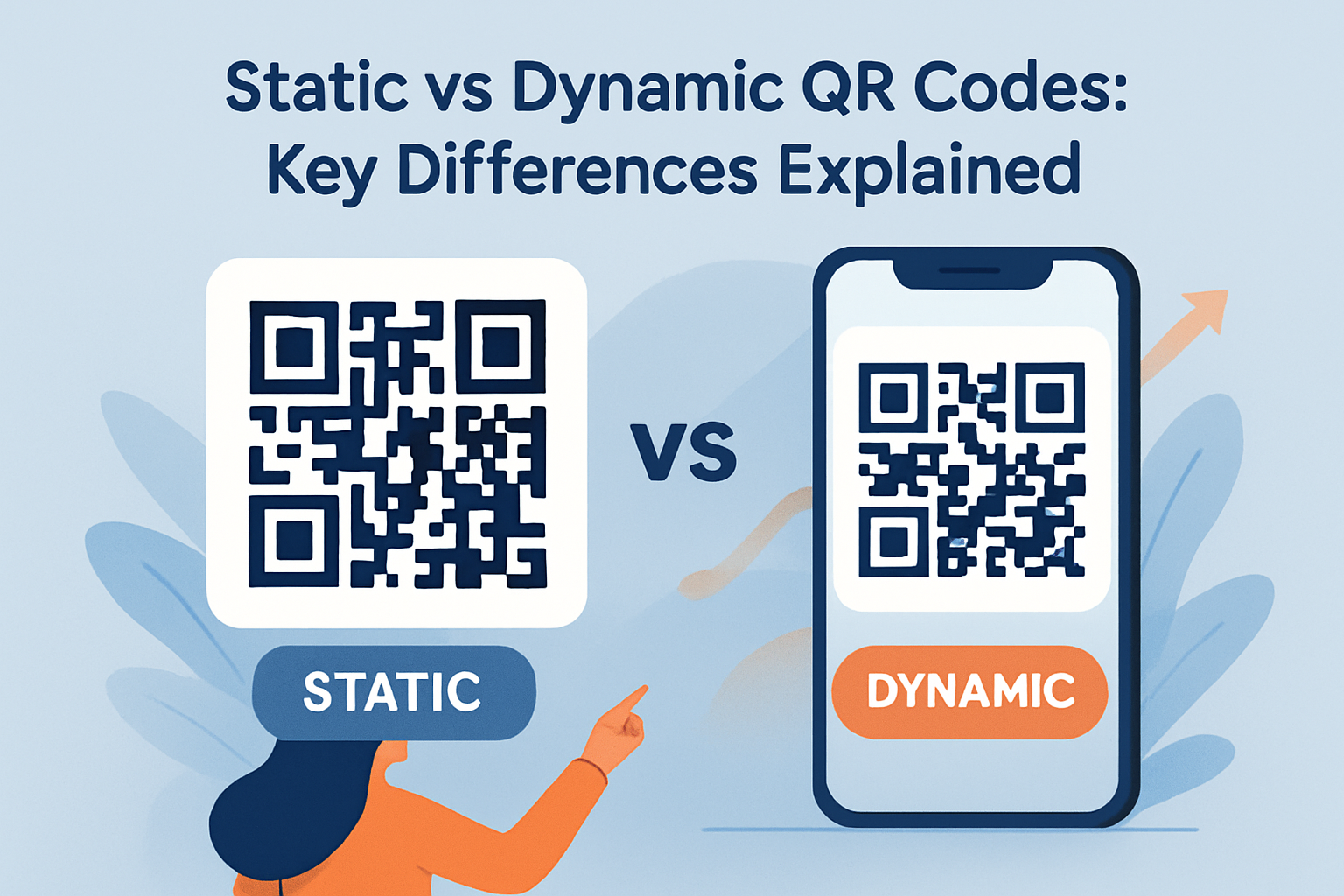
QR codes look simple on the surface, but the difference between a static QR code and a dynamic QR code has major implications for cost, flexibility, tracking, security, and long-term usefulness. If you are building a campaign, labeling products, running restaurant menus, sharing files, or planning printed materials, understanding types of QR codes before you generate one will prevent expensive mistakes. In practical terms, a QR code is a two-dimensional barcode that stores or points to information a phone can read with its camera. The two main categories are static QR codes, which contain fixed data that cannot be changed after creation, and dynamic QR codes, which use a short redirect URL so the destination can be updated later. I have used both across packaging, retail signage, event check-in, and B2B marketing, and the choice consistently affects performance, maintenance, and reporting. This guide explains static vs dynamic QR codes in plain language, shows where each type fits, and gives you a reliable framework for choosing the right format. It also serves as the central resource for understanding broader types of QR codes, including URL, vCard, PDF, app download, menu, Wi-Fi, and payment uses. By the end, you will know what each option does, where it excels, and how to avoid the common problems that frustrate teams after thousands of codes have already been printed.
What static and dynamic QR codes actually mean
A static QR code permanently encodes the final content inside the symbol itself. That content might be a website URL, plain text, a phone number, an SMS message, Wi-Fi credentials, or contact information in vCard format. Once the code is generated and printed, the encoded data is locked. If the linked URL changes, the phone number is replaced, or the PDF is moved, the code does not update. You must generate and distribute a new code.
A dynamic QR code works differently. The printed symbol usually contains a short tracking or redirect URL managed by a QR platform. When someone scans it, the platform forwards the user to the current destination you set in the dashboard. Because the redirect layer sits between the scan and the final content, you can edit the destination without changing the printed code. That single feature makes dynamic QR codes essential for campaigns, packaging, menus, and signage that need flexibility.
The distinction also affects data density. Static codes can become visually denser when they hold long strings of text or complex vCard data, which may reduce scan reliability at small print sizes. Dynamic codes usually encode a shorter URL, so the pattern is often simpler and easier to scan. In production, that matters on labels, business cards, small table tents, and curved packaging.
Key differences at a glance
The fastest way to compare types of QR codes is to look at how they behave after publication. Static codes are one-and-done assets. Dynamic codes are managed assets. That sounds small, but it changes how marketing teams, operations staff, and business owners use them over time.
| Factor | Static QR Code | Dynamic QR Code |
|---|---|---|
| Edit destination after printing | No | Yes |
| Scan analytics | Usually none | Usually included |
| Best for | Permanent information | Campaigns and changing content |
| Data encoded in symbol | Final content | Redirect URL |
| Error recovery if destination changes | Requires new code | Update in dashboard |
| Cost | Often free | Often subscription-based |
If your information will never change, static often works. If there is any chance of edits, localization, testing, expiration, or performance analysis, dynamic is usually the safer choice.
When a static QR code is the right choice
Static QR codes are ideal when the underlying information is stable, simple, and unlikely to move. Good examples include a Wi-Fi QR code posted in a conference room, a plain text equipment identifier inside a warehouse, or a phone number printed on an internal poster. In these situations, the main advantages are simplicity, independence from a third-party platform, and low cost.
I recommend static QR codes for offline operational uses where analytics are unnecessary and content permanence is a feature, not a limitation. A manufacturer might add a static code containing a product serial reference for internal scanning. A school might print a static code that opens a permanent district homepage. A freelancer might place a static code to a personal portfolio only if the domain and page structure are stable and fully owned.
There are tradeoffs. If you encode a long URL with UTM parameters directly into a static code, the design becomes denser and scan performance may drop at smaller sizes. If the page later changes, every printed asset becomes obsolete. That is why static works best when the content itself is short-lived only in theory but permanent in practice.
When a dynamic QR code is the better investment
Dynamic QR codes are usually the better choice for customer-facing materials because real-world content changes constantly. Restaurants update menus. Retailers rotate promotions. Event organizers shift schedules and room assignments. Packaging teams replace landing pages, legal notices, support documents, and video tutorials. A dynamic code lets all of that happen without reprinting inventory.
Dynamic codes also support measurement. Most platforms report scans by date, approximate location, device type, and operating system, helping teams compare placements and campaign performance. In one retail rollout I worked on, adding dynamic QR codes to endcap signage showed that one store cluster generated far higher scans during evening hours, which changed staffing and promotion timing. A static code could never have surfaced that behavior.
Another advantage is controlled destination logic. Some tools allow scan-based rules such as device redirects, language routing, time-based content, password protection, or scan limits. For example, an app install code can send iPhone users to the App Store and Android users to Google Play. A global brand can direct users to localized pages based on country. That flexibility turns a QR code from a simple link into a managed access point.
How common QR code types fit into static or dynamic formats
Many people confuse QR code type with QR code behavior. The use case type describes what the code is for, while static or dynamic describes how the destination is managed. A URL QR code can be static or dynamic. So can a PDF QR code, a menu QR code, or an app download QR code. Other formats, such as plain text or Wi-Fi credentials, are commonly static because they directly encode the data.
Here are the main types of QR codes covered in this subtopic hub. URL QR codes open webpages and are the most widely used. vCard QR codes save contact details. PDF and file QR codes deliver downloadable documents. Menu QR codes show digital restaurant menus. Wi-Fi QR codes auto-fill network credentials. App store QR codes direct users to mobile app listings. Payment QR codes initiate supported payment flows, often using regional standards such as EMVCo specifications. Event QR codes can open registration pages or store calendar details. Social media QR codes point to profiles or landing pages that aggregate multiple links.
As a rule, if the destination may evolve, choose a dynamic implementation. If the data is direct, permanent, and small, static may be sufficient.
Analytics, attribution, and operational control
One of the strongest reasons businesses choose dynamic QR codes is analytics. When scans pass through a managed redirect, the platform can log events and provide reporting dashboards. That allows you to measure unique scans, total scans, time patterns, geography, and device information. If you pair QR traffic with web analytics tools such as Google Analytics 4 using campaign parameters, you can trace not only scans but downstream behavior such as purchases, form fills, or video views.
This matters in budget decisions. A museum can compare which exhibit placards drive the most scans. A direct mail team can test QR codes by region. A restaurant group can learn whether table tents outperform window decals. Operationally, dynamic platforms also help with permissions, asset naming, bulk creation, folder structures, and API workflows. Large organizations benefit because QR codes become governable assets instead of anonymous images floating around shared drives.
Static codes offer almost none of this control. You can still estimate outcomes with landing-page analytics if the URL is unique, but you lose the centralized editability and direct scan reporting that make optimization practical.
Security, reliability, and platform risks
Security is not automatically better with either format; it depends on how the code is managed. Static QR codes avoid reliance on a redirect service, which removes one vendor dependency. If the destination domain is yours and remains live, a static code can be durable for years. Dynamic QR codes introduce a platform layer, so vendor stability matters. If a subscription lapses or the provider shuts down hosted redirects, scans may fail. That risk is real and should be evaluated before a large deployment.
At the same time, dynamic platforms can improve governance. You can pause malicious redirects, update broken destinations, require HTTPS, and monitor unusual scan activity. Reputable providers support custom domains, access controls, and audit trails. For enterprise use, those features outweigh the extra dependency. For a one-time poster to a permanent webpage, the added complexity may not be justified.
Best practice is straightforward: use HTTPS destinations, preview every code on multiple devices, maintain ownership of linked domains, document where each code is deployed, and avoid free tools with unclear retention policies for critical assets.
How to choose the right type for your use case
The best decision starts with one question: will the destination or content ever need to change? If yes, choose dynamic. If no, ask a second question: do you need analytics, testing, routing, or centralized management? If yes, choose dynamic again. Only choose static when permanence and simplicity clearly outweigh flexibility.
For printed packaging with long shelf life, dynamic is usually the safe default. For internal asset tags, static is often enough. For restaurant menus, dynamic is standard because items, prices, allergens, and seasonal availability change. For business cards, many professionals now prefer dynamic because job titles, phone numbers, booking links, and portfolio pages evolve. For Wi-Fi access cards in a stable office, static works well because the direct credential payload is fast and convenient.
Before generating any code, confirm scan distance, print size, contrast, quiet zone, and error correction. Follow ISO/IEC 18004 fundamentals, test under real lighting conditions, and avoid embedding codes in designs that reduce contrast. The smartest strategy is not just choosing between static and dynamic QR codes. It is matching the code type, content type, and lifecycle to the real environment where people will scan.
Static vs dynamic QR codes is ultimately a decision about permanence versus control. Static codes are simple, low-cost, and dependable when the encoded information will not change. Dynamic codes are flexible, measurable, and operationally superior for most customer-facing uses because they allow edits after printing, provide analytics, and support smarter routing. Within the broader landscape of types of QR codes, nearly every major use case—URL, PDF, menu, app download, social, and event access—can be implemented more effectively when you choose the right behavior model from the start. In my experience, teams regret choosing static only when they later need to change something, track performance, or fix broken destinations at scale. They rarely regret choosing dynamic for materials with a long life or uncertain future requirements. The practical takeaway is simple: use static for fixed information and use dynamic for anything that might evolve. If you are building out your QR Code Basics & Education resources, use this hub as your starting point, then map each specific application to the code type, destination, and management level it requires. Make that choice early, test thoroughly, and your QR codes will stay useful long after they are printed.
Frequently Asked Questions
What is the main difference between a static QR code and a dynamic QR code?
The core difference is what the QR code actually contains. A static QR code stores the final destination or data directly inside the code itself. That might be a website URL, plain text, contact details, Wi-Fi credentials, or another fixed piece of information. Once the code is created and printed, that content cannot be changed without generating an entirely new QR code. If the destination link changes later, the old code will continue pointing to the outdated information.
A dynamic QR code works differently. Instead of encoding the final content directly, it usually encodes a short redirect URL that sends scanners to the current destination set by the code owner. Because the destination is managed behind the scenes, you can update where the code leads even after it has already been printed on packaging, menus, posters, labels, or marketing materials. That flexibility is the biggest reason businesses choose dynamic codes for ongoing campaigns and customer-facing assets.
In practical terms, static codes are simple, permanent, and often free to create, while dynamic codes are editable, trackable, and better suited for business use cases where links, files, offers, or landing pages may need to change over time. If your information will never change, static may be enough. If you want control after printing, dynamic is usually the safer choice.
When should I use a static QR code instead of a dynamic QR code?
A static QR code makes the most sense when the information is truly permanent and there is little to no chance you will ever need to update it. Common examples include linking to a fixed personal contact card, displaying unchanging product information, providing Wi-Fi credentials in an office or home, or storing plain text that will remain accurate for the life of the code. In those situations, the simplicity of a static code is an advantage.
Static QR codes are also attractive when cost is the top priority. Many basic QR code generators offer static codes for free, and there is no ongoing subscription required to keep them working because there is no redirect platform managing the destination. That can make them useful for one-time projects, internal uses, classroom materials, or personal sharing where analytics and editability are not important.
That said, static codes can become expensive in a different way if they are used in the wrong context. If you place a static QR code on printed restaurant menus, retail packaging, flyers, signage, or event materials and later need to change the link, you may have to reprint everything. That is why static works best for stable, long-term data and dynamic works better when content, promotions, files, or URLs could evolve. The decision is less about the code itself and more about whether the information behind it is permanent or likely to change.
Why are dynamic QR codes better for marketing campaigns, restaurant menus, and printed materials?
Dynamic QR codes are often the better choice for business and marketing because they give you control after the code has been distributed. In a campaign, you may want to change the landing page, swap out a special offer, update tracking parameters, fix a broken URL, or redirect users based on seasonality or product availability. With a dynamic code, you can make those changes without replacing the printed code. That is a major operational and financial advantage.
Restaurant menus are a perfect example. A menu QR code may need to reflect price changes, sold-out items, seasonal dishes, limited-time promotions, or updated hours. A static code would force the restaurant to create and reprint new table cards, wall signage, or takeout inserts every time something changes. A dynamic code allows the menu URL or file destination to be updated behind the scenes while the visible QR code remains the same.
The same logic applies to brochures, product packaging, shelf talkers, business cards, trade show materials, and posters. Once those items are printed, replacing them is costly and inconvenient. Dynamic QR codes protect that investment by keeping the front-end code stable while allowing the destination to evolve. They also commonly support scan analytics, which helps businesses measure engagement by location, device type, scan volume, and timing. That combination of flexibility and insight makes dynamic QR codes especially valuable for real-world campaigns.
Can you track scans with both static and dynamic QR codes?
In most cases, meaningful built-in scan tracking is associated with dynamic QR codes, not static QR codes. Because a dynamic QR code routes users through a managed redirect system, the platform can log useful data before sending the person to the final destination. Depending on the provider, that can include total scans, unique scans, date and time, approximate location, device type, and operating system. For marketers and businesses, that data helps evaluate performance and make better decisions.
Static QR codes generally do not offer native tracking because there is no middle layer managing the interaction. The code sends the scanner directly to the encoded destination. If you link a static QR code to a web page that has its own analytics, you may still gather some limited data through tools like website analytics platforms, but that is not the same as having dedicated QR code management and reporting. It also becomes harder to isolate scans accurately if the same page is visited through other channels.
If performance measurement matters, dynamic QR codes are usually the right choice. They are especially useful for comparing campaign placements, tracking engagement across different print assets, testing calls to action, and monitoring whether a code is still being scanned over time. Static QR codes can still be useful for simple sharing, but if your goal includes optimization, attribution, or reporting, dynamic QR codes provide much stronger visibility.
Are dynamic QR codes more secure and worth the extra cost?
Dynamic QR codes are often worth the added cost when reliability, flexibility, and governance matter. From a business perspective, the value comes from being able to edit destinations, pause campaigns, correct mistakes, access analytics, and manage multiple codes from one dashboard. Those features can prevent wasted print costs, broken links, and lost customer opportunities. For many organizations, that practical control more than justifies the subscription or service fee.
On the security side, the answer is nuanced. A dynamic QR code can improve control because administrators can change a destination if a page becomes outdated, compromised, or incorrect. Some platforms also offer account-level management features, expiration settings, password protection, team permissions, and scan monitoring. Those tools can make dynamic QR codes safer to manage in professional environments.
However, security ultimately depends on the provider and how the code is used. Because dynamic codes rely on a third-party platform or redirect service, you are placing trust in that provider’s uptime, policies, and infrastructure. If the service is discontinued or your subscription lapses, the code may stop functioning depending on the platform. Static QR codes do not have that same platform dependency, which can be an advantage for long-term permanence. So the better question is not simply whether dynamic is more secure, but whether the added control and business features outweigh the dependence on a managed service. For most active campaigns, editable menus, file sharing, and measurable customer journeys, the answer is yes. For permanent, low-risk information that never needs to change, static may still be the more sensible option.